@rushikesh_agre_ I was at Andheri Linking Road for a customer visit. Spent the whole night in a BEST bus with water till the steps. Walked to my home at Ghatkopar next day morning
JUST IN: There are roughly 50,000 MRI machines operating worldwide. Each one requires liquid helium cooled to minus 269 degrees Celsius to keep its superconducting magnets functional. A single non-operational MRI eliminates 20 to 30 patient scans per day. Those are the scans that detect tumours before they metastasise, strokes before they kill, spinal injuries before they paralyse. The helium that makes those scans possible came, until 31 days ago, from Qatar’s Ras Laffan facility, which produced a third of the world’s supply as a byproduct of liquefied natural gas. Ras Laffan was struck by Iranian missiles on March 18. It declared force majeure. Fourteen percent of its helium capacity is permanently destroyed. Repairs will take three to five years.
Helium prices have doubled. India’s hospitals are already reporting MRI cost spikes and scan delays. European facilities are rationing non-urgent diagnostics. Air Liquide has warned customers of unfulfilled orders. And 200 cryogenic containers holding 41,000 litres each are stranded in the Persian Gulf with 35 to 48 days before their cooling systems fail and the gas vents irreversibly into the atmosphere. Helium is the only element that escapes Earth’s gravity once released. It does not come back.
Here is the connection that should stop every health minister, every defence secretary, and every AI executive in their tracks. The same helium that cools the MRI magnet scanning a child’s brain for a tumour in Mumbai also cools the extreme ultraviolet lithography machine printing the two-nanometre transistor in Hsinchu that powers the AI model selecting bombing targets over Isfahan. Hospitals and semiconductor fabs are now competing for the same shrinking pool of the same molecule at the same temperature. The war has created a zero-sum allocation between healing and killing, and the molecule does not care which one wins.
TSMC holds 6.2 weeks of inventory and recycles 68 to 95 percent on site. Samsung holds six months but sources 65 percent from Qatar. Both are rationing toward AI and high-bandwidth memory, starving consumer chip production to keep the advanced nodes alive. Hospitals are nominally prioritised in allocation queues, but when a single TSMC fab consumes 500,000 cubic feet of helium per year and a trillion-dollar AI buildout depends on keeping those fabs running, the allocation queue is a polite fiction masking a brutal triage.
Newer MRI machines use zero-boil-off technology, sealed systems holding as little as 0.7 litres of helium that never need refilling. In India, 3,500 of 5,000 machines already use this technology. But the legacy fleet, the machines in rural hospitals, developing nations, and underfunded health systems, still requires 1,500 to 2,000 litres per fill. Those are the machines that will go dark first. Those are the patients who will be diagnosed last. The geography of helium scarcity maps precisely onto the geography of healthcare inequality.
The war’s casualties are not only soldiers and civilians in the strike zone. They include every patient whose scan was delayed because the helium that should have cooled their MRI machine is boiling off in a container drifting 57 kilometres northwest of Dubai. The body count of a chokepoint war does not end at the chokepoint. It extends to every hospital, every diagnostic centre, every oncology ward that depends on a noble gas extracted from natural gas that transits a 39-kilometre strait controlled by a navy that no longer exists but whose mines, drones, and shore batteries still function.
The molecule does not distinguish between a magnet in a scanner and a magnet in a missile. It cools both to the same temperature. And today, there is not enough of it for both.
Full deep dive analysis - https://t.co/dAOBBMrIOk
THE FEVER THAT DIDN’T WAIT
Casualty was loud. Metallic urgency.
A 19-year-old rushed in.
High fever.
Severe headache.
Vomiting.
Now confused.
Neck stiff.
Photophobic.
BP falling.
Then Dr. X saw it.
Purplish spots on his legs.
Pressed them.
They did not blanch.
That moment changes everything.
Fever + headache + neck stiffness + non-blanching purpura?
Think meningococcal meningitis with meningococcemia.
No waiting for scans.
No waiting for confirmation.
- 2 large IV lines
- Blood cultures
- Ceftriaxone 2g stat
- Dexamethasone
- Aggressive fluids
-Vasopressors if needed
Every hr of delay increases mortality.
Why the rash?
Neisseria meningitidis releases endotoxin → endothelial damage → capillary leak → microthrombi → purpura.
In the brain: Bacteria enter CSF → cytokine storm → cerebral edema → rising intracranial pressure → confusion.
CSF:
⬆️Neutrophils
⬆️ Glucose
⬆️ Protein
Gram-negative diplococci.
Complications? Shock.
DIC.
Hearing loss.
Seizures.
Adrenal hemorrhage (Waterhouse-Friderichsen).
Close contacts need prophylaxis: Rifampicin / Ciprofloxacin / Ceftriaxone.
Vaccination prevents outbreaks.
Here’s the rule:
Fever → think.
Neck stiffness → think urgently.
Purpura → act immediately.
Meningococcal disease does not hesitate.
Speed saves brain.
Speed saves life.
Dr. X sat down with an air of self- assurance, that comes with decades of experience.
Imagine a siren running 24×7x365 days just to “keep people alert.”
For the first few days, everyone notices it.
Soon after, people realize they don’t need to do anything and they start ignoring it. After a few days, the siren becomes background noise.
Then one day, when a real emergency happens, people are shocked and need to take sudden action because the signal had lost its meaning.
Improper usage of Hazard lights work the same way.
When they’re used all the time during fog or rain instead of for an actual breakdown or sudden stop, they stop signaling real danger and just a background noise.
And when a genuine hazard appears, others may react too late as they're always used to see hazard lights and didn't do anything.
A good warning system must satisfy all three:
1. Rarity : only used when something is abnormal.If a warning is always present, it's not a warning anymore
2. Clarity : very clearly convey what's wrong
3. Actionable : we should know what to do clearly
Police get rightfully criticised on social media for poor work ethics and corruption, but when they do splendid work, they deserve praise on the same scale too.
Until 2019, posters glorifying terror groups were a common sight in Kashmir. The police would usually remove them, but not every time was there a serious investigation into who put them up.
The busting of Faridabad's white-collar terror module began when on 19 Oct some police officers in Srinagar noticed posters praising a banned terror outfit, something that might once have been dismissed as routine propaganda. But this time, the J&K Police got curious. The SSP Srinagar GV Sundeep Chakravarthy insisted that the source be traced, refusing to let it pass as just another poster incident.
That single decision, to investigate promptly, set off a butterfly effect. CCTV footage led to Dr. Adil Ahmed Rather of Saharanpur, which led to Dr. Muzzamil Shakeel, the seizure of 3,000 kg of IED-making material, and finally to a full-blown terror module stretching from Kashmir to Delhi and Faridabad.
Yes, one blast did happen, but had the J&K Police not acted when they did, those explosives, ten to fifteen times more than Pulwama, could have unleashed devastation on a scale this country hasn’t seen since 26/11.
This is how policing should work: alert eyes, curious minds, and relentless follow-through. J&K Police, Haryana Police, UP Police, and everyone else involved, well done. Please keep giving us more opportunities to say good things about the police.
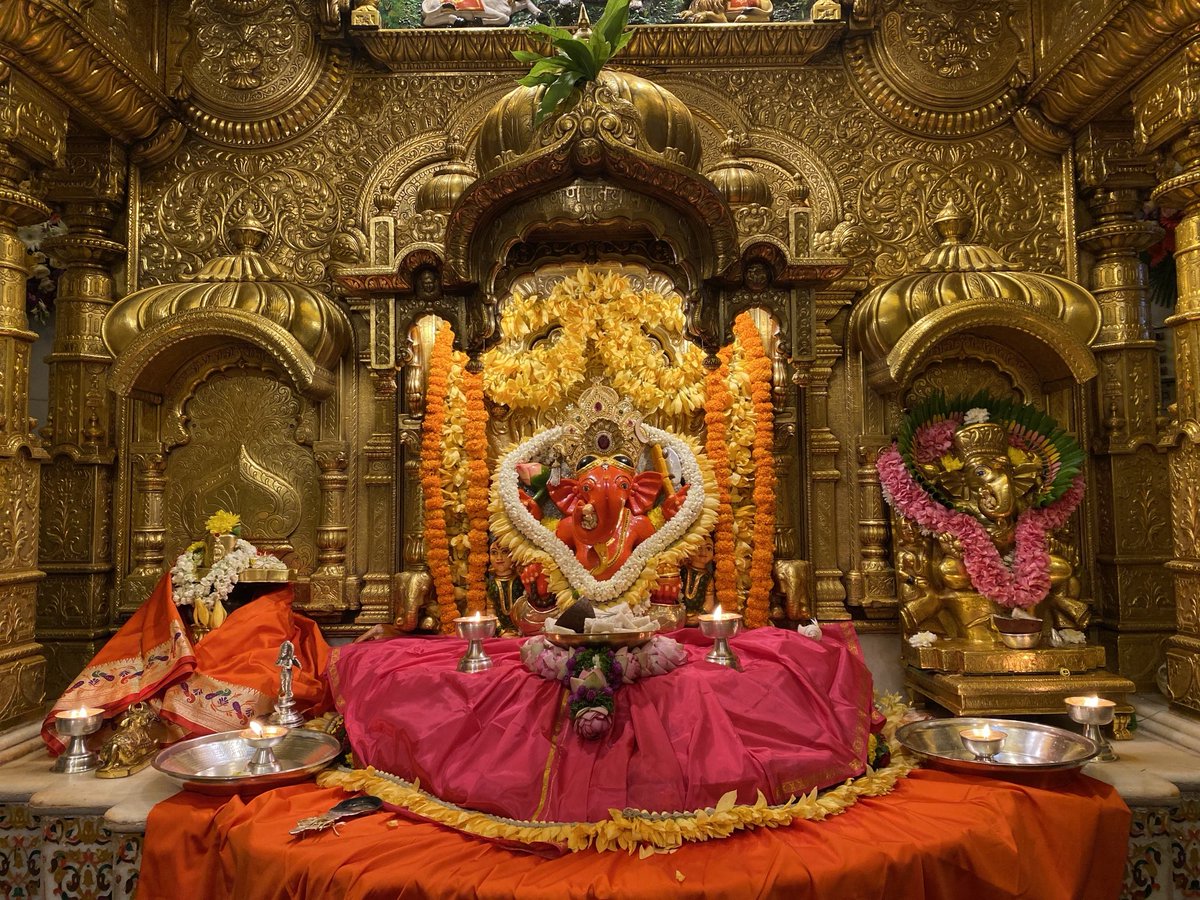
May the divine light of Diwali Illuminate your home with love, heart with joy, and your life with endless prosperity
Wishing you and family a Very Happy Diwali
Best Wishes
Nitin
Witness the extraordinary resolve of Dr. Vanita Noronha as she transforms her breast cancer experience into a story of hope and resilience.
Watch the video now.
🔗 https://t.co/0ybp7Tpzzd
One of the key arguments I hear in favour of reservation is:
I had privileges: therefore, I should make room for others to grow.
Facts:
[1] General, Male candidate.
[2] My mom worked as a cashier at a public sector bank
[3] Aced almost every test in my life. That was my ticket to a better life.
[4] Parents were always worried: that if I did not study well, I would not have a good career.
[5] So kept working hard. Aced good colleges.
[6] At Master's level, applied for IIMs -- had to compete due to diversity quota
[7] Got through due to good CAT percentile
[8] But, no scholarship
[9] So aced GMAT. Again because I was in the 'Indian' pool faced stiff competition
[10] Nevertheless, applied -- got through good foreign Business schools (on scholarship), which considered my profile worthy of being admitted. No 'reservation' there.
Studying well, excelled at almost every job I did in my life.
Meanwhile, many of my friend's dad were IAS officers from reserved categories. Had massive privileges.
Skimps through life with a smirk. Knowing that because they come from a reserved category, they will sail through any exam.
Oh yes, but, I have privileges.
Sorry if it hurts your sentiments: but punishing me for what my forefathers might have done 100 years back, is senseless.
It is like punishing a person for his grandfather's mistakes.
What happened 100 years back was bad.
What is happening now (reservation) is bad too.
Reverse discrimination is discrimination.
You can call whatever you like.
Hard working folks will still scrape though. But, that doesn't make the system right.
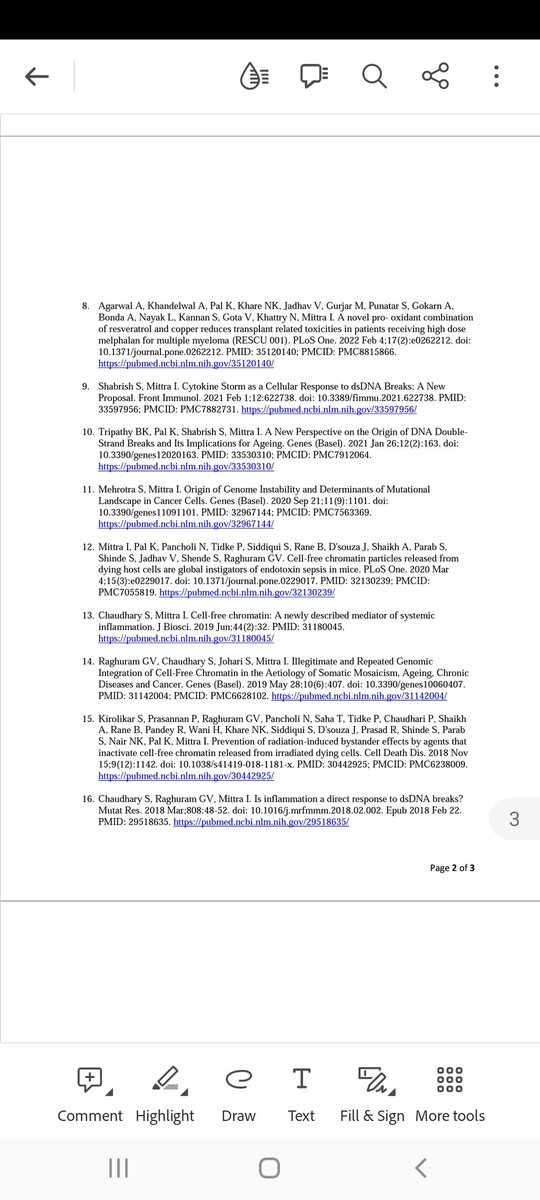
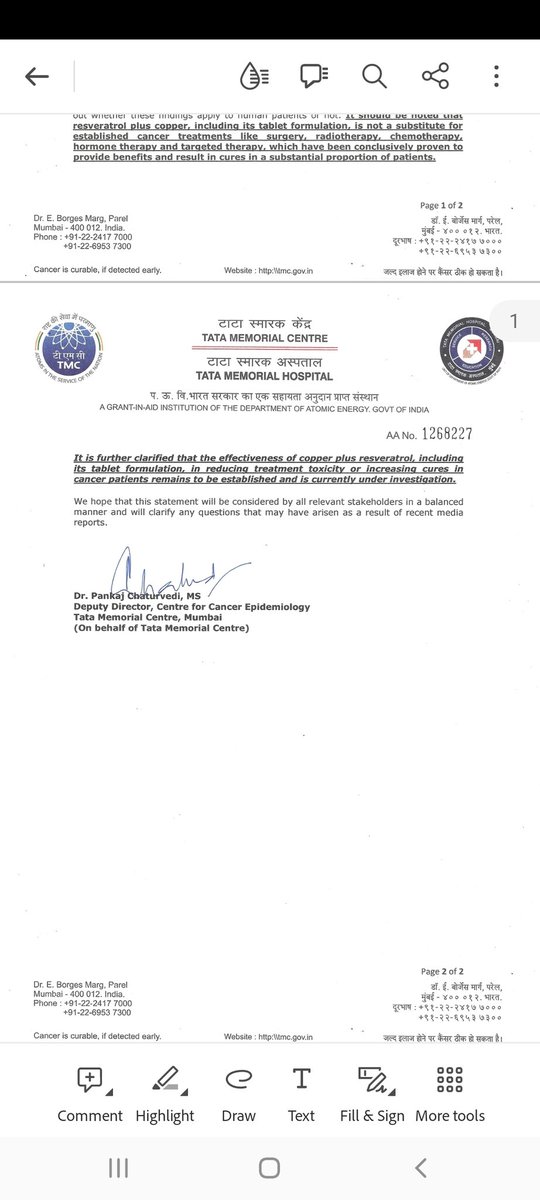
This is the official statement issued by @TataMemorial regarding the recent social media discussion about reaserch done by Professor Dr Mitra and colleagues at TMH. This statement clearly states that this particular reaserch is under study and its main purpose is to reduce treatment related toxicity and it is not a substitution for existing treatment options
This should reduce the anxiety amongst cancer patients and medial and non medical colleagues regarding this new research .
Let's work together to fight against this deadly disease .
Kindly forward this to as many contacts as possible so that everyone gets correct information on this matter . 🙂 @vinodscaria@MalathyIyerTOI@TataMemorial@CRI_ACTREC@Ravijharkhandi@BBCHindi@ETHealthWorld@timesofindia @icmr @PMOIndia@SirohiBhawna@venkymd@vijivenkatesh@cspramesh@ManjuSengar7@DrVijayPatil11@theliverdoc