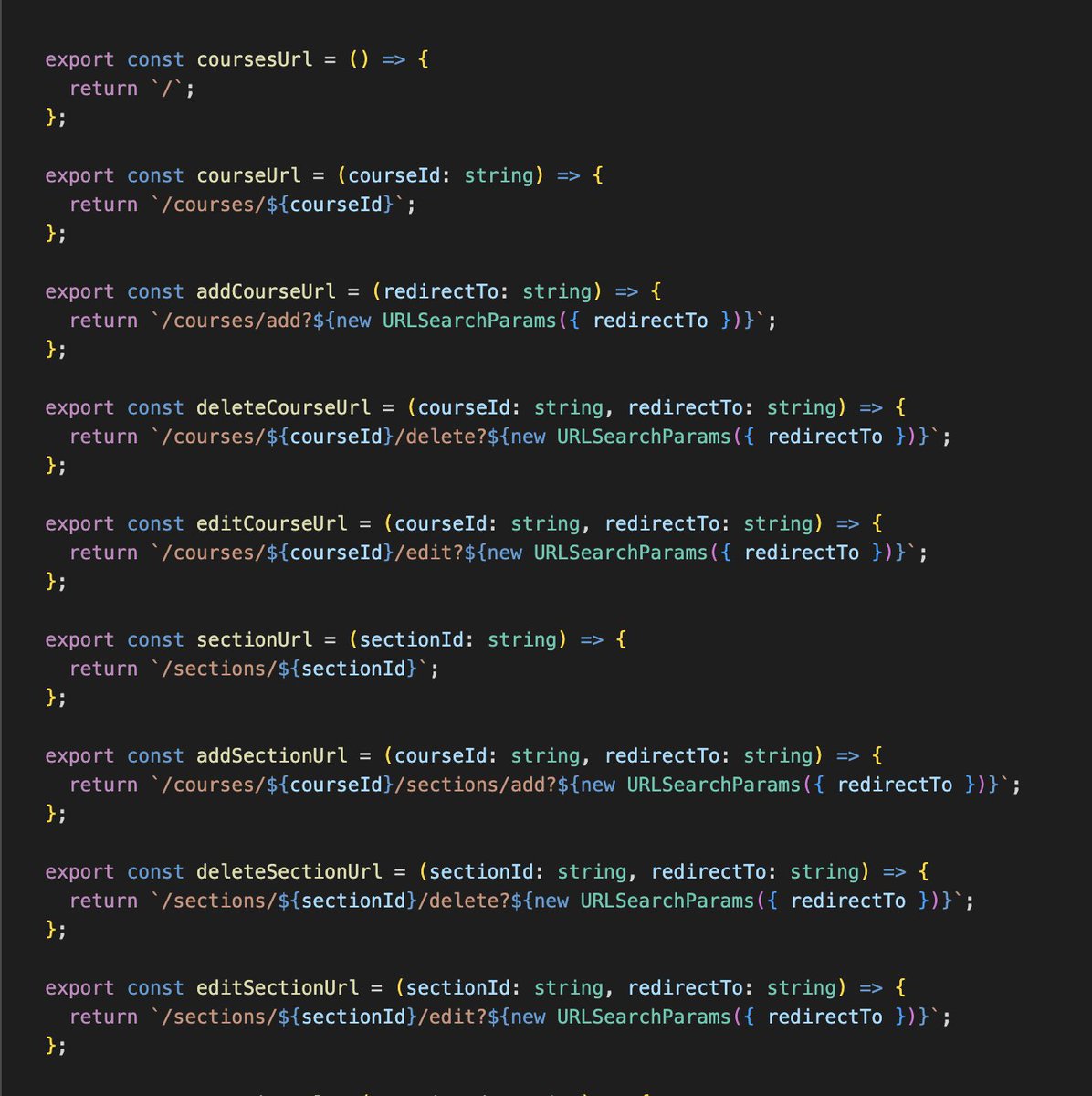
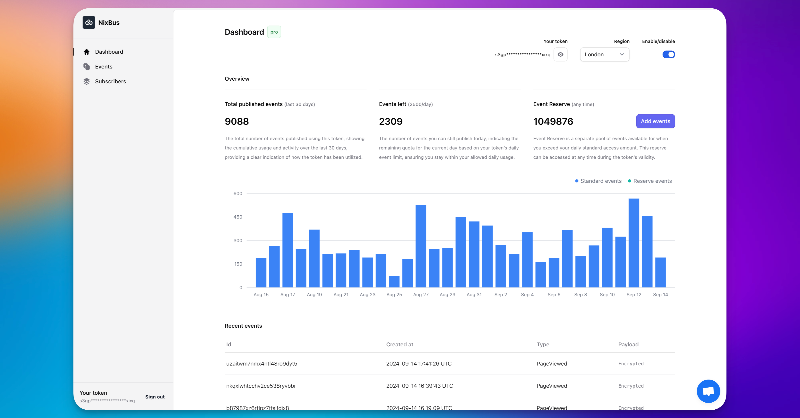
🚀 Introducing NixBus! Simplify your event-driven development with our secure and efficient event bus over HTTP. Get your free token today. https://t.co/i7OSicx7fY
New episode: "GIN Indexes"
Nikolay and Michael discuss GIN indexes in Postgres — what they are, what they're used for, and some limitations to be aware of.
🎧 https://t.co/QhSm9C02XU
📺 https://t.co/xvQfJ7c6CB
100%. Ready to go. The release will probably be on the 26th though so I can take time to enjoy the holidays with my family without stressing about inevitable launch day issues. For those interested: thanks for hanging in there, not long now. Happy holidays y'all. ❤️
Though #PostgreSQL includes a full-featured text #Search capability, ParadeDB’s pg_search vastly improves performance. Tembo’s ParadeDB stack provides an easy way to deploy and use this advanced search functionality in your apps today: https://t.co/qs9hBGXD9F
New episode: "Denormalization"
Nikolay and Michael discuss denormalization in Postgres — when and why to denormalize things, and a couple of specific cases Nikolay came across recently.
🎧 https://t.co/lGGcRbAfVa
📺 https://t.co/6Vw36UGYis
react is so much better when you use it only as a view layer and manage your state externally
after 2 days of dev I got frustrated enough with context and hooks to move my state logic into mobx-state-tree
way cleaner and only the needed parts rerender
Iteration is not rework.
Rework is when you mess something up and have to fix it or do it over.
Iteration is when you make something work, and then add functionality.
It's not about "you should never re-open a source file."
Rework is waste.
Iteration is progress.
New episode: "Planning time"
Nikolay and Michael discuss planning time in Postgres — what it is, how to spot issues, its relationship to things like partitioning, and some tips for avoiding issues.
🎧 https://t.co/kGFcH7lke6
📺 https://t.co/P8BskLTLxh
We just made a quick demo showing how ridiculously easy it is to create a serverless queue system using NixBus 🚀 It's so simple, just a few lines of code and boom 💥 you’ve got a fully working event-driven queue.
You can test it for free by getting a token in just one click! 🚀 No complicated setup—just grab your free token, and you're ready to start building powerful queue systems and event-driven workflows right away. Give it a try now! https://t.co/WAiqiYIuGr
We just made a quick demo showing how ridiculously easy it is to create a serverless queue system using NixBus 🚀 It's so simple, just a few lines of code and boom 💥 you’ve got a fully working event-driven queue.
And the cool part: with the NixBus dashboard, you can see everything your queue system is doing! 🎛️ You’ve got insights into published events, remaining events, subscribers' configs, and even event payloads (which are fully encrypted end-to-end).
New episode: "Slow count"
Nikolay and Michael discuss why counting can be slow in Postgres, and what the options are for counting things quickly at scale.
🎧 https://t.co/WJXAClg90p
📺 https://t.co/i1cowTNSU3
Postgres just got even faster
Like most databases, Postgres work with fixed size pages. Those pages are 8K in size, each page will have the rows, or index tuples and a fixed header. The pages are just bytes in files and they are read and cached in the buffer pool.
If a table has 100 pages, to do a full table scan, we would be making close to 100 system read calls, taking kernel read-ahead in to consideration.
Postgres 17 now combines I/Os to retrieve multiple pages at once. This leads to fewer system calls and lower read latency.
Watch my full coverage in this video
Postgres just got even faster
https://t.co/DjwOKAk0tp
If you prefer audio, listen to the podcast
https://t.co/daVmhswh3X