You know how everyone's fixated on megalodon having survived somehow in the Mariana Trench? Well, maybe you should fixate on the GIANT SIXGILL SHARK Hexanchus andersoni, a Miocene monster up to 10.5 m that was actually adapted to the deep sea! Just saying, just saying :B
FUNGUS IN SPACE!!! 🍄🚀
Equal parts cosmic horror and nature being metal, let's talk about the lichen that grew on the OUTSIDE of the International Space Station!
Get your tea and curl up, because I PROMISE you wanna hear about these fungal cosmonauts 🧑🚀
🧵
The thing that will end up killing American zoos won’t be ARAs or partisan legislation. It’s gonna be much more boring. It’s going to stem from their refusal and inability to build safe, functional facilities made w quality materials by skilled, well paid laborers.
Scientists Have Reported a Breakthrough In Understanding Whale Language
Researchers have identified new elements of whale vocalizations that they propose are analogous to human speech, including vowels and pitch.
Researchers have identified previously unknown elements of whale vocalizations that may be analogous to human speech, a new study reports.
Sperm whales are giants of the deep, with healthy adults having no known predators. Scientists studying their vocalizations have already picked out key elements of their communication, namely clicks, sequences of which are called codas. Now, researchers led by Gašper Beuš from the University of California, Berkeley report the discovery that the acoustic properties of these clicks—for example, pitch—are “on many levels analogous to human vowels and diphthongs,” which is when one vowel sound morphs into another such as in the word “coin.” The researchers even identify two unique “coda vowels” that are “actively exchanged” in conversation between whales, which they term the a-vowel and i-vowel.
The researchers explain in their paper, published as a preprint online this week, that the first clue that so-called spectral properties could be meaningful for whale speech was provided by AI. Beuš previously developed a deep learning model for human language called fiwGAN which “was trained to imitate sperm whale codas and embed information into these vocalizations.” Not only did the AI predict elements of whale vocalizations already thought to be meaningful, such as clicks, but it also singled out acoustic properties.
To follow up on the AI’s tip, the researchers analyzed a dataset of 3948 sperm whale codas recorded with hydrophones placed directly on whales between 2014 and 2018. They only analyzed one channel from the hydrophones to control for underwater effects and whale movement, and removed click timing from their visualization to better isolate patterns in the acoustic properties themselves.
These visualizations vindicated the AI’s prediction: The whales reliably exchanged codas with one or two formants—frequency peaks in the sound wave—below the 10kHz range. The researchers termed these codas “vowels,” with single-formant codas being a-vowels and two-formant codas being i-vowels. “This is by analogy to human vowels which differ in their formant frequencies,” the authors wrote. They also identified upward and downward frequency “trajectories” in these codas, which they considered analogous to diphthongs in human language.
Considering that these coda vowel patterns were very distinct and not intermixed, plus the existence of diphthongs, the researchers argue that whales are controlling the frequency of their vocalizations.
“Under our proposed view, whale clicks are equivalent to the pulses of vocal folds in human speech production,” the authors wrote. “In other words, we treat clicks as the source and the sperm whales’ resonant body (the nasal complex, including the spermaceti organ) as the filter that modulates resonant frequencies.”
The analogies to human speech are readily apparent. The authors note, for example, that vocal tone in Mandarin can change the meaning of otherwise identical syllables.
“If our findings are correct, it means that the communication of sperm whales is much more complex and can carry more information than previously thought,” the researchers concluded.
@ScottAdamsSays
https://t.co/QcWuNNvR1K
https://t.co/Ky6HzRKFVv
@ocean_keshi@sciencegal_al Although the company went under, so no support on paralenz cameras anymore unfortunately. Still great cameras, but have to buy used and if they break then they’re just broken.
@sciencegal_al Paralenz is the best underwater camera for the price (imo), although the company went out of business so u would need a used one, and the battery life is around 2 hours while filming.
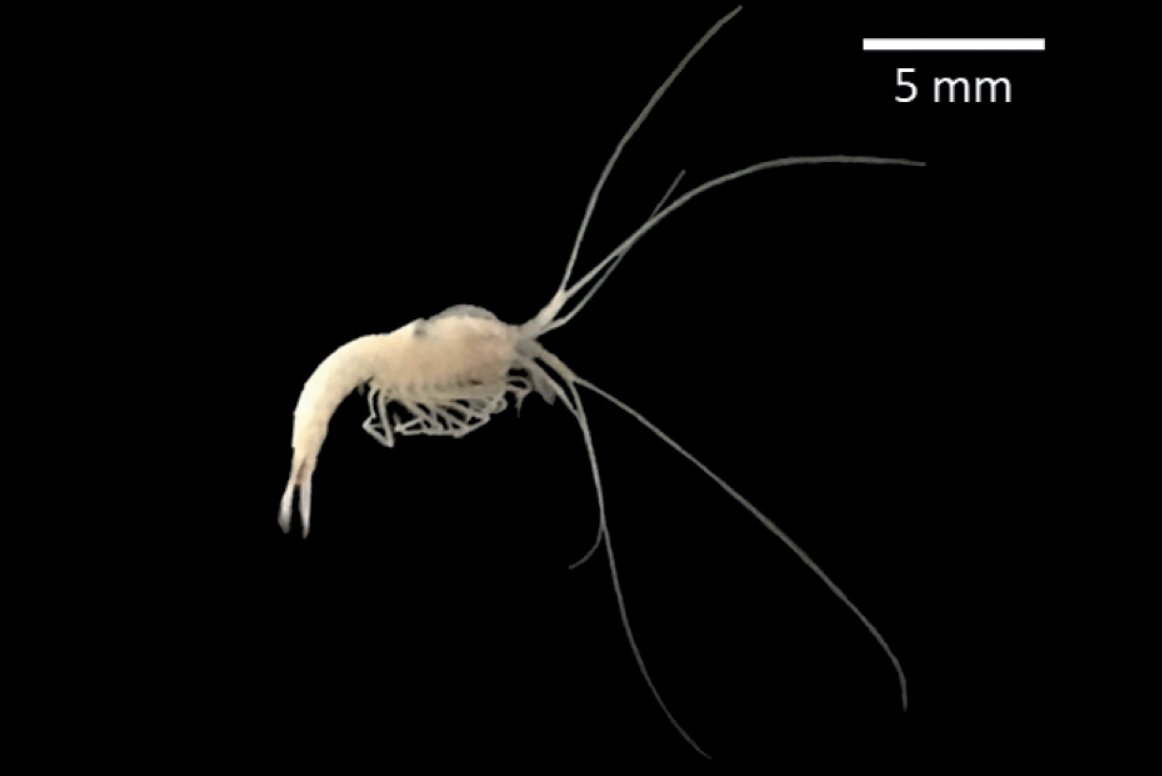
This study aims to understand how the aquatic community of the newly discovered Refugio Cave relates to other caves in the El Abra region, Mexico🇲🇽.
🔗https://t.co/uo4rFAels8
#cavefish#conservation
SFS is dismayed by today's Supreme Court Ruling regarding Waters of the United States. This decision is scientifically indefensible. Read our full statement #SCOTUS#WOTUS https://t.co/pRhOxeUuNJ
@Thomas_Clements Anybody else find it insanely interesting how subjective the term “modern life” can be? I mean it can mean sooo many things to so many people.
@WhySharksMatter@PADI@scubadivingmag If you wrote something cool about what a tech diver might see while diving the mesophotic I would be VERY excited to read it!
Here's our insider tip for National Hiking Month,
If you actually go outside, there's a greater chance that you'll meet somebody that enjoys hiking and doesn't just put it on their dating profile to attract well-balanced nature lovers.
November 6 🎂🥳🎉: Happy birthday and long life to Alexandra Elbakyan!
Neuroscientist and software developer #Alexandra Elbakyan who revolutionized the academic and scientific world with her ideals of open access to scientific knowledge.