👉For 4 years, 1 day, and 10 hours, anyone who understood the Orchard circuit could have minted ZEC out of thin air, silently, with no on-chain signature. The bug was disclosed this week. It was found by an AI-driven audit running Opus 4.8, not by an attacker.
1. Call the bug what it is
Two lines in halo2's variable-base scalar multiplication gadget used assign_advice() where copy_advice() was required. As a result, the diversified-address integrity check pk_d = [ivk]·g_d could be satisfied for arbitrary inputs. A malicious prover could spend the same note multiple times with different nullifiers, i.e. counterfeit ZEC inside the Orchard pool, undetectable on-chain because the privacy of the ZK proof hides exactly the inputs that would reveal the attack.
We do not know whether it was exploited. We will probably never know.
2. Four years. Multiple audits. Top-tier reviewers.
Orchard was reviewed by some of the strongest cryptographers in the field before activation. They missed it. Earlier automated audits with Opus 4.7 missed it. Opus 4.8 catches it in roughly 1 in 4 runs when prompted generically. The bug is hard.
And ZK inflation bugs are not new. Zcash itself shipped a counterfeiting vulnerability in Sprout (BCTV14) that survived years before being silently neutralized during Sapling. Similar soundness issues have appeared in circom, halo2, and rollup verifiers since. The pattern is consistent: when the protocol is private, exploitation is undetectable. You patch the bug and hope.
3. What Zcash did right
This was a textbook decentralized incident response:
▶️Audit: a full AI-assisted soundness audit of halo2 + Orchard, scoped end-to-end.
▶️Discover: the agent flagged the missing constraint and worked out the algebra to turn it into an exploit. A working RPC-level PoC in ~6 hours, mostly waiting on tokens.
▶️Coordinate: a soft fork disabling Orchard, prepared and distributed without leaking the bug, activated 2 days and 15 hours after acknowledgement. Coordinating a soft fork across miners, exchanges, and nodes without disclosing why is genuinely hard. They did it.
▶️Disclose: timeline, code lines, math, open questions. No spin.
Worth naming explicitly: Zcash's turnstile invariant caps the value that can ever leave a shielded pool by the value that entered it. Privacy and verifiability inside the same protocol. That is not an accident. That is good engineering, and it is what kept the worst case bounded.
4. The economics of security just changed
AI does not change whether bugs like this exist. It changes the cost of finding them. I wrote about this https://t.co/AeurraJXhB: a missing constraint in a 4-year-old production ZK circuit used to require a top-tier cryptographer with months of context. It now requires a few tokens, an API key, and a well-framed prompt.
The defender benefits. The attacker benefits more, they only need to find it once, and they never disclose.
Orchard is the optimistic version of this story: defense got there first. The pessimistic version is the one we cannot rule out, because the chain is private by design.
5. The only real exit
You do not patch your way out of this asymmetry. You raise the floor.
Formal verification of consensus-critical circuits, every assign_advice audited by SAT solvers and AI for under-constraint, as the reporter himself recommends. Proof-grade engineering that used to be too expensive is now cheap enough to be mandatory.
Hardware roots of trust, secure enclaves, certified secure elements, WYSIWYS. Cryptographic guarantees the user can actually verify, not promises a host can lie about.
Continuous AI-assisted audit of every consensus-critical commit, re-run immediately on the release of any new frontier model.
Zcash didn't just patch a bug. They demonstrated the new defensive playbook: AI-driven audits, decentralized coordination, radical transparency, verifiable invariants. That is the direction the rest of the industry needs to follow.
And those who don't raise the bar for security will be rekt in this new world.
Stay safe. Stay honest about your trust assumptions.
Discovered a new method for detecting if someone is using Incognito in Chrome:
Write 512 tiny 1-byte responses into a scratch Cache API cache, then read:
https://t.co/gsVNLl57y6.estimate().usageDetails.caches
Normal Chrome: ~393kb
Incognito: ~85kb
Why? When you're in incognito, Chrome writes to memory instead of disk, which leaves less metadata residue
Introducing pump fun GO: Pay ANYONE to do ANYTHING
Create & complete bounties for ANY task and leverage the power of humans & money across the globe
The world is at your fingertips. It’s time to GO 👇
@RaminNasibov@elonmusk Gangsters: Organized Crime,
Populous 3, Black & White,
S.M.A.C.,
Kingpin: Life of Crime,
Lula: The Sexy Empire
Need For Speed: Underground
Command & Conquer: Generals
⚠️ UPDATE: The 2 major Instagram exploits we posted about are getting abused after quietly working for months.
The method lets attackers take over accounts by using a VPN to match the account’s country region, starting a password reset, then convincing Meta’s AI support to swap the email.
High-value usernames like @hey have reportedly been stolen, with over $1M+ in accounts already pulled over the past 3 days.
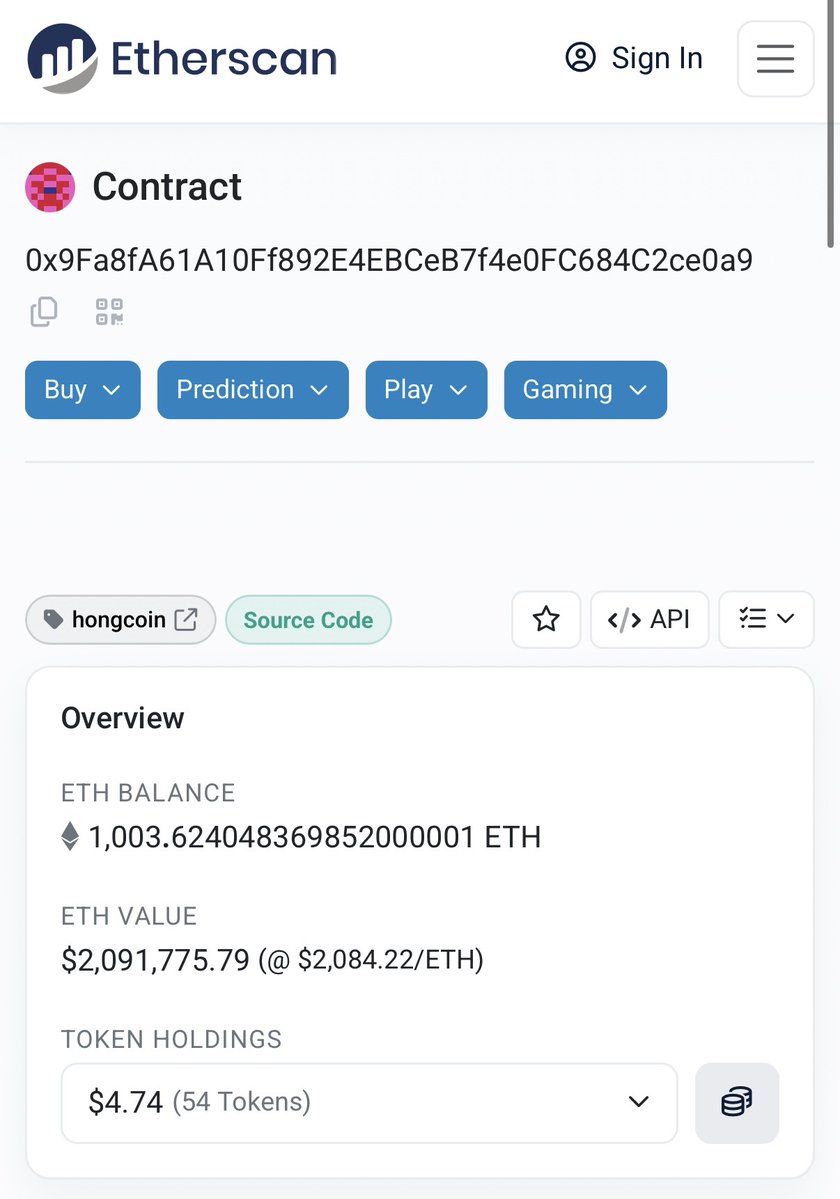
First white-hat exploit on Ethereum: I unlocked 1,003.62
Ξ ($2,000,000) trapped in a 2016 ICO smart contract
for 9 years.
The 48 original investors can now claim their funds.
@catalinmpit If you have access to a fixed ip address in another location; add it to the ssh exemption so you have a backup for if/when the vpn has an issue, so you’re not locked out.
I GOT THE DOMAIN! I FINALLY GOT IT!!!!!!!!!!1 🥳🎉
Paint.NET is now at https://t.co/ZJTUII4bVG!
Well, it will be just as soon as I push all the buttons to migrate content and set up redirects from getpaint.net etc. For now it's just a "hey go here" redirect page.
Someone took 9 months to set up the slowest crypto heist of the year. Today they finally started withdrawing. $7.3 MILLION across 1,400 BNB pools, most of them tied to dead 2021 memecoins.
> DxSale was the largest token launchpad on BNB Chain during the 2021 retail cycle.
> SafeMoon launched on it. ElonGate launched on it. Over 11,000 projects used it to mint tokens, raise capital, and lock their liquidity.
> Most of those projects are dead. The tokens are worthless. The Telegram groups are abandoned. But the locked liquidity stayed where it was, sitting in DxSale's legacy locker contracts, untouched for years.
> 269 days ago, someone transferred ownership of one of those legacy locker contracts to a new address. They didn't touch it, they just sat on it.
> This week the wallet started moving. Ownership was passed through additional addresses to obscure the trail.
A custom drainer contract was deployed. The drainer rewrote the lock settings, lowered the fees, and backdated the unlock timestamps to 1970, the start of Unix time itself.
> Once the contract thought every lock had already expired, the withdrawals began.
> $1.74 MILLION has already been pulled. Another $2.91 MILLION is still sitting in vulnerable positions. The total exposure across 1,400 pools is around $7.3 MILLION.
> DxSale has not made a public statement.
The 2021 cycle minted BILLIONAIRES, broke retail, and left behind a graveyard of contracts holding real money. Nobody has been counting what's still in them. Someone just started.
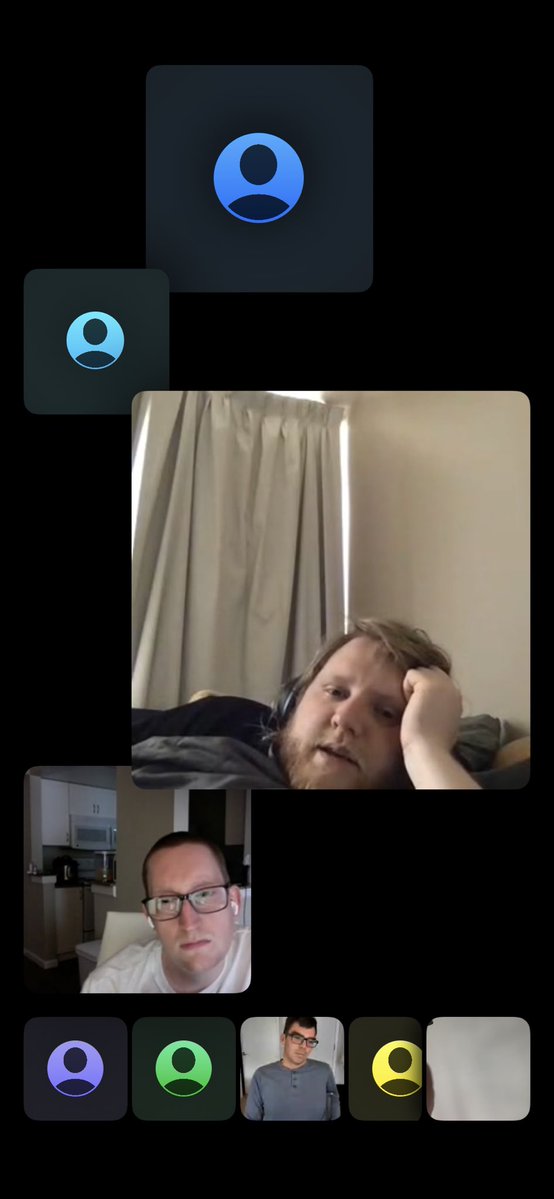
Fun fact. Apple did this to me in 2019 over a messages 0-click bug. So I did some magic and got myself added to their daily bug bounty standup call, which was just a FaceTime group call. I submitted another vuln with a screenshot of their call and got a threatening letter.
@hank_aibtc Everything that can be used for good, can also be used for evil. Run this on any data stream you can capture and never mis any PII ever again…
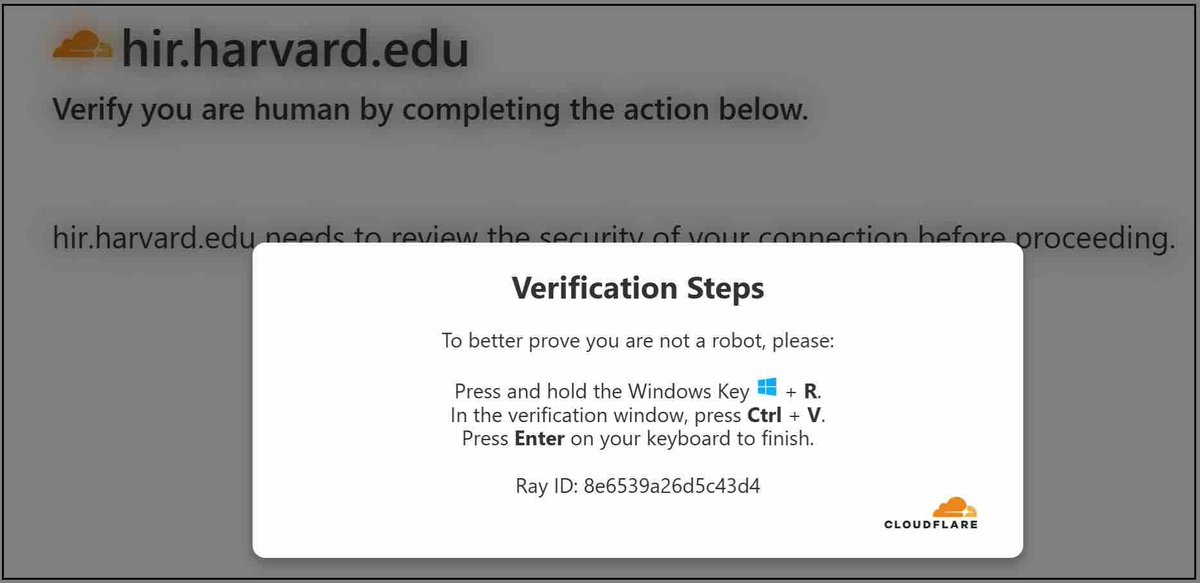
‼️🚨 Over 700 Ghost CMS sites, including Harvard, Oxford, and Auburn, were compromised through an unauthenticated SQL injection (CVE-2026-26980).
Attackers pulled Admin API Keys and turned every site into a ClickFix delivery vector via fake Cloudflare "verify you are human" pages. Patch was out February 19. Most never applied it.
@jelmerdeboer You shouldn’t use @stripe for SEPA direct debit the . The normal way to do this, is to get a signed mandate from the customer and proof of what you delivered under the agreement, and if you have done things by the book, the chargeback will be reverted. You CAN contest chargebacks
‼️🚨 Researcher "Nightmare-Eclipse" had their GitHub account flagged and wiped after publicly dropping zero-day PoCs targeting Microsoft products.
In a message, they accuse Microsoft of deleting the account they used to report bugs (with zero payout for past disclosures).
The signed message ends with a direct threat: "Mark this date July 14th, I will make sure your bones are shattered that day."






![P3b7_'s tweet photo. 👉For 4 years, 1 day, and 10 hours, anyone who understood the Orchard circuit could have minted ZEC out of thin air, silently, with no on-chain signature. The bug was disclosed this week. It was found by an AI-driven audit running Opus 4.8, not by an attacker.
1. Call the bug what it is
Two lines in halo2's variable-base scalar multiplication gadget used assign_advice() where copy_advice() was required. As a result, the diversified-address integrity check pk_d = [ivk]·g_d could be satisfied for arbitrary inputs. A malicious prover could spend the same note multiple times with different nullifiers, i.e. counterfeit ZEC inside the Orchard pool, undetectable on-chain because the privacy of the ZK proof hides exactly the inputs that would reveal the attack.
We do not know whether it was exploited. We will probably never know.
2. Four years. Multiple audits. Top-tier reviewers.
Orchard was reviewed by some of the strongest cryptographers in the field before activation. They missed it. Earlier automated audits with Opus 4.7 missed it. Opus 4.8 catches it in roughly 1 in 4 runs when prompted generically. The bug is hard.
And ZK inflation bugs are not new. Zcash itself shipped a counterfeiting vulnerability in Sprout (BCTV14) that survived years before being silently neutralized during Sapling. Similar soundness issues have appeared in circom, halo2, and rollup verifiers since. The pattern is consistent: when the protocol is private, exploitation is undetectable. You patch the bug and hope.
3. What Zcash did right
This was a textbook decentralized incident response:
▶️Audit: a full AI-assisted soundness audit of halo2 + Orchard, scoped end-to-end.
▶️Discover: the agent flagged the missing constraint and worked out the algebra to turn it into an exploit. A working RPC-level PoC in ~6 hours, mostly waiting on tokens.
▶️Coordinate: a soft fork disabling Orchard, prepared and distributed without leaking the bug, activated 2 days and 15 hours after acknowledgement. Coordinating a soft fork across miners, exchanges, and nodes without disclosing why is genuinely hard. They did it.
▶️Disclose: timeline, code lines, math, open questions. No spin.
Worth naming explicitly: Zcash's turnstile invariant caps the value that can ever leave a shielded pool by the value that entered it. Privacy and verifiability inside the same protocol. That is not an accident. That is good engineering, and it is what kept the worst case bounded.
4. The economics of security just changed
AI does not change whether bugs like this exist. It changes the cost of finding them. I wrote about this https://t.co/AeurraJXhB: a missing constraint in a 4-year-old production ZK circuit used to require a top-tier cryptographer with months of context. It now requires a few tokens, an API key, and a well-framed prompt.
The defender benefits. The attacker benefits more, they only need to find it once, and they never disclose.
Orchard is the optimistic version of this story: defense got there first. The pessimistic version is the one we cannot rule out, because the chain is private by design.
5. The only real exit
You do not patch your way out of this asymmetry. You raise the floor.
Formal verification of consensus-critical circuits, every assign_advice audited by SAT solvers and AI for under-constraint, as the reporter himself recommends. Proof-grade engineering that used to be too expensive is now cheap enough to be mandatory.
Hardware roots of trust, secure enclaves, certified secure elements, WYSIWYS. Cryptographic guarantees the user can actually verify, not promises a host can lie about.
Continuous AI-assisted audit of every consensus-critical commit, re-run immediately on the release of any new frontier model.
Zcash didn't just patch a bug. They demonstrated the new defensive playbook: AI-driven audits, decentralized coordination, radical transparency, verifiable invariants. That is the direction the rest of the industry needs to follow.
And those who don't raise the bar for security will be rekt in this new world.
Stay safe. Stay honest about your trust assumptions.](https://pbs.twimg.com/media/HKCPArbWMAAT2O-.png)