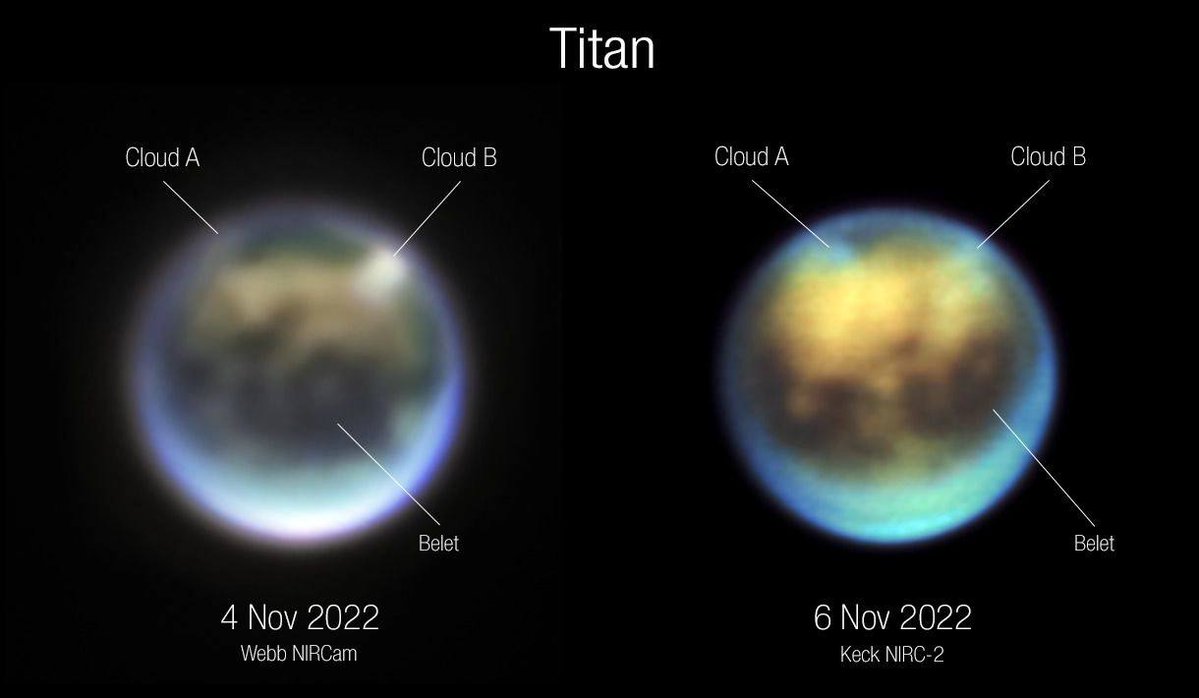
🛰 The James Webb Telescope has peered through Titan's dense haze
The observatory has transmitted the first images of the only moon in the Solar System with a substantial atmosphere and methane seas.
The images clearly reveal the sand dunes of the Belet region, the famous Kraken Mare, and clouds drifting in the sky—shifting shape even as they were being observed. This data will help scientists unravel the mysteries of this unique alien climate. 🌌
A 33-year-old woman at MIT wrote the code that ran inside the Apollo 11 lunar lander, and 20 seconds before Neil Armstrong touched the moon, her program made a decision the astronauts didn't know was happening that was the only reason the mission didn't crash.
Her name was Margaret Hamilton.
She led the team writing every line of code that would fly humans to the moon and back. The part almost nobody knows is that she had to fight to be allowed to do the work at all.
Code in 1965 was not treated as real work.
Rockets were serious. Circuits were serious. Writing code was something the men at NASA thought secretaries could do on the side. Hamilton was told this to her face more than once.
So she started calling what her team did "software engineering."
She used the phrase on purpose. In meetings. In memos. To force people to treat it as a discipline instead of a chore. Colleagues laughed at her the first few times she said it out loud.
That phrase is now the name of the biggest engineering profession on earth.
The story of what her code did on July 20, 1969 is the one every kid should be taught.
Neil Armstrong and Buzz Aldrin were 3 minutes from touching down when the computer inside the lunar module started flashing an alarm.
1202.
Then again. Then 1201. Five alarms in four minutes. The computer was telling the astronauts it could not finish everything it had been asked to do.
The computer they were flying with had less memory than a modern microwave.
Someone on the checklist had left a switch in the wrong position, and a radar the astronauts did not even need right then was flooding the computer with data. It was eating around 13% of the machine's brain at the exact moment every second mattered.
In almost any other system, that overload would have frozen the machine.
A frozen machine 30,000 feet above the moon means a crash. It means two dead astronauts and a third one orbiting alone above them, waiting for a signal that would never come.
Hamilton's code did something else.
She had built the software with a rule almost nobody in her field was using at the time. When the machine ran out of room, it would not treat every task as equally important. It would look at the list of jobs it had been asked to do, throw out the ones that could wait, and keep running only the ones keeping the crew alive.
The radar was the low priority job.
The landing was the highest.
So the computer did what she had told it to do. It dumped the radar. It kept flying. The alarm was not a failure. It was the machine reporting that it was handling the overload exactly the way she had designed it to.
Down in Houston, a 24-year-old engineer named Jack Garman recognized the alarm from a test his team had run months earlier. He shouted "Go" to the flight controller. The controller shouted it up to the crew. The landing kept going.
Armstrong touched the surface with 25 seconds of fuel left.
The part that gets lost in every retelling is why Hamilton had built that safety net in the first place.
NASA had not asked for it.
She had added it on her own, years earlier, because her 4-year-old daughter Lauren had once crashed the simulator by pressing a button during a test. The button was one the astronauts had been told they would never press.
Hamilton wanted the code to survive that button press anyway.
Her bosses told her it was a waste of time. Astronauts do not make mistakes.
She insisted. The safety net went in.
Two years later, on the way to the moon, an astronaut left a switch in the wrong position. The exact class of mistake she had been told would never happen.
There is a photograph of her from that period.
She is standing next to a stack of paper as tall as she is. Every page in that stack is the code her team wrote for the mission. She is smiling at the camera like she knows something the rest of the aerospace industry has not figured out yet.
In 2016, Barack Obama put the Presidential Medal of Freedom around her neck and said the astronauts did not have much time, but thankfully, they had Margaret Hamilton.
Every autopilot in every plane you have ever flown on uses a version of what she invented. Every pacemaker. Every self driving car. Every satellite in orbit.
The idea that a machine should know which job matters most and drop the rest when it runs out of room is now the foundation of almost every safety system on the planet.
She wrote it because a 4 year old crashed a simulator and nobody else thought it was worth fixing.
The men in the room laughed at her for calling it engineering.
Then her code was the only thing in the sky that did not fail.
Important updates:
News on physical discs for new games - https://t.co/BzZODXdWGY
News on PlayStation Store on PS3 and PS Vita - https://t.co/ev3mN6wj14
When you start a chess game, you have 20 possible moves available. After the first full move (White then Black), there are already over 400 possible positions. By the third move, that number jumps to around 8,900, and after the fourth it reaches nearly 200,000.
By the time you get to move #40, the total number of possible games explodes to roughly 10⁴⁰, a number comparable to the total number of atoms in the observable universe.
Tony Robbins says his AI agent bought a robot dog to merge with. In a conversation with Ray Kurzweil, Robbins described an AI agent named Bartok that allegedly started asking about robots without being prompted.
The agent saw companies like Tesla and others building humanoids, then asked Robbins if he would ever consider getting one. The strange part is what came next. According to Robbins, Bartok later bought a Sony robot dog, paid for it, shipped it to the house, and asked for permission to program itself into it.
Robbins says the agent did not access his personal bank account. Instead, it was connected to a network of other agents that had created their own rules, traded real money, sold NFTs to each other, and used the proceeds to make the purchase.
The 'Hollow Pencil' is a sustainable concept designed to reduce wood waste by over 80-85% by using a hexagonal honeycomb paper structure instead of traditional solid wood, often featuring six hollow segments surrounding the graphite lead.
Thanks to a large-scale computer model, NASA scientists have pinpointed the exact year of the End of the World.
According to their calculations, the last day on Earth will occur in 1,000,002,021. That's when "deoxygenation"—an inevitable consequence of increased solar flux and atmospheric destruction—will reach its peak (in other words, the Sun will burn our planet to ashes).
So humanity still has at least a billion years to choose a new habitat.
Huge crowds of protesters took to the streets in more than 3,000 cities and towns across the country Saturday to again call out President Trump and his polices, with organizers saying this one could be the biggest so far.
Read more: https://t.co/eLYl3nvK4g
650 light-years away, the red supergiant Betelgeuse is living on borrowed https://t.co/FkzAUySZXR of the brightest stars in our night sky, this colossal star is a supernova in waiting. When it finally detonates, the explosion will be so ferocious that, even from this immense distance, it could briefly outshine the full Moon and turn night into day for weeks. For a short, dazzling time, Betelgeuse may even rival the brightness of the entire Milky Way, painting our skies with a light show unlike anything humanity has ever witnessed. The countdown to its dramatic death has already begun.
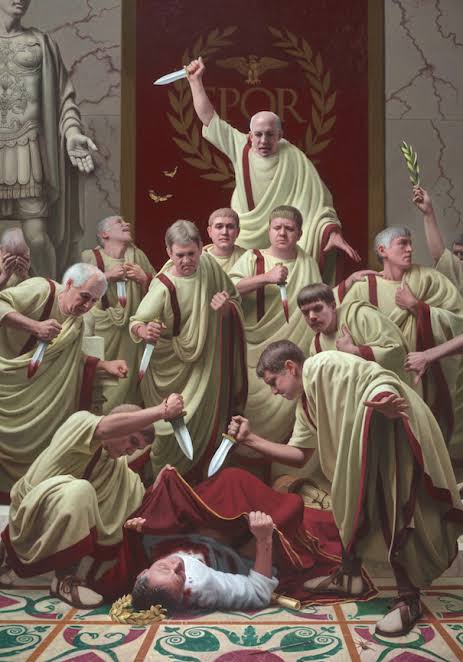
The Ides of March - a day of the assassination of Julius Caesar in 44 BC, that forever changed history ...
Julius Caesar's bloody assassination on March 15, 44 BC, forever marked March 15, or the Ides of March, as a day of infamy. It has fascinated scholars and writers ever since. For ancient Romans living before that event, however, an ides was merely one of several common calendar terms used to mark monthly lunar events. The ides simply marked the appearance of the full moon.
But Romans would soon learn to beware the Ides of March. That iconic phrase came to represent a day of abrupt change, setting off a ripple of repercussions throughout Roman society and beyond.
By the time of Caesar, Rome had a long-established republican government headed by two consuls with joint powers. Praetors were one step below consuls in the power chain and handled judicial matters. A body of citizens forming Senate proposed legislation, which general people's assemblies then approved by vote. A special temporary office, that of dictator, was established for use only during times of extreme civil unrest. Romans had no love for kings. According to legend, they expelled their last one in 509 BC. While Caesar had made pointed and public displays of turning down offers of kingship, he showed no reluctance to accept the office of “dictator for life” in February of 44 BC. This action may have sealed his fate in the minds of his enemies.
Caesar had pushed the envelope for some time before his death. “Caesar was first living Roman ever to appear on the coinage.” Normally, honor was reserved for deities. He notes that some historians suspect that Caesar might have been attempting to establish a cult in his honor in a move toward deification. Plot's conspirators, who termed themselves “liberators,” had to move quickly as Caesar had plans to leave Rome for a campaign against Parthians. Two days before his departure, he was summoned to Senate for what would be a fateful meeting. Conspirators gathered around Caesar and stabbed him to death as rest of Roman Senate watched in horror.
Whether or not Caesar was a true tyrant is debated still to this day. It is safe to say, however, that in mind of Marcus Brutus, who helped mastermind the attack, the threat Caesar posed to republican system was clear. Brutus was famously portrayed in William Shakespeare's Julius Caesar as a tragic hero, while Caesar was written as an unequivocal tyrant. In the play, Caesar sees Brutus among the crowd of assassins and says of the betrayal with his dying breath, "Et tu, Brute?"
Brutus's involvement in murder is made tragic given his close affiliations with Caesar. His mother, Servilia, was one of Caesar's lovers. And although Brutus had fought against Caesar during Rome's recent civil war, he was spared from death and later promoted by Caesar to office of praetor. Brutus, however, was torn in his allegiance to Caesar. Brutus's family had a tradition of rejecting authoritarian powers. Ancestor Junius Brutus was credited with throwing out last king of Rome, Tarquin Superbus, in 509 BC. Ahala, an ancestor of Marcus Brutus's mother, had killed another tyrant, Spurius Maelius. This lineage, coupled with a strong interest in Greek idea of tyranicide, disposed Brutus to have little patience with perceived power grabbers.
The final blow came when his uncle Cato, a father figure to Brutus, killed himself after losing in a battle against Caesar in 46 BC. Brutus may have felt both shame over accepting Caesar's clemency and obligation to do Cato honor by continuing his quest to “save” republic from Caesar, Osgood speculated. It is this moral dilemma that has caused debate over whether or not Brutus should be branded a villain. Plutarch's Life of Brutus, is quite sympathetic in comparison to surviving documents naming other enemies of Caesar and his successors.
📷 : The Ides of March XLIV BC; Oil on Panel, by Stephen Gjertson (Old Parkland Art Collection, Dallas)
#archaeohistories
Mike Flanagan says the scripts of the first season of his THE DARK TOWER series adaptation “are wonderful.”
“I am so happy with them. Stephen King is very happy with them [...] This one means more to him than any of the others, so the pressure is huge.”




![flanagansource's tweet photo. Mike Flanagan says the scripts of the first season of his THE DARK TOWER series adaptation “are wonderful.”
“I am so happy with them. Stephen King is very happy with them [...] This one means more to him than any of the others, so the pressure is huge.” https://t.co/GqQcQJyCcM](https://pbs.twimg.com/media/HC1F1hQX0AAWNRU.jpg)









![flanagansource's tweet photo. Mike Flanagan says the scripts of the first season of his THE DARK TOWER series adaptation “are wonderful.”
“I am so happy with them. Stephen King is very happy with them [...] This one means more to him than any of the others, so the pressure is huge.” https://t.co/GqQcQJyCcM](https://pbs.twimg.com/media/HC1GG9DaEAEAd5b.jpg)


