@stephenpollard@michaelgove By all means focus on and be critical of the way some schools are lead and their weaker standards, but don’t support the concept that Michael Gove’s adjustments between 2010 and 2014 have been impactful on improved outcomes. Disastrous more like.
@stephenpollard@michaelgove Credit those parents and carers of students at Michaela for their aspirations of securing a place in that excellent school. Such aspirations don’t exist in many, many families of most state schools. They are unconcerned about their child’s education….
@michaelgove Dear Michael. Your motives were honourable; however schools have been saddled with a curriculum that hasn’t suited large numbers of students. To compound this, Ofsted incorporated take up as a measure of success. Thank god this will now change. I’ll read your denial in The Times.
Are we as journalists, with our excitable coverage of politics, contributing to democratic instability and a crisis of governance? Yes, I would say….
https://t.co/zYU5HIEN22
Listen, if you’re tired of the diplomatic fluff and want someone to actually call out the chaos, you need to hear this. Claude Malhuret just went absolutely scorched-earth in the French Senate, and frankly, it’s a masterclass in truth-telling.
He doesn't hold back on the "madmen" wrecking the global order—slamming putin for his relentless, bloody ego-trip in Ukraine and dragging Trump’s new "circus" of a cabinet for treating foreign policy like a private piggy bank.
Malhuret is basically the only adult left in the room, cutting through the MAGA noise and the Kremlin’s lies with the kind of sharp, witty clarity we desperately need right now. It’s brutal, it’s honest, and it’s a total must-watch.
Speech by Claude Malhuret regarding the situation in the Near and Middle East:
"Mr. President, Mr. Prime Minister, ladies and gentlemen of the Cabinet, in February 2022, a dangerous madman drunk on grandeur lit a fuse in Ukraine that blew up a powder keg and disrupted the world order. The war was supposed to last a week. It is now entering its fifth year. In February 2026, another dangerous madman lit another fuse in the Near East that once again threatens international balance. Was that war also supposed to last a week? One month later, the whole world is asking: 'What is going to happen?' The simple, short, and precise answer is this: God only knows.
A year ago in this very place, I compared the Trump presidency to the court of Nero. I was wrong; it is a 'Court of Miracles.' An anti-vax former heroin addict as Secretary of Health; a climate skeptic as Secretary of Econology; an alcoholic TV host as Secretary of Defense; a former agent of Qatar as Attorney General; a putin groupie as National Security Advisor. A Turkish proverb says: 'When a clown moves into a palace, he doesn't become a king; the palace becomes a circus.'
This 'fine team' decided to create a competitor to the UN. Since his Peace Council has existed, Trump has launched more military strikes than Biden did during his entire term. Every time an internal scandal resurfaces, bombs explode somewhere in the world as a diversion. Bomb more to gain more. There isn't a country where Trump hasn't taken advantage of the situation to enrich himself, never forgetting his family: a private Boeing gifted by Qatar, investments in all Gulf projects or elsewhere, manipulation of stock market prices benefiting a few insiders. A single one of these conflicts of interest would have triggered an immediate impeachment procedure here, but we are not here—we are in MAGA America: the conduct of public affairs at the service of private interests.
After the customs duties, Greenland, the abandonment of Ukraine, the humiliation of allies, the ineffective back-and-forth in Venezuela and so many others, a new senseless adventure begins.
Let me be clearly understood: I am the last to complain about the decapitation of the Mullahs' regime and the first to demand freedom for the Iranian people. But what is the strategy to achieve it? And have the collateral damages, including for the Iranians, been measured? The answer is: there is no strategy, and collateral damages are written off as losses. Just as in January, when Trump called on Iranians to take to the streets, only to leave them to be massacred by the Basij.
After the pretext of an 'imminent' Iranian atomic bomb—contradicted by the Director of American Intelligence herself—and then the argument for regime change, it is Marco Rubio who finally let the cat out of the bag: we went in because we followed Netanyahu. In other words, we have no objective of our own. Trump ignored the warnings of the few who had the courage to tell him what would obviously happen: the blocking of the Strait of Hormuz, the extension of the war to the entire Near East, and finally the global repercussions.
1/3
@RoryStewartUK …and the saddest thing is that 25 yrs ago such a possibility would have appeared fanciful. Not only is this possible, it’s highly likely.
For the record, the president of the United States is now simultaneously claiming that he has won the war, is currently winning the war, needs help to win the war, and needs no help to win the war. All to destroy the nuclear program he claims to have already destroyed last year.
@prodnose Grasping at straws. B’burn have been awful all year. If this was typical Millwall it’s surprising that you are where you are. If it wasn’t, perhaps you deserved to lose to two good goals. Every fan at each Ch’ship club knows referees get it wrong in this league. Live with it.
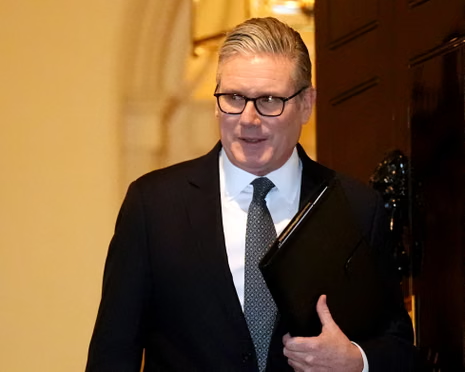
The level of personal hostility directed at Keir Starmer over the last week deserves scrutiny in its own right. Not because he should be immune from criticism, but because the tone and intensity of the attacks tell us something unhealthy about the state of democratic politics.
1. Starmer is a conventional political figure. Cautious, legalistic, incremental. He frustrates people precisely because he is managerial rather than messianic. Yet the reaction to him often goes far beyond disagreement, tipping into visceral hatred more commonly reserved for authoritarians or demagogues.
2. Much of this hostility is disconnected from concrete policy. It is not about specific votes, proposals or outcomes, but about projection. A belief that Starmer embodies betrayal, bad faith or hidden malice. That kind of politics runs on suspicion rather than evidence.
3. This matters because democracy depends on the assumption of good faith among opponents. You can think a leader is wrong, timid, or misguided without believing they are fundamentally illegitimate. Once politics becomes moralised to the point of demonisation, compromise is reframed as treachery and pluralism as weakness.
4. The pattern is familiar. In fragmented, polarised systems, anger concentrates not on extremists, whose intentions are clear, but on moderates, who disappoint maximalists on all sides. The centre becomes the lightning rod precisely because it resists totalising narratives.
5. There is also a media and online dynamic at work. Incentives reward outrage, not proportionality. Algorithms favour contempt over analysis. Over time, this creates a political culture in which relentless personal attack feels normal, even virtuous, rather than disgusting.
6. None of this is a defence of Starmer’s decisions, instincts or record. Those should be argued over robustly as you do in a democracy. The problem is the substitution of critique with hostility and the quiet erosion of democratic norms that follows when political opponents are treated as enemies rather than rivals.
7. A democracy cannot function if every election is framed as an existential struggle against internal evil. At some point, the target may change, but the damage to trust, restraint and culture remains.
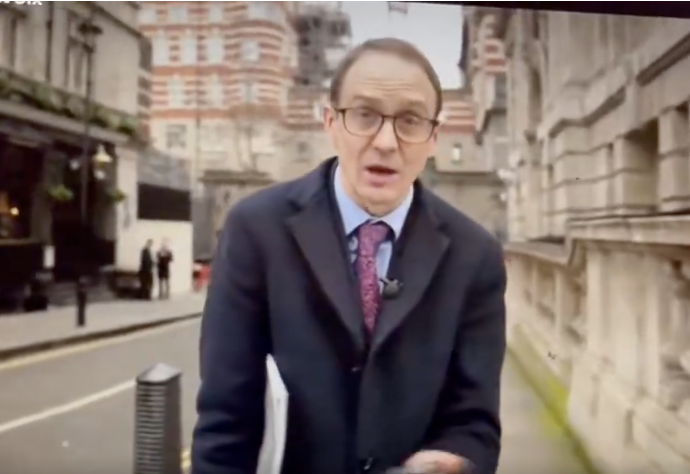
There is growing concern about the BBC’s political coverage and the way recent events have been reported.
Too often, reporting appears to rely on assumption, interpretation and anonymous briefing, presenting a picture that does not reflect the mood within the Labour Party or among voters. Commentary risks being treated as fact, and Westminster speculation has too often been given greater weight than the views of the wider membership and the electorate.
The Parliamentary Labour Party is not the Labour Party. MPs were elected under the Labour banner, on the party’s manifesto and under the leadership of Keir Starmer. The democratic mandate rests with the members and the voters, not simply with internal briefings and political gossip.
Over the weekend, the public pushed back strongly against the narrative being constructed. People challenged the claims, questioned the evidence and made it clear that they expect facts, attribution and balance, not speculation presented as reality.
The Cardiff University analysis, highlighting the disproportionate level of coverage given to Reform compared with its electoral weight, has added to concerns about balance and proportionality.
The BBC is funded by licence fee payers and carries a duty of strict impartiality. If reporting continues to rely on narrative framing rather than verifiable fact, public trust will continue to erode.
If you share these concerns, the appropriate response is to use the BBC’s formal complaints process and ask for transparency and review.
Make a complaint here:
https://t.co/NhT8Z3mW9F
Or write to:
Director General
BBC Broadcasting House
Portland Place
London
W1A 1AA
Public trust sustains the BBC. If enough people believe standards are slipping, their concerns should be formally heard.