🚨 JUST IN: KRA has officially changed the deadlines for filing annual tax returns in Kenya.
Millions of Kenyans will now have different filing dates depending on their tax status.
📌 New deadlines:
• Nil Returns (no taxable income): By January 31
• Salaried employees (PAYE only): By April 30. Most returns will be pre-filled on iTax - simply verify and submit.
• Businesses & taxpayers with other income (side hustles, consultancy, rental income, etc.): June 30 remains the deadline.
This replaces the old system, where almost everyone filed by June 30.
Please read, save, and share so your family and friends don't miss the new deadlines and end up paying unnecessary penalties. Adios.
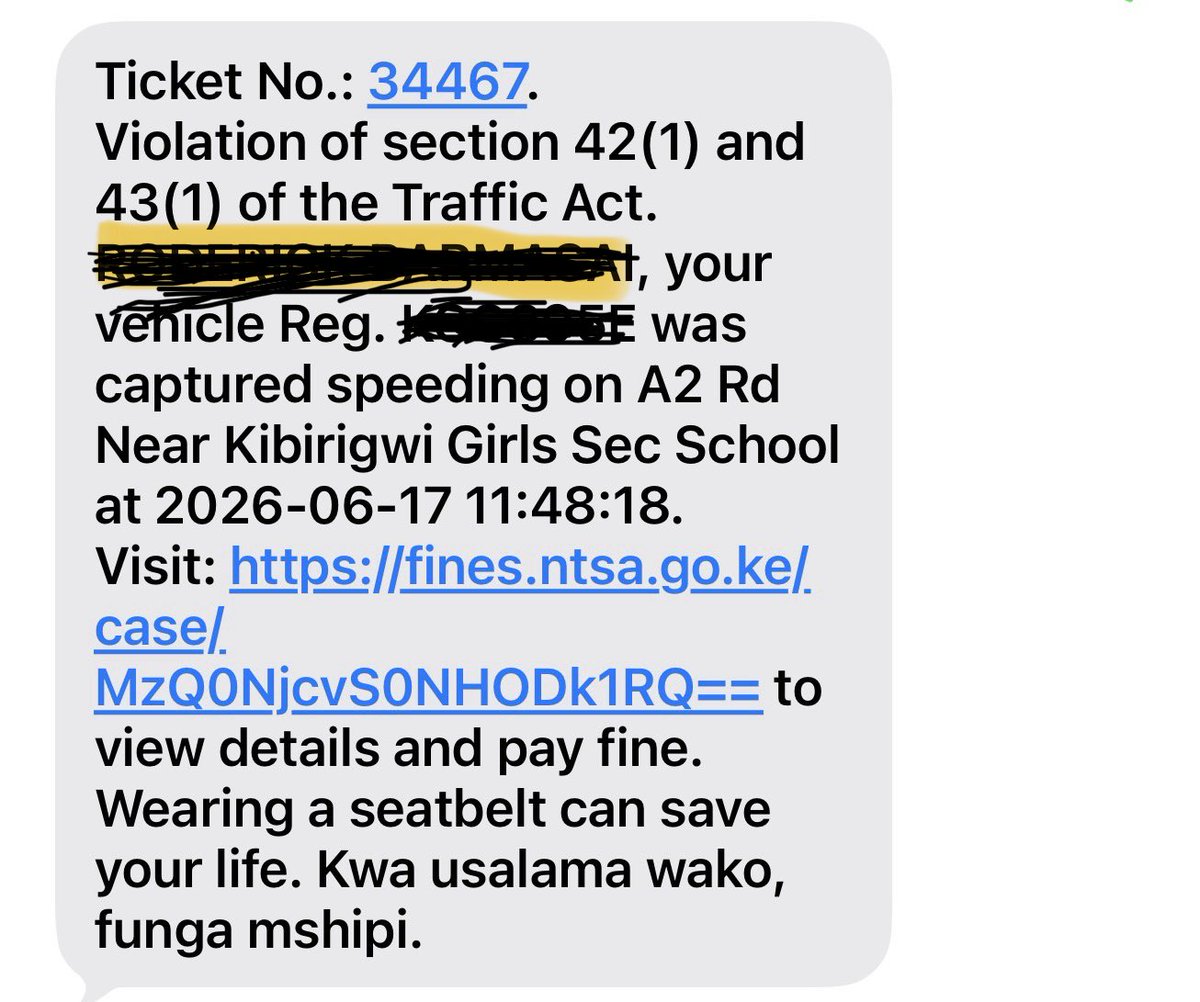
🚨 BREAKING: Kenyans are already being targeted by scammers exploiting the new NTSA traffic fines system.
We have come across another case, in addition to the one shared by lawyer Donald Kipkorir, and we've also identified what appears to be a security concern with how NTSA ticket links are generated.
A Kenyan reached out to us after receiving an SMS claiming their vehicle had been captured speeding. The message directed them to make payment through a link.
After clicking it, they were taken to what looked like the NTSA website. But if you look closely at the address bar, the domain is not NTSA's official website. Instead of ntsa . go .ke, it is a completely unrelated domain made up of random characters.
That is a classic phishing website designed to impersonate NTSA.
Then there is the case shared by lawyer Donald Kipkorir. According to his post, his son received a message about a KSh10,000 traffic fine, clicked the payment link and paid, only for the money to end up under another person's name instead of NTSA.
We have been looking into these cases, and here is what we have found.
One possible explanation is that scammers are harvesting vehicle registration numbers and phone numbers that are publicly available online, particularly from platforms used by ride-hailing drivers. They then send convincing fake traffic fine messages and direct victims to cloned NTSA payment pages.
We have also looked into the name that reportedly appeared during one payment. While we cannot conclude who is responsible, our preliminary checks suggest it may belong to a KCB agent. If true, it is possible that the fraudsters used an agent account as part of the money collection process. That is something investigators should verify.
We also noticed something else.
The NTSA ticket link shared in the Kipkorir case appears to use Base64 encoding. Decoding it revealed information such as the ticket number and vehicle registration.
Base64 is not encryption; it simply converts data into another format. If official NTSA links rely only on easily decoded or predictable identifiers without additional safeguards, that could increase the risk of scammers creating highly convincing fake messages. Whether that is an actual security flaw depends on how NTSA's systems validate requests, but it deserves urgent review.
One thing is already clear: scammers are exploiting the traffic fines rollout to target Kenyans.
If you are an Uber, Bolt or taxi driver, or anyone whose vehicle details may be publicly available, you should be extra cautious. Never assume an SMS is genuine simply because it mentions your registration number.
NTSA should urgently strengthen this system. One possible solution would be an official NTSA mobile app where users log in securely before viewing or paying fines.
Another would be allowing payments only through an official Paybill using the ticket number as the account reference, instead of asking people to follow links sent via SMS.
Please share this so more Kenyans don't become victims.
My kid-bro received a text message purportedly from @ntsa_kenya for overspending … As a dutiful citizen, he paid the fine to the account at @KCBInKenya given by NTSA .. The account is in the name of CATHERINE JERONO TOMNO …. The law doesn’t allow Government institutions to open bank accounts in the names of individuals. Is NTSA exempt?
You know this country can make you sick.
You are taxed for owning a vehicle.
You are taxed 40% for every litre of petrol.
You are taxed 16% for spare parts.
The same people taxing you, loot your taxes and refuse to maintain roads.
Then suddenly, they want to charge you for mandatory inspection.
Make it make sense.
Wakili Charles Mugane, finyaa!
KRA has graduated to your tax accountant,
Courtesy of the Finance Act, 2026.
• Starting in January 2027, it is KRA that shall FIRST tell you, what income it believes you earned in 2026. And what taxes you shall therefore pay.
KRA will do this by generating a pre populated income tax return using the information it already has, such as:
• eTIMS data
• PAYE records
• Withholding tax records
• Plus any other information already in KRA systems
KRA shall then send you this pre-populated return by 31st January 2027.
Once you receive it, you have 2 MONTHS (February and March), and 2 OPTIONS. To either:
• Confirm it. If it is correct. Or,
• Reject & amend it. If KRA got the numbers wrong. And provide your own numbers together with supporting documents.
- If you make your amendments late. Or,
- You do not make any amendments at all,
KRA shall conclude that you have agreed with its assessment, and you shall pay the KRA generated tax bill.
After that, you can use the amended or confirmed return to file your taxes as follows:
• If you are a human being, file by April 30th 2027.
• If you have no flesh & blood (company, partnership, trust, etc), file by June 30th.
(Or the last day of the sixth month after your accounting year ends.)
One more critical mistake to watch.
• Do not assume KRA's numbers are always correct. The law has expressly given you the right to accept or reject the pre-populated return before filing.
Lessons:
• Proper bookkeeping is King in 2026.
• Mark the new tax timelines in your calendar.
Now, reread this slowly.