I am giving a "Crash Course in Embryo Development" for the public (no science background needed! pitched around GCSE-level) in London on 21st May https://t.co/zwqkZsBRi8 We'll dip into development, with a splash of embryo models, and a pinch of ethics. And it's free (but book)!👍
Honoured to receive this recognition from @ISSCR with excellent colleagues - particularly since they noted the ethical advances which @NicolasRivron and I have tried to support in the growing SCBEM field alongside our research, showing the community’s value of ethical leadership
The ISSCR also recognizes five outstanding scientists with Honorable Mention distinctions for the 2026 Early Career Impact Award. The award is supported by the @ChenInstitute. https://t.co/RCcuoXJyet
Lovely little pre-Christmas present to see this out
@NatureCellBio ! Some 🔥 new results in here since the biorvix incl (1) a new RARE-GFP reporter ✳️🙌, (2) additional NMP quantification 🔢, (3) no neural tube patterning on RA inhibition 🙅 etc. Enjoy! 😍 https://t.co/CUHOGDv5I4
Do you have friends with questions about fertility? Egg freezing? Embryo research? IVF? Stem Cells? This Friday, the BBC are hosting a Question of Science and tickets are still available. PLUS you can submit a question to ask the panelists! 🎤 https://t.co/zwLdMQzRmR
🧫Looking for a PhD to start Autumn 2025? We're recruiting! 🧪
The project will focus on using #embryomodels to explore #development & could cover a range of specific questions. Please RT! 🙏
Apply via the portal, and get more details here: https://t.co/6IxF96Qp3K
This work was led by postdoc, Komal, and research scientist, Louise, @theCrick with the help of lots of others. The link to our biorxiv manuscript can be found here: https://t.co/ZmZNOItno2 Feedback welcome, thanks for reading! 🙏 (7/7)
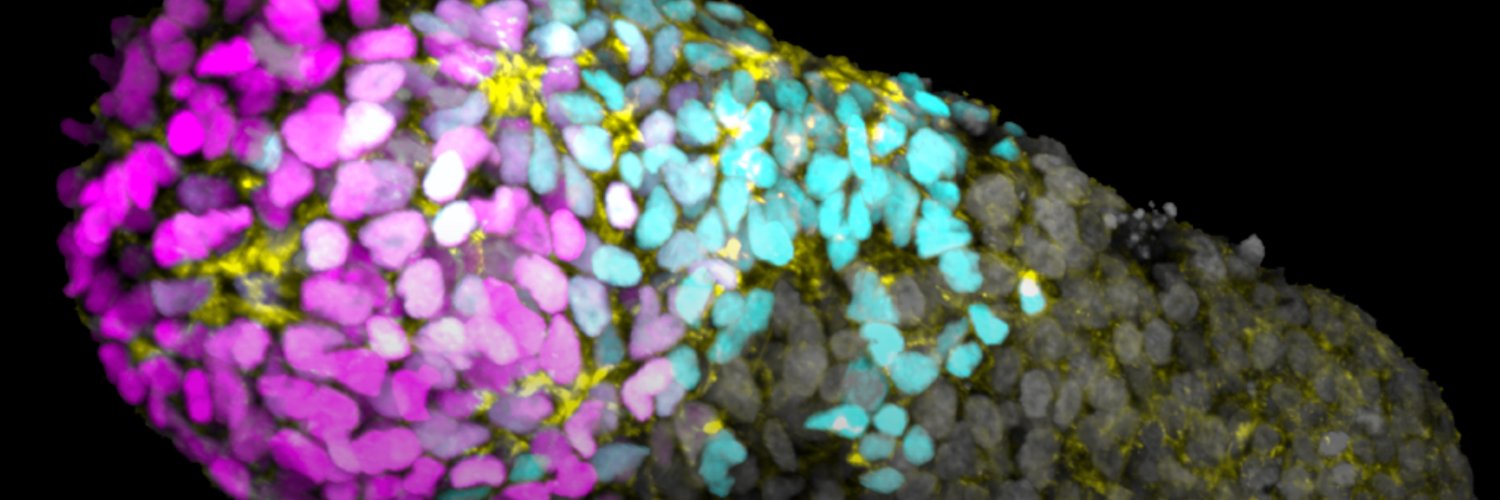
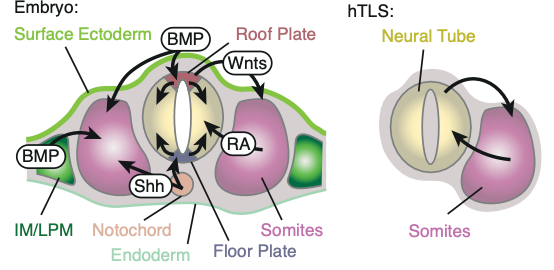
Have you ever wondered how your back formed? The human embryo makes a neural tube (future spinal cord) and somites (trunk muscle/bone) from ~d20. They’re formed at the same time and place, so we used human Trunk-like Structures (hTLS) to investigate their ‘co-development’… (1/7)
Thus, we found feedback in both directions, causing patterning important for organogenesis. The simple ‘modularity’ of hTLS that let us investigate in the presence/absence of certain tissues, could help us understand co-development, esp in a human context (6/7)
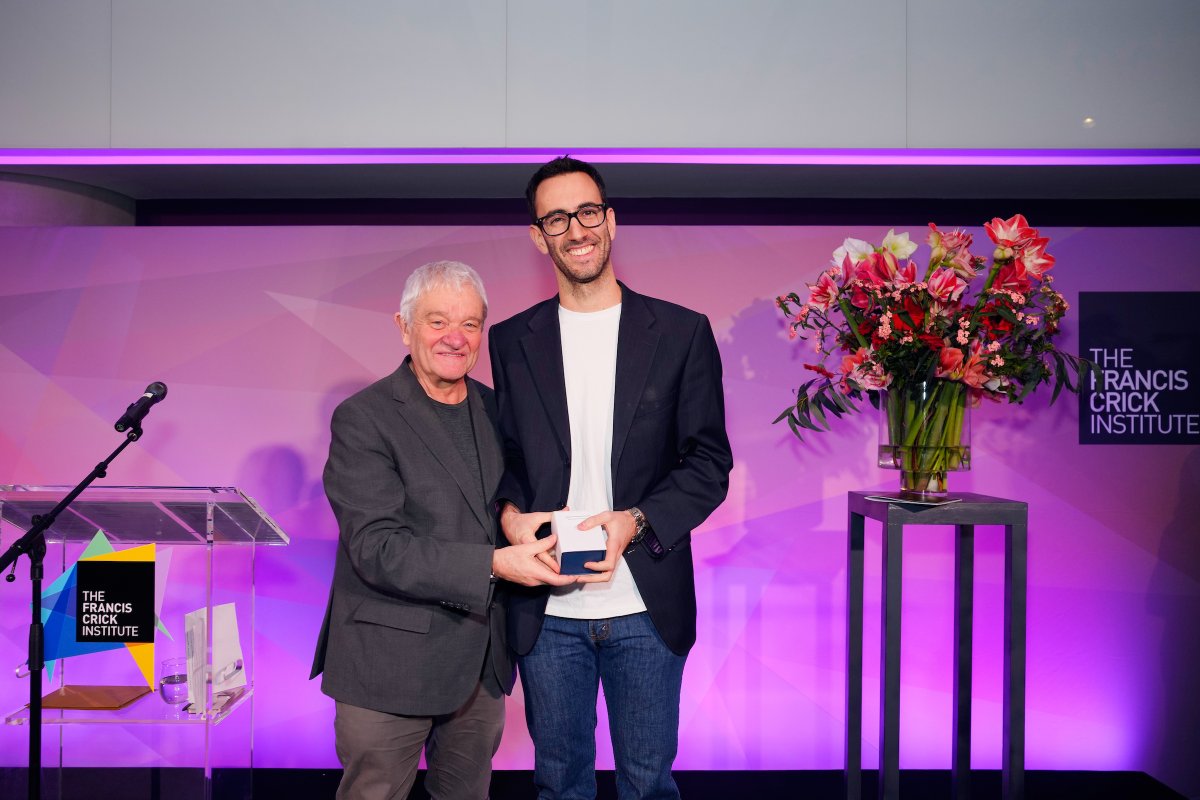
Incredibly proud of Jesús from the lab for this stellar achievement! ☺️ Doing good science is not just done with a pipette, it also involves engaging with the various contextual issues and the wider community as well
Very interesting, and important, set of recommendations from Nuffield. Suggests 'bespoke' regulation of embryo models (not just the same as for embryos), supports the Code of Practice for case-by-case evaluation, but also suggests a 'red line' limit...
We have published proposals to bolster governance of research using stem cell-based embryo models, including legislation to ensure that research doesn't cross ethical red lines.
Read our news story:🔗https://t.co/oBIJTAfoZw
#science#embryomodels#stemcells#makingethicsmatter
Models of human embryos are getting more realistic but still nowhere near the real thing. Ethicists and regulators are scrambling to keep up with advances in the field. Embryo models are “pretty much the hottest topic right now”, says Insoo Hyun. https://t.co/0giFzurqBq
1/2 A new UK Code of Practice has been developed to support #researchers working with stem cell-based #embryo models.📢
We will consider the Code of Practice within our review exploring the #ethical & regulatory issues raised by research in this area: https://t.co/lNYdsIpwr6 🔗
Today, the HFEA has issued a statement in response to Cambridge Reproduction’s newly unveiled SCBEM Code of Practice.
You can find our full statement here: https://t.co/PgwiSeDhMz
New UK voluntary Code of Practice published today, aiming to provide more clarity about how to evaluate stem cell-based embryo models.
See piece in the Guardian for a brief explainer https://t.co/PyfhDJNOid (and I learnt a new word too, thanks Sandy @PET_BioNews 😂) @Cam_Repro
💓🧠🦵 Is it beating heart muscles? The first flicker of brain activity? Budding limbs?
Scientists at @TheCrick are asking the public at a @RoyalSociety exhibition how far they feel artificial embryos made of stem cells should be allowed to develop:
https://t.co/ivhUAKkk3J