What is the deepest-living fish? Do all corals live in warm water? What is a mid-ocean ridge? NOAA’s @oceanexplorer Facts provide short answers to common ocean questions: https://t.co/hsXmMcrllQ #OceanMonthNOAA#STEM#TeacherResource Photo Credit: @oceanexplorer, Seascape Alaska
Teaching and learning about tides can be complicated. Our updated resource collection unpacks the complexity of tides into a digestible format that includes infographics, data & related education resources. https://t.co/jESkLOy3jW
#OceanMonthNOAA#STEM#Science#TeacherResource
Plan ahead! Knowing and following proven lightning safety guidelines can greatly reduce the risk of injury or death in a thunderstorm. Students and kids can learn to stay safe with Owlie Skywarn in their corner! https://t.co/NUNrfWJ3Dm
#LightningSafetyAwarenessWeek@NWS
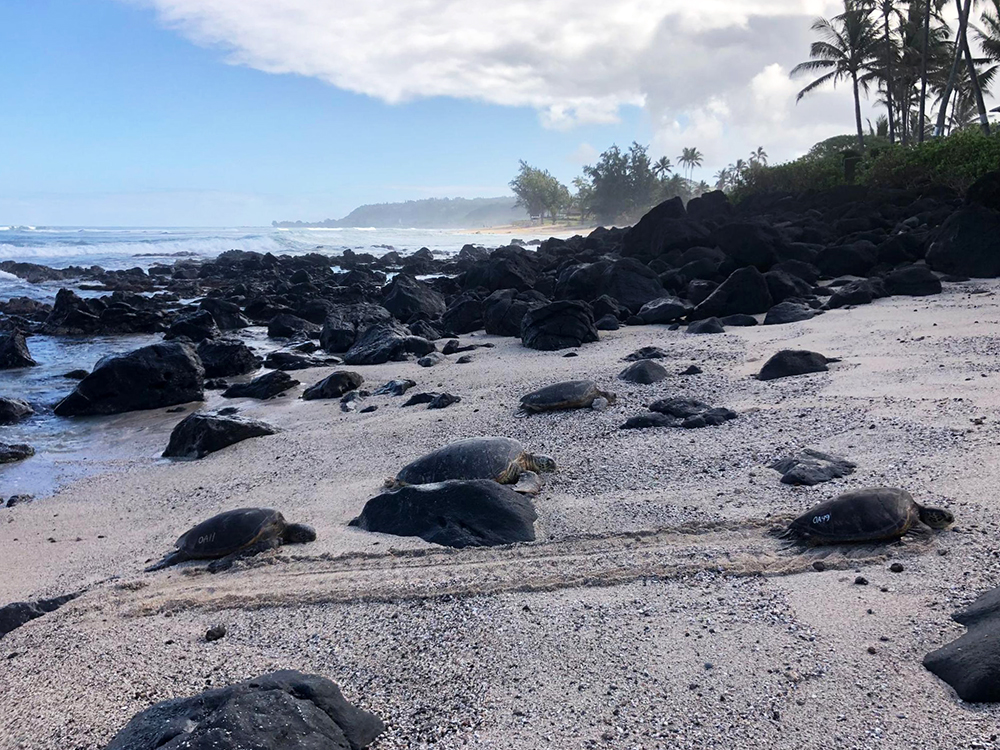
This #SeaTurtleWeek, help us track Hawaiian green sea turtles (honu)! Contribute to a valuable source of data for sea turtles in Hawai‘i. #CitizenScienceNOAA: https://t.co/HEU9iACVXf
📸 Credit: @NOAAFisheries/Camryn Allen
Why does the ocean have waves? What is a barrier island? What species live in the ocean? Get the facts with @noaaocean's Ocean Facts — a perfect daily starter activity for the classroom! https://t.co/A6sYomRn88
#OceanMonthNOAA#STEM#Science#TeacherResource
Our sea turtle resource collection will help you explore the biology and adaptations of sea turtles. Activities include lessons on habitat, turtle interaction etiquette & tracking sea turtles—perfect for #SeaTurtleWeek! https://t.co/atNzl3o6AE 📸credit: @NOAAFisheries/Ali Bayless
Experience @sanctuaries' underwater treasures through virtual reality! Sanctuaries 360° is a collection of immersive virtual dives created to visit these places without getting wet. https://t.co/NnO1u8R8Xd. Credit: Florida Keys NMS.
#OceanMonthNOAA#STEM#Science#TeacherResource
It’s #NationalFishingandBoatingWeek! This podcast episode from @NOAAFisheries, “Teaching Kids to Fish and Love the Water,” shares a pilot project from 2024 that gets students and volunteers involved in fishing and crabbing: https://t.co/ncgq9QnpUL
A team of scientists conducting habitat surveys in @NOAA_CINMS recently made an exciting discovery: a live white abalone.
Read more about this rare sighting in our latest #NoteFromTheField: https://t.co/KFWGrp1nuj.
📸: Athena Maguire/CDFW
This #WorldOceanDay, check out our resource collections we’ve paired with each of the 7 ocean literacy principles which help us teach and learn about our connection to the ocean. https://t.co/Iw5F0HNdA9 #OceanMonthNOAA#STEM#Science#TeacherResource
@NOAA is celebrating the ocean and its countless resources that inspire us, nourish us, and benefit our local economies. Celebrate the ocean with us this month as we share engaging content using #OceanMonthNOAA! https://t.co/U3D6dn1eLH
With @NOAAOceanToday videos, students can watch, explore, and discover our amazing ocean! Videos are short, scientifically-vetted, and organized into collections to help educators. https://t.co/SbNxxaIpK6
#OceanMonthNOAA#STEM#Science#TeacherResource
🐞It’s International Nature Journaling Week! NCEI has some great ideas for how you can enjoy nature while becoming a citizen scientist. For more information on citizen science, visit this link here: https://t.co/AbXTXLmo9y
#NCEI#NOAA#CitizenScience
.@NOAA experts say the record-breaking fourth global #CoralBleaching event likely ended in mid-2025 after heat stress impacted 84% of the world’s #CoralReef areas. Scientists are now studying reefs that showed signs of resilience despite the extreme heat exposure.
Although this event appears to have subsided, global heat stress still persists as ocean temperatures remain unusually warm. NOAA is forecasting continued bleaching risks for this summer and fall in the Northern Hemisphere.
Learn more: https://t.co/45rhl3GO7U
#OceanMonth @NOAACoral@CoralReefWatch
On Saturday, May 30, the Geostationary Lightning Mapper (#GLM) on board @NOAA's #GOESEast (#GOES19) 🛰️ detected a bright flash near Massachusetts.
But this wasn't lightning—it was a bolide, a bright meteor that exploded in Earth's atmosphere. Residents throughout the region reported hearing a loud boom as it streaked overhead.
🌀 June 1 is the first day of Atlantic hurricane season! Get ready with IBTrACS, a complete dataset consisting of historical and recent tropical cyclone statistics. Access IBTrACS and learn more here: https://t.co/CYgKWXLBVC
Today is the start of the 2026 Atlantic Hurricane Season🌀
@NOAA is working with technology partners to gather data from the most dangerous part of hurricanes where crewed aircraft & ships can not safely go.
Learn more: https://t.co/XwKMnOezla #HurricaneSeason
Join @marinesanctuary at #CHOW2026 to launch bold breakthroughs, ignite discovery & secure waters for all! CHOW returns for its 25th year from June 2-4 to showcase the cutting-edge advancements & emerging leaders shaping the future of ocean stewardship. https://t.co/ArPPQNPn5f