I love watching this series and this is what you get when you have bright innovative minds at work!!!!
The way the song changed when Peter Obi stepped in eh, I just shouted “Okwute!!!!!!”
May the Lord bless your day with peace, guide your steps with wisdom, and crown your efforts with success. May He protect you from every harm, grant you favour in unexpected places and fill your heart with joy.
A beautiful and unexpected moment as Pope Leo XIV entered Peruvian airspace!
Knowing that the Pope was in the cockpit with the pilots, an air traffic controller radioed the plane with a heartfelt message:
“Blessed is he who comes in the name of the Lord. Welcome home, Pope Leo XIV!”
But what she probably never expected was for the Pope himself to pick up the microphone and respond!
“I am Pope Leo, and I want to express my gratitude to all the aviation workers in Lima and throughout the country. I am very happy to return to Peru!”
Credit: Colm Flynn
THE PRIEST'S SILENT PRAYERS AT MASS
If you have seated closer to the altar during the celebration of the Mass, you must have noticed that the priest says some prayers quietly (or in a low tone) at different points in time during mass. These are called the silent prayers of the priest. There are eleven of such prayers that are more like private prayers for only the priest to pray during mass and they all have profound meanings.
1. Before Proclaiming the Gospel
When a deacon is not present, the priest will bow before the altar, quietly praying: Cleanse my heart and lips, almighty God, that I may worthily proclaim the Gospel. After this, the priest proceeds to the pulpit to proclaim the Gospel.
2. After Proclaiming the Gospel
At the end of the Gospel, the priest kisses the book of the Gospel, saying quietly: Through the words of the Gospel, may our sins be wiped away.
3. Holding the Paten with the Bread
The priest holding the paten with bread, slightly raised, says is a low voice: Blessed are you, Lord God of all creation, for through your goodness we have received the bread we offer you; fruit of the earth and work of human hands, it will become for us the bread of life. In case the offertory chant is not sung, the priest does say these words aloud and the people respond: Blessed be God for ever.
4. As the Priest Pours Wine and Little Water in the Chalice
During the offertory, the priest pours wine and little water in the chalice. While doing this sacred action, the priest or the deacon silently says: By the mystery of this water and wine may we come to share in the divinity of Christ who humbled himself to share in our humanity.
5. Holding the Chalice with Wine
The priest raising the chalice with wine offers this prayer: Blessed are you, Lord God of all creation, for through your goodness we have received the wine we offer you; fruit of the vine and work of human hands, it will become our spiritual drink. Again, if the offertory chant is not sung, the priest can say the prayer aloud.
6. Before Washing his Hands
After bread and wine are prepared, and before washing the hands, the priest, bowing profoundly, prays: With humble spirit and contrite heart may we be accepted by you, O Lord, and may our sacrifice in your sight this day be pleasing to you, Lord God.
7. As the Priest Washes his Hands
The priest standing side of the altar washes his hands, saying quietly: Wash me, O Lord, from my iniquity and cleanse me from my sin. (My altar servers do hear me say this particular prayer).
8. After the Sign of Peace
As the priest finishes the sign of the peace, he takes the host, breaks it over the paten, and drops a small piece of it in the chalice, saying: May this mingling of the Body and Blood of our Lord Jesus Christ bring eternal life to us who receive it.
9. After the Invocation of Lamb of God
The priest will join hands and say quietly: Lord Jesus Christ, Son of the living God, who, by the will of the Father and the work of the Holy Spirit, through your Death gave life to the world, free me by this, your most holy Body and Blood, from all my sins and from every evil; keep me always faithful to your commandments and never let me be parted from you.
OR
May the receiving of your Body and Blood, Lord Jesus Christ, not bring me to judgment and condemnation, but through your loving mercy be for me protection in mind and body and a healing remedy.
10. Priest Before Consuming the Body and Blood of Christ
Before consuming the Body of Christ, the priest says silently: May the Body of Christ keep me safe for eternal life. Similarly, before drinking the Blood of Christ, the priest will say: May the Blood of Christ keep me safe for eternal life.
11. As the Priest Purifies the Sacred Vessels
The priest carries out the purification, quietly saying: What has passed our lips as food, O Lord, may we possess in purity of heart that what has been given to us in time may be our healing for eternity.
Fr. Ugochukwu Ugwoke, ISch
RE: SENATOR ROCHAS OKOROCHA’S REMARKS ON PETER OBI’S SINGLE-TERM COVENANT
We have reviewed Senator Rochas Okorocha’s comments on Channels Television’s Politics Today.
We accept his description of Peter Obi as “a fantastic gentleman; clear in his head.” On the claim that a single term is “a four-year gambling,” we respectfully disagree.
Section 135(2) of the 1999 Constitution provides that a President shall leave office after four years and may seek a further four years. In law, “may” is permissive, not mandatory. A single term is therefore constitutional. It is not a gamble.
Nigeria already tested an eight-year tenure between 2015 and 2023. The result was rising inflation, a weakened naira, soaring public debt, widespread poverty, and insecurity across the country. That is the real balance sheet of prolonged tenure without performance.
Peter Obi’s offer is a performance bond, not a gamble. He has pledged to serve one term, to be judged strictly by results, and to hand over power in 2031 in recognition that it is the turn of the North. This is sacrifice for national stability.
Leadership is measured by impact, not duration. Nigeria’s problem has never been insufficient time. It has been the repeated failure to use time well. Mr. Obi proposes to reverse that culture: one term dedicated entirely to delivery.
When a man entitled to eight years voluntarily chooses four and invites the nation to judge him by results, he is not gambling. He is sacrificing.
This is not a gamble. It is a rescue mission with a deadline.
Signed,
Mallam Ibrahim Hussain Abdulkarim
Director-General
National Campaign Council
Nigeria Democratic Congress (NDC)
#VoteNDC
#NigeriaWillBeOK
"I HAVE NO APOLOGY."
In 2001, retired Major-General Ibrahim Haruna appeared before the Oputa Panel and was questioned by Chief Anthony Mogbo, SAN, counsel for Ohanaeze Ndigbo, about the 1967 Asaba m@ss@cre.
Haruna’s response became one of the most controversial moments of the testimony.
Listen to the exchange yourself.
Creyeron haber desterrado la Fe Católica de Francia🇫🇷, se burlaron de la Última Cena de Jesús en los Juegos Olímpicos, sin embargo la Francia Católica salió a reclamar su sitio en la historia, la hija mayor de la Iglesia regresa a casa!
#VivaCristoRey#Jornada#PapaLeónXIV#Fe
#WatchThis if you want to get an idea of the real issues in the matter concerning #Nigeria's current president & the drug trafficking issues in the USA.
"The richest man of God in Nigeria is a Roman Catholic priest, Rev. Fr. Emmanuel Edeh. But you will never know. His net worth is believed to be about $500 million. He took the oath of poverty, meaning that everything he owns does not belong to him but to the Roman Catholic Church. Many pastors today want to live like Solomon but exercise the power of Elijah- you are confused. How can we disconnect your pursuit of mammon from the pursuit of Jesus?”
— Rev. Isaac Omolehin
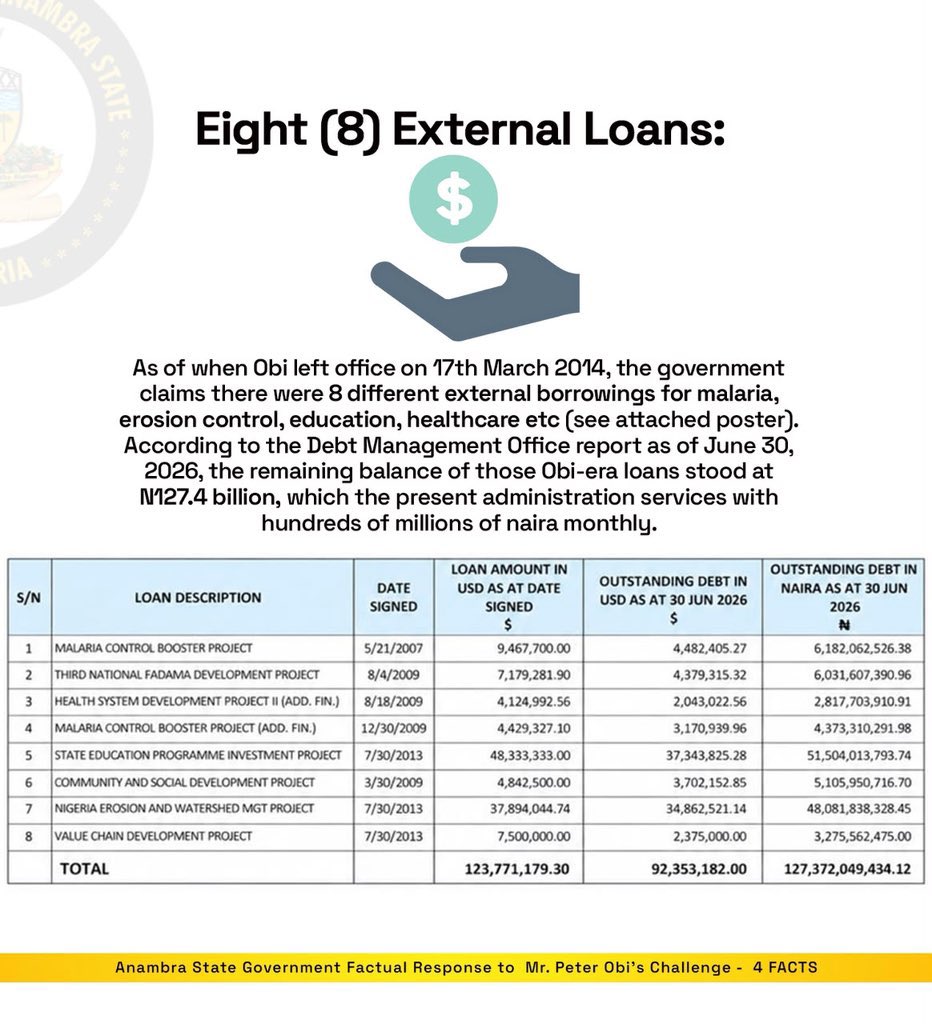
As the incumbent SSG of Anambra under @PeterObi at the time he left office on 17 March, 2014, I had the honour of personally being present when Peter Obi signed the attached handover letter. I was also present, when Gov. Willie Obiano received and signed an acknowledgement for his own copy of the letter, complete with the annexed certified bank statements, related documents and the Handover Report. The letter listed assets and liabilities - in black and red.
During the nationally televised Anambra 2017 governorhip debate on Sunday 12, November, 2017, organized by Channels Television, Gov. Willie Obiano asserted surprisingly that there were no funds left by the Obi Administration. I recall asking him on national television, how as a certified accountant and auditor he would sign off and accept financial documents, for which he now was expressing reservations. He then publicly acknowleged for the first time that some specified funds were in place and asked what was the use of saving money, when there was work to be done. As Gov. Darius Ishaku of Taraba would later confirm to members of the Nigerian press corps, Gov. Obiano had disclosed to him that his predecessor (Gov. Obi) had indeed left huge sums, which enabled him to independently build the Anambra Airport at Umueri.
If Gov. Obiano to whom Peter Obi handed over to in 2014 would eventually acknowledge -implicitly and explicitly - that Gov. Peter Obi indeed left the stipulated funds; a fact that was also publicly corroborated by Gov. Alex Otti, in his capacity as an ex- banker, what then, one may ask, is the beef and grouse of the incumbent Anambra State Government?
Go Figure!
It's either the Anambra State Government does not understand public finance, or they are being mischievous.
Let me attempt to explain this with simple examples.
1. Your father, the FGN, borrows $100 from the World Bank and gives it to you. You must pay it back in 10 years; you need to repay $10 each year.
2. You take N100,000 from your savings, add it to the $100, and start a school.
3. You are to retire in 5 years. You have paid back $50; you still owe $50. You can't prepay the World Bank loan in advance, so you take the remaining $50 and deposit it in a bank to repay the World Bank $10 each year.
4. That $50 in the commercial bank repays the outstanding $50 loan and earns interest income for the new State government. In terms of net worth, the State is richer because the loan's APR (interest paid) is fixed, but the APY (interest earned) allowed the State to earn net interest income.
5. The Anambra State government is quick to point out it is still repaying $50, but the funds to do so are left in a commercial bank account earning interest for the State.
The State did not have to incur any new cost or raise new taxes to settle this $50 debt.
Remember Peter Obi also saved in USD, meaning that there was no devaluation risk.
If anything, the question is: what did the State do with the interest income on the $50 in the commercial bank? What about the devaluation surplus from holding $?
This is a non-issue.
Please fact check this @grok
State if the loans were multilateral
State the borrower
State the disbursement dates
State the DMO verified figure for external and local debts when obi handed over.
Debunking the Phantom Debts and Ecological Loan Fallacy
My attention has been drawn to trending claims by the Anambra State Government that my administration left behind inherited debts, including a ₦2 billion ecological loan, contractor liabilities, and unpaid salaries, gratuities, and pensions. This is completely false.
We systematically liquidated historical gratuities and arrears dating back several years, amounting to over ₦35 billion. At the point of handover, the state owed nothing in salaries, gratuities, or pensions, nor did we owe anything to any contractor for projects duly executed and certified.
The ₦2 billion ecological fund in question was released barely three months before the end of my tenure for the Oko/Umuchiana erosion crisis. Despite pressure to spend the money, I refused, insisting that it should be left for my successor because government is a continuum and the funds were tied to a specific project.
The money was therefore left 100 per cent intact in First Bank, in Account No. 2018779464, with a balance of over ₦2.13 billion.
It is important to stress that funds tied to specific projects or set aside for particular purposes were not even included in the over ₦75 billion in savings we left behind.
If anybody can establish anything to the contrary, I will stop campaigning. -PO
The recent report that 97% of assessed Primary Healthcare Centres across 16 states failed to meet the national staffing standard is not merely a statistic; it can be extrapolated nationwide, where about 80% of PHCs are not functioning. It reflects a serious risk.
Health is the primary measure of development in any nation and forms the foundation of healthcare. A country cannot build a healthy, productive population if its Primary Healthcare Centres lack the necessary staff to care for the people.
Behind every understaffed PHC is a pregnant woman who might not receive timely care, and a child who could die from a preventable illness. That is why Nigeria is currently classified among the most challenging and poorest places to be born and to live.
Healthcare should not be a privilege reserved for the wealthy. It is a basic responsibility of government. Progress is not best measured by flyovers, new bus stops, or airports that are rarely used. Instead, we should measure it by the number of lives saved, the number of operational health centres, the availability of qualified health workers, and the quality of care provided to ordinary Nigerians.
We cannot create a New Nigeria while allowing our people to die from issues that a functioning Primary Healthcare system should prevent. Our priorities must be clear: invest in our people, strengthen Primary Healthcare, recruit and retain essential health workers, and ensure every Nigerian, regardless of location or income, has access to quality, affordable healthcare.
A New Nigeria is POssible. -PO
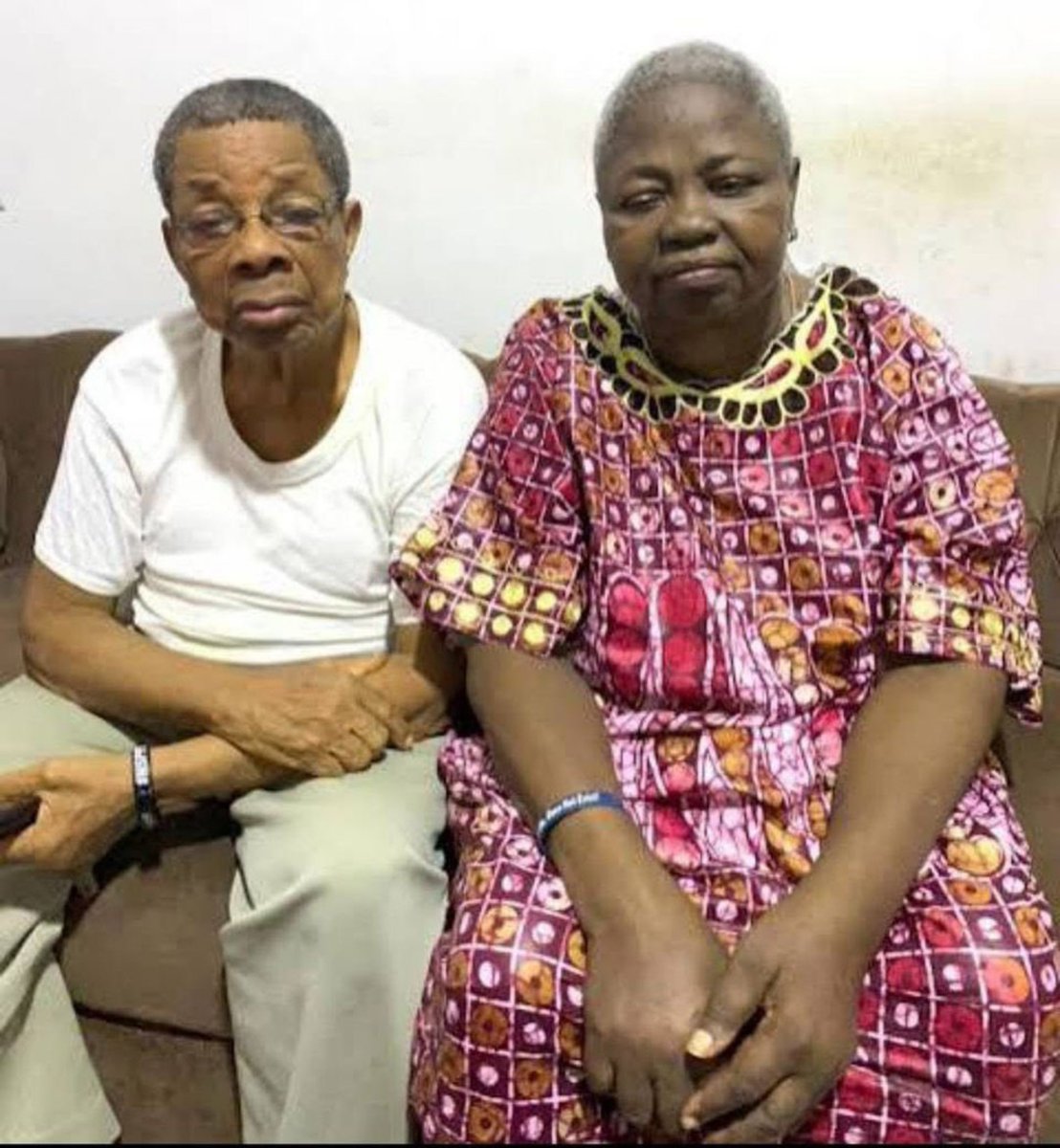
The Forgotten Igbo Hero of the Liberian Civil War. 🇳🇬
During the Liberian Civil War (1989–1990), a wealthy Igbo businessman, Emmanuel Chukwu, risked everything to save over 1,000 Nigerians trapped in Monrovia.
Using his two cargo ships and personal wealth, he organized their evacuation amid bullets, chaos and violence.
At one point, he gave up his brand-new Mercedes to help secure the release of captured Nigerians.
His heroism came at a devastating cost. His businesses were looted, his assets worth about $89.4 million were lost, and his younger brother was killed.
After saving more than 1,000 Nigerians, Emmanuel Chukwu returned to Nigeria with reportedly only about $600 left.
Despite promises of assistance and recognition from the Nigerian government at the time, he remained largely unrecognized.
The wealthy man who risked his fortune, sacrificed his possessions and lost his brother to save Nigerian lives came back home to live in silence and struggle.
A man who saved more than 1,000 Nigerians should not be forgotten. 🇳🇬💔