今年は今まで以上にインバウンド客が増えた1年でした。
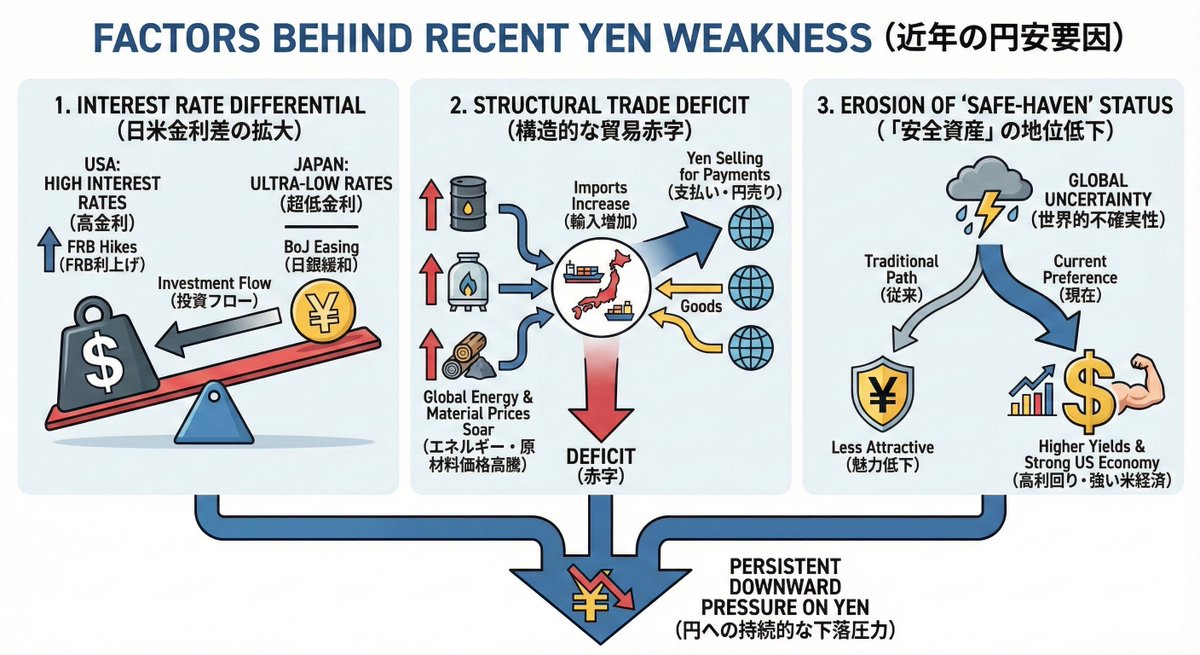
その一つの要因として円安があると思いますが、なぜ円安が進んでいるのかを英語で表現してみました。
少し長いですが、こうした表現もスラスラ話せるようになりたいですね!
---
The recent yen depreciation is primarily driven by the expanding interest rate differential between Japan and the United States. While the U.S. Federal Reserve raised rates aggressively to curb inflation, the Bank of Japan’s commitment to ultra-easy policy made the yen less attractive to investors.
This trend has been further exacerbated by Japan’s structural trade deficit, as soaring global energy and raw material prices forced Japanese importers to sell large amounts of yen to settle payments. Furthermore, the yen has partially lost its status as a "safe-haven currency"; instead of buying yen during global uncertainty, investors have favored the dollar due to its higher yields and the U.S. economy's resilience. These combined fiscal and market pressures have kept the yen under consistent downward pressure.
(近年の円安は、主に日本と米国の間に生じた金利差の拡大によって引き起こされています。米連邦準備制度(FRB)がインフレ抑制のために積極的な利上げを行う一方で、日本銀行が超大規模な緩和政策を維持したため、投資家にとって円の魅力が低下しました。
この傾向は、日本の構造的な貿易赤字によってさらに悪化しました。世界的なエネルギーや原材料価格の高騰により、国内の輸入業者が支払いのために多額の円を売らざるを得なくなったためです。さらに、円は「安全な資産」と��ての地位を一部失いつつあります。世界情勢が不安定な際にも、利回りの高さと米国経済の強さを背景に、投資家は円よりもドルを好むようになりました。これらの金利、貿易、市場心理といった複合的な要因が、円への持続的な下落圧力となっています。)
今週は来年度の予算案がまとまりましたね。
税収も過去最高ということで、改めてインフレの定着を感じます。
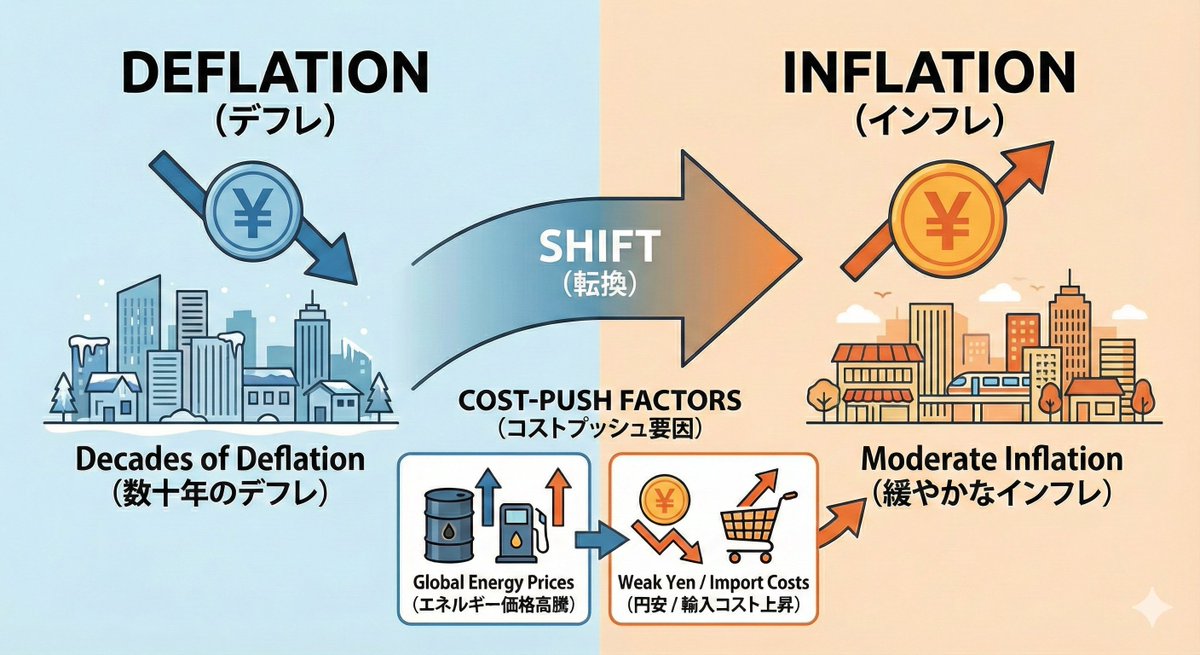
近��のインフレについて英語で説明してみました↓↓
---
Japan has experienced a significant shift from decades of deflation to moderate inflation in recent years. This change was initially triggered by cost-push factors, such as rising global energy prices and a weak yen, which increased the cost of imports.
(日本は近年、数十年にわたるデフレから緩やかなインフレへと大きな転換を迎えました。この変化は当初、世界的なエネルギー価格の高騰や円安��よる輸入コストの上昇といった、コストプッシュ要因によって引き起こされました。)