IMO it's like any kind of workflow/pipeline. The first high level signals you want to capture are:
- Reliability: How often does this fail ?
- Duration: How long does it take ?
- Cost: How much does a run cost ?
Then you can deep dive into what causes each of them. Traces and logs.
AI made code cheap.
So what’s actually valuable now?
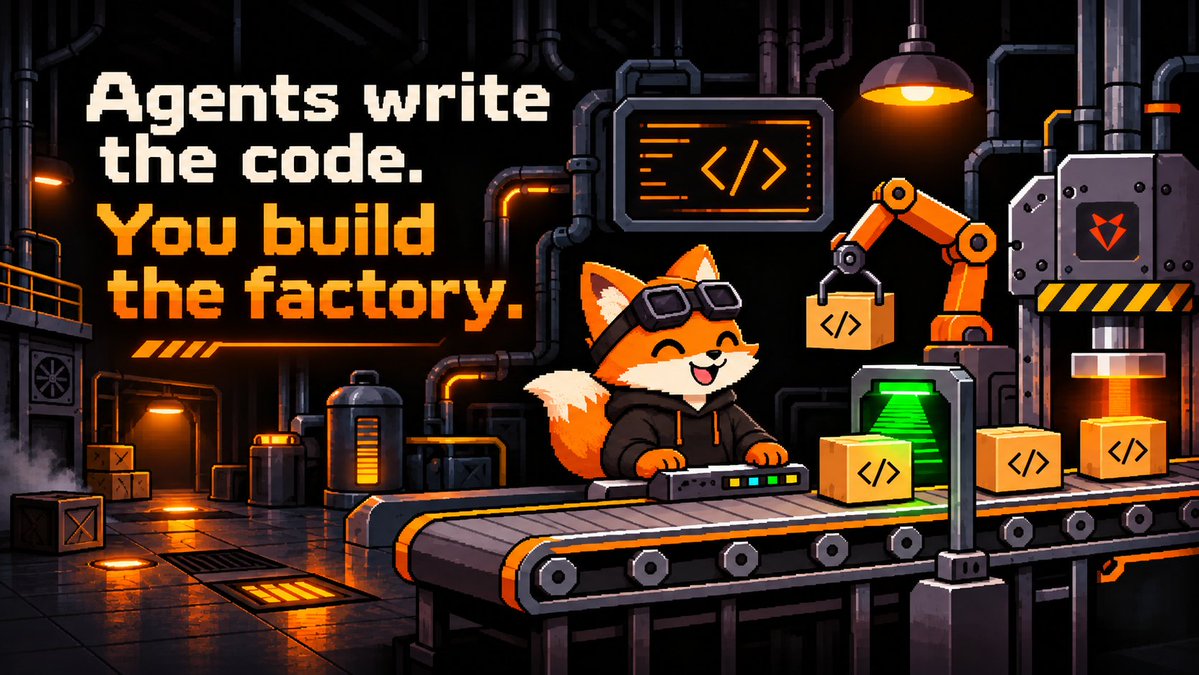
Every software team will soon engineer two systems: the software it ships, and the factory that ships it.
The value is moving to the second one. I wrote a manifesto on it: Continuous Engineering ↓
It's a fully declarative factory engine. Like a CI/CD platform for the agentic era that covers the whole SDLC.
You declare the workflows and agents and how they interract, the engine takes care of everything around it (orchestration, infra, observability...)
https://t.co/YQXfcG9Ka1
If your processes hold your team’s knowledge, the engine running them shouldn’t be a black box you rent.
It should be open source. That’s why Shipfox is MIT.
Factory engineer will be the next platform engineer.
Someone has to build, run, and improve the system that does the engineering work.
Most teams don’t have that person yet.