I love China. I love Shanghai. It is my adopted home.
I love Turkey. I love Istanbul. It is my birth country.
And many foreigners who live in China know this exact feeling.
You take a high-speed train. You live in cities that look like the future. You watch infrastructure actually work. You see digital systems integrated into daily life at a scale difficult to explain unless you experience it yourself.
And at some point, a thought enters your mind
“Can my own country also achieve this level of development one day?”
You visit your birth country after living in China for years and it feels and looks like you traveled 50 years back in time. Many foreigners living in China feel this way.
We want our countries to have strong, and respectful relations with China because we have seen with our own eyes what long-term planning, infrastructure, education, stability, industrial investment, and serious development policies can build over time.
Once you experience that level of transformation closely, it becomes impossible not to wish the same for your own country too.
Because when you have been living long enough in a country that invested heavily in its people, built for the long term, protected social stability, lifted hundreds of millions out of poverty, expanded infrastructure relentlessly, and gave its citizens a reason to feel proud, you cannot help but ask:
“What if my own country had stayed on that path too?”
As a foreigner, I am genuinely proud of China. And I feel truly happy when I see how proud my Chinese friends are of their country. They earned that pride, every bit of it.
China’s transformation is epic, especially when you have lived there long enough to see how deeply it changes daily life, confidence, ambition, and the future people believe they can build for themselves and their children.
I also wish my own country had not drifted away from Atatürk’s vision of science, education, production, rational policy, public welfare, merit, and dignity for ordinary people.
Turkey and China could have been extraordinary partners.
Two ancient civilizations.
Two proud societies.
Two countries that understand sovereignty, development, discipline, and the cost of national humiliation.
Instead, I watched my adopted home rise with long-term national strategy, while the policies implemented in my birth country kept exhausting its own people.
I wanted both of them to become amazing partners and build something powerful side by side. But seeing that this is not the path being taken… that is the part that breaks my heart.
I am not sure if others who have lived abroad, especially in China, can relate to this feeling...
i saw a mouse with an X-shaped battery compartment.
first thought: this is stupid - who designed it?
5 seconds later: oh.
10 seconds later: OHHH!
the X slot fits an AA or an AAA battery - whichever you've got lying around.
the part most people miss is that the shape also makes it physically impossible to load both at once.
there is no warning label, no instructions and no way to screw it up.
the geometry does the thinking for you.
japanese has a word for this.
poka-yoke = "mistake-proofing."
the product refuses your stupidity before you can offer it.
i wish more things worked like this.
Die AfD möchte Leistungen von illegalen Migranten streichen.
Die Bundesregierung streicht Leistungen von uns arbeitenden Deutschen.
Verdammt! Wen soll ich nur wählen?
🤔
🇩🇪 AUSWANDERN FUNKTIONIERT NICHT MIT FAMILIE
Die häufigste Antwort hatte einen Satz, der wortwörtlich immer wieder kam.
"Wenn ich keine Familie hätte, würde ich es tun. Du bist jung und ungebunden, also funktioniert es bei dir."
Ich hab das in vielen Variationen gelesen. Mit Kindern, mit pflegebedürftigen Eltern, mit Schulpflicht, mit Hausverkauf, mit allem was als Anker im Land hält.
Das Problem ist: Es stimmt nicht.
Ich erzähl euch warum.
Als ich nach Thailand gekommen bin, dachte ich auch ich würde hier auf Backpacker treffen. Auf Digital Nomads in Co-Working-Spaces. Auf andere Singles in den Dreißigern die wie ich aus dem deutschen System raus wollten.
Stattdessen sitze ich seit anderthalb Jahren in Cafés mit deutschen Familien. Ehepaare mit drei Kindern. Alleinerziehende Mütter mit Teenagern. Großeltern die ihren Sohn besuchen kommen und am Ende selber überlegen.
DREI VON IHNEN ERZÄHL ICH EUCH.
Fiktiv, da ich keine Namen nennen will.
Markus, 41. Ehemaliger Steuerberater aus Köln. Frau Anja, früher Grundschullehrerin. Zwei Kinder, Mia 9, Jonas 12.
Vor vier Jahren von Köln nach Hua Hin gezogen. Mia geht auf eine internationale Schule. In Deutschland wäre das eine Frage des Sozialprestiges. Hier ist es normal. Jonas spielt Tennis auf einem Niveau wo in Deutschland gerade die Vereins-Förderung anfangen würde. Anja unterrichtet online deutsche Kinder die im Ausland leben. Verdient so viel wie früher als verbeamtete Lehrerin in Köln, aber ihr Netto ist gleich brutto.
Markus sagt: Wir sehen uns mehr als in Deutschland. Damals waren ich und Anja vor halb sieben aus dem Haus, die Kinder bei der Tagesmutter. Heute frühstücken wir zusammen, jeden Tag.
Andreas und Tina. 47 und 44. Sohn Leon, 16.
Die schwierigste Geschichte. Leon wollte nicht weg. Er hatte Freunde in München, Fußballverein, Schule die er mochte. Andreas hat ihn ein Jahr vorbereitet. Hat ihn mit nach Bangkok genommen, dann nach Chiang Mai, dann zurück. Hat ihm Schulen gezeigt. Hat ihn entscheiden lassen welche Stadt.
Heute lebt Leon in Bangkok auf einer internationalen Schule mit Kindern aus achtundzwanzig Nationen. Spricht fließend Englisch. Hat Freunde aus Singapur, Australien, Japan. Will dort studieren wo seine Freunde hingehen.
Andreas erzählt: Mein Sohn ist vor anderthalb Jahren losgezogen mit einem Bayern-München-Schal um den Hals. Heute hat er Pläne für die nächsten zehn Jahre, von denen ich in seinem Alter nicht mal geträumt hätte.
Sebastian und Caro. Beide 36. Vier Kinder zwischen drei und neun.
Berlin hatte sie irgendwann zerrieben. Vier Kinder in einer Vier-Zimmer-Wohnung in Friedrichshain. Caro war ständig erschöpft. Sebastian hat als Architekt 60 Stunden gearbeitet damit es überhaupt reicht.
Heute leben sie auf Koh Samui. Haus mit Pool. 950 Euro Miete. Sebastian arbeitet remote für die alte Berliner Agentur.
Der schwerste war ihre Mutter zu überzeugen. Heute kommt die Mutter zweimal im Jahr und bleibt jeweils sechs Wochen.
WAS ALLE DREI FAMILIEN GEMEINSAM HABEN.
Sie haben aufgehört zu fragen ob es geht.
Sie haben ein Jahr Vorbereitungszeit eingerechnet. Schulen besucht, Visa geklärt, Wohnungen gemietet, Krankenversicherungen verglichen. Markus hat in der Vorbereitungszeit fünf Mal mit den Kindern Probewohnen gemacht. Sebastian hat seinen Architekten-Job in einen Remote-Vertrag umgewandelt, sechs Monate vor dem Umzug. Andreas hat seinem Sohn Veto-Recht gegeben.
Sie haben die Großeltern eingebunden. Drei der sechs Großeltern sind inzwischen mehr in Thailand als in Deutschland. Anjas Vater hat in Hua Hin sogar eine kleine Wohnung gemietet, die er fünf Monate im Jahr nutzt.
Sie wissen was sie aufgegeben haben. Schulfreundschaften, Vereinsleben, das deutsche Bildungssystem. Eingetauscht dagegen haben sie: Zeit zusammen, internationales Umfeld, ein Leben in dem die Kinder ihre Eltern wirklich erleben.
Ich selbst bewundere diese Familien. Sie sind weiter als ich.
Ich bin alleine gegangen. Niemanden zu überzeugen, niemanden zu schützen, niemanden mitzunehmen. Mein Setup war ein Privileg, kein Beweis von Mut.
Wer eine Familie mitnimmt schultert ein anderes Gewicht. Plant länger. Verantwortet mehr. Riskiert nicht nur sich selbst sondern jeden am Tisch.
Ich bin mir nicht sicher ob ich diesen Mut aufgebracht hätte. Deshalb haben sie meinen Respekt.
🇩🇪 LEUTE, ICH BIN SCHOCKIERT!
Ich habe gerade meine erste Steuererklärung mit dem thailändischen Finanzamt hinter mir. Und ich verspreche euch: das hier ist eine ganz andere Welt.
Lest selbst.
Ich lebe seit anderthalb Jahren in Thailand. Meine Firma sitzt in Hongkong. Hongkong nutzt Territorialbesteuerung. Was außerhalb der Stadt verdient wird, wird mit null Prozent besteuert. Legal, sauber, offiziell. Deshalb sitzt halb Asien dort.
Aber ich lebe nicht in Hongkong. Ich lebe in Thailand. Also musste ich hier eine Steuererklärung machen.
Und ab hier wird es wild.
SCHRITT EINS: STEUERBERATER FINDEN.
In Deutschland eine eigene Disziplin. Wartelisten von zwei Jahren. "Wir nehmen dieses Jahr keine Neukunden auf, melden Sie sich gerne 2027 nochmal." Du flehst den Steuerberater deines Bruders an dich auf eine Empfehlungsliste zu setzen.
In Thailand? Kumpel gefragt. Nummer bekommen. Samstag Abend Mail geschrieben. Drei Sätze, mehr nicht.
Sonntag Vormittag kam die Antwort.
SONNTAG.
Eine einzige Frage stand drin.
Eine.
Wie viel gibst du im Monat aus?
Ich las die Mail zwei Mal. Mein deutsches Hirn fing an zu zucken.
In Deutschland geht so eine Mail anders los. "Bitte senden Sie uns: sämtliche Belege der letzten zwölf Monate, Lohnsteuerbescheinigung, Kapitalertragsbescheinigung, Werbungskosten tabellarisch, Krankenkassenbescheinigungen, Spendenquittungen, Handwerkerrechnungen, Aufstellung außergewöhnlicher Belastungen, sowie eine Übersicht aller in- und ausländischen Konten mit Stichtagsbeständen."
Hier? Wie viel gibst du im Monat aus.
Nicht was ich verdiene. Nicht meine Konten. Nicht ob ich Krypto halte.
Der Grund ist absurd einfach. In Thailand wird nur das Einkommen versteuert das du tatsächlich ins Land reinbringst. Bleibt das Geld in Hongkong, kein Steuerthema. Wise-Karte am Bangkoker Bankomat 1.000 Baht abheben? Reingebracht. Miete vom deutschen Konto? Reingebracht. Restaurant mit Revolut? Reingebracht.
Also nannte ich eine Zahl. Eine. Monatliche Lebenshaltung.
JETZT KAM DER ECHTE SCHOCK.
Ich schrieb zurück: Aber will das Finanzamt nicht meine Kontoauszüge sehen? Belege? Wise-Historie? Restaurantquittungen aus den letzten zwölf Monaten?
Antwort: Nein.
Eine deutsche Steuerprüfung läuft so ab. Der Finanzbeamte will Belege aus 2018 sehen. Du sitzt in einem klimatisierten Büro mit deinem Berater und einem Aktenordner. Du erklärst warum du im März 2019 für 47 Euro essen warst. Der Beamte schreibt mit. Du schwitzt durchs Hemd.
In Thailand? Eine Zahl. Email. Fertig.
Keine Prüfung. Keine Belege. Kein Brief drei Jahre später mit höflicher Bitte um Rechnungen aus 2023. Kein Aktenzeichen das aussieht wie eine Schiffsregistrierung.
Ich überwies die Rechnung meines Steuerberaters. Schickte ihm Reisepass-Kopie, Visa und Mietvertrag. Mehr Unterlagen wollte er nicht.
In Deutschland brauchst du allein für die Anmeldung als Selbstständiger sieben Formulare. Hier: Pass, Visa und Mietvertrag.
Am siebten Tag kam die Mail. Anhang: ein QR-Code. Im Text: 17.000 Baht.
17.000 Baht? 450 Euro!
Für das gesamte Jahr 2025?
Meine letzte deutsche Steuerlast lag zwischen 70.000 und 80.000 Euro.
Ich rechnete dreimal nach. Schrieb meinem Berater zurück: Bist du sicher? Ich habe nichts vergessen?
Antwort: Alles korrekt.
Dann fragte ich wie ich das überweise. Bank, IBAN, Verwendungszweck mit Steuernummer und Veranlagungszeitraum.
Antwort: Geh zum 7-Eleven.
Ich las die Mail drei Mal.
Seven. Eleven.
ZUM KIOSK.
Bin also in den nächsten Laden gegangen. Stand zwischen Wasserregal und Zigarettenregal. Zeigte dem Verkäufer den QR-Code. Er scannte. Piep. Ich legte die Scheine auf den Tresen. Bekam Wechselgeld und einen Bon.
Steuern in Thailand offiziell bezahlt. An der Kasse.
ZUM VERGLEICH:
Deutschland: 70.000 bis 80.000 Euro. Plus Soli bevor er fiel. Plus Krankenkasse die sich anfühlt wie eine zweite Steuer. Plus Steuerprogramm. Plus Berater. Plus Belegsammlung. Plus das Gefühl im Nacken dass dich jederzeit ein blauer Brief erreichen könnte.
Thailand: 450 Euro. Am Kiosk.
Ich erzähle das weil ich selber zwei Jahre gebraucht habe um zu glauben, dass Systeme anders funktionieren können. Wir wachsen mit der Annahme auf dass der Staat im Nacken sitzen muss. Dass Steuern wehtun müssen. Dass Bürokratie dazugehört wie das Wetter. Dass Kontoauszüge ein Naturgesetz sind.
Sie sind es nicht.
Auswandern ist trotzdem keine Lösung für jeden. Hongkong-Firma sauber gründen, Wohnsitz wechseln, deutsche Rückkehrabsicht klären, ein Jahr Aufbau bis das System steht. Das ist kein Klick auf einen Button.
Aber es existiert.
Während ich das tippe sitzen Leute in Berlin und Brüssel und überlegen wie hoch der Spitzensatz noch steigen darf bevor die letzten Leistungsträger das Land verlassen. Sie schreiben Papiere darüber. Sie machen Talkshows. Sie nennen es Gerechtigkeit.
Ich habe heute am 7-Eleven bezahlt.
17.000 Baht. 450 Euro für das Jahr 2025.
- KI in der Bürokratie einsetzen
Alleine dadurch könnte man jährlich 80-100 Milliarden Euro einsparen!
Es würden ca 10% der Stellen beim Staat obsolet werden.
- Entwicklungshilfen streichen und Ministerium schließen (10 Milliarden pro Jahr)
- Rente mit 63 stoppen
- EU-Beiträge neu verhandeln (mind. 10 Milliarden drin pro Jahr)
- Bürgergeld abschaffen, Arbeit wieder attraktiv machen (60 Milliarden Euro)
- Klimasubventionen streichen (10 - 20 Milliarden Euro jährlich einsparen)
- Zahl der Bundesministerien auf 8 reduzieren, Behörden zusammenlegen, Doppelstrukturen zwischen Bund und Ländern eliminieren.
Einsparpotenzial: 5–10 Mrd. Euro jährlich
- Am Staatsapparat sparen:
2024 waren rund 5,4 Millionen Menschen im öffentlichen Dienst tätig – knapp 12% aller Erwerbstätigen in Deutschland. Die jährlichen Personalausgaben beliefen sich zuletzt auf über 250 Milliarden Euro – rund ein Fünftel der gesamten Staatsausgaben!
Die Pensionen killen uns. Diese haben sich seit 2007 verdoppelt! Daher Pensionsniveau auf 48% senken (aktuell ca. 70%)
Alle Sonderleistungen (Beihilfe) streichen (warum Extra Kindergeld?) und sie müssen ebenfalls ins Sozialsystem einzahlen.
Für jeden neuen Beamten müssen zwei gehen (dasselbe schlage ich für Gesetze vor hier gar besser 1:5)
Einsparpotential 30-50 Milliarden Euro
Summasummarum reden wir hier schon von 250 Milliarden Euro Einsparungen!
Bei meiner Recherche ist folgendes deutlich geworden:
Der Staat ist nicht teuer wegen seiner Kernfunktionen. Er ist teuer, weil er sich selbst verwaltet, seine eigene Komplexität reguliert und die Folgen seiner eigenen Fehler managt und dazu neigt im Parkinsonschen Gesetz immer neue Stellen zu schaffen.
🚨Gerade frisch aus Berlin:
Gestern Abend hallten vor dem Kanzleramt lautstark „Merz muss weg!“-Rufe durch die Nacht. Was für ein Mut, was für eine Energie!
Das Video ist bei „Der rasende Reporter Roy“ zu finden: https://t.co/v79NAXI56L
Sanyo,1988, filmed in Houston and featuring music by Jean-Michel Jarre.
And it is like a mini-movie showcasing the style and ethos of this era.
The music is masterful…
A 62 year old Chinese man tests the limits of qinggong (轻功), a martial arts technique often described as the ability to fly or move with extreme lightness.
@lava_xyz Same here, the card seems to be a bait, can't get it, can't even sell my BTC within Lava. The rates they offer to buy/sell BTC differ by 1.000 USD from actual BTC price... Something doesn't feel right 🤷
During filming of The Myth, Jackie Chan bonded with an elephant named Lakshmi in India
in one scene, her instinctive was to rescue him from water, it was unscripted yet beautiful
As tensions between Europe and the United States grow sharper, the old rhetoric according to which America generously saved Western Europe out of pure benevolence is being wheeled out again by Americans. It needs to be understood clearly: THIS IS A COMPLETE FABRICATION.
Entry was forced, not chosen
•Neutrality maintained from September 1939 through December 1941, despite the fall of Poland, the fall of France, the Battle of Britain and the onset of the Shoah.
•The US entered only after Pearl Harbor (7 December 1941) and Hitler’s declaration of war on the US (11 December 1941). No American initiative.
•House vote to extend the draft on 12 August 1941: 203 to 202. One vote.
•Gallup polling 1939 to 1941: a consistent majority opposed entering the war. The America First Committee reached around 800,000 members.
Britain paid cash before getting aid
•“Cash and Carry” (November 1939) required belligerents to pay in gold or dollars and to ship in their own bottoms.
•“Destroyers for Bases” deal (2 September 1940): 50 obsolete WWI destroyers in exchange for 99-year leases on eight British bases (Newfoundland, Bermuda, Caribbean).
•Britain was forced to liquidate US-held assets (American Viscose sold to a Morgan Stanley syndicate in March 1941) before Lend-Lease was enacted.
•Lend-Lease Article VII (Master Agreement, 23 February 1942): British commitment to dismantle Imperial Preference as a condition of aid.
War aims: dismantling the British Empire and seizing its succession
•Atlantic Charter (14 August 1941): Roosevelt inserted self-determination and equal access to raw materials, directly targeting the Ottawa Preference system of 1932.
•Bretton Woods (July 1944): the dollar became the reserve currency, Keynes’s “bancor” plan was rejected, sterling was subordinated.
•Council on Foreign Relations War and Peace Studies (1939 to 1945, Rockefeller-funded): explicit planning for US succession to British hegemony.
Roosevelt betrayed France repeatedly
•Treaty of Guarantee signed by Wilson, Clemenceau and Lloyd George on 28 June 1919. France surrendered the Rhine frontier in exchange. The US Senate refused to ratify (Versailles rejected on 19 November 1919 and again on 19 March 1920). The British guarantee, tied to US ratification, lapsed automatically. France had traded the Rhine for nothing.
•June 1940: Reynaud’s telegrams of 14, 15, 18 June begged Roosevelt for intervention or at least a public commitment. Roosevelt’s 13 June reply offered material aid and explicitly refused military commitment. He forbade publication.
•The US maintained full diplomatic recognition of Vichy until November 1942 (Admiral Leahy as ambassador to Pétain).
•Operation Torch (November 1942): a deal with Darlan, the Vichy collaborationist, then with Giraud, deliberately excluding de Gaulle.
•Casablanca / Anfa conference (January 1943): Roosevelt tried to impose Giraud, a docile military figure, over de Gaulle.
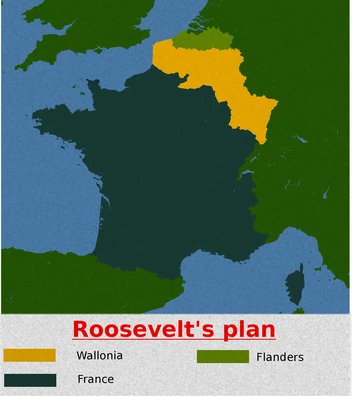
•Roosevelt’s “Wallonia” project: in 1942 and 1943 the President proposed to Anthony Eden and to Lord Chandos the creation of a new buffer state, “Wallonia”, carved out by detaching Alsace-Lorraine and parts of northern France from French territory and merging them with French-speaking Belgium and Luxembourg. France, the country that had been invaded, was to be amputated by its own ally. The plan was dropped only because of British opposition and de Gaulle’s establishment of facts on the ground.
•AMGOT plan: a US military government envisaged for liberated France, with its own occupation currency printed in advance. A pure denial of French sovereignty.
•Recognition of the GPRF withheld until 23 October 1944, more than four months after D-Day, while the GPRF was already administering liberated France.
•France excluded from Yalta (February 1945). The French occupation zone in Germany was carved out of British and American zones at Churchill’s insistence, against Roosevelt’s preference.
Strategic priorities served US interests, not liberation
•“Germany First” (ABC-1 plan, March 1941) was set before Pearl Harbor to protect the Atlantic and the hemispheric position, not to rescue Europeans.
•The second front was delayed from 1942 to 1944 despite Soviet demands, in favor of Mediterranean operations covering imperial sea lanes.
•Quincy Pact (14 February 1945, USS Quincy): the Roosevelt and Ibn Saud agreement secured Saudi oil before the war was even over.
Continued business with the Reich
•Ford-Werke, Opel (a GM subsidiary), IBM via Dehomag, ITT via Focke-Wulf: American-owned industrial assets operated inside Nazi Germany throughout the war.
•Standard Oil of New Jersey and IG Farben agreements on synthetic rubber and aviation additives are documented into 1941 and 1942.
•Union Banking Corporation (Prescott Bush) was seized under the Trading with the Enemy Act only in October 1942.
Indifference to the persecuted
•Évian Conference (July 1938): the US refused to raise immigration quotas for Jewish refugees.
•SS St. Louis (June 1939): 900 Jewish refugees were turned away from US shores.
•The rail lines to Auschwitz were not bombed in 1944 despite War Refugee Board requests and the available range of bombers based in Italy.
American soldiers were not ideological crusaders
•Around 16 million Americans were mobilised, of whom about 10 million were conscripted under the Selective Training and Service Act (September 1940), the first peacetime draft in US history.
•Samuel Stouffer, The American Soldier (1949, around 500,000 surveys): the primary combat motivation was small-unit loyalty and wanting to go home. Abstract ideological motives (“Four Freedoms”, the defeat of fascism) ranked low.
•The extermination of the Jews was not publicly known at the scale we now understand until the camp liberations of spring 1945. “The war to save the Jews” is a post-1960 retrospective construction.
•GI Bill (June 1944): around 8 million beneficiaries. This was the real domestic payoff, a middle-class expansion program, not a liberation crusade.
Postwar result: American primacy, not European freedom
•US GDP rose from around 27 percent of world output in 1941 to around 50 percent in 1945. The only major economy enriched by the war.
•Marshall Plan (1948) conditioned on market opening, the exclusion of Communist parties from government, and purchases of US goods.
•NATO (1949) under permanent American command (SACEUR). US bases installed in Europe to the present day.
•The empires of the allies (British, French, Dutch) were dismantled within twenty years. The US emerged as the sole Western hegemon.
Conclusion
None of this is a moral indictment. It is, in truth, perfectly normal. In the long history of nations, it is exceedingly rare for a country to send its children to die out of altruism. States send their sons to fight to defend their interests. That is the rule, not the exception. The Americans behaved as any serious power behaves.
The fault lies partly with us, for having believed otherwise. But it lies also with the Americans of today, who sincerely believe their own propaganda, who have ended up taking the Hollywood version of their own history at face value, and who now lecture us from the height of a fable. We would like, finally, to talk to them as adults talk to adults, between people who understand the real nature of things.
We were fortunate that, for a moment in history, American interests partly coincided with our own. That coincidence was real, but only partial. It meant the defeat of Germany and the holding at bay of Soviet Russia, both of which served us. It also meant the deliberate weakening of Britain and France, the dismantling of their empires, and the subordination of their currencies and industries, none of which served us. The same hand that pushed back the Wehrmacht also pulled down the pillars of European power. We benefited from the first half of that movement and were diminished by the second.
We can still be grateful to the young American soldiers buried in Normandy, Lorraine and the Ardennes. Most had not chosen to be there. They were fighting first for their own, not for ours. Their deaths remain tragic, and we did partially benefit from their sacrifice. Gratitude toward them is owed and should be plainly expressed. It is a separate question from the strategic intentions of the government that sent them.
The choice facing Western Europe in 1945 was real: vassalage to the Germans, vassalage to the Soviets, or vassalage to the Americans. Of the three, American tutelage was by far the least brutal, the least extractive, and the most compatible with the survival of parliamentary institutions and a measure of prosperity. That is not in dispute. But the lesser of three evils is not generosity. Vassalage is not liberation. The two should never be confused.
The lesson is ours to draw. No one but Europeans will ever defend the interests of European children. It is time to reclaim our independence, so that our children inherit a future of their own, and not one held hostage to the shifting interests of Washington.
Deutschland sitzt auf einem gigantischen Energieschatz und tut so, als wäre es völlig abhängig vom Ausland und auf Wind und Sonne angewiesen.
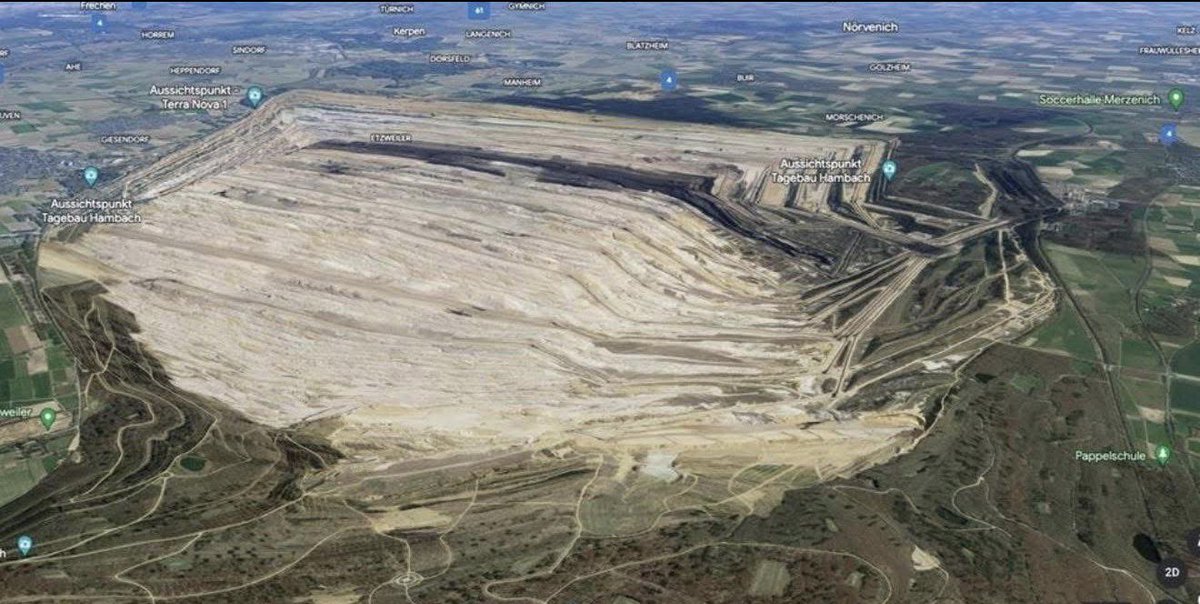
Unsere Steinkohle reicht für Tausende Jahre, die Braunkohle für 300 bis 400 Jahre. Erdgas könnte uns 20 bis 30 Jahre versorgen und selbst die Ölreserven würden noch rund 10 Jahre durchhalten.
Und dann das große Tabu: Mit den vorhandenen Uranbeständen ließen sich die abgeschalteten Kernkraftwerke locker 100 Jahre lang betreiben – sicher, zuverlässig völlig unabhängig vom Ausland, umwelt- und klimaschonend.
Während andere Länder ihre Ressourcen nutzen, wird hier absichtlich verknappt, verteuert und verzichtet. Nicht aus Not, sondern aus reiner Ideologie.
Deutschland hat kein Energieproblem – Deutschland hat ein massives politisches Problem.