Our long-range responses had a very significant impact in the Moscow region last night. One of Russia’s key oil industry facilities and the aggressor’s logistics facility were hit. These are billions of dollars that sustain the war machine. The systems used included FP-1, RZ-100, MICH-2000, Palianytsia, Vendetta, Liutyi, Bars, Flamingo, Sichen, and Pelican.
I thank our warriors for their accuracy: the Security Service of Ukraine together with the Unmanned Systems Forces, the Special Operations Forces, the Defense Intelligence of Ukraine, and the Foreign Intelligence Service. Sanctions were also imposed on a facility in the Voronezh region. Moscow must end its brutal war and choose peace instead of building layered rings of air defense at the expense of other regions. Steps toward de-escalation are on the table – in energy and food security. What is needed is political will. I thank everyone who is strengthening Ukraine’s long-range capabilities. I am grateful to everyone who complements our long-range responses with responses through sanctions. Glory to Ukraine!
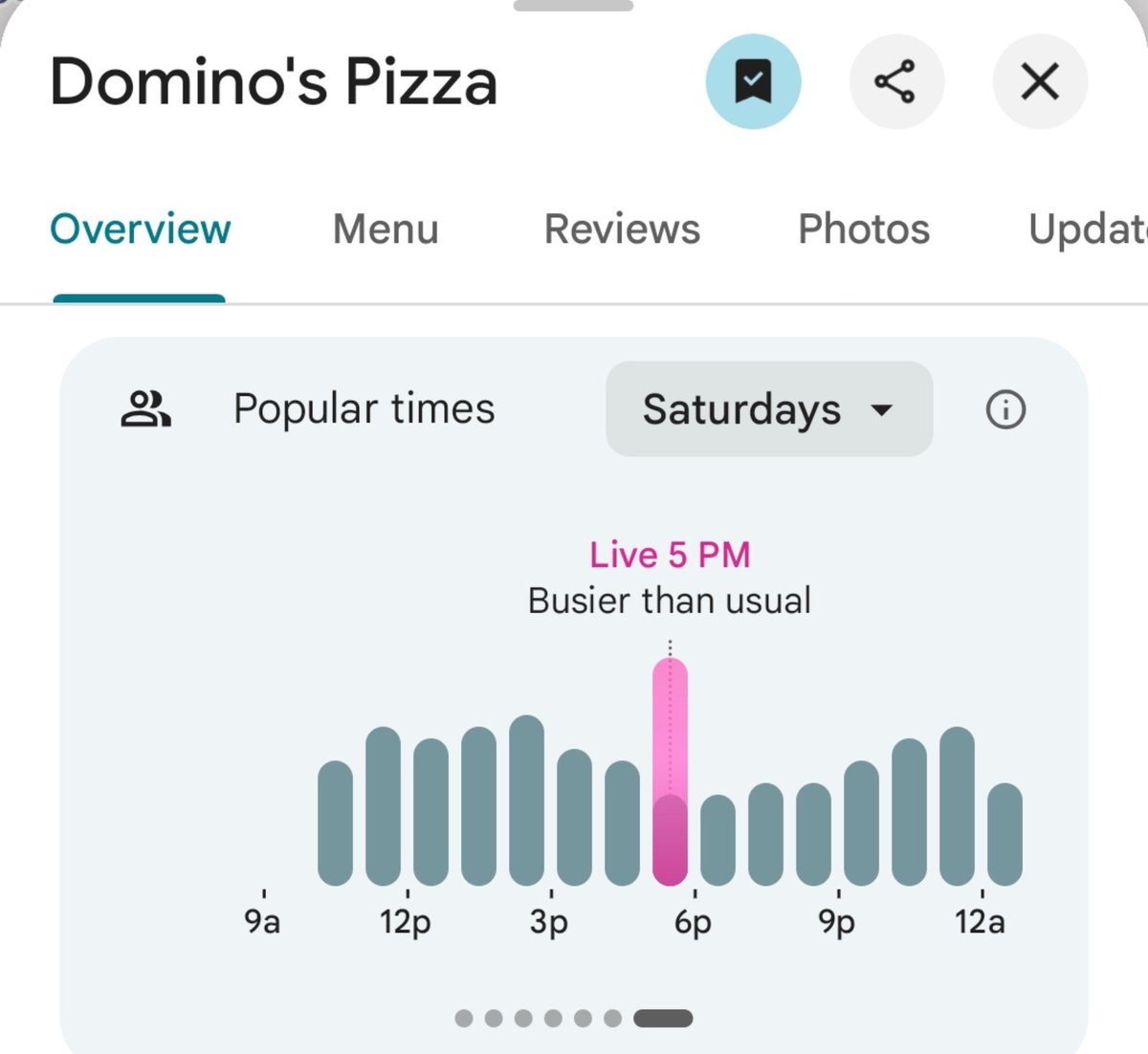
The closest Dominos to the Pentagon is reporting very high traffic.
Freddies Beach Bar, the closest gay bar to the Pentagon, is reporting low traffic.
As of 5:25pm ET
🚨 EUROPE’S PREPARATIONS FOR WAR ARE REACHING AN ALARMING LEVEL
Measures that would have appeared unthinkable only a few years ago are now spreading across Europe:
🇫🇮 FINLAND (AKA Ukraine 2.0)
• Raised the military-reserve age to 65
• Building a reserve approaching one million people
• Removed the legal barrier preventing allied nuclear weapons from entering Finnish territory
• Withdrew from the treaty banning antipersonnel land mines
🇪🇪 ESTONIA
• Declared its willingness to host NATO nuclear weapons if necessary
• Building bunkers, trenches and anti-tank barriers along its Russian border
• Participating in the new Baltic Defense Line
🇱🇻 LATVIA
• Constructing border fortifications, barriers and military positions
• Withdrew from the treaty prohibiting antipersonnel mines
• Expanding civil-defense and national-resilience preparations
🇱🇹 LITHUANIA
• Building fortified defensive positions near Russia and Belarus
• Stockpiling anti-tank barriers and mine capability
• Withdrew from the antipersonnel-mine treaty
🇵🇱 POLAND
• Offered to host NATO nuclear weapons
• Pursuing an army and reserve system totaling approximately 500,000 people
• Planning to train as many as 100,000 reservists annually
• Considering military preparation for all adult men
• Building the “Eastern Shield” of fortifications, surveillance, drone defenses and potential minefields
• Withdrew from the antipersonnel-mine treaty
🇩🇪 GERMANY
• Cataloguing subway stations, tunnels, garages and basements for use as bomb shelters
• Seeking shelter capacity for approximately one million people
• Registering and assessing young men for possible military service
• Preparing to move hundreds of thousands of NATO troops and vehicles east during a major war
🇸🇪 SWEDEN
• Sent citizens an “In Case of Crisis or War” handbook
• Instructed families how to survive blackouts, air attacks, disrupted communications and possible occupation
🇩🇰 DENMARK
• Expanded military conscription to women
• Increased military service from four months to eleven months
🇫🇷 FRANCE
• Developed public-survival guidance covering emergency supplies, radio communications and radiation precautions
• Encouraging participation in military reserves and civil-defense organizations
🇬🇧 BRITAIN
• Reviving government “War Books”
• Integrating military, civilian, industrial and utility planning
• Preparing a national home-defense exercise
• Strengthening protection of energy systems, water, communications and undersea cables
• Planning for cyberattacks, fuel shortages and supply-chain breakdowns
• Making it easier to recall former service members—potentially up to age 65
• Increasing weapons, drone and ammunition production
🇪🇺 EUROPEAN UNION
• Advising 450 million residents to maintain at least 72 hours of food, water, medicine, cash and emergency supplies
• Building strategic reserves for chemical, biological, radiological and nuclear emergencies
Nuclear weapons have not been confirmed as deployed in Finland, Estonia or Poland—but those countries have opened, or are considering opening, the door.
Europe says this is deterrence and preparedness.
But when countries simultaneously expand conscription, recall older soldiers, prepare bunkers, restore land mines, consider hosting nuclear weapons and teach civilians how to survive war, one question becomes unavoidable:
WHAT DO EUROPEAN GOVERNMENTS KNOW—or fear—THAT THEIR CITIZENS ARE NOT BEING FULLY TOLD?