An enumerator from Rajasthan told The Hindu on condition of anonymity, “In the mobile app, if we enter that a household has a tin roof, we are asked by our superiors to change it to concrete. Are we supposed to lie? Similarly, if the house does not have a toilet and occupants are defecating in the open, we are told to check if there is a toilet nearby, even that of a neighbour or a relative, which they may be using occasionally or even a public urinal. Then the entry can be changed from ‘open defecation’ to having access to a toilet.”
Excl: Ground reality vs official records: Census fieldwork is throwing up data that differ from govt records on open defecation free villages, use of cow dung cakes/kerosene/crop residue for cooking in urban areas despite LPG connection, no electricity. Enumerators asked to revisit and review the “data discrepancies”.I ✍️
https://t.co/1LaYwpiiED
Fantastic story by Express dissecting huge number of maternal deaths in one district-Sidhi
Govt boasts of almost 100% institutional deliveries
Lures women into opting for institutional deliveries in public hospitals
But invests ZERO in preparedness of facilities
Mothers die
The Modi Government has given approval to coal mining by Modani in Chattisgarh’s Kente Extension Opencast Coal Block, 98% of which falls under Hasdeo Aranya’s pristine sal forests. This will result in –
• Indiscriminate felling of at least 7 lakh trees
• An existential threat to biological diversity, including leopards, sloth-bears, and the national heritage animal of India, elephants
• Increased human-animal conflict since the coal block is just 3.6 km from the Lemru elephant corridor
• Adverse impact on water flows in Hasdeo river and Bango dam since the forests serve as their catchment area
On January 26, 2022, the @bhupeshbaghel led Congress Government had passed a resolution in the Chhattisgarh Legislative Assembly that no mining leases should be granted in Hasdeo Aranya. The Modani trouble-engine regime which has since come to power is determined to see this project through, whatever the cost to Adivasi jal-jangal-zameen and the ecosystem. Compensatory afforestation is just no substitute for the loss of such rich natural forests—in fact, it is nothing but a fraud that only assuages a guilty conscience.
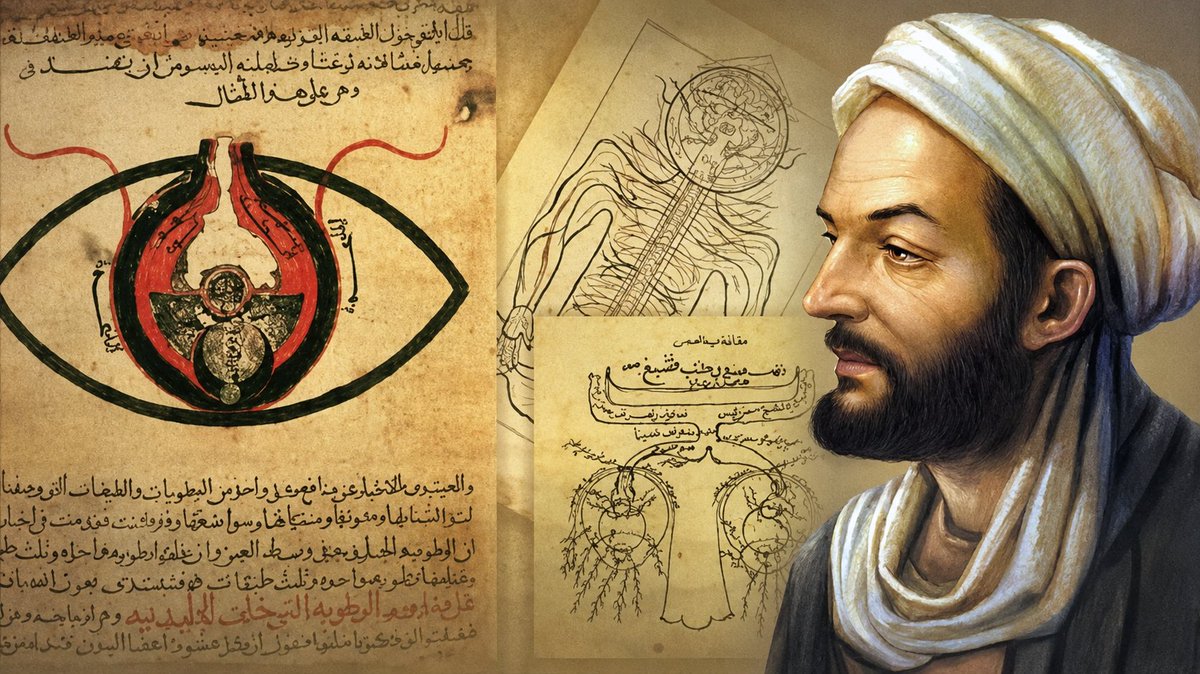
A Persian physician memorized the entire Quran by age 10 and was practicing medicine by age 16. By 18 he had cured a sultan that no other doctor could help. The textbook he wrote in his 30s became the operating manual for every European doctor for the next 600 years.
I started reading about him at midnight and could not believe one teenager had personally built so much of the foundation of modern medicine.
His name was Ibn Sina. The book is called The Canon of Medicine.
Every modern clinical trial. Every evidence-based drug protocol. Every pharmacology textbook. Every medical school curriculum that teaches doctors to observe before they prescribe.
All of it traces back to a Persian teenager who finished his medical education before most modern students finish high school.
Ibn Sina was born in 980 CE near Bukhara, in modern-day Uzbekistan. His father was an Islamic scholar who employed the best tutors money could buy. The tutors started failing to keep up with him almost immediately.
By age 10 he had memorized the entire Quran word for word. By 12 he was correcting his tutors on points of law. By 14 he had outpaced his teacher in mathematics and started learning on his own. By 16 he was treating patients in his neighborhood.
He later wrote, with no false modesty, that medicine was an easy subject and he had mastered it quickly.
He hit a wall around 17. He could not understand Aristotle's Metaphysics. He read the book forty times and still could not grasp it. Then he picked up a commentary on it by Al-Farabi in a Bukhara bookshop for a few coins, read it overnight, and suddenly the entire system of Greek philosophy snapped into place.
He went home and gave alms (money or goods) to the poor in gratitude that he had finally understood.
A year later the news of his medical skill reached the sultan of Bukhara, Nuh ibn Mansur, who was suffering from an illness no doctor in his court could cure. Ibn Sina was called in. He treated the sultan. The sultan recovered. The 18-year-old asked for one thing in payment.
Access to the royal library.
The library of the Samanid sultans in Bukhara was one of the greatest in the Islamic world at that time. Ibn Sina spent the next year inside it reading everything he could find.
He later wrote that by age 21 he had absorbed everything written by every major scholar before him, and that the rest of his career was just refining what he had already understood as a teenager.
He spent the next decade as a wandering physician and political advisor. Empires were collapsing across Persia and Central Asia. He moved from court to court, treating princes, drafting legal documents, escaping invasions, hiding from enemies who wanted to kill him for his association with rival rulers.
He wrote at night while moving between cities by day. He was imprisoned at least once. He kept writing.
In his 30s and 40s he produced The Canon of Medicine. A five volumes book at least a million words. A complete synthesis of every medical tradition he could find. Greek medicine from Galen and Hippocrates. Persian medicine from his own tradition. Indian medicine from Ayurvedic texts. His own clinical observations from thousands of patients.
The Canon was translated into Latin in the 12th century. It was reprinted more than 30 times in the 15th and 16th centuries alone. It was the standard reference text at the University of Paris, the University of Bologna, and Oxford well into the 17th century.
William Osler, one of the founding fathers of modern medicine, called it the most famous medical textbook ever written and said it served as a medical bible for a longer period than any other book in human history.
The part that most people miss is what was actually inside it.
He laid out clear rules for testing whether a drug works rules that still look like modern clinical trials. The drug must be pure, tested on a single condition, and checked against opposite conditions for consistent results. Effects must be seen repeatedly, with timing that matches the treatment. And it has to be tested on humans, since animal results don’t always carry over.
A thousand years before the modern clinical trial existed, he had written its protocol.
He defined medicine itself in a sentence that has never been improved on. Medicine is the science by which we learn the various states of the body in health and when not in health, the means by which health is likely to be lost, and when lost, is likely to be restored.
He insisted that prevention came before treatment. He argued that lifestyle, diet, exercise, and sleep mattered as much as drugs. He was right by a thousand years. He documented hundreds of conditions with such precision that European doctors were still using his diagnostic categories in the 1700s.
He died in 1037 at age 57. He was on a military campaign with one of the rulers he served when he developed colic. He treated himself with what he believed was the correct remedy. The remedy did not work. He died near the city of Hamadan in modern Iran. His tomb is still there.
His own assessment of his life is one of the most honest things any genius has ever written about themselves. He said he had lived a wide life rather than a long one and that he preferred it that way.
The Canon is digitized at the Library of Congress. The original Arabic version is preserved at multiple universities. Free English translations exist online.
The medical textbook that trained every European doctor for half a millennium is sitting one click away from you.
Most modern doctors have never heard the author's full name.
Exclusive: Odisha lied and claimed the road was for tribal villages. Investigation shows it was for Vedanta group's bauxite mines. And it displaced tribals.
When they protested, the state used force to shut them.
@ayushikar1998 for @reporters_co
1/3
https://t.co/2dt2R512YL
King's College Hospital in London has opened a rooftop garden for critical care patients. Its first patient, a 29-year-old woman dependent on feeding tubes, said the outdoor space gave her 'a real boost to keep on going
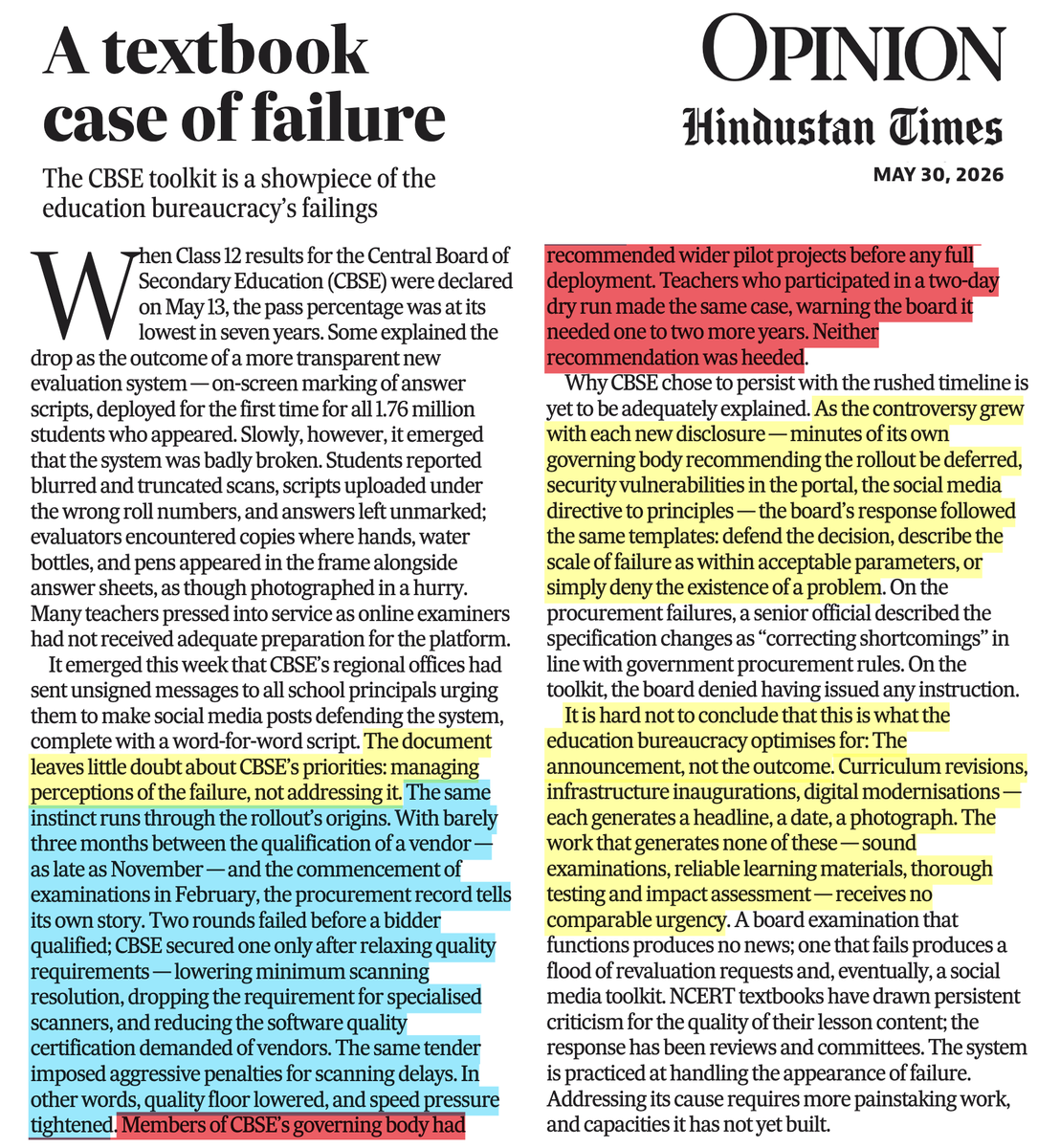
Scathing editorial that points to a larger malignancy of BJP's regime: do something wrong, get caught, defend the decision or simply deny the problem. What HT misses is BJP's subsequent efforts to distract, with more anti-Muslim/Christian measures and more Jai Shri Ram. We, the fools, get 'managed' by the last two, as usual.
Latest: On May 10, PM Modi urged us to carpool, use public transport and save fuel.
We tracked his activities since the war began and found: in 70 days, he travelled to 53 cities, attended 81 events across 12 states, including 25 roadshows.
Only 13/81 events were official events. Reporting for @thewire_in with Aashna Ajmera:
https://t.co/kHcSwsYp5W
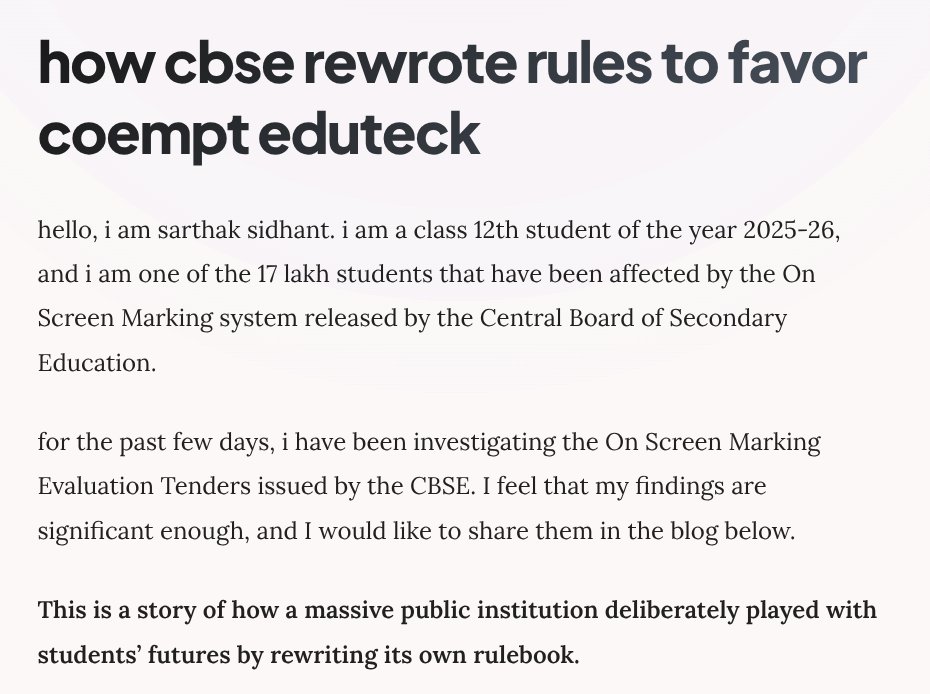
I had hacked CBSE's OSM (On-Screen Marking Portal) in February and had reported the vulnerabilities to CERT-In, but they were unable to patch most of them.
I've written a detailed blog post about it here: https://t.co/qyT23GkTEJ
This is the screen recording of our audience demographic which we have shared with media before our account was hacked.
More than 94% of the audience is from India.
Why is a Union Minister @KirenRijiju labelling Indian youth as Pakistani?
VIDEO | From scripting college election strategies in the narrow lanes of Thevara in Kochi to preparing to take charge as Kerala's Chief Minister, the political rise of V. D. Satheesan is a story those closest to him say was evident long before the state took notice.
(Full video available on PTI Videos - https://t.co/bIyFWTeOLF)
VIDEO | For 43 years, Ranjith Thamby has remained one of VD Satheesan's closest friends. Their friendship dates back to Sacred Heart College, Thevara, a campus where student politics in the 1980s was fiercely competitive and deeply ideological.
Sitting at his Kochi home, Thamby recalls a college union election episode that, according to him, revealed Satheesan’s political instincts early on.
(Full video available on PTI Videos - https://t.co/bIyFWTfmBd)
The Modi Government’s education ecosystem - populated by third-rate academic mediocrities - has proven itself to be supremely incompetent, politicised, and corrupt over the last few years. Every passing month brings up a new crisis - the NCERT textbook row, the UGC’s draft regulations on the appointment of VCs, the constant paper leaks, the NAAC bribery scandal, the ICHR scam, the blatantly unconstitutional withholding of Samagra Shiksha funds, the absentee Vice Chancellors appointed in several key Central Universities, and the large-scale vacancies in teaching positions in higher educational institutions.
Now it is evident that the Ministry’s incompetence is matched only by its Minister’s arrogance. When asked by the media why his Ministry did not heed the Parliamentary Standing Committee on Education’s recommendations on the NTA, the Minister refused to take the Parliamentary Standing Committee’s report seriously because it has ‘members from the opposition.’
The fact is that of the 30 Members of Parliament, 17 are from the BJP itself. Part of the Committee’s recommendations include a reiteration of the K Radhakrishnan Expert Committee’s report that the Minister cites. The Minister’s refusal to acknowledge the Parliamentary Standing Committee is a dismissal of his own party’s MPs and the Indian Parliament’s bipartisan traditions.
The PM takes great pride and gives great publicity to his annual Pariksha pe Charcha extravaganza. What is the need of the hour is a Pariksha ki Samiksha. The Education Minister doesn’t appear to be cut out for the task.
https://t.co/7pbPwWLFVh
This kind of a statement should directly lead to impeachment of the judge. As responsible citizens, we cannot allow judicial standards and ethics to fall to such pits. The dignity of the chair and institution is at stake here. Leader of Opposition @RahulGandhi should condemn this statement and consider moving an impeachment motion against the Chief Justice. Someone should speak up for our courts!
1/ Bureaucrats raiding the athletes' fund. The National Sports Development Fund (NSDF) exists to train India’s top athletes and build sporting infrastructure. Instead, crores are going to upgrade fancy sports facilities for top bureaucrats in Lutyens’ Delhi. An explosive @IndianExpress
investigation by @mihirsv : https://t.co/01s5HpjTIk