🚨BREAKING: Two researchers from UPenn and Boston University just published a paper that should be uncomfortable reading for every CEO automating their workforce right now.
The argument is straightforward. Every company replacing workers with AI is also eliminating its own future customers. Laid off workers stop spending. Enough of them stop spending and nobody can afford to buy anything. The companies that fired everyone end up selling into an economy with no purchasing power left.
Every executive can see this. The math is not complicated. But here is why nobody stops.
If you do not automate, your competitor does. They cut costs, lower prices, take your market share, and you collapse anyway. So every company automates knowing it is collectively destructive because the alternative is dying alone while everyone else survives. The researchers proved this is a Prisoner's Dilemma playing out in real time.
The numbers are already moving. Block cut nearly half its 10,000 employees this year. Jack Dorsey said AI made those roles unnecessary and that within the next year the majority of companies will reach the same conclusion. Salesforce replaced 4,000 customer support agents with AI. Goldman Sachs deployed a coding tool that lets one engineer do the work of five. Over 100,000 tech workers were laid off in 2025 and AI was cited as the primary driver in more than half those cases. 80% of US workers hold jobs with tasks susceptible to AI automation.
The researchers tested every proposed solution. Universal basic income does not change a single company's incentive to automate. Capital income taxes adjust profit levels but not the per-task decision to replace a human. Collective bargaining cannot hold because automating is always the dominant strategy.
They also identified what they call a Red Queen effect. Better AI does not solve the problem, it accelerates it. Every company chases faster automation to gain market share over rivals but at the end everyone has automated equally, the gains cancel out, and the only thing left is more destroyed demand.
The one thing the math says could work is a Pigouvian automation tax. A per-task charge that forces companies to account for the demand they destroy each time they replace a worker.
The conclusion is that this is not a transfer of wealth from workers to owners. Both sides lose. Workers lose income. Companies lose customers. It is a deadweight loss with no market mechanism to stop it on its own.
(Link in the comment)
It has come to my notice that I apparently ‘liked’ a reel that is condescending toward another actor. We get tagged in multiple things every day, and this appeared during an award-function reference like any other tag. It isn’t true and was definitely not done consciously, if anything, it may have been clicked accidentally.
Never in my life have I resorted to cheap PR tactics. I have always focused on my work and moved on.
In the world of clickbait, it’s tempting for even dignified social media portals to harp on this and turn it into coffee-table gossip. But I would hope they would consider that I have earned a better reputation than that.
I have no PR team, have respectfully cleared my stance on entertainment award shows long ago, and remain focused on my work. 🙏🏻
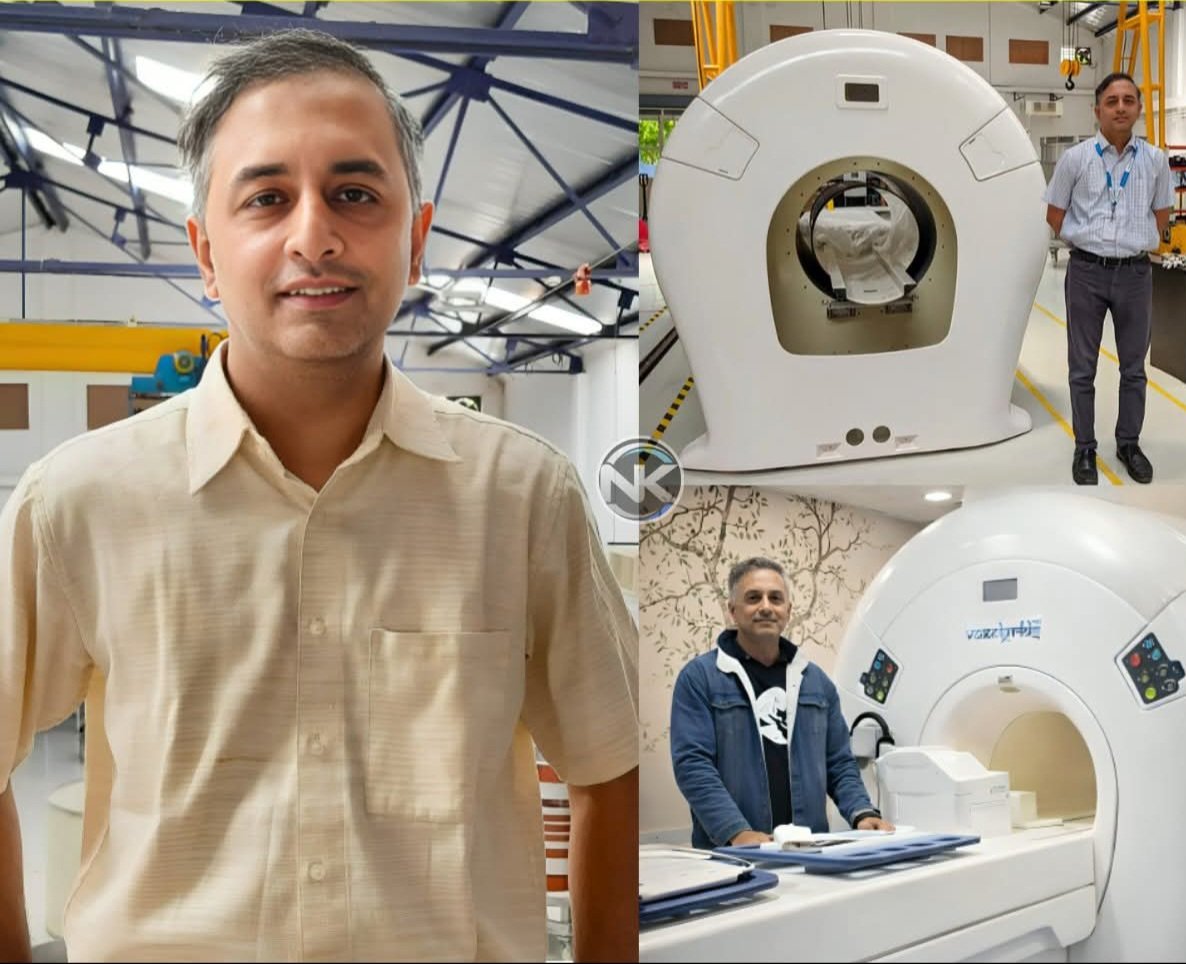
For many years, India depended heavily on imported MRI machines — expensive systems that required liquid helium and consumed high amounts of power, placing them beyond the reach of numerous hospitals.
Now, Bengaluru-based startup VoxelGrids has introduced India’s first fully indigenous 1.5-tesla MRI scanner. The system is already functioning at a cancer care centre in Chandrapur, Maharashtra, marking a meaningful development in the country’s medical technology journey.
What makes this innovation stand out is not just that it is manufactured in India, but that it is engineered specifically for Indian conditions:
• No dependence on liquid helium
• Reduced power consumption
• Approximately 40% lower cost compared to imported alternatives
For hospitals operating under tight capital budgets, VoxelGrids also provides a pay-per-use model, helping extend advanced diagnostic imaging to underserved and remote areas.
Leading this breakthrough is founder Arjun Arunachalam, who returned from a research career in the United States with the goal of addressing a long-standing gap in India’s healthcare infrastructure. With support from institutions such as Tata Trusts, the team dedicated years to research, refinement, and development to build a solution suited to domestic needs.
This achievement represents more than just a new medical device. It reflects a broader transition — from reliance to self-reliance, from importing technology to innovating at home, and from limited access to wider inclusion in healthcare services.
#MakeInIndia
#HealthcareInnovation
#MedicalTechnology
#IndianStartup
#AffordableHealthcare
#Innovation
Privileged to share that our, @PSL_IITD / @iitdelhi collective work with @fooddeptgoi and @UNWFP_India has been featured in the Economic Survey 2025-26, Page 53. Blessed to be given a chance to contribute to national economy & development through public systems.
The Economic Survey tabled today presents a comprehensive picture of India’s Reform Express, reflecting steady progress in a challenging global environment.
It highlights strong macroeconomic fundamentals, sustained growth momentum and the expanding role of innovation, entrepreneurship and infrastructure in nation-building. The Survey underscores the importance of inclusive development, with focused attention on farmers, MSMEs, youth employment and social welfare. It also outlines the roadmap for strengthening manufacturing, enhancing productivity and accelerating our march towards becoming a Viksit Bharat.
The insights offered will guide informed policymaking and reinforce confidence in India’s economic future.
@AdaniOnline@IKS_Media@EduMinOfIndia@gautam_adani@ganti_dr To conclude: a beginning seems to have been made. Are our businesses paying heed? Are other leaders in the right thought league?
On our part, our group at IITD is committed to play its role. Are other key players, IIT alumni & others up for some adventure and future making?
Over past several years, any perceptive mind will sense the humongous civilizational churn going on in ("India, ie") Bharat: society at large, esp. youth! I've personally been grappling with a burning q: is something moving within our elites? Or will we let this churn dissipate?
@AdaniOnline@IKS_Media@EduMinOfIndia@gautam_adani@ganti_dr 6) Legacy: Our strategic investors need to get into the higher orbit of building legacies, through institutions, and not buildings. The youth is ready. The society is getting ready. Are the elders and elite ready? That, to my mind, is the big question facing us today.