We're excited to announce the partnership between Dill and @Matr1x_io, a pioneering entertainment platform that combines gaming, AI, and esports on blockchain infrastructure. With over 5 million on-chain users and 138 million transactions, Matr1x has become a leader in web3 gaming. Its flagship FPS, Matr1x FIRE @Matr1xOfficial, has attracted more than 3.5 million players across 135 countries!
Given the high data demands and low latency requirements of FPS games, a robust data availability layer is crucial for delivering an optimal on-chain gaming experience. Dill as a hyper-scalable chain for sovereign applications, offers unparalleled customizability and sovereignty for the platform, along with its secure, native interoperability within the ecosystem. More over, Dill provides unmatched data availability scalability, trust-minimized native bridge, standardized ZK stack and unique community-centric staking, all out of the box.
This collaboration marks a major step forward in the development of on-chain gaming and DA integration. Want to dive into the details of this game-changing integration? Follow us and check out the full post here 🔗https://t.co/WzvqZX5wic
So what could have been a solution here? Blobstream! If every tx commitment submission was to be checked against Blobstream, i.e. against Celestia validators that attest their availability, the Sequencer could not halt the chain by itself.
𝗔𝗳𝘁𝗲𝗿 𝘆𝗲𝘀𝘁𝗲𝗿𝗱𝗮𝘆, 𝗺𝗼𝗱𝘂𝗹𝗮𝗿 𝗯𝗹𝗼𝗰𝗸𝗰𝗵𝗮𝗶𝗻𝘀 𝗮𝗿𝗲 𝗼𝗻 𝘁𝗵𝗲𝗶𝗿 𝘄𝗮𝘆 𝘁𝗼𝘄𝗮𝗿𝗱𝘀 𝘂𝘀𝗵𝗲𝗿𝗶𝗻𝗴 𝗶𝗻 𝘁𝗵𝗲 "𝗰𝗿𝘆𝗽𝘁𝗼 𝗯𝗿𝗼𝗮𝗱𝗯𝗮𝗻𝗱 𝗺𝗼𝗺𝗲𝗻𝘁", 𝗮𝘀 𝘁𝘄𝗼 𝗽𝗼𝘄𝗲𝗿𝗵𝗼𝘂𝘀𝗲𝘀 𝗮𝗿𝗲 𝗰𝗼𝗺𝗶𝗻𝗴 𝘁𝗼𝗴𝗲𝘁𝗵𝗲𝗿 𝘁𝗼 𝗯𝘂𝗶𝗹𝗱 𝗺𝗼𝗱𝘂𝗹𝗮𝗿 𝗿𝗼𝗹𝗹𝘂𝗽𝘀 𝘄𝗶𝘁𝗵 𝘂𝗻𝗽𝗿𝗲𝗰𝗲𝗱𝗲𝗻𝘁𝗲𝗱 𝘁𝗲𝗰𝗵𝗻𝗼𝗹𝗼𝗴𝗶𝗰𝗮𝗹 𝗮𝗱𝘃𝗮𝗻𝘁𝗮𝗴𝗲𝘀...
Due to the recent Cambrian explosion of modular infrastructure, the advent of the rollup revolution over the last 18 months is quickly turning into a 'modular rollup' focused landscape.
The "build whatever" creator-focused energy of modular blockchains is growing mindshare, and for good reason:
Very soon DeFi power users will experience a previously unfathomable UX, boasting much faster confirmations and dramatically cheaper tx's on modular-based rollups.
In today's post, you'll learn about the recent collaboration between two modular powerhouses, how building modular rollups enables a better UX, and a hint into where I foresee value accrual happening 👇
Yesterday, @CelestiaOrg & @0xPolygonLabs came together to announce the integration of Celestia's data availability layer (DA) with the Polygon CDK.
This is enabling zk L2s launched with Polygon's CDK to integrate Celestia's DA layer.
𝗟𝗲𝘁𝘀 𝘁𝗮𝗸𝗲 𝗮 𝗱𝗲𝗲𝗽 𝗱𝗶𝘃𝗲 𝗶𝗻𝘁𝗼 𝘁𝗵𝗲 𝗣𝗼𝗹𝘆𝗴𝗼𝗻 𝗖𝗗𝗞 𝘁𝗼 𝘂𝗻𝗱𝗲𝗿𝘀𝘁𝗮𝗻𝗱 𝗵𝗼𝘄 𝗯𝘂𝗶𝗹𝗱𝗶𝗻𝗴 𝗺𝗼𝗱𝘂𝗹𝗮𝗿 𝗿𝗼𝗹𝗹𝘂𝗽𝘀 𝗲𝗻𝗮𝗯𝗹𝗲𝘀 𝗮 𝗯𝗲𝘁𝘁𝗲𝗿 𝗨𝗫:
Polygon's Customizable Development Kit (CDK) is a tool that is enabling a rapid development of modular blockchains.
Their modular approach allows developers to select specific components they need for their blockchain's usecase, offering a "tailor made" solution to the headaches which come with choosing which stack to deploy your project on.
The true power of the CDK lies in its ability to bring interconnectivity between all blockchains built using the CDK.
Here's what I mean:
As you can see below, builders have the option to pick and choose specific parts of the modular stack to utilize within their chain design.
This gives developers the freedom to choose virtual machines, sequencer types, gas tokens, and data availability solutions while still being able to seamlessly share liquidity with each other and the wider Polygon ecosystem through composable interoperability.
𝗧𝗵𝗲 𝗖𝗗𝗞 𝗼𝗽𝗲𝗿𝗮𝘁𝗲𝘀 𝘄𝗶𝘁𝗵 𝗳𝗼𝘂𝗿 𝗽𝗿𝗶𝗺𝗮𝗿𝘆 𝗰𝗼𝗺𝗽𝗼𝗻𝗲𝗻𝘁𝘀:
1⃣ ZK-Provers: Type-1 (in future) and Type-2:
Batch processing using Polygon's ZKPs further eases the validation load on each blockchain, granting higher throughput.
The @0xPolygonLabs team is planning to implement type 1 zk-provers in the future to scale even faster.
2⃣ Data Availability: Ethereum, DAC, 3rd Party (@CelestiaOrg):
Ethereum ensures data availability by storing the entire state and transaction history on its blockchain, while its the most expensive, its also currently the most secure.
Next, we have Data Availability Committees (DACs), which are specialized offchain groups that store and provide access to blockchain data, using zk proofs as a means for enhanced security.
While the DAC is a secure group of nodes, there is risk of collusion with DAC members.
See below to understand the tradeoffs of different data availability:
Then, we have 3rd Party Solutions such as @CelestiaOrg which offer a separate data availability layer for other blockchains to utilize, enhancing scalability and finding a happy medium between speed and security.
3⃣Virtual Machine (VM) - zkEVM, Miden VM (in future):
Polygon zkEVM has been in development for several years and has been rigorously battle-tested for security. Deploying using the Polygon CDK grants builders access to the liquidity, mindshare, infra, and tooling within the zkEVM ecosytem.
Also, following an epic presentation from @schmiddominik1 during @epicweb3 ETH Infra days, I learned that Miden VM is coming very soon for builders to deploy on.
@0xPolygonMiden offers a secure 'actor model' utilizing ZKPs for 'notes', flexible transaction modes, and the creation of a proof for every transaction.
Will be very interesting to see this develop.
4⃣ Sequencer: Centralized, Decentralized (in future):
The state of sequencing within Polygon CDK is similar to many rollups currently, a single sequencer.
Like many other ecosystem teams, there is a strong focus on building towards a decentralized sequencer to address the single point of failure dilemma.
The challenge is to do this in a way which doesn't affect the state alignment between L2 <> L1, and also the potential economic disadvantages of spreading sequencer fees amongst many.
Polygon's CDK also offers other features such as customization for transaction costs, data storage, and regulatory aspects. It provides EVM compatibility, dedicated throughput, and native gas tokens.
Two recent examples of the Polygon's CDK are @CantoPublic and X1, a project of @okx Chain.
Canto, originally a cosmos L1 appchain, transitioned to an Ethereum L2 using Polygon CDK with a focus on developing onchain adoption of real-world assets.
The modularity of CDK-based chains makes them suitable for onboarding and transacting with a wide range of real-world assets.
On the other hand, X1, also known as OKX Chain, is a ZK L2 network created to empower builders within its onchain ecosystem and expand into their vast network.
It'll be interesting to see the traction these both gather, but one thing is certain...
𝗧𝗵𝗲 𝗿𝗮𝗽𝗶𝗱 𝗱𝗲𝘃𝗲𝗹𝗼𝗽𝗺𝗲𝗻𝘁 𝗼𝗳 𝗺𝗼𝗱𝘂𝗹𝗮𝗿 𝗯𝗹𝗼𝗰𝗸𝗰𝗵𝗮𝗶𝗻𝘀 𝗳𝗮𝗰𝗶𝗹𝗶𝘁𝗮𝘁𝗲𝗱 𝗯𝘆 𝗣𝗼𝗹𝘆𝗴𝗼𝗻'𝘀 𝗖𝗗𝗞 𝗶𝘀 𝘀𝗲𝘁 𝘁𝗼 𝗽𝘂𝘀𝗵 𝘁𝗵𝗲 𝗯𝗼𝘂𝗻𝗱𝗮𝗿𝗶𝗲𝘀 𝗼𝗳 𝘄𝗵𝗮𝘁 𝗮 "𝗴𝗼𝗼𝗱 𝗨𝗫" 𝗿𝗲𝗮𝗹𝗹𝘆 𝗹𝗼𝗼𝗸𝘀 𝗹𝗶𝗸𝗲.
Following the integration with @CelestiaOrg, the status quo for users is likely to be pushed further.
𝘘𝘶𝘰𝘵𝘪𝘯𝘨 𝘧𝘳𝘰𝘮 𝘵𝘩𝘦 𝘊𝘦𝘭𝘦𝘴𝘵𝘪𝘢 𝘱𝘰𝘴𝘵 𝘪𝘵𝘴𝘦𝘭𝘧:
"The integration will enable fully onchain applications and can dramatically reduce Ethereum L2 transaction fees by ~100x. Celestia's DA solution will be available to devs launching ZK L2s with Polygon CDK as an easily-pluggable component, early next year."
I expect to see rollup fees sub $0.01 in the busiest of times, compared to $1+ across rollups currently.
This UX improvement is going to be a legitimate 100x for users who care about transacting in a better execution environment.
Frankly, this is one of the major reasons why I'm so bullish on modular blockchain developments...
𝘐𝘵 𝘮𝘢𝘬𝘦𝘴 𝘵𝘩𝘦 𝘱𝘰𝘸𝘦𝘳 𝘶𝘴𝘦𝘳𝘴 𝘭𝘪𝘧𝘦 𝘰𝘯𝘤𝘩𝘢𝘪𝘯 𝘮𝘶𝘤𝘩, 𝘮𝘶𝘤𝘩 𝘣𝘦𝘵𝘵𝘦𝘳.
When you throw in additional layers of the stack such as alternative VMs, the security and developer experience will also significantly increase...see some of my 'highlights' for articles on this.
We are just at the tip of the iceberg, with @CelestiaOrg and DA layers leading the charge to adoption of modular blockchains.
As we conclude this post, I want to take some time to explain some of my thinking behind where the value will accrue in the modular stack:
Without diving into speculation on any particular asset or segment, I generally think value will accrue to all parts of the ecosystem.
This includes the 'stack providers', DA layers, altVMs, interop protocols, sequencers, and the settlement layers.
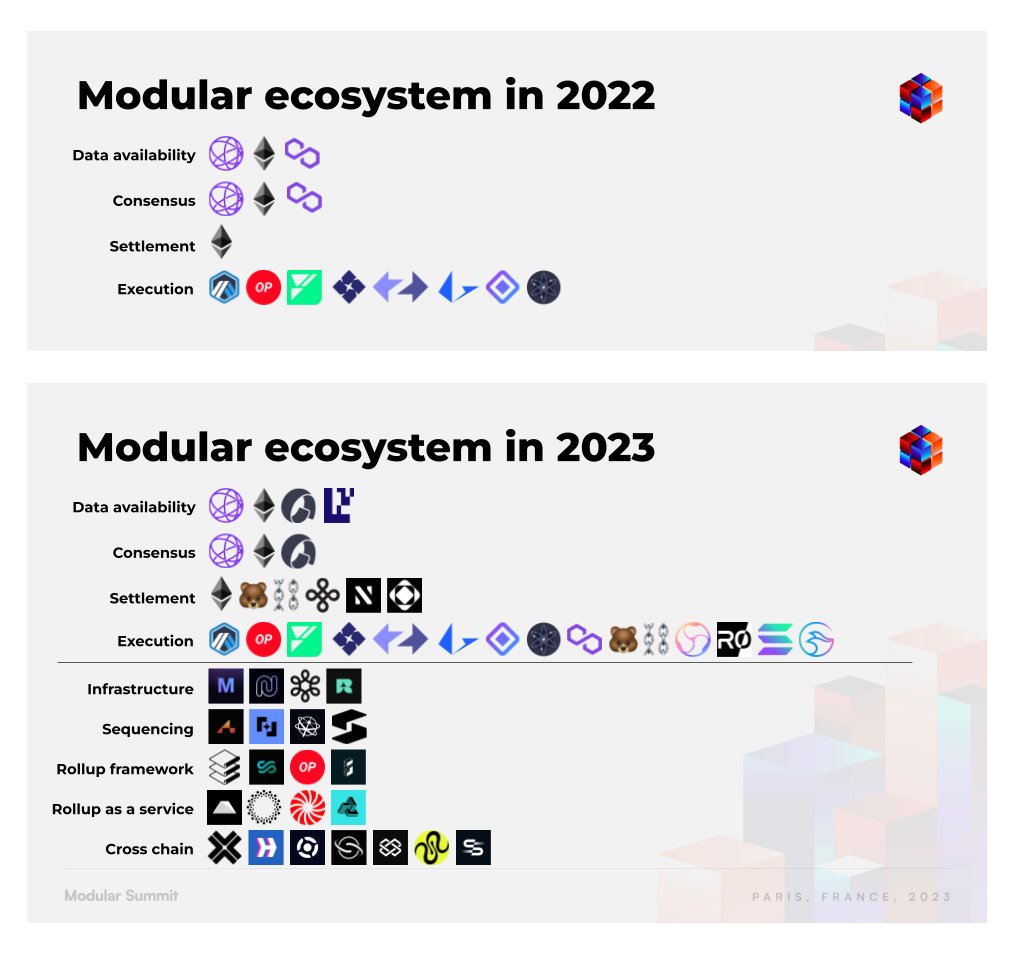
While in traditional monolithic vs. modular charts, we only see three layers, I expect the interop and sequencing layer to make its way into new, updated diagrams.
The market is going to slowly figure out how to value these new segments with experimentation and speculation, which is very exciting.
Testing out these new chains, interacting with modular rollups and being on the front lines is definitely a good way to capture this value.
All in all, we are still quite early to the modular thesis and I will be developing value accrual model in-depth as this progresses (so be sure to smash the follow button @andyyy).
As for you, anon:
Prepare yourself for a speedy UX, tons of new modular rollups, and a whirlwind of new chains as easy to spin up as smart contracts.
The builders are eating up this "build whatever" mantra and will run with it like we haven't seen before.
𝗔𝘀 𝗮𝗹𝘄𝗮𝘆𝘀, 𝘁𝗵𝗲 𝗸𝗲𝘆 𝗺𝗲𝘀𝘀𝗮𝗴𝗲 𝗿𝗲𝗺𝗮𝗶𝗻𝘀 𝘁𝗵𝗲 𝘀𝗮𝗺𝗲...
Modularism, not maximalism 🧱
Build whatever, with Polygon CDK 🧱
@CelestiaOrg’s high-throughput, modular data availability (DA) solution will integrate with Polygon CDK, lowering the barrier for launching high-throughput Layer 2 chains on Ethereum.
The integration will enable fully onchain applications and can dramatically reduce Ethereum L2 transaction fees by ~100x. Celestia's DA solution will be available to devs launching ZK L2s with Polygon CDK as an easily-pluggable component, early next year.
ZK + modular DA. A broadband moment for web3.
More: https://t.co/4a6nX6WcRk
🎊Cointime #Timestamp Summit 🎉 is come!
Cointime will Host TimeStamp Summit in Singapore on September 11th.
✨The summit is hosted by Cointime and co-hosted by Chainup @ChainUpOfficial, ABCDE Capital @ABCDELabs, and New Huo Tech @New_Huo_Tech.
💛rain or shine💛!
DA layers are different - their purpose is to prevent data withholding attacks.
Unlike data storage, this is a very blockchain specific thing. Data withholding attacks are when consensus nodes do not publish transaction data.
(5/16)
Let’s clear this up once and for all
Alchemy, the Graph and all other blockchain indexers are NOT data availability services
Neither are file storage protocols like Filecoin and Arweave 👇🧵