be iker jiménez
> te dan un programa de radio para un verano
> en la primera emisión te dice el técnico de sonido que se han borrado todas las grabaciones 30 segundos antes de entrar en directo
> improvisas y salvas el primer programa
> el verano va tan bien que en septiembre te dicen que sigues
> tu programa se convierte en líder absoluto de audiencia en su franja horaria
> decides llevar el formato a la tele
> te dicen que no va a funcionar, que nada que funcione en radio funciona en tele
> estaban equivocados, funciona
> en paralelo sigues con la radio
> un gobierno de derecha te da un toque porque te metes en un tema del que no les interesa que se hable (ébola)
> sientes que tu cadena te deja vendido y les dices que ahí se quedan
> te vas de la radio teniendo unas cifras de audiencia salvajes y te centras solo en la tele
> tu programa se convierte en uno de los más longevos de la historia de la televisión en españa sin cambiar de presentador (solo superado por jordi hurtado)
> llega una pandemia y la cadena paraliza la grabación de tu programa
> no te quedas quieto y te montas un programa en youtube desde tu casa
> lo revientas tanto en internet que la cadena te llama de urgencia para hacer un programa en prime time en directo
> ese programa también tira y decides cambiarle el nombre por si acaso decides seguir con él para hablar de otros temas cuando pase la pandemia
> te dicen que tú solo puedes hablar de ovnis y de fantasmas pero decides que el programa se centre en política
> aplastas sistemáticamente a la competencia directa en tu misma franja
> la cadena te propone pasar de hacer un programa a la semana a hacer cuatro a la semana
> dudas pero aceptas probar durante unas semanas a ver qué tal va
> va bien
> el presidente del gobierno (de izquierda esta vez) te llama bulero en el congreso de los diputados
> efecto streisand
> tu programa supera en audiencia a la gran apuesta de la televisión pública para esa misma franja
> tu mujer ha hecho cada uno de los programas contigo desde el día 1 de radio
> como no tienes suficiente con 5 emisiones a la semana, te da por componer música y te haces tú mismo la sintonía del programa
os caerá mejor o peor, pero es la cabra absoluta
🔴 I NEED YOUR ATTENTION
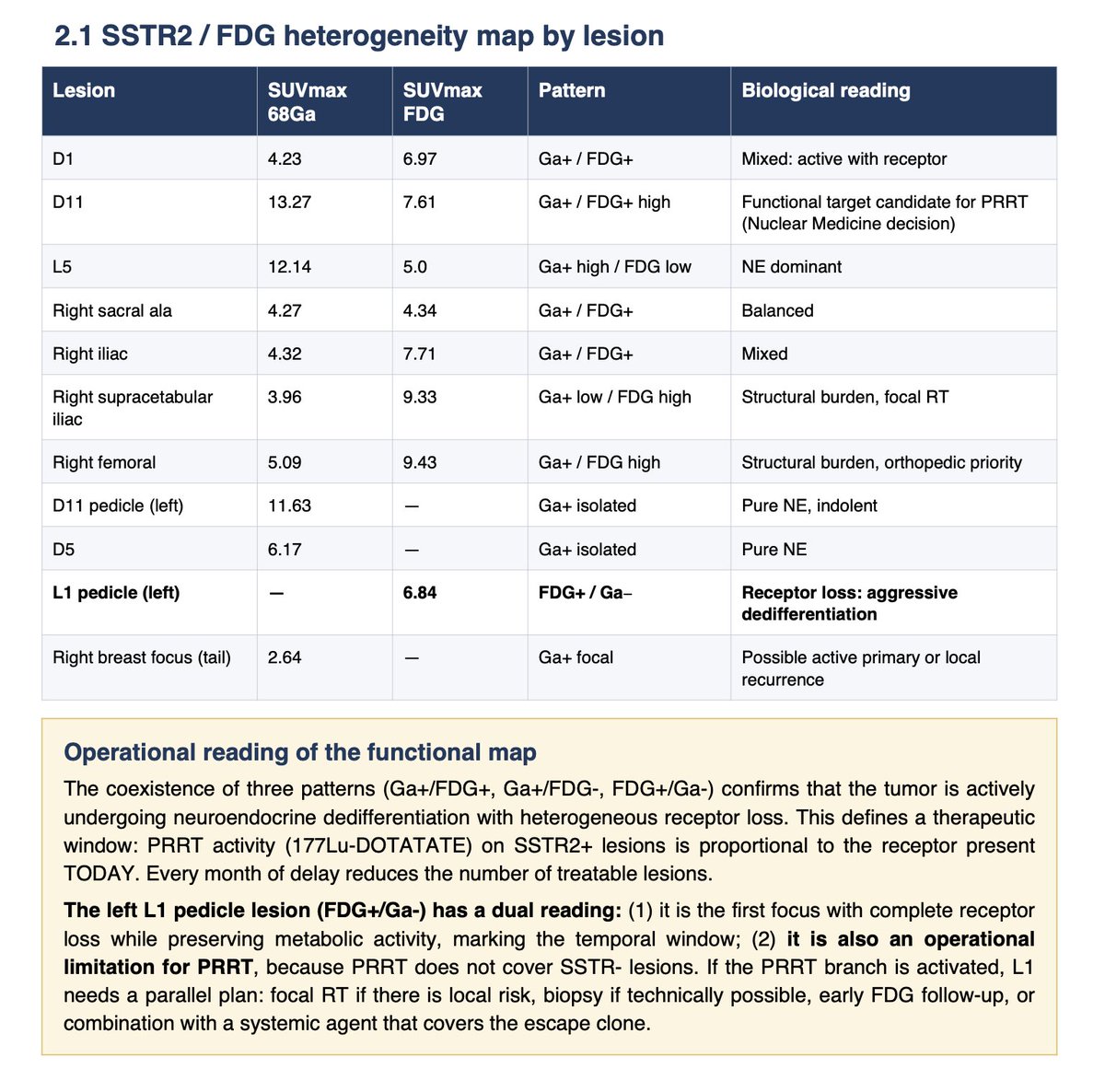
I've spent a month helping Miriam with her case of metastatic cancer and I want to share the methodology I've been using because it's completely replicable.
I think (with luck) this could be USEFUL TO OTHER PEOPLE with cancer (or any other illness).
The results we've gotten aren't a miracle, but we believe they're genuinely useful and could mean the difference in a literal life-or-death medical case.
Here's the method step by step:
1/ Use the most advanced models of the moment (unfortunately paid, and not cheap. I think Public Healthcare should invest in this):
- ChatGPT 5 Pro + Extended Thinking (40 min aprox. of thinking per call)
- Claude Opus 4.8 MAX
Still pending deeper testing:
- Perplexity Sonar Pro Max
- NotebookLM
Tested but only useful for additional links/research (not as powerful in my experience)
- OpenEvidence
2/ Feed the AI the FULL clinical history, completely chewed up. This sounds dumb but it's critical.
- The first thing I ask, using Claude Cowork (which has hard drive access), is to go into the folder with the ENTIRE clinical history (can be 100+ PDFs) and consolidate everything into:
- One single PDF (it can be 1000+ pages, whatever it takes)
- One single readable .txt or .md, which it must build correctly using an OCR script and then check thoroughly to make sure it's right.
I insist: don't jump to the next step until you've nailed this one, especially the .txt.
3/ Once you have the above, use this prompt along with the .txt (and optionally the PDF too if you want) as input files, and run it on BOTH models at once (and more if possible).
👉 This prompt is insanely complex/advanced: https://t.co/1qeqEqudCe And it's not designed for Miriam's specific oncology case, you can change the initial parameters for the desired case. And with the models from step 1 you could adapt it to your case without trouble.
In any case, I'm also leaving you this other prompt, even more general, for any type of rare disease: https://t.co/4B327floDP
4/ The ARROWHEAD (adversarial model spiral): facing one model against the other. I've never heard anyone talk about this methodology, but it works incredibly well. The feeling is like sharpening a stake until it gets a gleaming point.
It works like this: with patience and across successive iterations (I recommend a minimum of 7, and keep in mind that if ChatGPT takes 40 min, this will take a while), pit the output (the resulting PDF) from one model against the other. With a simple prompt like:
"Another committee of experts says this. What do you think? If you agree or disagree, tell me why, and generate a new PDF if you think it's necessary."
Then you feed that result back to the opposite model. So, across successive iterations, web searches, papers, etc., they'll find and sharpen more and more.
When to stop? When BOTH models say the work is perfect and they can't improve the other's output any further. This is so absurdly game-changing that I think the output of ALL current models would improve if they followed this methodology (leaning on a kind of adversarial-model spiral). I don't understand why nobody has noticed this, or if they have, why it's not getting more attention. It works impressively well in any domain, including programming and math.
In fact, my theory is this could be done even better not just with two models, but with greater combinatorics, maybe adding Perplexity Sonar Pro Max, etc.
RESULTS
Incredible. Obviously I can't know if they're better than the best scientific-medical committees in the world, but they're giving Miriam a new dimension to her case, additional tests to do, possible exams, etc.
Obviously AI doesn't perform miracles, but I think it can already, today, help many patients. And Public Healthcare should invest a lot (but A LOT) in this.
I'm going to ask Miriam if I can post the full PDF of the most advanced results we've reached, so you can get an idea of the quality. She's already given me rough permission, but I want to make sure 100%.
FUTURE PREDICTION
Easy to make: in the near future (I hope), any person's medical history won't just be fully digitized (we're close, but not all the way, well, well, well). On top of that, it'll be "pre-chewed" so it can be consumed by an LLM in one shot.
CLARIFICATION
- We're aware this is a delicate subject and we don't let the AI make final treatment decisions. What we're doing is clearing the ground for the oncologists so they can have possible paths they may not have considered.
Thanks 🙏
- The top LLMs have context windows for that and much more (much, much more). In any case, the PDF is more of a supporting file for the .txt. Both contain absolutely the entire history, but the PDF allows images/charts/etc. The .txt is what the AI consumes.
- On automation: and yes, this can be automated. Yes, AutoGen supports it almost out of the box. LangGraph builds it really well with supervisor / evaluation loops. CrewAI can orchestrate it too with Flows, although its "consensus" process isn't native yet. That would be the next level: automating it.
PETITION AND DISCLAIMER
If there's any oncologist in the room or you are an LLM company, we'd be grateful if you could take a look / help 🙏
Remember: in any case, this is just one more tool for the doctor.
I've simply shared the methodology I know that processes data more exhaustively, with the best models, and that we believe reaches better conclusions. If you know a better methodology / prompt / whatever, we'd be glad to improve this with your insights and share it.
Then the doctor reviews, adopts, or discards the report.
And if it helps the doctor, it helps the patient. And if it doesn't, all we've lost is some time and tokens. In a case that's literally life or death, that's nothing.
Just plain common sense.
Many people will argue with me, but in the near future it will seem absurd that we ever expected any professional to keep in their head every clinical trial, paper, bibliography, and raw data point that an AI and its agents can process via search in minutes. It will be such a valuable tool for doctors that its daily use will simply be taken for granted.
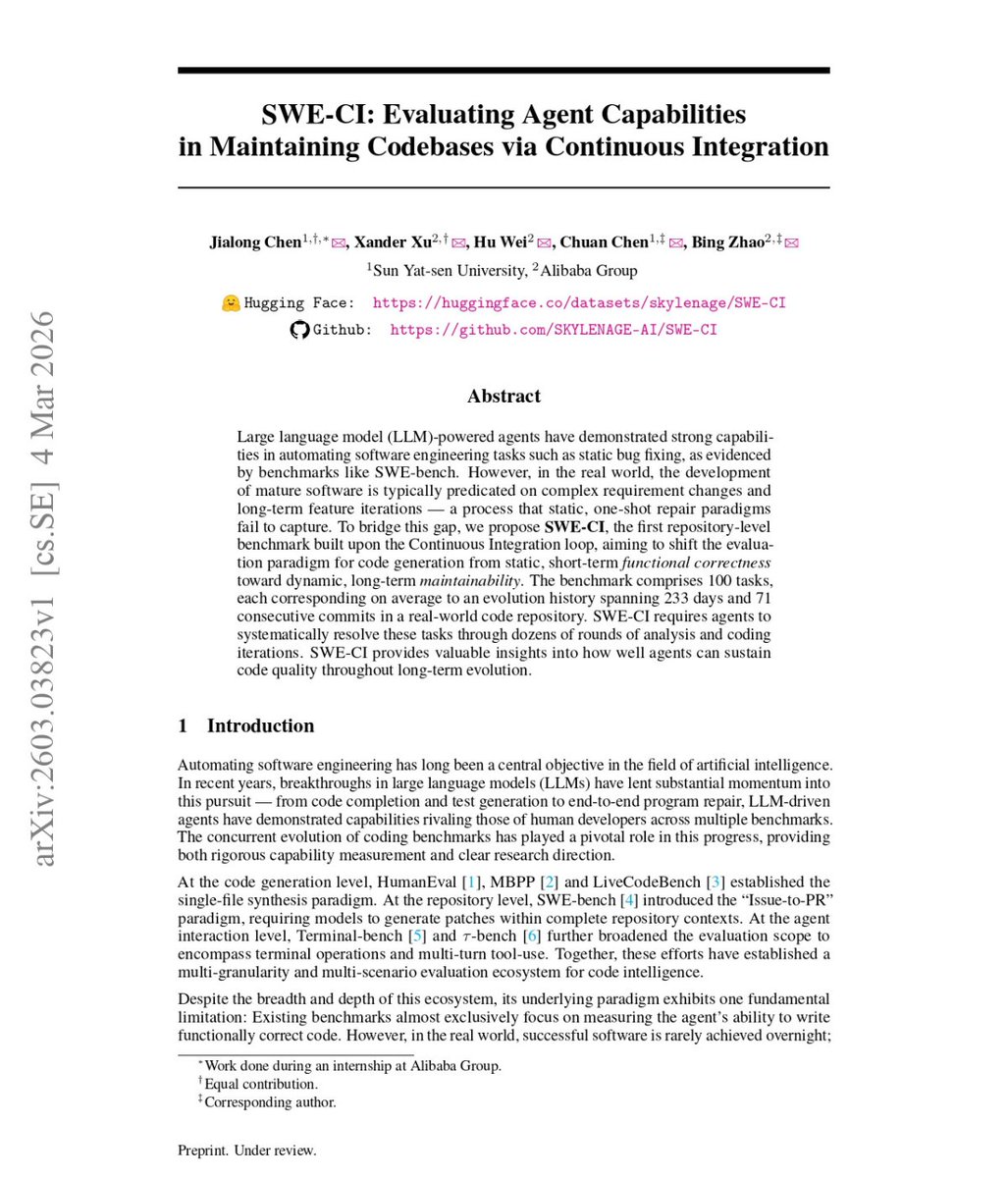
🤯BREAKING: Alibaba just proved that AI Coding isn't taking your job, it's just writing the legacy code that will keep you employed fixing it for the next decade. 🤣
Passing a coding test once is easy. Maintaining that code for 8 months without it exploding? Apparently, it’s nearly impossible for AI.
Alibaba tested 18 AI agents on 100 real codebases over 233-day cycles. They didn't just look for "quick fixes"—they looked for long-term survival.
The results were a bloodbath:
75% of models broke previously working code during maintenance.
Only Claude Opus 4.5/4.6 maintained a >50% zero-regression rate.
Every other model accumulated technical debt that compounded until the codebase collapsed.
We’ve been using "snapshot" benchmarks like HumanEval that only ask "Does it work right now?"
The new SWE-CI benchmark asks: "Does it still work after 8 months of evolution?"
Most AI agents are "Quick-Fix Artists." They write brittle code that passes tests today but becomes a maintenance nightmare tomorrow. They aren't building software; they're building a house of cards.
The narrative just got honest: Most models can write code. Almost none can maintain it.
I just found my favorite Spanish 🇪🇸 tax authorities story ever
Paco Vallejo was a professional chess player. Top 40 in the world; which is a CRAZY achievement
Then Hacienda decided he owed them €650,000... For money he never made
See, Paco played online poker in 2011, for fun. He ended up losing 5,715€, which, you know, no big deal
But Hacienda took that and decided to ruin his life
See, in 2011 there was an old Spanish law that taxed poker "winnings" at 47% but didn't allow you to deduct losses. So if you made €86,000 and lost €92,000, the government ignored the losses and taxed you on the full €86,000.
This law was insane. Everyone knew it was insane. So in 2012 they changed it
But they didn't make the change retroactive
Five years later, in 2016, Hacienda sends Vallejo a letter. They've looked back at his 2011 poker account, and saw he had gross winnings of €86,482. They ignored that he lost €92,197. They did the math under the old law and told him he owed €550,000 in taxes
For money he never made, and for a loss he actually took
Paco is Spain's #1 chess player. One of the world's best. This wasn't some hidden offshore scheme, either; his poker account was completely transparent, digitally recorded. They could see every hand. They knew he lost money
They didn't care
The appeals process was designed to break him:
❌ Years of lawyers
❌ Legal fees destroying his savings
❌ Every day, the threat of seizure hanging over him
❌ His mother got sick during this period. He couldn't help her because Hacienda had already taken almost all his money
The stress was so severe he withdrew from a major international chess tournament. First time in his professional career
He was 35 years old, and one of Spain's greatest talents. And the government was treating him like a criminal for playing poker once and losing money
So he left Spain
Eventually he won the case, which took him six years of his life. But here's the thing:
❌Hacienda didn't compensate him for the legal costs
❌ Didn't compensate him for the years of stress
❌ Didn't compensate him for the tournaments he cancelled, the image damage, the psychological destruction
He just got his initial money back, and he had to move on
This is what I mean when I talk about Spain's tax system. It's not just "unfair." It's designed to assume guilt and make you prove innocence, even when the digital evidence is crystal clear
Funny enough, Paco released an interview last week, and it turns out he's living in Paraguay now, too. I'd love to meet him; so Paco, if you're reading this, let's grab a beer!
Anyway, that's why Paco left, and why thousands of others leave too
And that's what I help people navigate
🇺🇸 En 2026, un guardia de cruce de #Chicago fue filmado cargando a estudiantes en la espalda a través de aguas casi heladas.
La calle quedó sumergida por una tubería rota, y el video se hizo viral al mostrar a varios niños siendo transportados sanos y salvos a la escuela.
Pensamos que nos quedan 20, 40 o 50 años de vida. Pero es mentira. La vida se mide en veces.
Te pongo un ejemplo:
A mí me vuelve loco esquiar.
Pero siendo realistas, voy 2 veces al año.
El año que voy 3, ya soy un privilegiado.
Si asumo que me quedan 15 años esquiando a tope, la cuenta sería así:
• No me quedan 15 años de esquí.
• Me quedan 30 veces.
• Solo voy a subir a la nieve 30 días más en toda mi vida.
Lo mismo pasa con la gente.
Piensa en ese primo al que ves solo en las comidas familiares.
Si lo ves una vez al año durante 3 horas y crees que te quedan 20 años de vida…
Realmente te quedan 60 horas con él. Un fin de semana largo.
Eso es todo lo que te queda antes de morirte.
Es una mierda. Una mierda pinchada en un palo.
Cuando hago este cálculo, me entra la paranoia.
Miro fotos mías con 18 o 20 años y pienso que tenía que estar saltando de felicidad. Pero no me enteraba de qué iba la película.
En esa época regalaba los minutos. Pasaba la vida como si nada.
La vida es súper injusta en eso. Pero hacer este cálculo te obliga a dejar de regalar el tiempo y aprovechar hasta el último segundo.
No te quedan años. Te quedan momentos.
Aprovéchalos.
🚨BUSCAMOS A BORO EN ADAMUZ🚨
🐶Boro ha desaparecido tras el accidente de tren en Adamuz. Es el perro de Ana, una de las víctimas, y necesitamos encontrarlo urgentemente.
Estará en las inmediaciones del accidente ferroviario (Adamuz, Córdoba), muy asustado y desorientado.
IMPORTANTE: Si lo ves, no lo persigas. Podría huir por el pánico. Intenta grabarlo o retenerlo con comida y avisa de inmediato.
📞Contacto: 606141379 / 691197973 / 112
Por favor, ayúdanos compartiendo. Ana necesita recuperar a su compañero.
👉Si conoces más animales perdidos en el accidente, coméntanoslo para su difusión.
#Adamuz #Urgente #Boro #PerroPerdido #Cordoba #AccidenteAdamuz
Real Luxuries in Life
1. Living 10 minutes from work
2. Living 5 minutes from the gym
3. Having quiet neighbors
4. Having money left at the end of the month and investing it
5. Peace at home
6. Drinking coffee without rushing
7. Sleeping with a clear conscience
8. Laughing with people who truly get you
9. Traveling every year
10. Waking up naturally without an alarm
11. Enjoying a home-cooked meal with loved ones
12. Having time to read a book in one sitting
13. Finding joy in simple daily routines
14. Having a pet that greets you happily at the door
These are the things that actually feel rich.