#Artsprosjekt
Kartlegging av leddsnegl i Norge.
Taxonomic inventory of chitons (Polyplacophora) in Norwegian waters.
Universitetsmuseet, Universitetet i Bergen.
Om oss/About us:
#Artsprosjekt som kartlegger forekomst og utbredelse av leddsnegl i Norge. A Norwegian Taxonomy Initiative project funded by @Artsdatabanken mapping the distribution of chitons (#Polyplacophora) in Norwegian waters.
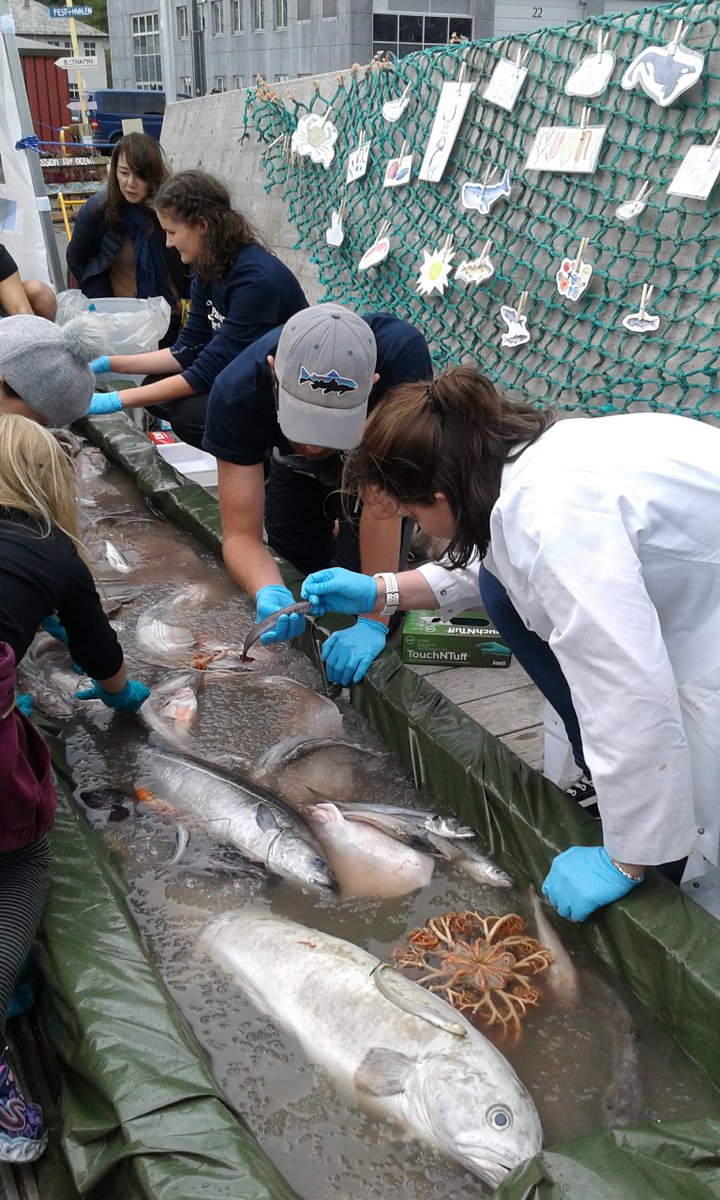
Lørdag 23. april blir det kunnskapsfestival på Marineholmen! Klokken 11-18, gratis og passer for alle.
Museet stiller med zoologer til lands og til vanns, folk fra hagene, og vandreutstilling om plasthvalen.
Se https://t.co/SKR3q6M0M2
@hardbunnsfauna @norchitons @planetcopepod
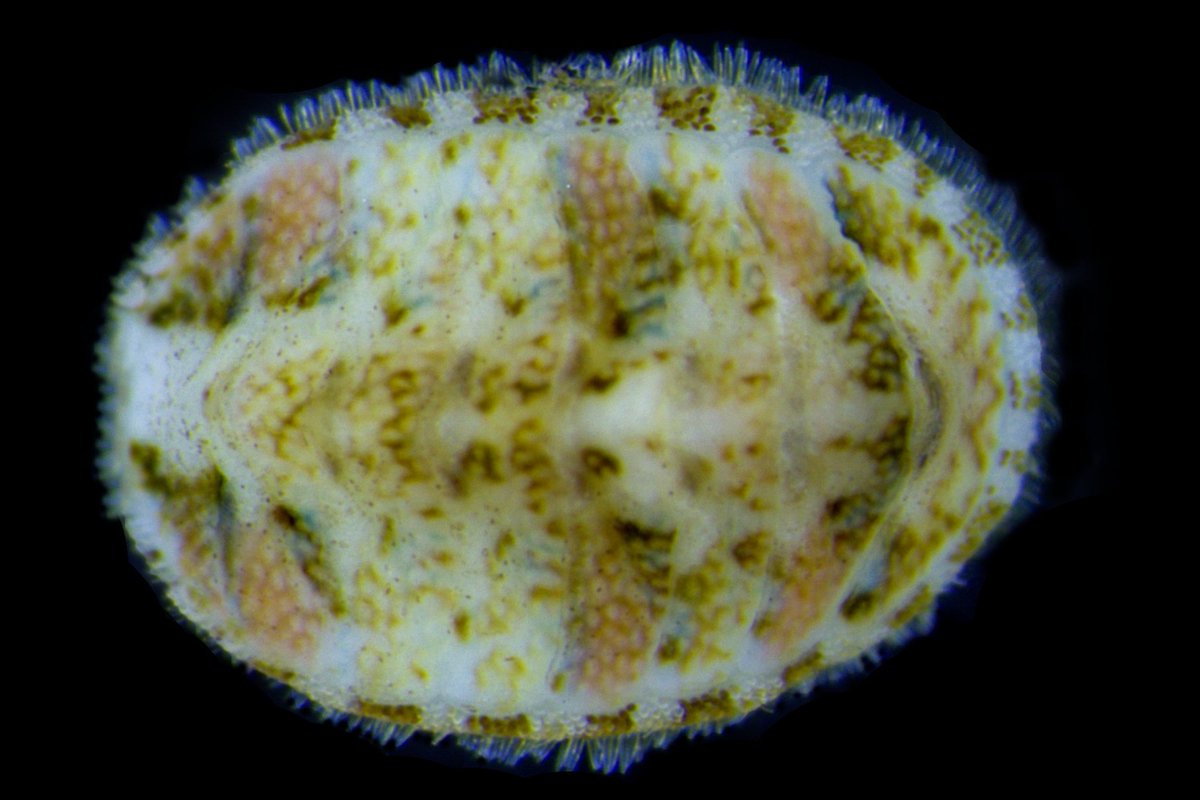
Chitons have little calcareous scales, granules, or spines on the mantle around the shell plates. In juveniles, like this tiny Lepidochitona, they are really big! But that's ok, it will grow into them as it gets larger! 😅
#polyplacophora#mollusca
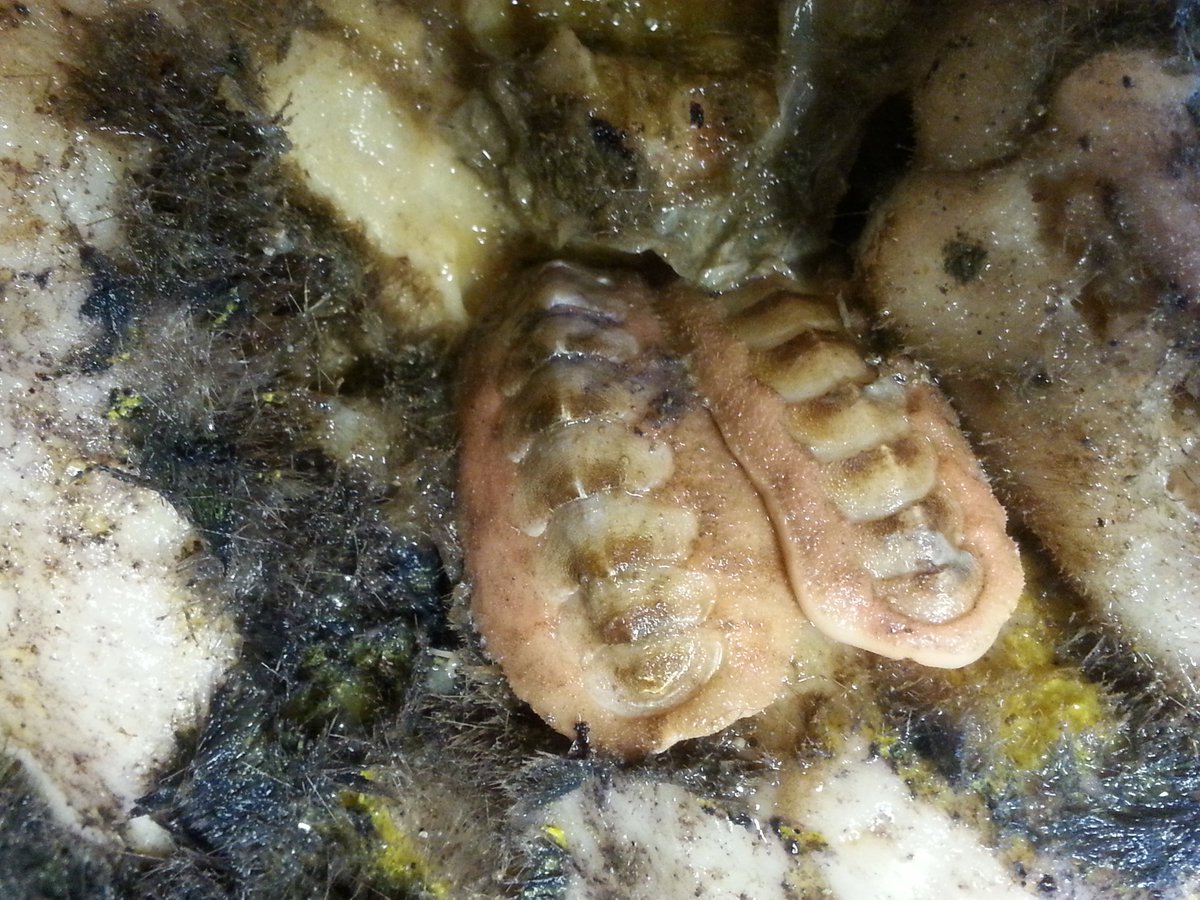
Chitons can be found on all hard substrates on the ocean floor. This species, Hanleya hanleyi, is specialized to living on sponges. They feed on the sponge, and in the process dig themselves a little protective burrow.
#Polyplacophora#MolluscMonday#Porifera
@cade_usa It varies from species to species. Species that have eyes also have different types of eyes. Some have simple, light sensitive eyespots, other species have more elaborate eyes with lenses made of aragonite (a form of calcium carbonate), the same material as the shell plates.
Did you know that #chitons can see through their shell? Their heads lack eyes, but in many species the shell plates are instead dotted with tiny eyespots, or ocelli! The little black dots are the the eyespots on the shell plates of Callochiton septemvalvis.
Om oss/About us:
#Artsprosjekt som kartlegger forekomst og utbredelse av leddsnegl i Norge. A Norwegian Taxonomy Initiative project funded by @Artsdatabanken mapping the distribution of chitons (#Polyplacophora) in Norwegian waters.
It's #fieldcourse time!
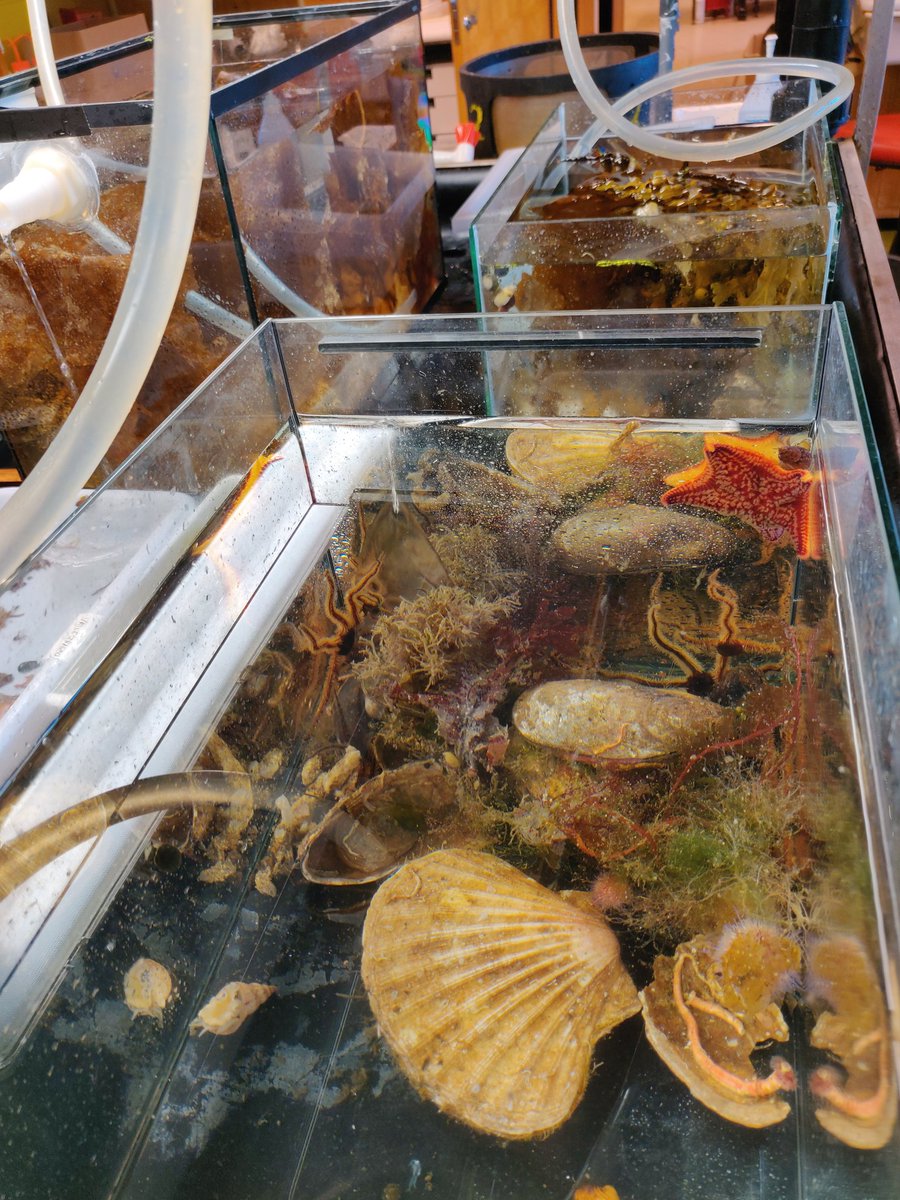
Our annual course in marine faunistics @UiBmatnat@UiB is on! Many species have already been studied and registered by the students, and the aquaria are filling up with beautiful and interesting creatures.
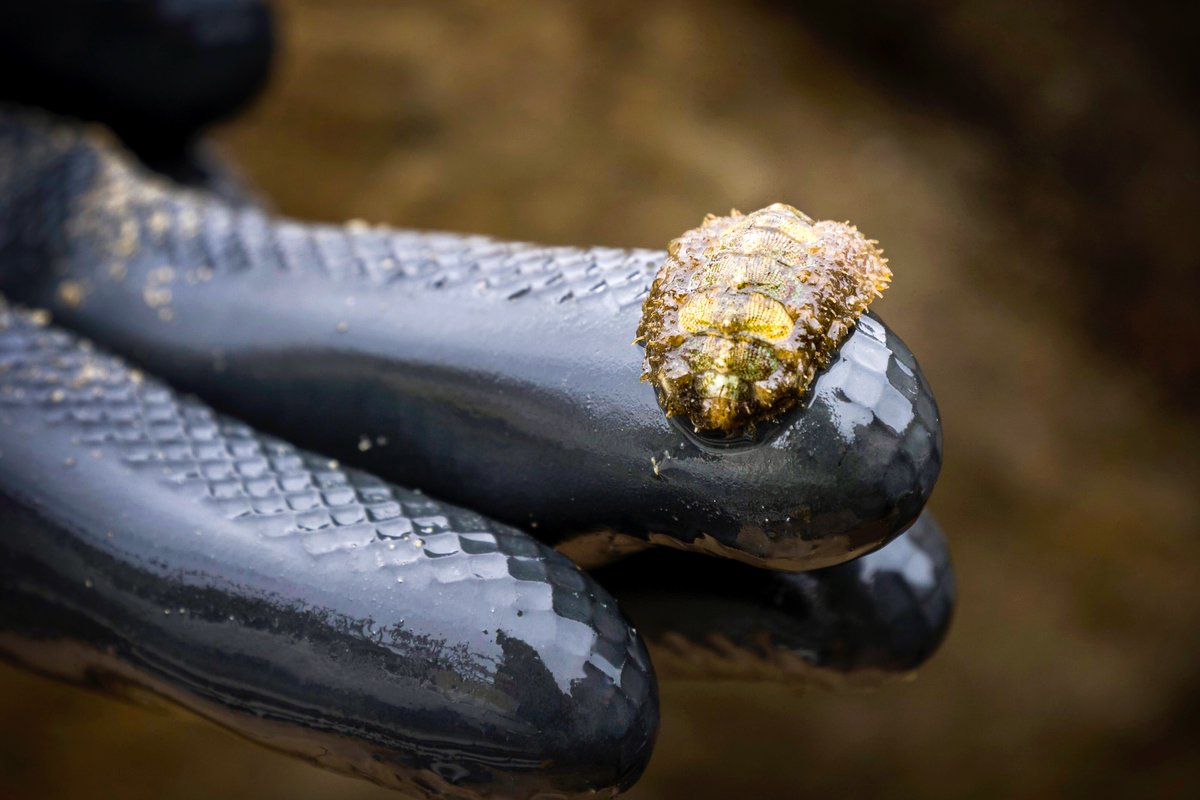
Just a couple of #chitons cruising around in a tide pool.
These are two very differently coloured specimens of Lepidochitona cinerea, little dude catching a ride is a small Littorina.