The Life Administration Series Practical Guides For Real-Life Moments (3 books)
Paperback Edition
Modern life requires adults to manage systems that were never designed to be clear, humane, or forgiving.
Medical billing.
Aging parents.
End-of-life decisions.
Most people are expected to navigate these situations without training, guidance, or structure—often under stress, guilt, or urgency. The result is confusion, burnout, and unnecessary damage.
The Life Administration Series exists to change that.
These books are plain-English, step-by-step guides for adults facing difficult, real-world responsibilities. They do not offer motivation, inspiration, or theory. They offer process, clarity, and control.
Each book in the series addresses a specific high-pressure situation:
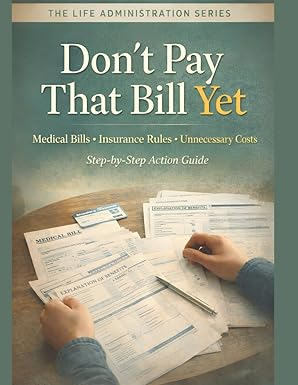
Don’t Pay That Bill Yet — A practical guide to understanding, disputing, and reducing medical bills before unnecessary payments are made.
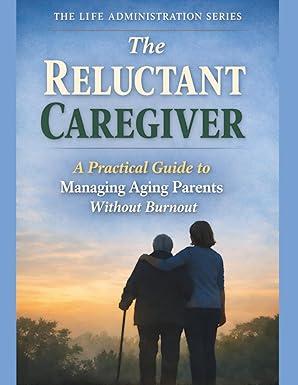
The Reluctant Caregiver — A survival guide for managing aging parents without losing your life, identity, or health.
When I'm Gone— A plain-spoken guide to end-of-life planning, decisions, and preparation families actually complete.
These books are designed to be used, not skimmed. They include checklists, scripts, logs, and decision frameworks meant to reduce mistakes when clarity matters most.
The Life Administration Series is for adults who want to act responsibly—without panic, shame, or professional dependency.
https://t.co/xUX2XZHjoT { Amazon Link }
OUT NOW......What The Sycamore Saw Two Hundred Years of Michigan Memory
Some witnesses never say a word. This one waited two hundred years to speak.
Beside a river in central Lower Michigan stands an American sycamore — tall, pale-barked, and older than the town around it. It took root before Michigan was a state, before the forests fell, before the first engine ever rattled down the road. For two centuries it has done the only thing a tree can do: stand, and watch, and remember.
What The Sycamore Saw, that memory becomes a voice — patient, observant, honest, and quietly wise. The tree narrates the whole sweep of Michigan history as it was lived on the ground: the light footsteps of the Anishinaabe along the river; surveyors with their chains; the year Michigan became a state; the ring of the axe and the fall of the great forests; a young man who carves his initials into the bark before leaving for the Civil War and never comes home; the lumber boom and the sky once darkened by passenger pigeons; the first motorcar and the birth of the auto age in nearby Lansing; Depression gardens, wartime gold stars, the rising suburbs, and the children who come at last with glass screens in their hands.
Part historical narrative, part nature writing, part love letter to a place, each chapter pairs the tree's storytelling with a short, factual What Was Happening in Michigan, and closes with a reflection that invites you to consider the old, silent witnesses near your own home.
A moving, deeply human chronicle for anyone who loves Michigan, local history, the natural world, or the quiet landmarks that outlast us all.
What The Sycamore Saw Two Hundred Years of Michigan Memory: Midwest History Nostalgia https://t.co/agsHDjyjQn #Amazon via @Amazon
@007 I've always said, he was Bond before he ever played Bond. Look at the last 2 seasons of The Saint...those season episodes were just mini James Bond movies. Much respect.
The Affairs Of Mr. Calder: The Affair Of The Silver Ledger British Mystery Adventure: Victorian Detective London Crime Novel (The Affairs Of Mr. Calder Victorian Adventure Novels) https://t.co/RFpovvG5aJ #Amazon via @Amazon
Medical billing is complicated by design.
But you don't need a lawyer or an advocate to fight back. You need a clear process and the confidence to use it.
That's exactly what Don't Pay That Bill Yet gives you — step by step.
Link in bio. 👇 #DontPayThatBill#MedicalDebt
Book 1: Don't Pay That Bill Yet
The average American overpays their medical bills by hundreds — sometimes thousands — of dollars. Not because they're careless. Because the system is designed to confuse you. I wrote the book on fixing that. Literally.
https://t.co/b30XWcDOnv
Step 7: Know your appeal rights.
If insurance denied a claim — appeal it. First through your insurer. Then through your state insurance commissioner if needed. Then through an external review process.
Most people stop at step one. Don't.
Step 6: If you dispute — dispute in writing.
Phone calls are forgettable. Letters are documented. Always send disputes via certified mail. Always keep copies.
A paper trail is your most powerful tool if this escalates.
Step 5: Negotiate.
Yes, medical bills are negotiable. Hospitals routinely accept 40–60 cents on the dollar for self-pay patients. Even insured patients can negotiate balances.
The key is knowing what to say — and what NOT to say — when you call.
Step 4: Ask about financial assistance programs.
Almost every nonprofit hospital is REQUIRED to have a charity care program. Many for-profit hospitals do too.
Most people never ask. The hospitals never volunteer this information.
Ask anyway. The worst they can say is no.
Step 3: Check the provider's network status BEFORE assuming you owe anything.
Surprise billing is real. A surgeon can be in-network while the anesthesiologist in the same OR is out-of-network.
Federal law now offers some protection here. Know your rights.
Step 2: Cross-reference every charge with your Explanation of Benefits (EOB).
Your insurance company already negotiated rates with the provider. You should never pay MORE than what your insurer approved.
If the numbers don't match — that's a red flag worth disputing.
Common errors I've seen people find on itemized bills:
• Duplicate charges for the same service • "Facility fees" for things done in a doctor's office • Charges for supplies never used • Upcoding (billing for a more expensive procedure than what happened)
These aren't rare. They're routine.
Step 1: Request an ITEMIZED bill.
Not the summary. Not the EOB from insurance. The full line-by-line itemized bill.
You are legally entitled to this. And when you get it, you'll often find charges that make no sense.
First, understand this:
A medical bill is not like a utility bill. It is not fixed. It is not final. It is a starting point — and hospitals know most people won't question it.
That's exactly what they're counting on.