Whether it’s a new policy, training, automation, or some other control, if you don’t have a clear idea of how what you’re doing helps people deal with the complexity of work, then you may need to rethink what you’re doing.
We should never again put it in on the shoulders of bereaved families to fight for truth and justice - we need to change the blame culture in the NHS for a positive learning culture in which there is openness not obfuscation following a tragedy
If your incident writeup lists “human error” as a cause, it’s a sign that you don’t really understand how the incident happened. Instead, you stopped asking questions too soon.
If your system depends on humans never making errors, you have a systems problem.
#Breaking: Today a jury convicted former Vanderbilt University Medical Center #nurse RaDonda Vaught. We are deeply distressed by this verdict and the harmful ramifications of criminalizing the honest reporting of mistakes. Full Statement: https://t.co/DbWldaBz50
Catch them doing something right!
What is your praise to reprimand ratio (PRR)? Research with teenage students discovered that a high PRR led to "greater academic engagement and report card grades, particularly for students who at baseline were more disruptive." @angeladuckw
Dismissing ideas that you dislike isn't critical thinking. It's confirmation bias.
Critical thinking is approaching new information with a mix of curiosity and doubt.
It starts with gauging the credibility of the source, the rigor of the logic, and the validity of the evidence.
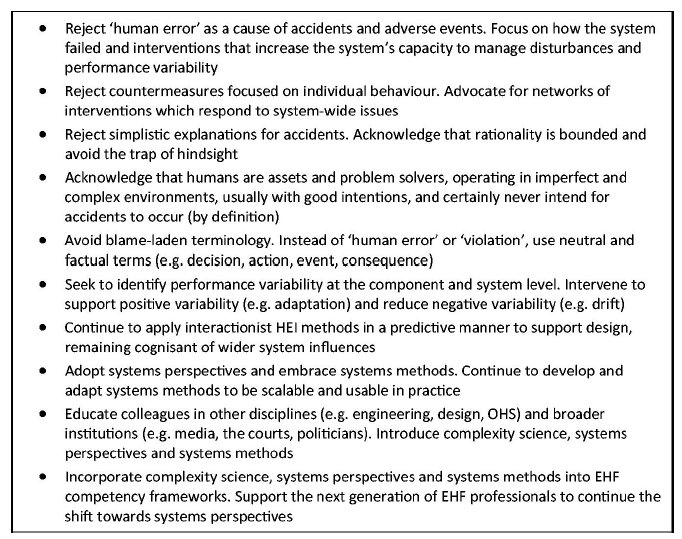
In our @ergonomics1957 state-of-science article on human error we propose the following recommendations to shift the focus from an individual, mechanistic, blame-worthy ‘human error’ approach towards a sociotechnical systems thinking approach #error#systemsthinking#safety
Psychological safety is so important for all staff to flourish! If we don't feel safe we are not in our learning zone so growth and change won't happen.
Couldn't have said it better! TY @BreneBrown “If we want people to fully show up – so that we can innovate, solve problems, and serve people – we have to be vigilant about creating a culture in which people feel safe, seen, heard, and respected.” https://t.co/JXX8gdRMga
We have tons of evidence for the importance of #PsychologicalSafety. We know it matters.
What are you doing in your workplace to create & nurture #PsychologicalSafety?
I'm looking for real stuff that you think has made a difference, & maybe stuff you've tried that didn't work.
I forgot how good this talk on "normalization of deviance" is. Really important lessons for critical systems design and operation: https://t.co/d2BhjWegJ0
Tremendous opportunity to hear all things culture coming up in just 11 days. Register at https://t.co/VmEbiwI5eZ and proceeds benefit the Firefighter Cancer Support Network and Association of Memorial Stair Climbs
Effectively nurturing a #culture of speaking up still isn’t easy—in fact, it can be even harder as teams work remotely—and it is therefore more important than ever. https://t.co/cW8eVt79G2 by @khalilsmith_