@HeidingOut Your talk with @iamJMinx got me back looking into Elliott waves. I was combing through random charts and yes this is a crapco, but they were supposed to turn around with the new CEO they sniped from Apple. $PTON Could I be looking at an expanded flat here?
@HeidingOut And if they still make many, many 20% swings up and down through digestion, more opportunities to cash in. Or aggressive wave 2 price corrections and not slow time corrections. Those just chop me up too much.
@HeidingOut With some software names reporting big and having huge reactions up. I'm trying to decipher what software companies will execute the best post SAASpocalypse, post earnings. They took their links now its time to see who comes out swinging heavy.
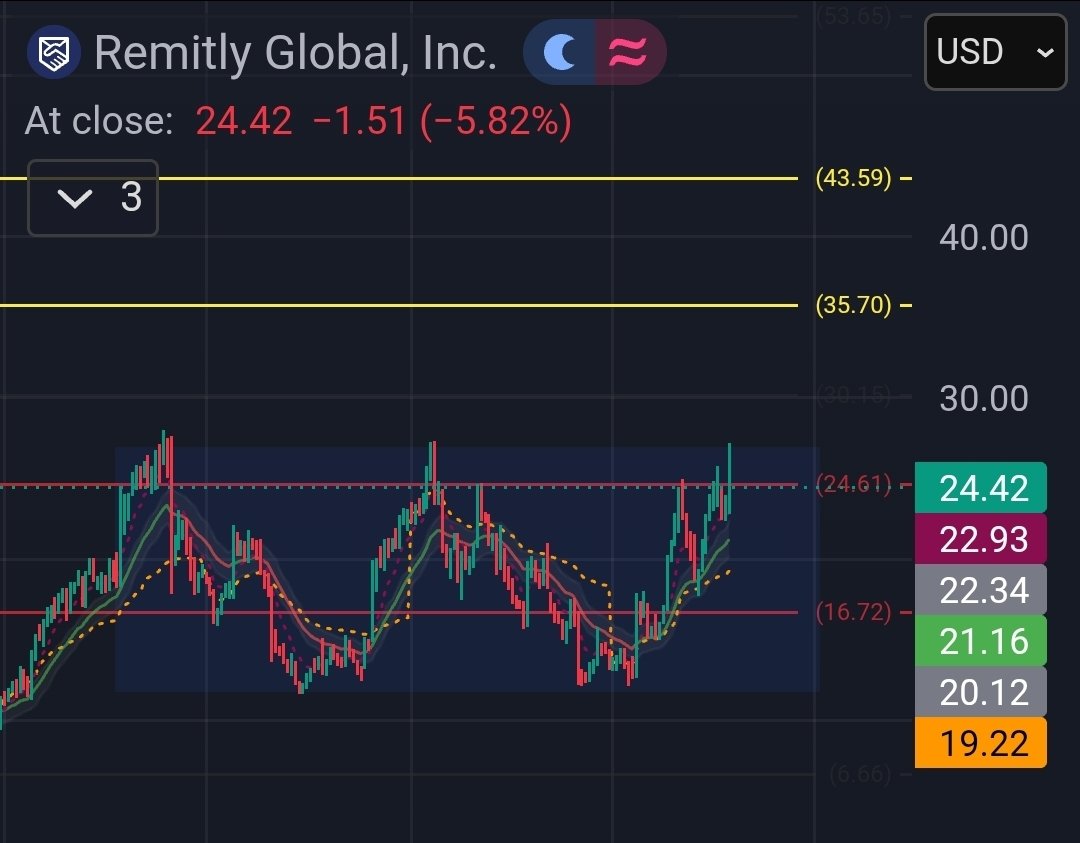
Here's a new video for any of you late night owls. I see this setup occurring in $MXL and it looks like a breakout coming very soon. Hope you enjoy the video. $MXL
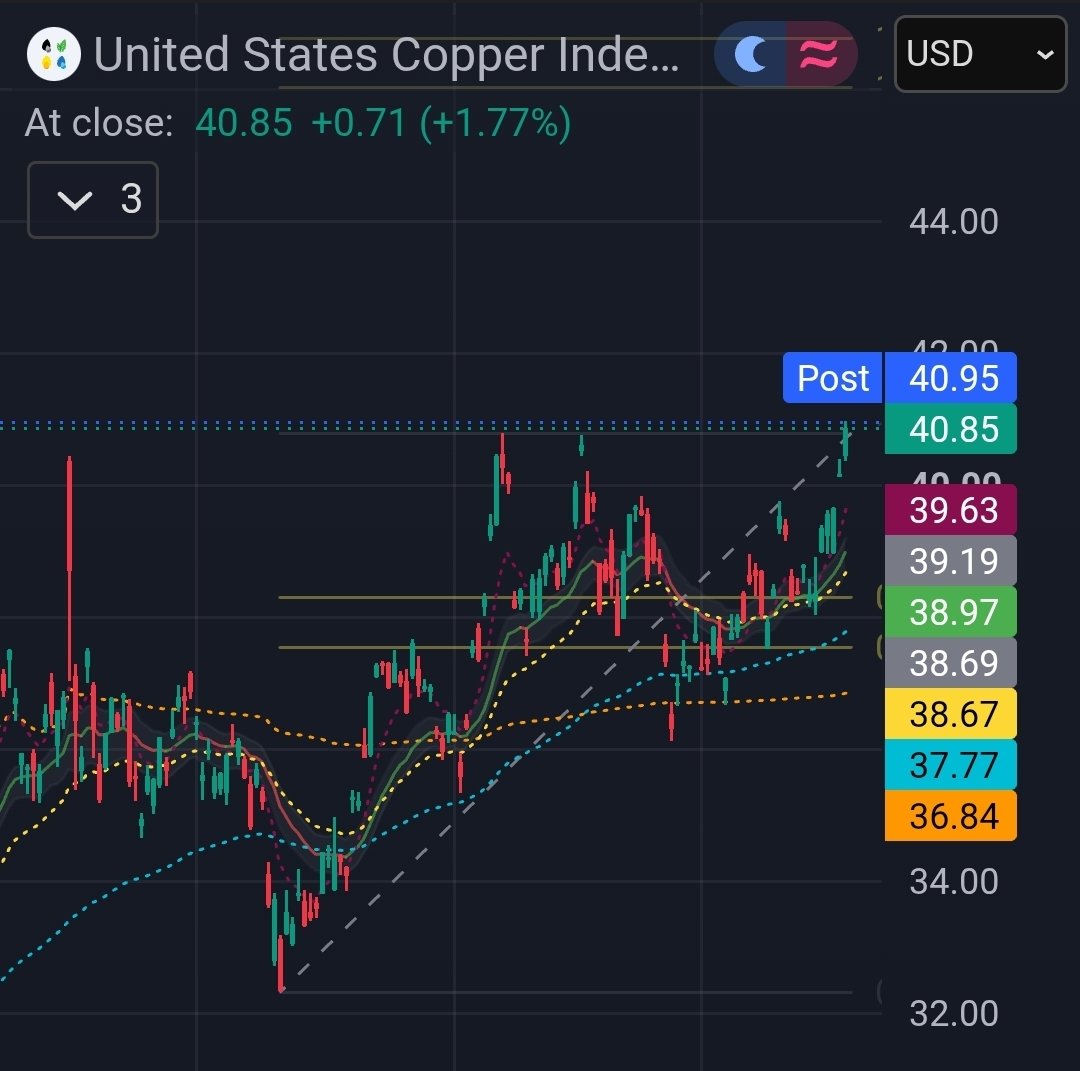
Another one I've been holding long for a while. Mainly with the idea that all this AI build out requires electricity and what conducts electricity best....copper. $CPER
@HeidingOut Ive had issues before when trying to program things and I want after hours data included. A lot of things dont have access and just give you a best guess and it explains why in a fine print disclosure somewhere.
@HeidingOut My best guess would be to reset your session setting between regular and extended and see if it fixes it at all. Seems stupid but sort of like turning it off and on again. Gotta get your levels right. 😃
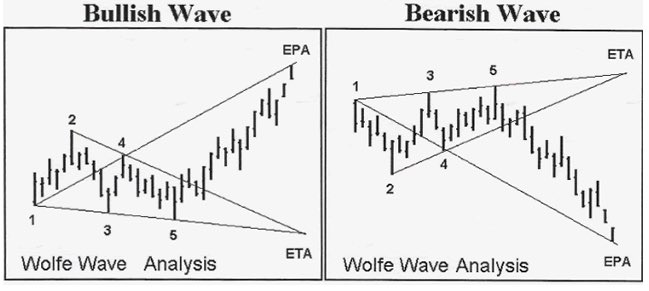
I have had a few of you ask what is a Wolfe wave. I’ve been misspelling it but here are the basics. Developed by Bill Wolfe:
•A proper channel must form using points 1, 2, 3, and 4 (created by waves 1–3).
•Timing between the waves should be relatively consistent.
•Waves 3 and 5 are typically 127% and 162% Fibonacci extensions of the prior swing inside the channel.
•Point 5 is a move that slightly pierces outside the channel formed by points 1–4. This is often a false breakout (though not always). The ideal entry occurs after price returns back inside the channel.
•The target (point 6) comes after wave 5. Draw a line connecting points 1 and 4 and extend it forward this is the estimated target. Symmetry can help refine the exact price target.
•A falling channel creates a bullish Wolfe Wave, where price breaks above resistance to reach the upside target.
•A rising channel creates a bearish Wolfe Wave, where price breaks below support to reach the downside target.
•Horizontal channels that form during consolidation can break in either direction. I have to guess if it’s a bullish or bearish version.
I always like checking the IBD Top 15.
It's a quick way to see where institutional money is flowing.
This week's list is heavily focused on AI infrastructure, semis, and healthcare.
$MU $ALAB $ARGX $TVTX $LQDA $HUT $CRDO $AMD $TGTX $CRS $ASTH $GH $MIRM $LRCX $DY