🇮🇷 Senior delegations from Hamas and Palestinian Islamic Jihad attended funeral ceremonies for Ayatollah Ali Khamenei at Tehran's Grand Mosalla, where the former supreme leader, killed with members of his family in the US-Israeli strikes that opened the war on February 28, lies in state.
The Hamas delegation was led by Muhammad Darwish, head of the movement's leadership council, and included Zaher Jabarin, Osama Hamdan, Mousa Abu Marzouk, Basem Naim, Izzat al-Risheq, and Khaled Qaddoumi. PIJ Secretary-General Ziad al-Nakhalah led his movement's delegation, joined by Ihsan Ataya and others.
Iranian state media said representatives from more than 100 countries are expected across seven days of ceremonies, with the foreign ministry counting at least eight heads of state or government, including Pakistani Prime Minister Shehbaz Sharif alongside army chief Asim Munir, Russia's Dmitry Medvedev as Putin's envoy, and Taliban Foreign Minister Amir Khan Muttaqi. Processions move to Qom, then Najaf and Karbala in Iraq, before burial July 9 at the Imam Reza shrine in Mashhad, Khamenei's birthplace. Authorities expect millions of mourners.
The six-day state funeral for Iran’s late Supreme Leader Ayatollah Ali Khamenei is officially underway in Tehran. On July 4 and 5, public farewell ceremonies and funeral prayers will be held at the Imam Khomeini Mosalla Grand Mosque in Tehran.
Millions are flooding the streets of Tehran, and it is a spectacle the world simply cannot ignore. The funeral procession for the late Ayatollah Ali Khamenei has officially begun today, and the scale is staggeringly massive.
Trump’s decision to plunge us into this illegal, unprovoked war has forced us into a dangerous fallout as the Muslim world unites.
This is one of the largest funeral gatherings in history!
The firm behind Wembley and Tottenham's stadium designed a football ground in Mexico, then pointed it at a mountain. They dropped the roof on one end so the open side frames the Cerro de la Silla, the saddle-shaped mountain that rises over Monterrey, sitting right behind the pitch.
That view in the clip came first. The architects, a firm called Populous, built the stadium around it, and they have said the mountain was one of the biggest reasons it looks the way it does. The roof stands tall on the north side and slopes down toward the south, opening up so the mountain fills the gap above the stands.
The roof is one solid piece that reaches 55 meters out over the crowd, longer than an Olympic pool, with nothing holding it up from underneath. It shades fans from a summer sun that climbs past 40°C, or 104°F. The sides stay open so the air keeps moving. Instead of closing the place up and running air conditioning, Populous cut "gills" into the metal shell, angled to catch the breeze and push warm air up and out. The building cools itself.
The metal shell is a nod to the city's past. Monterrey built its fortune on steel and had the first iron and steel foundry in Latin America, so the stadium is wrapped in steel and aluminum, which got it the nickname "El Gigante de Acero," the steel giant. The lopsided, sweeping shape comes from an odd place: the outline of old brewing stills, a tip of the hat to the beer-making the city has done since 1890.
Inside, they pulled the crowd right on top of the grass. The first row sits 9 meters from the field. At the club's old ground, it was 27. The stands tilt back at 34 degrees, one of the steepest angles in the Mexican league, packing all 53,500 seats close to the pitch, which is part of why it gets so loud.
FEMSA, the drinks giant that owns the club, paid for all of it. The bill came to around $200 million, making it the most expensive stadium ever built in Mexico when it opened in 2015. In 2024 it became the first stadium in Latin America to earn LEED Gold, a major green-building rating, for how it handles energy and water.
So the view in that clip was drawn into the plans years before they laid the first beam. The whole building is a frame, and the mountain is the picture.
Swiss farmers planted flowers between their crops and watched pest damage drop by over half. The UK is now running the same trial across 15 farms. The reason this works is embarrassingly simple.
A Swiss study on winter wheat found that fields with wildflower strips had 40 to 53% fewer leaf beetle pests than fields without. Crop damage dropped 61%.
The mechanism is simple. Wildflowers feed hoverflies, lacewings, parasitic wasps, ladybugs, and ground beetles. Those insects eat the aphids, beetle larvae, and caterpillars that farmers would otherwise spray for. A few meters of wildflowers hosts an unpaid pest control crew that would jump at the chance to whoop some aphid ass.
In apple orchards where no insecticides had been used for five years, plots with wildflower alleyways had 9.2% damaged fruit. Control plots without flowers had 32.5%.
The UK is now running a five-year trial across 15 farms placing 6-meter flower strips through the middle of fields, not just at the edges, because the beneficial insects can't reach the center of a large field otherwise.
This works the same way in a backyard vegetable garden as it does on a commercial farm. Plant native flowering species near your tomatoes, beans, and squash. The pests still show up, but the predators show up too.
Study doi: 20151369
When he stood at Gettysburg and said, “Four score and seven years ago,” Lincoln pinned the beginnings of the country not in the writing of the Constitution, which had still not been transformed by the Civil War and Reconstruction, but in the Declaration of Independence, which proclaimed the values of equality, unalienable freedom, and democratic self-government. These values have been the driving force towards a more perfect Union.
Dana Terrace has created artwork for ‘The Three Tomes’ by @breanimator.
The queer YA coming-of-age series follows a bisexual Black teen witch as she battles monsters and falls in love with vampires.
Support The Three Tomes on Kickstarter (Link Below ⬇️).
LET'S GO! Monkey D. Luffy threw out the ceremonial first pitch and recited ""It's Time for Dodger Baseball!"" during ONE PIECE Night in UNIQLO Field at Dodger Stadium! (7.2.26) 🏴☠️⚾️
#ONEPIECE#Dodgers@Dodgers
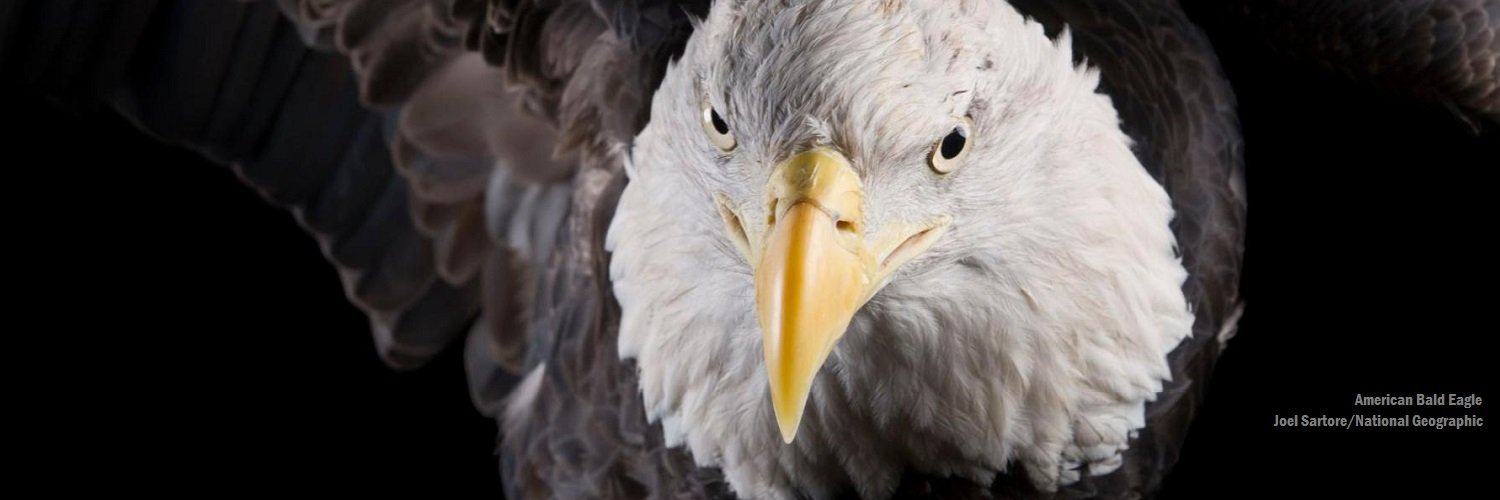
Getting ready for your July Fourth weekend? We are still soaring from our Grand Opening ceremony – and enjoying this video of an unexpected guest with a birds-eye view.
A few of our eagle-eyed guests caught sight of an actual bald eagle flying overhead during the ceremony.
There’s more to learn: Some bald eagles are known to be nesting at Park 597 near the Calumet River, where two eaglets were recently spotted.
Be sure to send us your nickname ideas for the bald eagle, along with any sightings of your own!
And Happy Independence Day!
🚨 The BLM is reviewing nationwide strategies that will shape the future of America’s wild horses & burros.
⏳ Public comments close July 2.
https://t.co/YZ6wObc2vz
📸 Scott Wilson
A thousand years before modern boats crossed the waters of Lake Waccamaw, Native craftsmen were building vessels that could carry people, goods, and knowledge across the region.
Archaeologists recently recovered a remarkable 28-foot dugout canoe from Lake Waccamaw in North Carolina, a discovery believed to be connected to the ancestors of today's Waccamaw Siouan Tribe. Estimated to be around 1,000 years old, the canoe offers a rare look at the skill, engineering, and craftsmanship of Indigenous peoples long before European contact.
Carved from a single massive tree trunk, the vessel demonstrates an impressive understanding of woodworking, transportation, and life on the waterways that connected Native communities throughout the Southeast.
Because the canoe remained preserved beneath the lake's waters for centuries, experts have been able to study details that are rarely found in artifacts of this age. The discovery is helping researchers learn more about how Native peoples traveled, traded, fished, and interacted with neighboring communities.
For the Waccamaw Siouan people, the canoe is more than an archaeological find. It is a connection to ancestors whose knowledge, innovation, and traditions helped shape the region for generations.
Discoveries like this remind us that Native history is not buried in the past. It continues to emerge, teaching us new lessons about the ingenuity and achievements of the first peoples of North America.
Half of all U.S. states, 25 to be exact, carry Native American names. Today we will be taking a look at the 25 states and the meanings of their names. They will be listed in alphabetical order. 1. Alabama: Named after the Alabama, or Alibamu tribe, a Muskogean-speaking tribe. Sources are split between the meanings 'clearers of the thicket' or 'herb gatherers'. 2. Alaska: Named after the Aleut word "alaxsxaq", which means "the mainland" 3. Arizona: Named after the O'odham word "alĭ ṣonak", meaning "small spring" 4. Connecticut: Named after the Mohican word "quonehtacut", meaning "place of long tidal river" 5. Hawaii: Is an original word in the Hawaiian language meaning "homeland" 6. Illinois: Named after the Illinois word "illiniwek", meaning "men" 7. Iowa: Named after the Ioway tribe, whose name means "gray snow" 8. Kansas: Named after the Kansa tribe, whose name means "south wind people" 9. Kentucky: Origins are unclear, it may have been named after the Iroquoian word "Kentake", meaning "on the meadow" 10. Massachusetts: Named after the Algonquin word "Massadchu-es-et," meaning "great-hill-small-place,” 11. Michigan: From the Chippewa word "Michigama", meaning "large lake" 12. Minnesota: Named after the Dakota Indian word “Minisota” meaning “white water.” 13. Mississippi: Named after the river which was named by the Choctaw, meaning “Great water” or “Father of Waters.” 14. Missouri: Named after the Missouri tribe whose name means "those who have dugout canoes
Important message from little SherlyJohn of the Mono Lake Kootzaduka’a tribe! The Mono Lake horses are deeply tied to the cultural and spiritual heritage of local Indigenous communities—yet USFS is still preparing to round up up these animals. Take action: https://t.co/uQvRYmHWot