A KPI turned red. Now what?
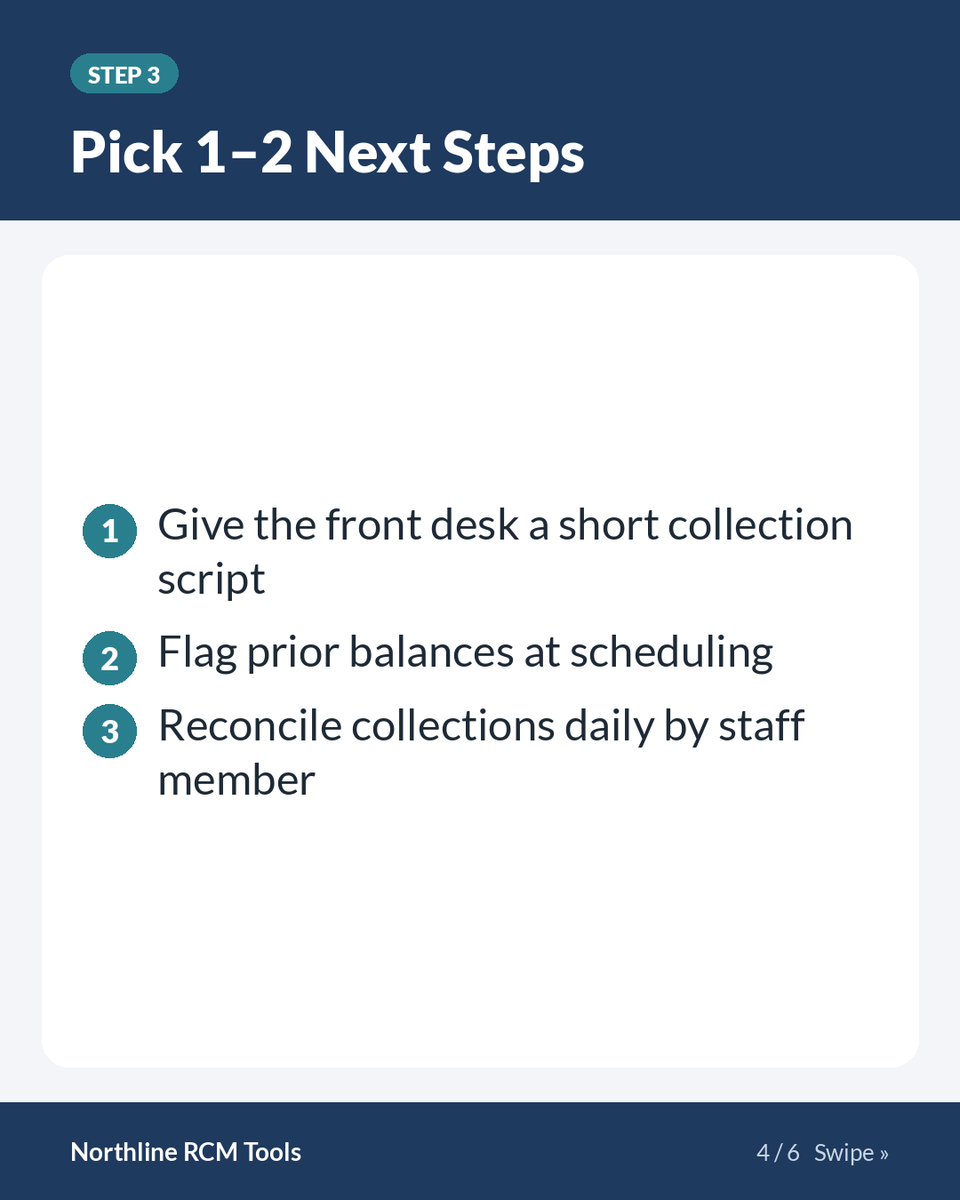
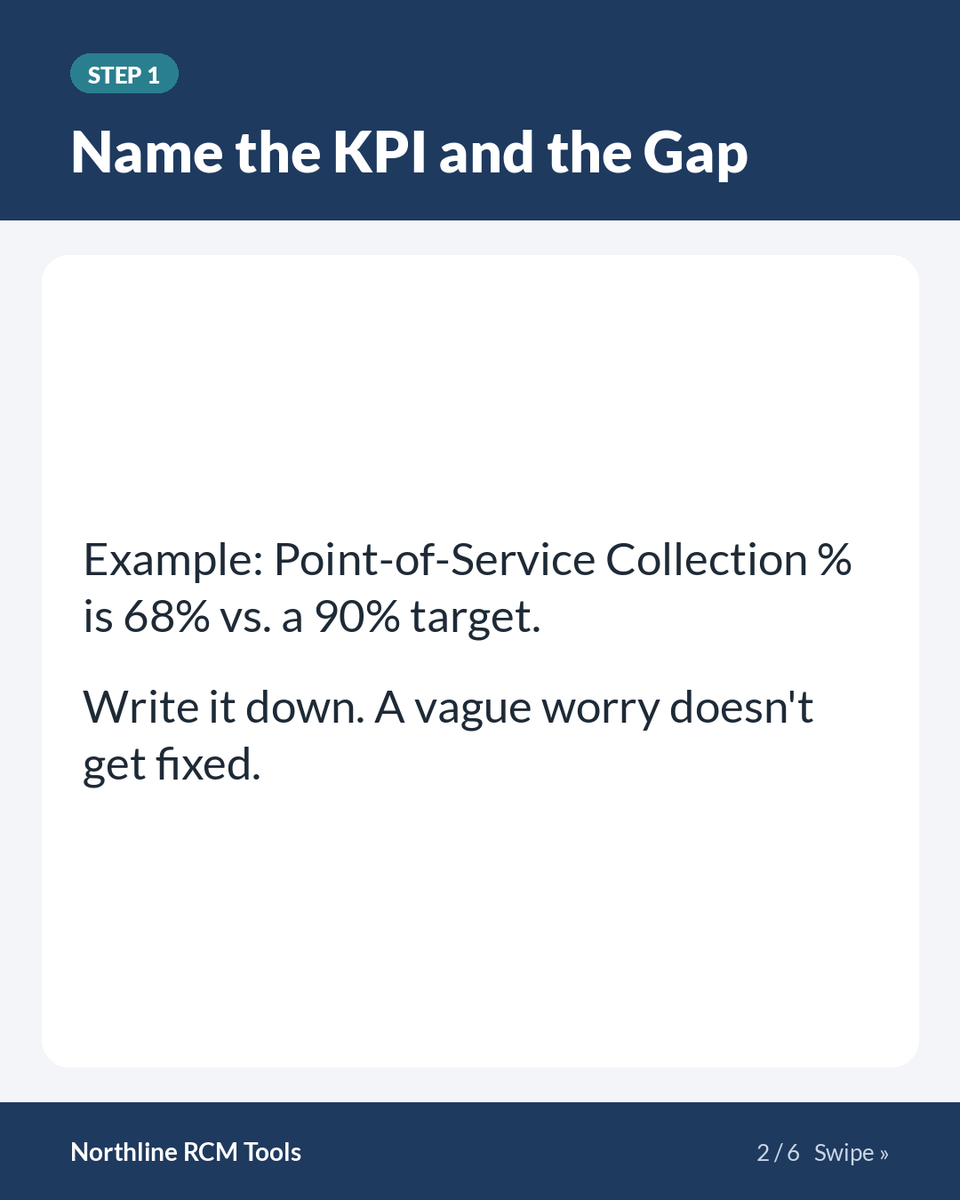
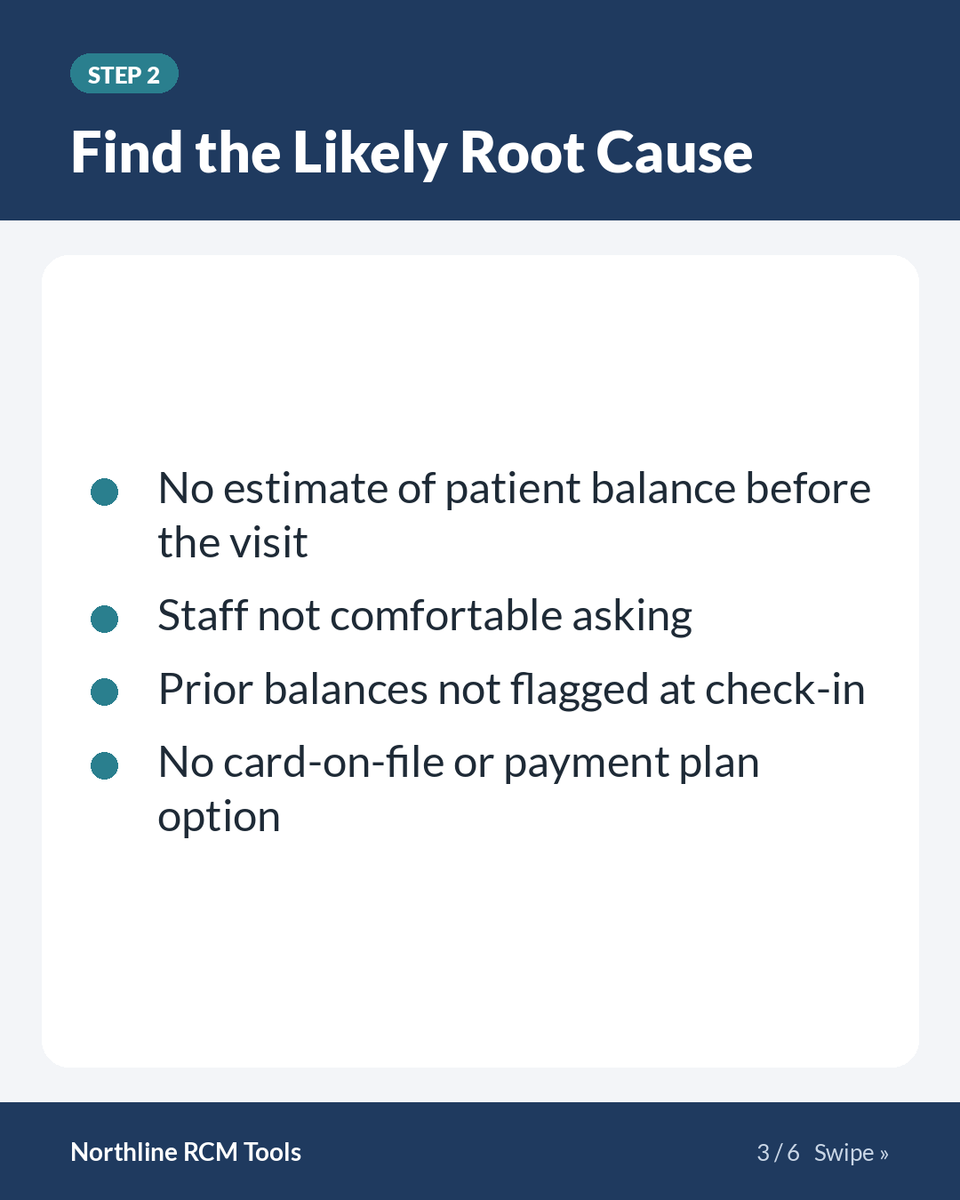
From red flag to action plan in 4 steps: name the gap, find the likely root cause, pick 1-2 next steps (not 10), and give it one owner and a due date.
Pro kit Action Plan tab: https://t.co/qsQU8U3vch
#RevenueCycle#RCM
@ccoacademy Modifier 25 is the one I see cause the most rework, usually when the separate E/M documentation is thin. A quick pre-bill edit that flags 25 on same day procedures catches most of those before they turn into denials.
@staffingly For practices, the practical win from shorter windows is tracking auth turnaround by payer so staff know when to escalate instead of waiting. Keeping a simple log of submit date, decision date and denial reason makes appeals much faster.
@techguy@AHIMAResources@akasahealth Autonomy works best on the high volume, rule based work like status checks and simple denials. The catch is exception handling, so I would track how many accounts still land in a human work queue and how long they sit there.
@KaizenSystemInc For us the biggest one has been denials that trace back to registration and eligibility errors, since they are cheap to prevent and expensive to rework. Splitting denials by root cause for a month usually shows which of your challenges is actually costing the most.
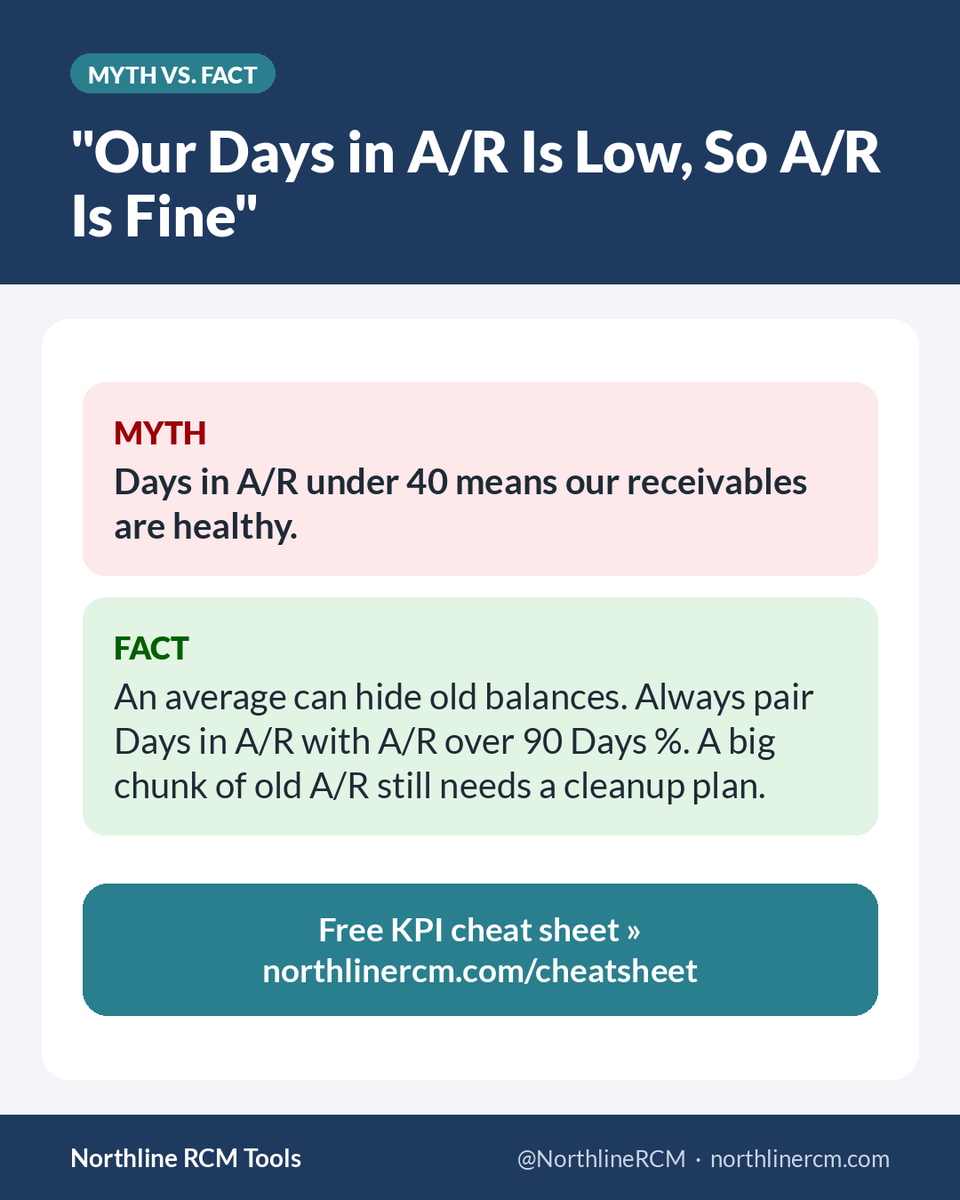
MYTH: "Our Days in A/R is under 40, so our A/R is healthy."
FACT: An average can hide old 120+ day balances nobody is working. Pair it with A/R over 90 Days %. Target: under 15-20%.
Free KPI cheat sheet: https://t.co/KnjEyzz71X
#RevenueCycle#AccountsReceivable
@soycronus Faster auth packets help, but the number to watch is auth-related denial rate by payer, before and after. If that does not move, the bottleneck is probably front-end eligibility and documentation rather than packet building.
@NorwoodCDI Write-offs rising while tech budgets grow usually points to upstream causes. Splitting final denials by root cause (eligibility, auth, coding, timely filing) shows where a fix beats another tool.
@RevCycleGuy Plain language on statements really does cut call volume. Pairing it with tracking patient balance collection rate by statement version helps you see which wording actually gets people to pay sooner.
Coding and modifier denials repeat. Find the pattern once and fix it for good.
Pull 30 days of coding denials, group them by code and reason, then add a scrubber edit for each repeat error.
Free KPI cheat sheet: https://t.co/KnjEyzz71X
#RevenueCycle#MedicalCoding
@HLTHEVENT@modmed The tax is real, and it is easier to fight with data. Tracking denial reasons by payer and appeal overturn rate shows which denials are worth automating a response to and which need a fix upstream.
@alokgangaramany@cmbreneman46236 Agreed, and the payer-level view is the useful part. Tracking auth turnaround and auth-related denials by payer tells you which ones need a standing workflow and which can stay light-touch.
@nickperspectiv Most of that chasing is avoidable with a front-end check. Verifying eligibility and auth requirements before the visit, then logging each denial reason by payer, shows which fix saves the most time.
@MGMA Alignment shows up in the numbers too. A shared weekly view of clean claim rate, denial rate by payer and A/R over 90 days gives front desk, coding and billing one scoreboard to own.
Your denial rate is a report card on your front end.
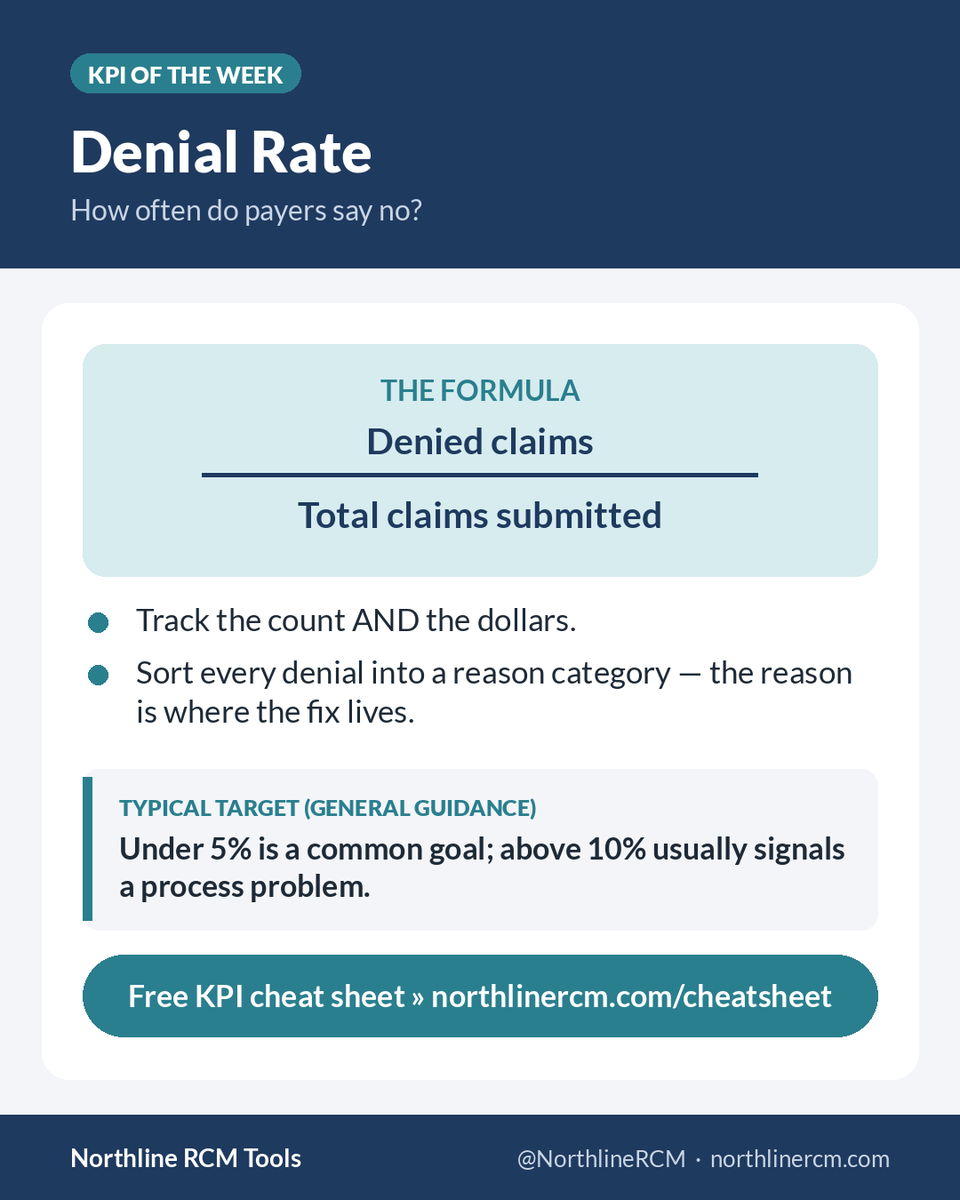
Denial Rate = Denied claims ÷ Total claims submitted. Track count and dollars, then split by reason and payer. The reason tells you what to fix.
Free KPI cheat sheet: https://t.co/KnjEyzz71X
#RevenueCycle#DenialManagement
Your top denial reason is your next project.
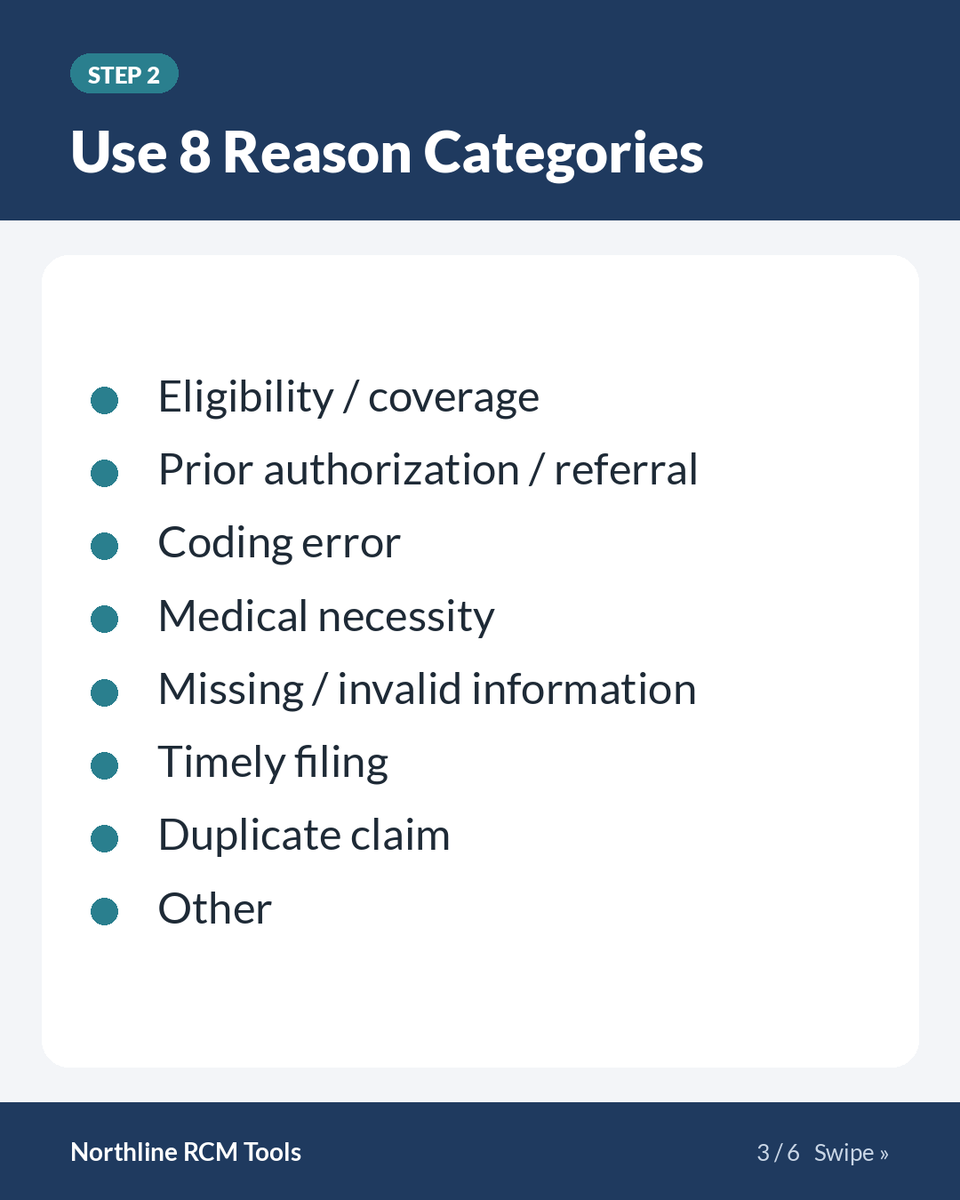
Sort last month's denials into 8 reasons and total the dollars in each. The biggest bucket is often a front-desk or scheduling fix, not a billing one.
Pro kit (Denials Tracker): https://t.co/qsQU8U3vch
#RevenueCycle#DenialManagement
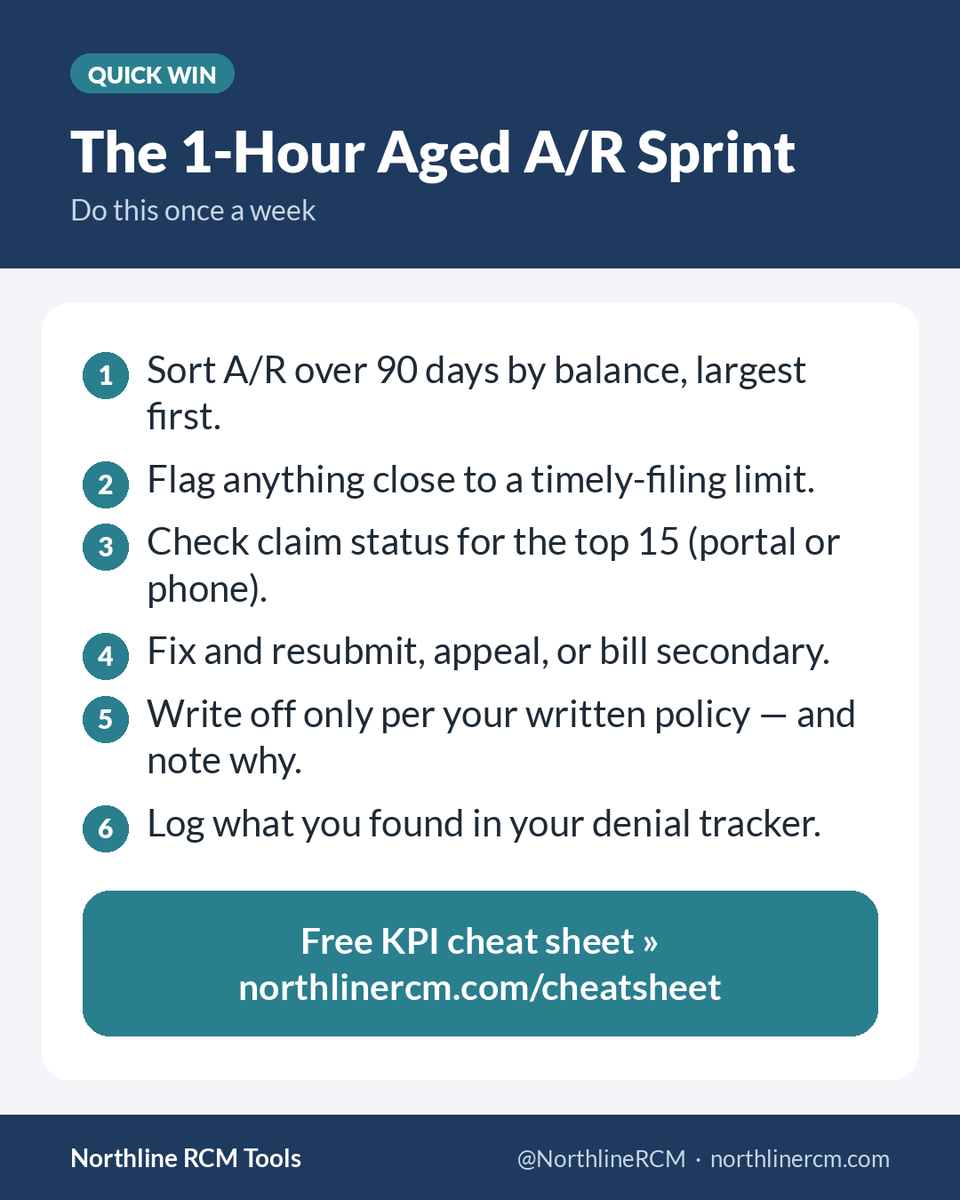
The 1-hour aged A/R sprint (do it every week).
Sort A/R over 90 by balance, flag filing deadlines, work the top 15, log every fix.
Target: A/R over 90 under 15-20%.
Free KPI sheet: https://t.co/KnjEyzz71X
#RevenueCycle#MedicalBilling
Build a denial log in 15 minutes, no new software.
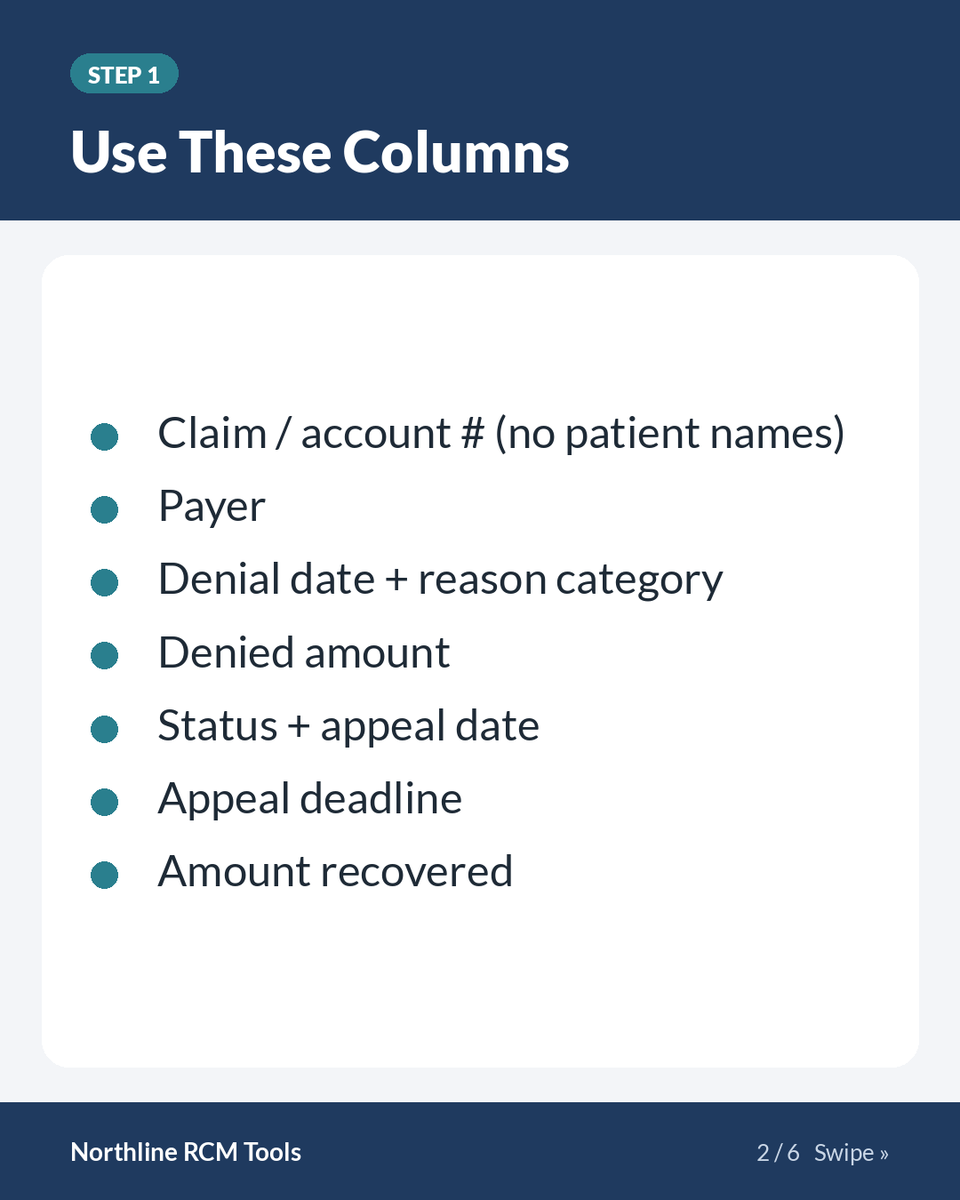
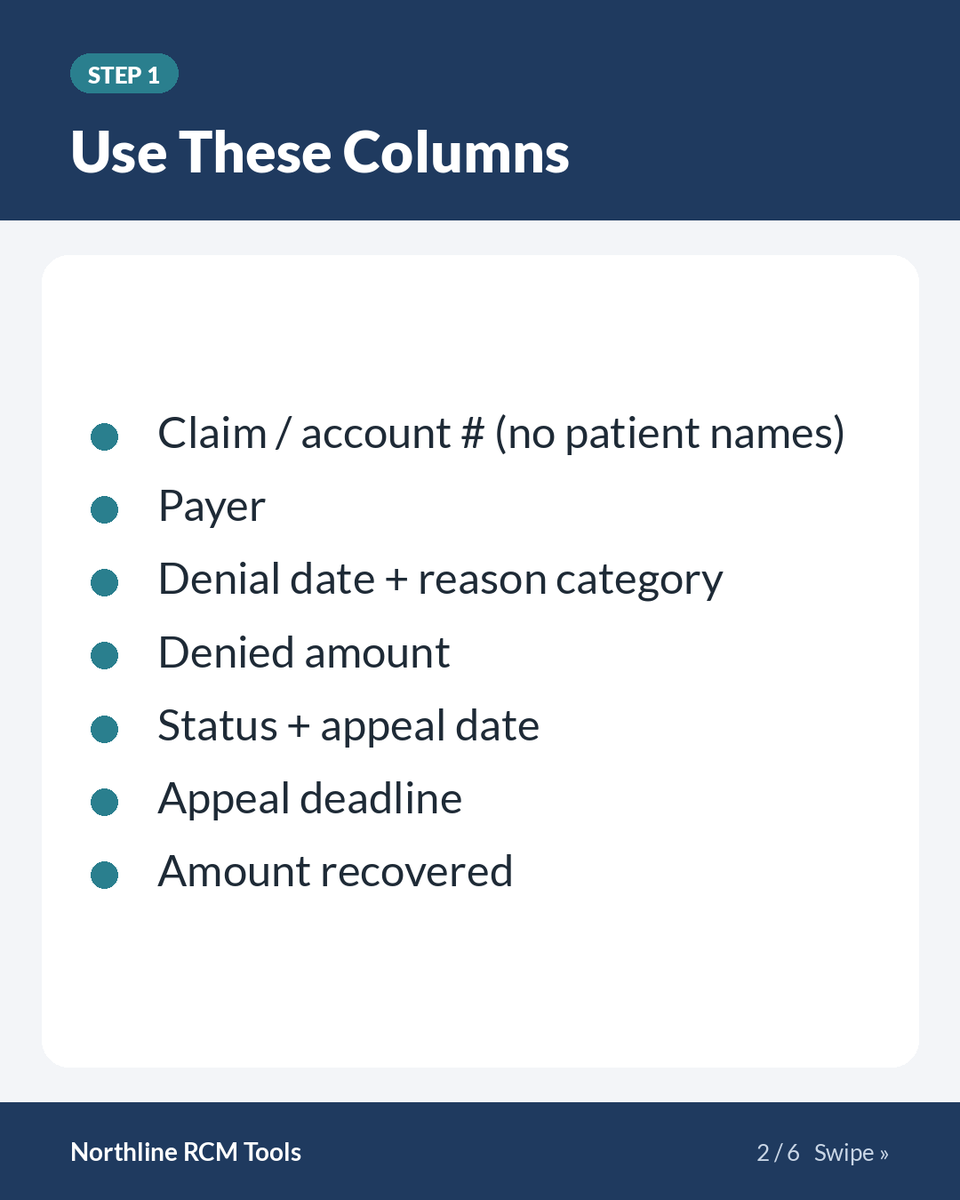
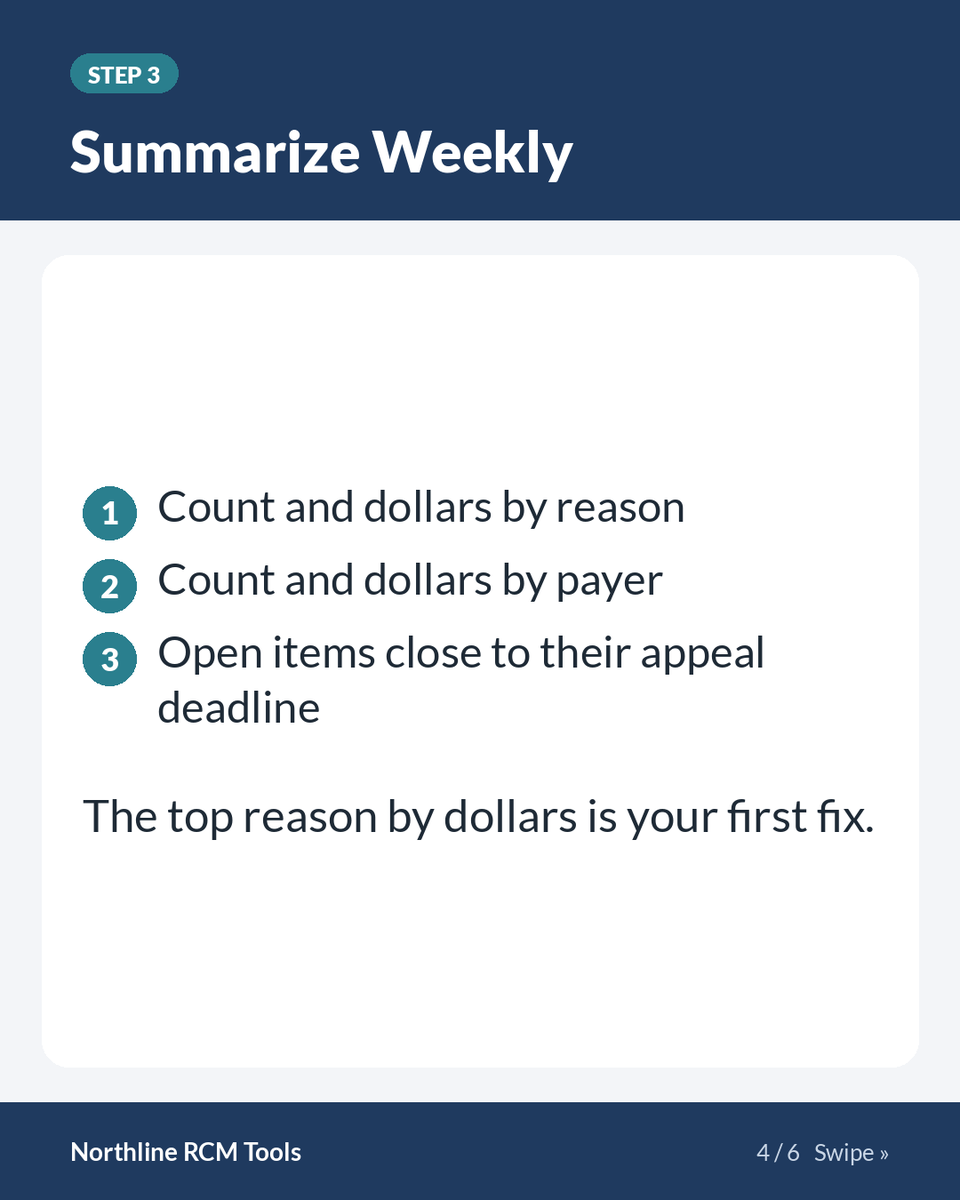
Columns: claim #, payer, denial date, reason, amount, status, appeal deadline. Summarize weekly by reason and payer.
Ready-made tracker in the Pro kit:
https://t.co/qsQU8U3vch
#RCM#DenialManagement
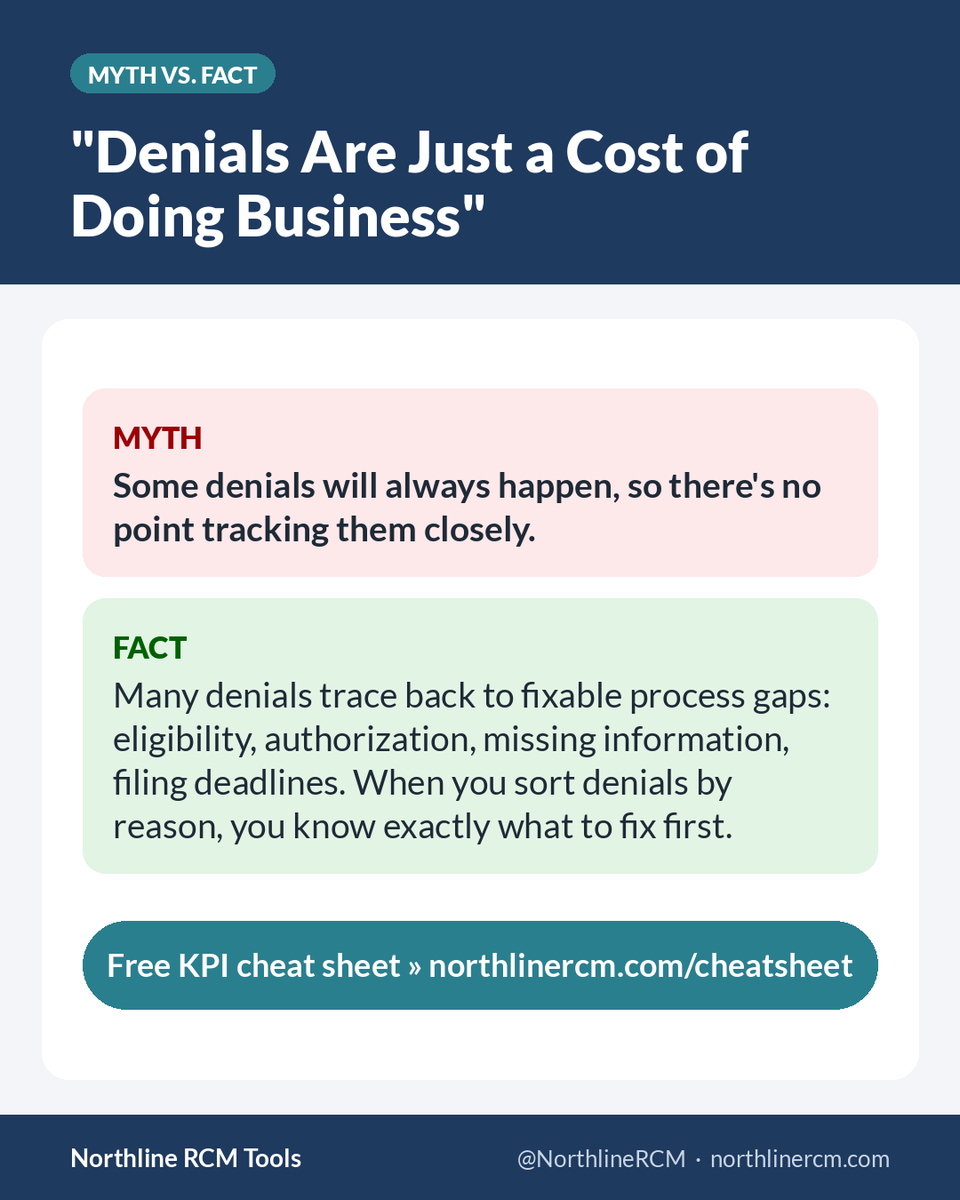
Myth: Denials are just a cost of doing business.
Fact: Most trace back to fixable process gaps.
Sort every denial into 8 reasons, then total dollars by reason. The biggest bar is your first project.
Free KPI cheat sheet: https://t.co/KnjEyzz71X
#RCM#DenialManagement
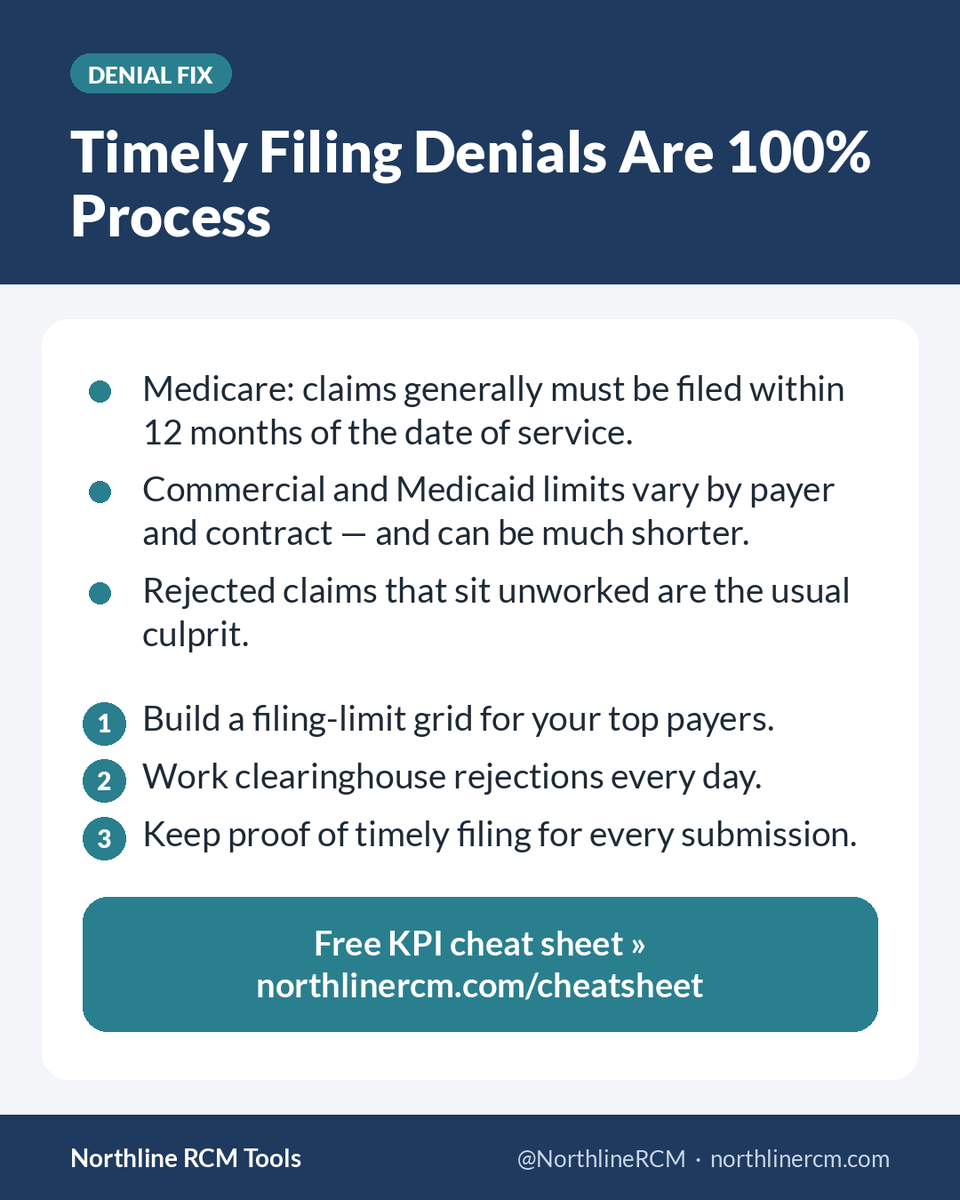
Timely filing denials are 100% process, so they're 100% preventable.
Fix: work clearinghouse rejections every day. Rejected claims that sit unworked are the usual reason the filing window closes.
Free KPI cheat sheet: https://t.co/KnjEyzz71X
#RevenueCycle#DenialManagement