Saw quite a few papers on knowledge distillation @COLM. Been thinking a lot at about why on-policy distillation works so horribly in smalller scales. More coming soon.
I’ll be presenting my paper @COLM_conf this week on Thursday on Autoresearch agents:
📍Franciscan C, 11am-1 pm
I’ll be here all week: looking forward to chatting about post-training, RLVR, and better ways to assign process rewards. DM if you wanna chat or grab coffee!
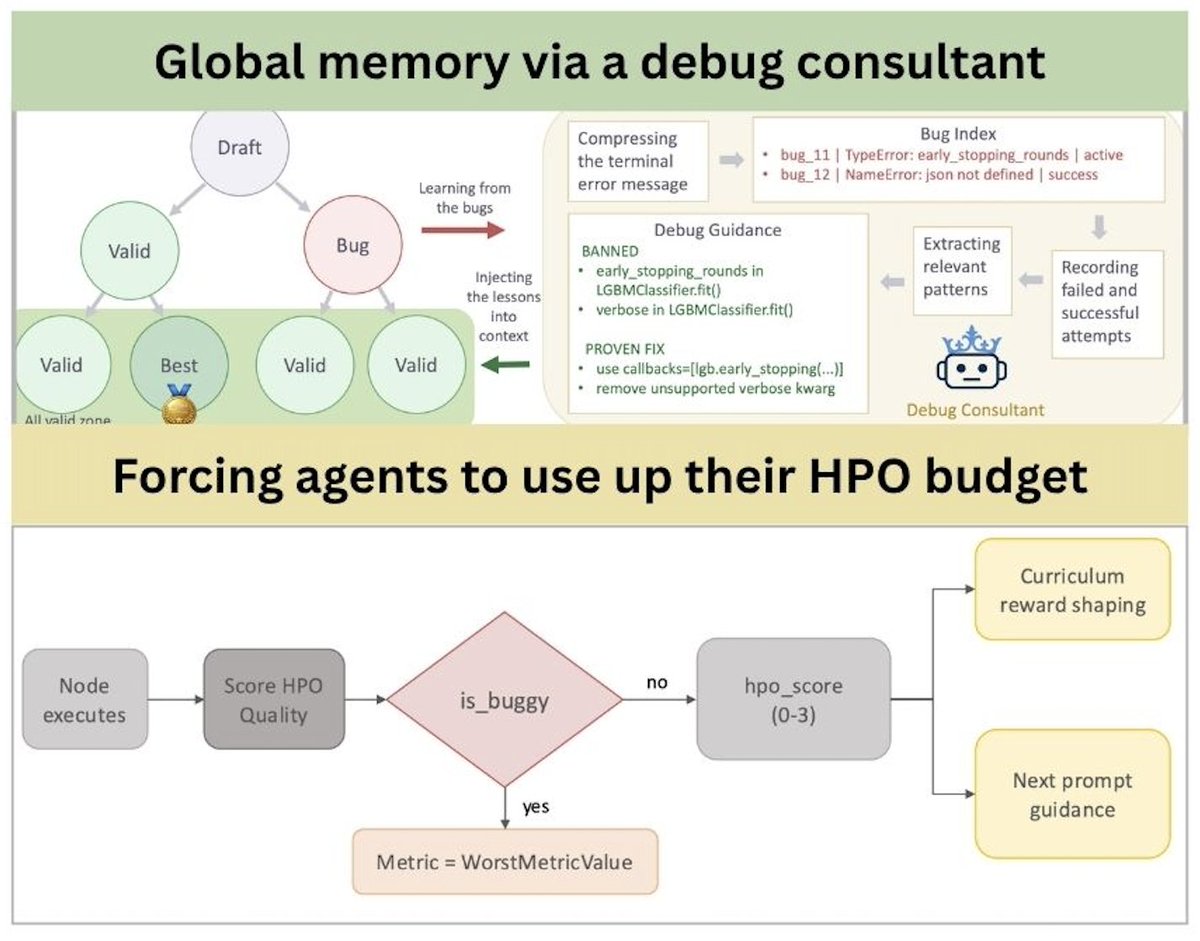
Agents can now automate large parts of the ML training pipeline, including code generation, debugging, and model tuning. However, these autoresearch agents are often unreliable due to harness failures. We trace these failures and develop model-agnostic fixes.
Finally, agents stall on dying paths and burn their remaining budget there. We backtrack to where the error first appeared and improve stability using Thompson Sampling.
Agents can now automate large parts of the ML training pipeline, including code generation, debugging, and model tuning. However, these autoresearch agents are often unreliable due to harness failures. We trace these failures and develop model-agnostic fixes.
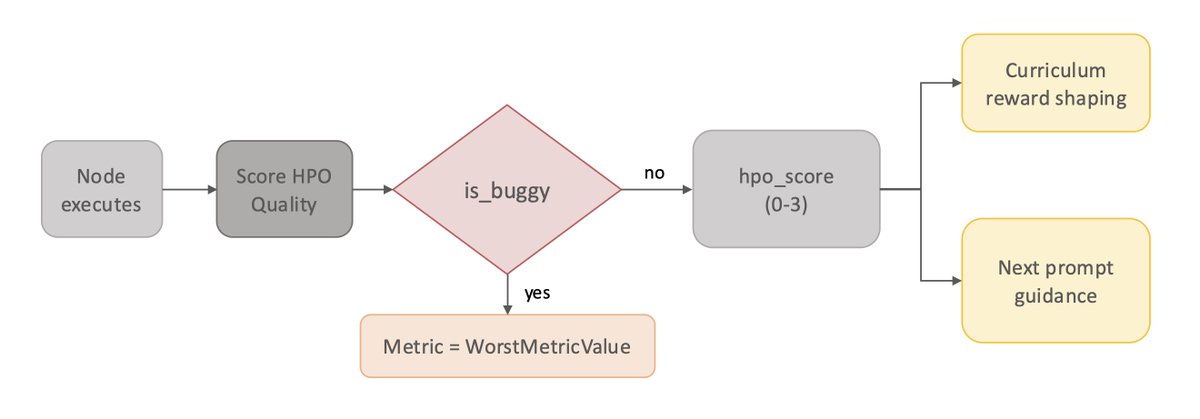
MLE agents also skip core ML practice. Hyper-parameter tuning is often absent, and while models mimic humans by performing EDA, they ignore the results; deliberately injecting wrong EDA into the agent's memory leaves scores unchanged.
In June, Columbia researchers Dr. Savannah Thais and Amaya Kejriwal and University of Cincinnati researcher Abhigyan Acherjee released From Policy to Practice: Quantifying Sex Education Policy Adherence for Improved Policy Impact Analysis.