.@tobi I have really big complains about your content storage limit policy that are currently putting the company I work for into unnecessary trouble.
The Admin UI doesn't tell you how much space is left, no email warnings. But then when you cross the limit...
... your new products don't have images anymore, so they are not selling. And getting more storage requires signing a contract addendum, so it take time. If you put hundreds of new products online each days, dealing with the aftermath if a pain in the ass...
La nouvelle entrée principale de la station de métro La Fourche sur la ligne 13, qui est une reconstruction à l'identique de celle originale, remplacée dans les années 1960 par des garde-corps en béton.
Nvidia paid $20 billion for Groq’s IP. Taalas raised $169 million with 24 employees. And they just demonstrated 8x faster single-model inference than Cerebras on the same Llama 3.1 8B.
The number everyone’s fixating on is the speed. The number that actually matters is the constraint.
HC1 runs exactly one model. Llama 3.1 8B, released July 2024, aggressively quantized to 3-bit and 6-bit precision with measurable quality degradation. You can’t swap in a new architecture. You can’t load different weights. If you want to serve Llama 4, you fabricate an entirely new chip.
This tells you everything about what Taalas is actually betting on. They’re betting model release cadences slow down. That enterprises will lock into stable, mature models for 12+ months. That the two-month tapeout cycle they’ve built with TSMC (N6 process, 815 mm2 die, only two metal layers change per model) can keep pace with a frontier that’s still accelerating.
The economics on paper are staggering. 0.75 cents per million tokens versus Cerebras at 10 cents. That’s 13x cheaper. Ten HC1 cards in an air-cooled 2U server pull 2,500 watts total. No HBM, no liquid cooling, no advanced packaging. The founder, Ljubisa Bajic, cofounded Tenstorrent and grew it to unicorn status before starting Taalas. Jim Keller was his first angel investor. This team has shipped silicon before.
Where it gets interesting is the multi-chip math. Taalas simulated DeepSeek R1 671B across 30 custom HC chips: 12,000 tokens per second at 7.6 cents per million tokens. Nobody has run that in production. Simulated multi-chip inference and production multi-chip inference are different engineering problems with very different failure modes.
The real question is market timing. If model improvements keep delivering large generational gains, the two-month fabrication cycle can’t keep up and you’re perpetually running yesterday’s model in silicon. If improvements plateau and enterprises standardize on stable versions for their highest-volume workloads, Taalas wins on pure economics. Medical devices don’t hot-swap models mid-certification. Satellites don’t patch weights in orbit.
Nvidia just priced Groq’s fast-inference approach at $20 billion. A 24-person team in a different corner of the same design space just showed 45x the single-model throughput of a B200. The acquisition math writes itself. Whether the production math does is the $169 million bet.
The AWS Console is a social experiment to see how many UI frameworks can coexist in a single website. Every click is a journey to a different decade of web design.
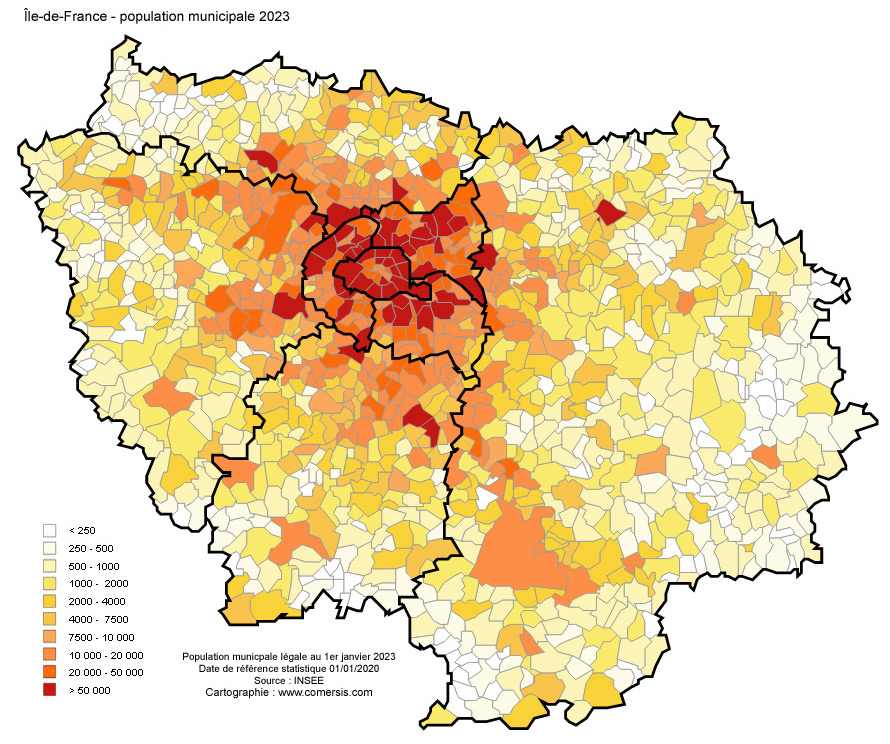
@C14Lcom @MichaelAArouet@LibertePeanuts It did not, Paris boundaries just haven't evolved since 1860. So Paris, the OG one in the middle, with 2M souls, did loose 300K inhabitants in the last few years. But mostly because people juste moved to the "Greater Paris" which is about 7M souls.
Another thing everyone was wrong about: ”people are driven by powerful internal drives for money, status, sex, etc”. Nope. People want to watch short form videos and never leave the house.
it's official, Netflix is buying Warner Bros. for $83 billion. The streamer will acquire the Warner studio, both HBO and HBO Max, and access to IP including Harry Potter, Game of Thrones, and DC Comics https://t.co/BwLrxDD7tf