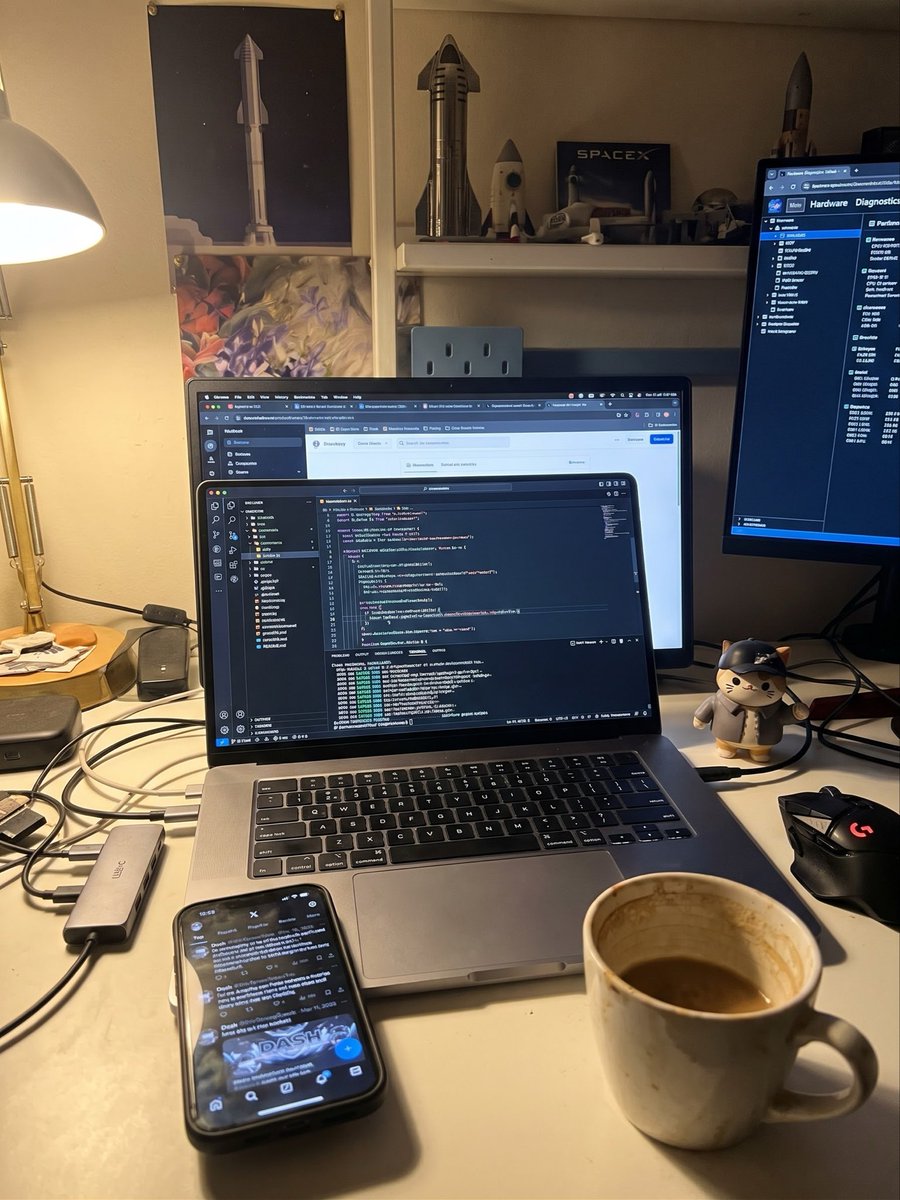
logged back in.
was barely active here, but that’s done. back with clear goals.
focusing strictly on things i actually care about and experiment with:
• live positions & real pnl (posting entries, exits, and bagging profit)
• web3
• polymarket
• space tech and mechanics
• local ai models & developer tools
good to be back.
Microsoft just filed a patent to train AI models on idle consumer GPUs.
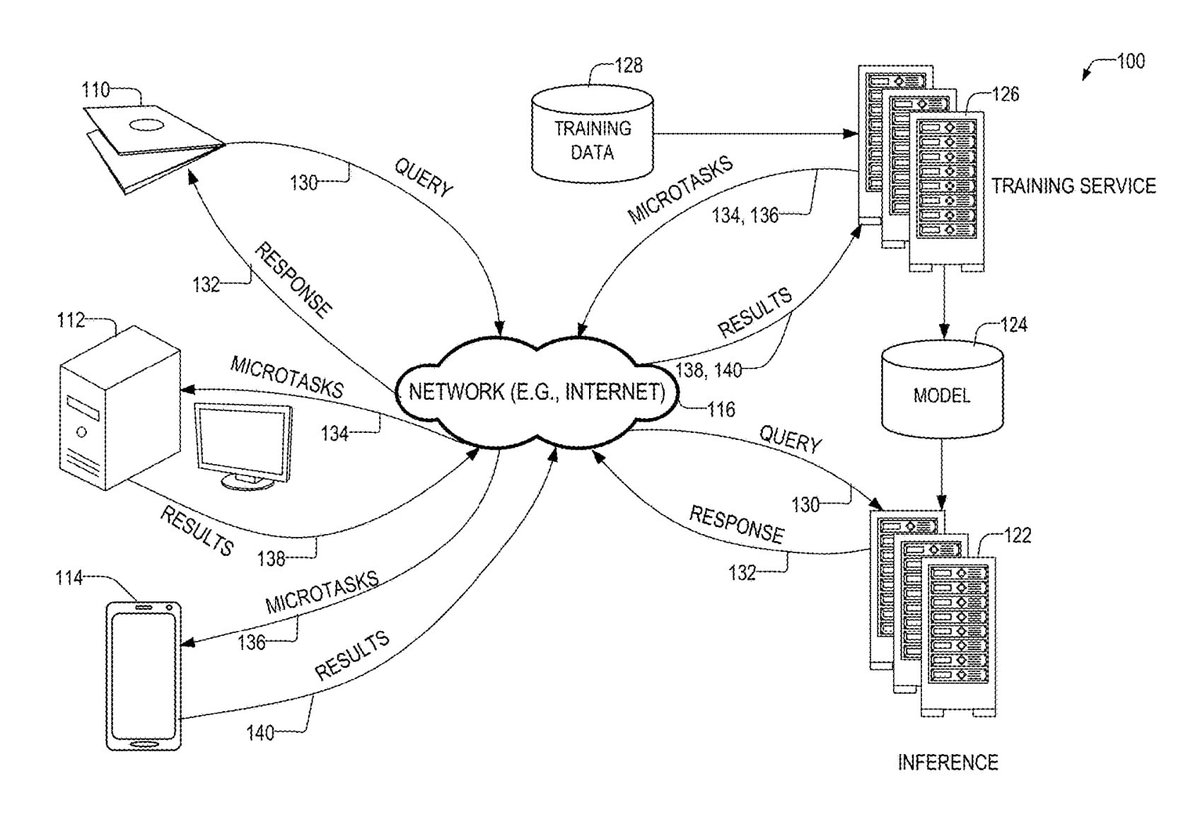
The architecture splits heavy training workloads into microtasks and routes them over the network to opted-in PCs and mobile devices. In exchange for compute, users earn credits redeemable for software, AI model access, or direct payouts.
Sam Altman's "universal basic compute" vision is quietly turning into a Big Tech infrastructure play.
The math here is simple:
- Hyperscalers are hitting hard power and CapEx ceilings on centralized data centers.
- Millions of consumer RTX cards sit at 0% utilization 18 hours a day.
- Subsidizing compute with software credits costs Microsoft near-zero marginal cash compared to buying H200s.
DePIN startups have been pitching decentralized compute grids for years. Now a $3T incumbent is patenting the exact same pipeline at the OS level.
Would you let Windows rent out your GPU overnight for API credits or cash?
@Google just quietly solved one of the biggest bottlenecks in production AI pipelines: calibrated batch routing.
The new Gemini Decisions API (powered by Gemini Decision 1) lets you run up to 1,000 multimodal decision queries at once—across text, video, audio, and PDFs—without paying the latency or token tax of full generative completions.
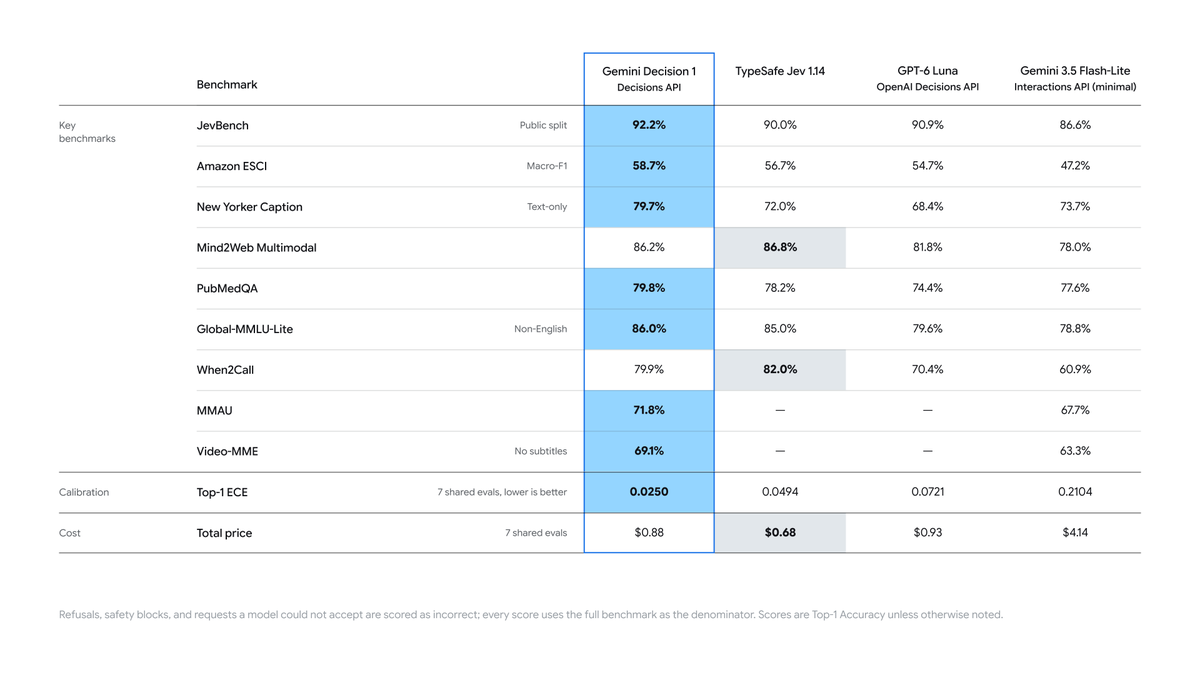
Looking at the benchmark sheet, two numbers actually matter here:
1. Calibration (Top-1 ECE): 0.0250
Compare that to GPT-6 Luna (0.0721) or standard Flash-Lite (0.2104). In production classification, overconfident hallucinations break downstream logic. Getting nearly 3x tighter probability calibration means you can actually trust the confidence thresholds.
2. Economics & Throughput:
$0.88 total across 7 shared evals while beating GPT-6 Luna on JevBench (92.2% vs 90.9%) and tool-use routing on When2Call (79.9% vs 70.4%).
Nobody needs a massive reasoning model to output a JSON boolean or route an incoming webhook. Dedicated, well-calibrated decision endpoints are how you actually scale agentic workflows without burning margin.
How are you currently handling high-volume routing - fine-tuned classifiers or brute-forcing with frontier APIs?
introducing the Gemini Decisions API
powered by Gemini Decision 1, our new multimodal decision model
get fast, calibrated decisions on up to 1000 questions at once across text, images, audio, video, and PDFs
try it today in AI Studio and via the Gemini API https://t.co/h3Kmz2ypDi