You made your first 100k after tax? That’s more than solid and something to be proud of. It’s fine to celebrate that, even take a step back, rotate part of it into an world ETF, and build a stable foundation so you can trade more unemotionally and with stronger discipline going forward. What you shouldn’t do is assume you’ve automatically figured it out, lose focus, or let your strategies and execution slip. The key is to keep your drive and discipline intact and continue doing exactly what got you there in the first place. Don’t shift into chasing bigger and faster wins, increasing size aggressively, or breaking your rules out of overconfidence, because that’s often where traders give back what they’ve built and fall into a downward spiral. Stay consistent with small, controlled wins, keep stacking, keep compounding, that discipline is what takes you from 100k to 200k and beyond.
People talk about discipline in trading like it's a vibe.
It's not. Discipline lives at very specific points in the setup, and most traders break it at the same predictable spots every single time. If you can't name where discipline is supposed to show up, you can't build it.
Here is where discipline actually matters in a trade 👇
Before the entry.
Discipline is having defined criteria for what qualifies as a setup before you ever click. Three confluences, not "it looks good". HTF aligned, level present, structure clean, reaction confirmed. If even one is missing, the trade does not qualify. Most "losing trades" are not losing trades - they are unqualified trades that should never have been taken.
At the entry.
Discipline is waiting for price to come to your level instead of chasing it. The most expensive habit in trading is "I'll just enter early because I don't want to miss it". You will miss some trades. That is part of the math. Chasing fills the slot of a planned trade with a bad-priced trade and ruins the risk-reward of the whole setup.
At the stop.
Discipline is setting the stop before you enter and not touching it after. The moment price approaches your stop and you start thinking "maybe just give it a little more room" - that's the moment a small loss turns into a portfolio problem. Stops are not suggestions. They are the entire reason your account survives.
At the take profit.
Discipline is taking partials at planned levels even when the move "feels like it has more". Most traders who give back open profits do so because they got greedy at the take profit, not because they were wrong on entry. Bank the planned move. Let the rest run with stop on entry.
At the pass.
Discipline is closing the laptop when no setup qualifies. This one is the hardest because doing nothing feels like falling behind. It's not. The pass is a trade. Sitting flat through a chop session is a winning decision, even though it doesn't show up on the P&L.
After the trade.
Discipline is journaling the trade you just took, regardless of outcome. Win or loss. Tag the setup, tag the execution, tag the mistakes. Without this step the same mistakes repeat for years because there's no record forcing you to confront them.
Discipline isn't a personality trait you either have or don't. It's a series of small choices at specific points in every trade. Miss any of them and the chart doesn't matter - the trader cancels the edge.
The chart can be perfect. If your discipline breaks at the entry, the stop, the TP or the pass, you don't have a strategy. You have a hobby.
Build it where it matters.
@watchingmarkets If you think crypto is going to zero, sure bud.
If not, buying SOL at a 70% discount here is incredible R/R.
Hey if it goes lower, you'll get an even better buying opportunity.
This is one of those trades where you simply canno't lose in my humblest opinion.
Cheers.
@watchingmarkets I like to think about it this way :
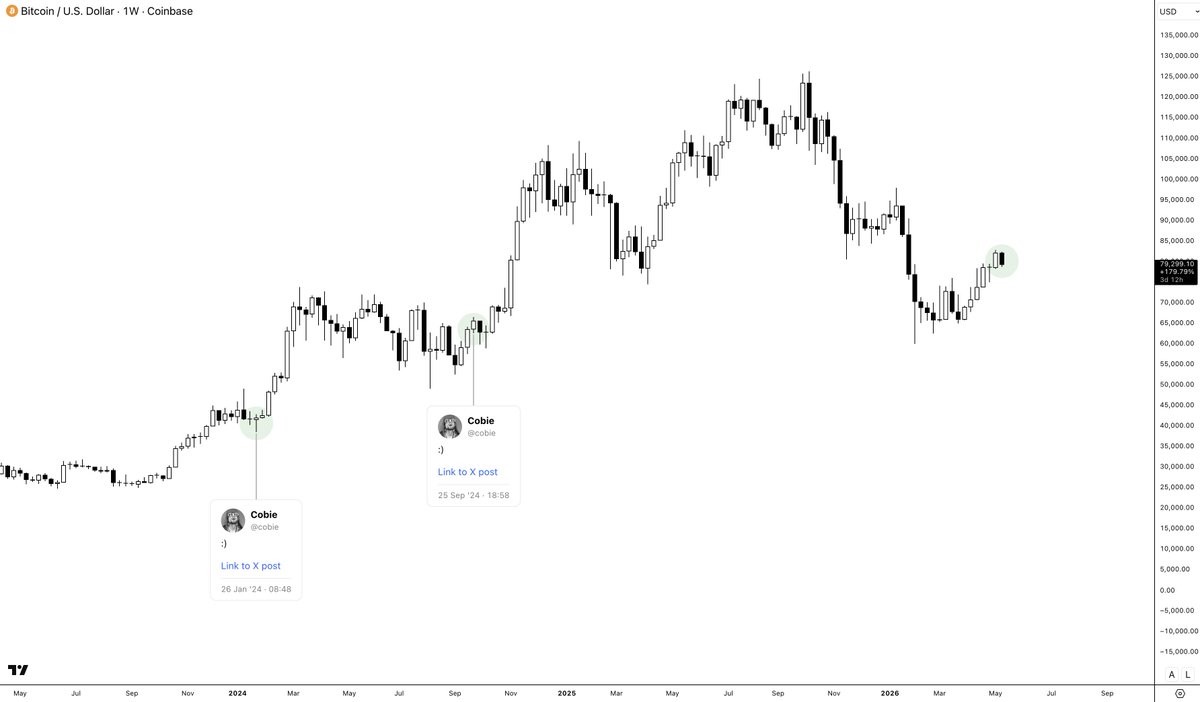
Consolidation after 7 months of bearish price action means a reversal here is definetely probable
Looking at everything that's happened macro wise during that period, the worst (fear wise) is most likely behind us for now
(...)