🦋 for Science
Starter packs for genomics, bioinformatics, #Rstats, Nextflow. Moderation lists. Feeds. Let's rebuild the old scitwitter community and keep this place nice.
https://t.co/8QxQUcHiV0 🧬🖥️🧪
We start back with our second sub session “Alternative Sources of microbiomes” with @notmaxib and Tziona Ben-gedalya having their tandem talk!!
@archaeologyEAA
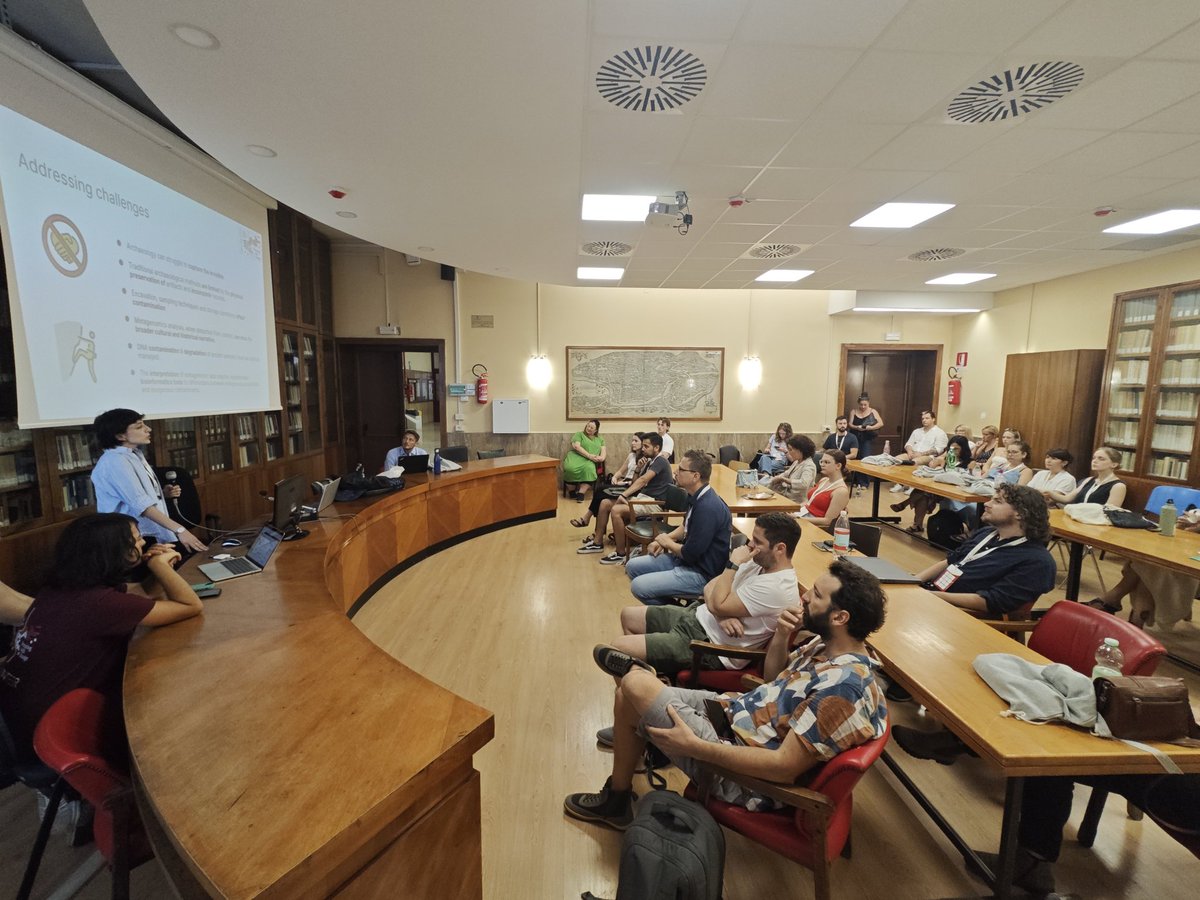
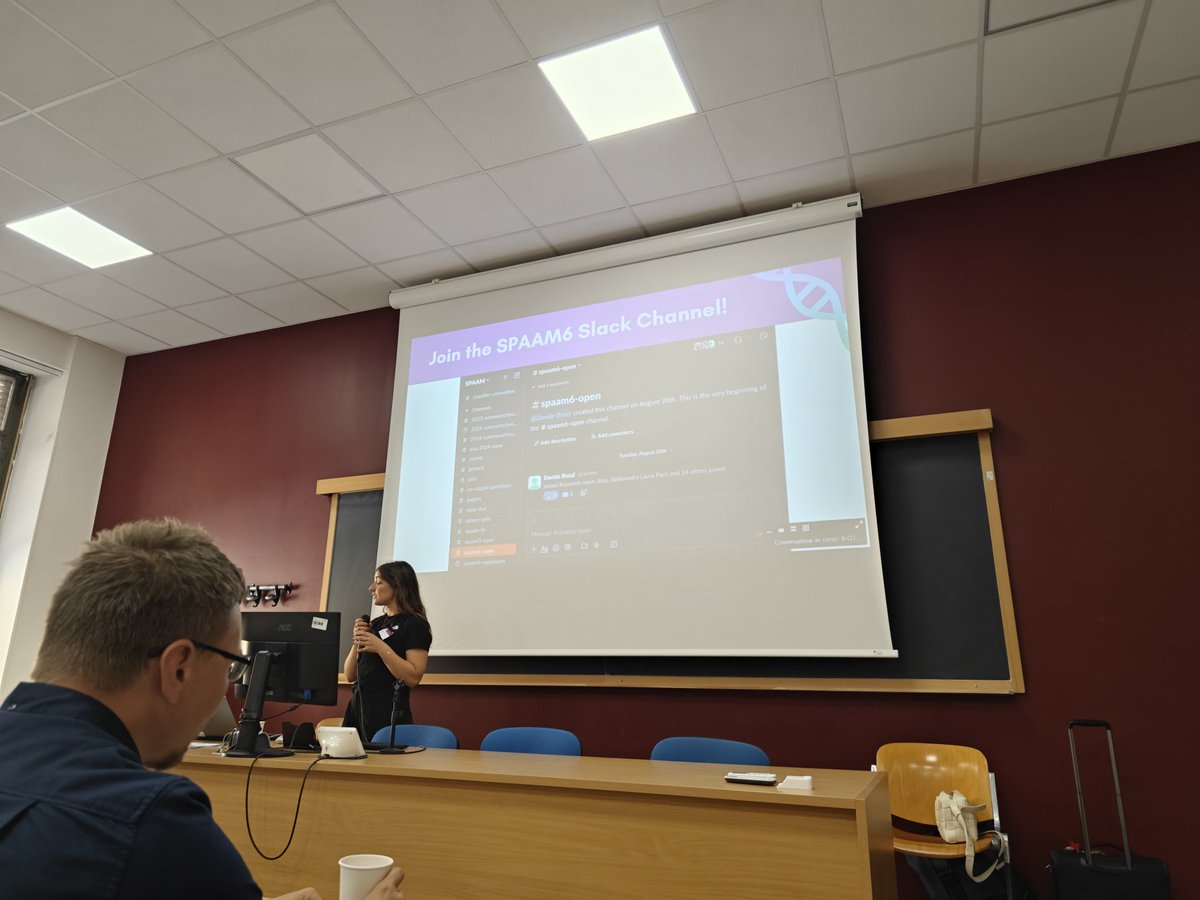
Great attendance at the bridge building session between metagenomics and archeology at #EAA2024 ! Next year we'll maybe need to push the walls a little bit for @archaeologyEAA 2025
We are all here #EAA2024
Kicked off with @spaam_community#spaam6 conference followed by opening ceremony at the beautiful site of Roman Fori.
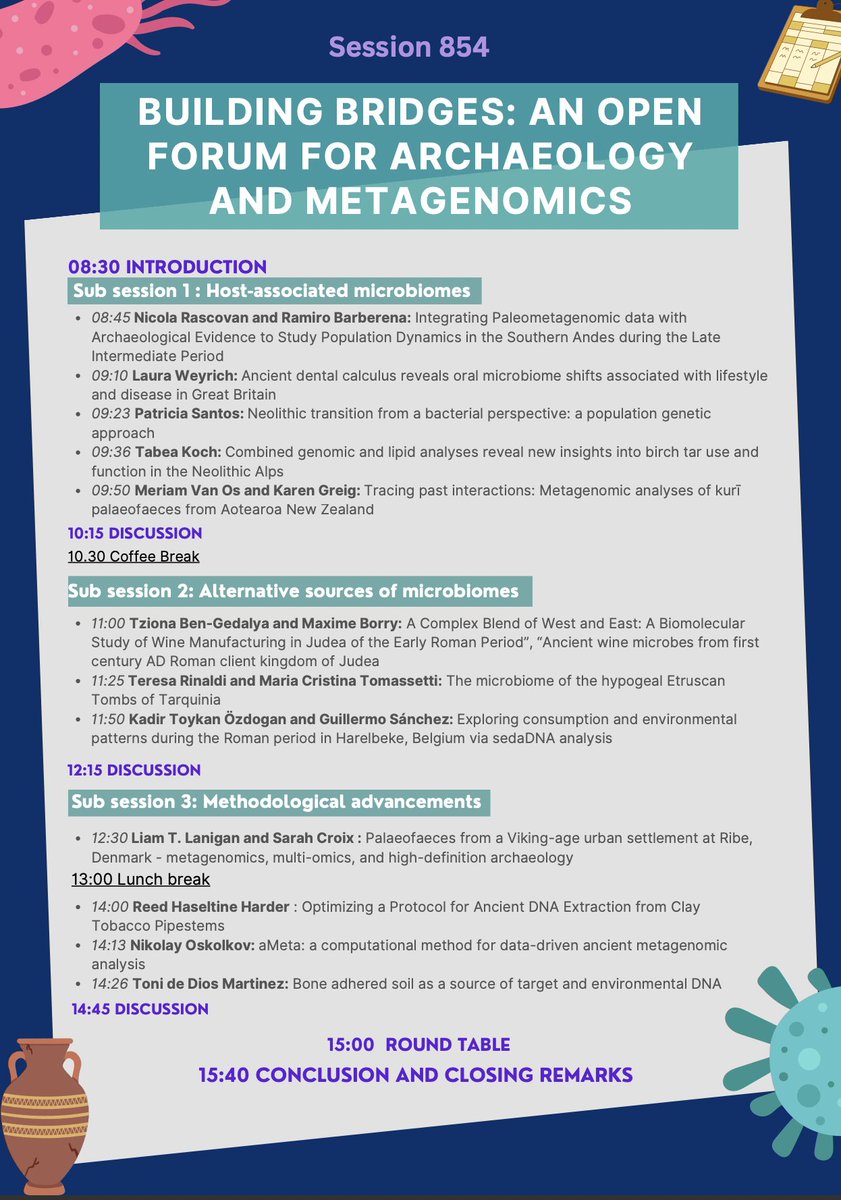
Don't miss out on tomorrow's session #854 👇 we are super excited to see you all!!!
Ready for the #EAA2024 ? We certainly are!
If you are interested in discussing how we can better integrate archaeology and ancient metagenomics, join us on Friday, 30th August, in Room 25, 1st floor, building CU002!
See the schedule and map below!! 🦠📷🎙️
@archaeologyEAA
Alphabetical order mismatch and 52 of 78 neighborhoods had wrongly merged data. I spend a lot of time teaching advanced inference methods, but boring research data management remains the most essential skill. And that includes auditing for merge mistakes.
Taking identity-by-descent (IBD) analysis into the wild! https://t.co/VduostwY6e
In this preprint, we leverage novel genomic methods to estimate fine-scale gradients of relatedness in animals and highlight their many applications in the field of ecology and evolution.🐒🧬 [1/3]
Are you running antiSMASH across many genomes? Check out multiSMASH, my simple wrapper that streamlines comparative BGC analyses by parallelizing antiSMASH runs and tabulating the results. Runs BiG-SCAPE too! WIP, so feedback and bug reports appreciated.
https://t.co/MNVa3HWp5F
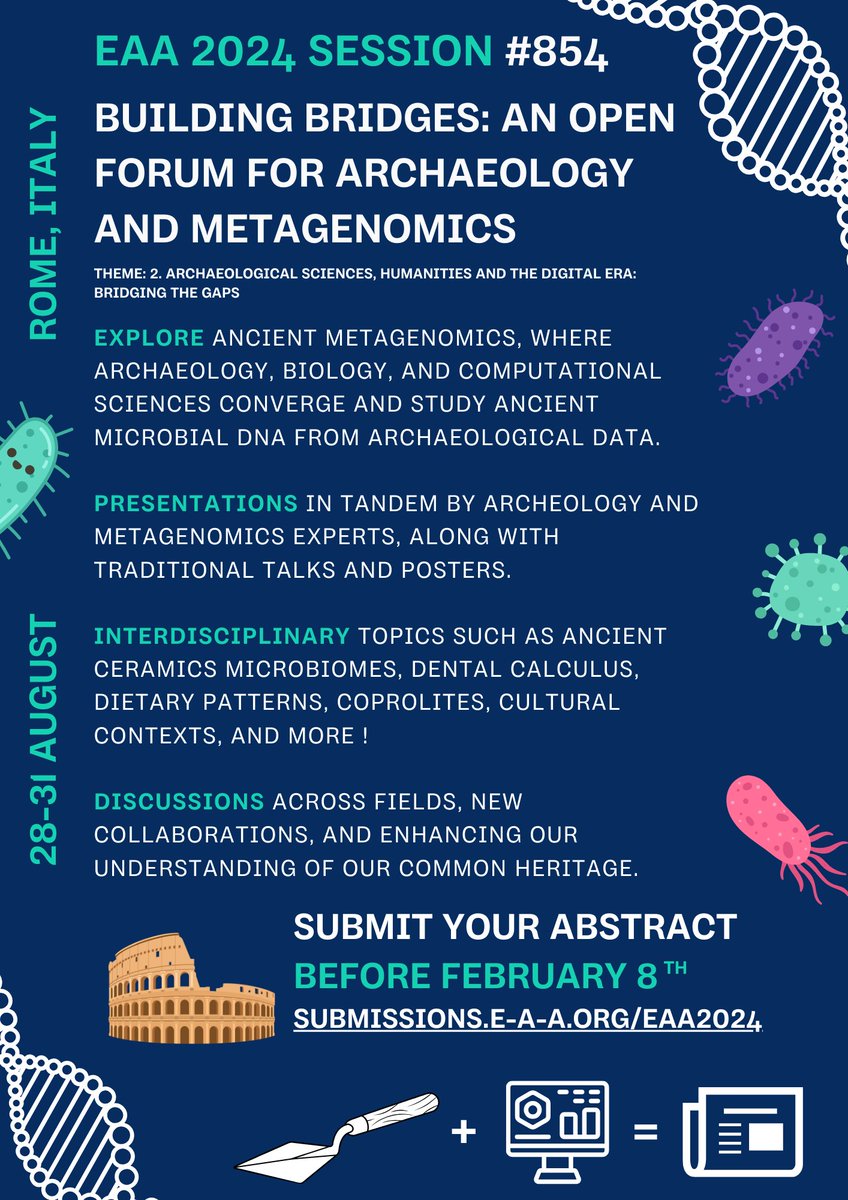
The eternal city of Rome will be the place to foster communication and collaboration among the most exciting fields of #Archaeology#metagenomics and #computerscience . Submit an abstract NOW for #EAA2024👇
🚨#EAA2024 Call for Abstracts OPEN NOW!
Join our session number 854👇
How: Tandem or solo presentations
When: Abstracts due Feb 8th (oral) or Apr 8th (poster)
Is Rome too far? EAA offers online participation
Submit at https://t.co/irLyOTB0Dz
More info https://t.co/eg76lNBZvY
💻🧵 "People underestimate how impactful @scikit_learn continues to be" — @fchollet
https://t.co/dFH2FLr2T9
This is a crucial point that I would like to illustrate with a few figures
Full post: https://t.co/eUGgX6Ypnk
And thread below 👇 1/6
📕 A study co-led by @IBE_Barcelona and @Harvard University has recovered and analyzed the ancient #genome 🦴🧬 of 146 people who inhabited the Balkan Peninsula during the 1st millennium, revealing how Slavic Europe was formed🧵
➡️ https://t.co/9lloKZ5sTY
The evolution of the English language over a 1,000-year time span traces back to the 5th century when England was invaded by different tribes, including the Angles, Jutes, Saxons, and Frisians. Their languages produced what we know today as Anglo-Saxon or Old English, which sounded similar to German. In the 8th, 9th, and 10th centuries, invasions by the Vikings of Denmark, Norway, and Sweden brought another form of the same Germanic language, Old Norse, which mixed with Old English.
In the year 1066, French forces led by William the Conqueror conquered England. Over the next 300 years, thousands of French words entered the English language, especially those related to governance and food. During the English Renaissance, many Latin-based words also entered the language, partly due to English poets, writers, and playwrights. Shakespeare, for instance, wrote plays set in Italy, such as "Romeo and Juliet," "The Merchant of Venice," and "Julius Caesar."
By the mid-1500s, a modern-day English speaker would be able to communicate with some patience and concentration. While there would be some archaic pronunciations, shifting meanings, and evolving figures of speech, the language overall would be recognizable.











![AnnikaFreudiger's tweet photo. Taking identity-by-descent (IBD) analysis into the wild! https://t.co/VduostwY6e
In this preprint, we leverage novel genomic methods to estimate fine-scale gradients of relatedness in animals and highlight their many applications in the field of ecology and evolution.🐒🧬 [1/3] https://t.co/x7FDtWLMca](https://pbs.twimg.com/media/GDmB47lXsAEDSdo.jpg)