The UN is admitted climate change is a hoax. It destroyed economies and robbed citizens of trillions of dollars. Net zero is tied to climate change therefore any politician who is still pushing net zero should be jailed indefinitely. No courts and no appeal.
This Euro Nut Job, just had his ass kicked by the Polish Supreme Court, they have ruled his orders issued on October 30, illegal.
Now kick him out of the country!
🇪🇺☠️🇪🇺
🔴NEWS: Police use of facial recognition risks WRONGFUL arrests, a new report by watchdog warns
"The revelations that officers are treating facial recognition as bona fide evidence rather than a probability score is alarming.
Worse still, police aren’t even logging their use of retrospective facial recognition, meaning people could wrongfully become suspects in criminal investigations without any record of why they’ve been accused.
The government must urgently step in and introduce strong safeguards through its much-promised legal framework, instead of handing the police a blank cheque to operate this technology without any democratic oversight." - Jasleen Chaggar
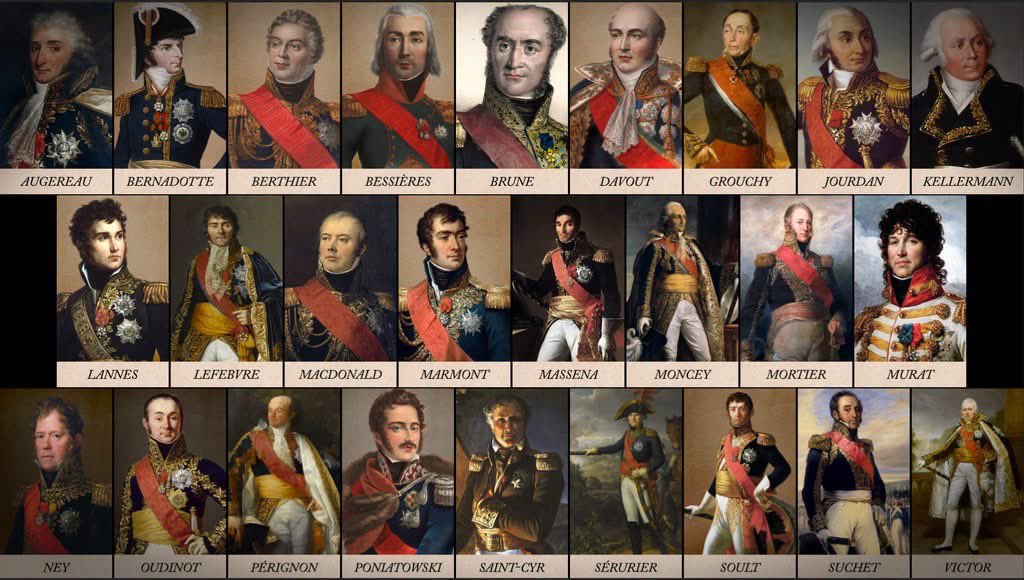
Napoleon never wore armor. His version of it was a hat.
He owned an estimated 120 bicorne hats during his time in power, plain black felt with no gold trim, made by the same Paris hatter. Most officers wore their bicornes front to back. Napoleon wore his sideways. Paired with his plain gray overcoat, it made him easy to spot on a battlefield full of feathers and gold braid. His own soldiers could find him, and so could the enemy. He did it on purpose.
The hat became his brand. Cartoonists in London drew it. Soldiers knew it from a mile away. And when everything fell apart at Waterloo on June 18, 1815, part of that image got left behind.
As the French army collapsed that night, Napoleon fled in his traveling carriage. Near the town of Genappe the roads were jammed and Prussian cavalry were closing in. He jumped out, got on a horse and escaped. The Prussians took the carriage. Inside were diamonds, gold coins and his personal belongings, packed like a field office.
The carriage ended up in London, where a showman named William Bullock put it on display and charged admission. Huge crowds paid to sit where Napoleon had sat. It was later bought by Madame Tussaud's wax museum, where it stayed for decades as one of their prize exhibits. In 1925 a fire tore through the museum and destroyed it.
Napoleon died in exile on the island of St. Helena in 1821. He was buried in the green uniform of the cavalry of his Imperial Guard. In 1840 France got permission to bring him home. When they opened the coffin on St. Helena, witnesses said his body was remarkably well preserved, still recognizable in his uniform after nearly 20 years. He was brought back to Paris, and today he lies under the dome of Les Invalides.
The hats outlived the carriage. A few dozen are believed to survive. In 2023, one sold at auction in France for about 1.9 million euros, a record for a hat.
The man who conquered most of Europe skipped armor altogether. He just picked a hat nobody could miss.
📜 Austerlitz Campaign, 12 November 1805
The French are closing on Vienna. The army they hoped to trap is still beyond their reach.
Yesterday at Dürnstein, Gazan’s division fought its way out of a dangerous encirclement. The surviving French need time to recover and re-establish contact across the Danube.
Kutuzov has paid a price, but he has kept open the road toward Russian reinforcements in Moravia.
Vienna offers stores, roads and prestige. It cannot replace the surrender of the army that has escaped. And Archduke Charles’s Austrian army is still intact to the south. A junction with the Russians would make the next stage far more dangerous for Napoleon.
Image: Plan of the Battle of Dürnstein, Bibliothèque nationale de France, via Wikimedia Commons. Public domain.
We need a proper national conversation about how we elect the Scottish Parliament.
There's something wrong with a voting system that most people struggle to understand, never mind explain.
Voters should know how their votes translate into seats and who is accountable to them. Is the current system really delivering that?
I'm a list MSP myself, but that doesn't mean I think the system is right or beyond criticism.
The Scottish Greens have learned how to work the system to their advantage. Rather than engage with the argument, they resort to personal insults. Predictable.
No voting system should be a sacred cow. We should be prepared to challenge the way Holyrood is elected and find something simpler, fairer and more accountable to the people of Scotland.
https://t.co/vkHaTuxheU
BREAKING: 15 year olds are now women when they're being raped, but children when they want to use social media, listen to Spotify, or buy something from Etsy 👀
एक फ्रेंच खोजी, इजिप्त के पिरामिडों में दस वर्षों तक खोज करता रहा है। उस आदमी का नाम है--बोविस।
वह एक वैज्ञानिक और इंजीनियर है। वह यह देखकर बहुत हैरान हुआ कि कभी-कभी पिरामिड में कोई चूहा भूल से या बिल्ली घुस जाती है और फिर निकल नहीं पाती--भटक जाती और मर जाती है। पर पिरामिड के भीतर जब भी कोई चूहा या बिल्ली या कोई प्राणी मर जाता है तो सड़ता नहीं। सड़ता नहीं, उसमें से दुर्गंध नहीं आती। वह ममीफाइड हो जाता है--सूख जाता है, सड़ता नहीं।
यह हैरानी की घटना है और बहुत अदभुत है। पिरामिड के भीतर इसके होने का कोई कारण नहीं है। और ऐसे पिरामिड के भीतर जो कि समुद्र के किनारे हैं जहां कि ह्युमिडिटी काफी है, जहां कि कोई भी चीज सड़नी ही चाहिये, और जल्दी सड़ जानी चाहिये, उन पिरामिड के भीतर भी कोई मर जाए तो सड़ता नहीं।
मांस ले जाकर रख दिया जाए तो सूख जाता है, दुर्गंध नहीं देता। मछली डाल दी जाए तो सूख जाती है, सड़ती नहीं। तो बहुत चकित हो गया। इसका तो कोई कारण दिखाई नहीं पड़ता। बहुत खोजबीन की। आखिर यह खयाल में आना शुरू हुआ कि शायद पिरामिड का जो शेप है, वही कुछ कर रहा है।
लेकिन शेप, आकार कुछ कर सकता है! सब खोज के बाद कोई उपाय नहीं था। दस साल की खोज के बाद बोविस को खयाल आया कि कहीं पिरामिड का जो शेप, जो आकृति है, वह तो कुछ नहीं करती! तो उसने एक छोटा पिरामिड माडल बनाया--छोटा सा, तीन-चार फीट का बेस लेकर, और उसमें एक मरी हुई बिल्ली रख दी।
वह चकित हुआ, वह ममीफाइड हो गई, वह सड़ी नहीं। तब तो एक बहुत नये विज्ञान का जन्म हुआ, और वह नया विज्ञान कहता है--ज्यामिट्री की जो आकृतियां हैं उनका जीवन ऊर्जाओं से बहुत संबंध है। और अब बोविस की सलाह पर यह कोशिश की जा रही है कि सारी दुनिया के अस्पताल पिरामिड की शक्ल में बनाये जाएं। उनमें मरीज जल्दी स्वस्थ होगा।
आपने सर्कस के जोकर को, हंसोड़े को जो टोपी लगाये देखा है, वह फूल्स कैप कहलाती है। उसी की वजह से कागज--जितने कागज से वह टोपी बनती है, वह फूल्स कैप कहलाता है। लेकिन बोविस का कहना है कि कभी दुनिया के बुद्धिमान आदमी वैसी टोपी लगाते थे। वह वाइज--कैप है, क्योंकि वह टोपी पिरामिड के आकार की है। और अभी बोविस ने प्रयोग किये हैं, फूल्स कैप के ऊपर। और उसका कहना है कि जिन लोगों को भी सिरदर्द होता है, वे पिरामिड के आकार की टोपी लगाएं तत्क्षण उनका सिरदर्द दूर हो सकता है। जिनको भी मानसिक विकार हैं वे पिरामिड के आकार की टोपी लगाएं उनके मानसिक विकार दूर हो सकते हैं। अनेक चिकित्सालयों में जहां मानसिक चिकित्सा की जाती है, बोविस की टोपी का प्रयोग किया जा रहा है, और प्रमाणित हो रहा है कि वह ठीक कहता है।
Please share this far and wide.
This is separate from him being investigated for election fraud.
Cornwall MP Perran Moon referred to police over election spending - Cornwall Live https://t.co/Rr2ruWs8Hi
We were the richest country in the world but since our political 'leaders' all graduated from the WEF new world order financial class since 1971, politicians got Very Rich, and our country very poor
The aim is poverty, control by ai, and slavery
You used to laugh didn't you
Film is Fabulous! will be selling a selection of high quality films, from a major private collection. at The Blackpool Film Collectors’ Convention on Sunday, 15th November. With six tables, there’ll be a large selection of film and equipment for sale.
There's no climate crisis at all.
The Arctic sea ice extent has increased and the sea ice volume, contrary to all failed predictions, as hardly changed for the last 2 decades.
So our PM has buggered off to a COP Conference - with NO PRESS journalists allowed (bar one) How is he allowed to get away with this total lack of scrutiny except for a hand picked pre-planned questions lacky? He has only had ONE press conference since being PM. A leader who will not answer questions is a dictator.
A heartbreaking day for the Chagossians. We lost because appeal judges ruled that the original court had no power to overturn the law banning them from living on their ancestral islands.
Our next possible routes are the Privy Council or a fresh challenge in England.
This is David versus Goliath. The British state forcibly removed these people from their homeland over 50 years ago, and today their descendants are still fighting for the right to return.
Great British PAC will not abandon them. This fight is far from over. 🇬🇧
Chagos judgment: The key findings explained (as we currently understand them)
The 33-page judgment handed down on 12 November 2026 is a significant defeat for the four Chagossian claimants. However, understanding exactly why the judges ruled against them is important because it also helps identify what legal options may remain.
The five judges unanimously allowed all four grounds of the BIOT Commissioner's appeal and dismissed all four grounds of the Chagossians' cross-appeal.
Here are the eight most important findings, explained in straightforward terms.
1. The original judge did not have the power to overturn the constitutional ban
Paragraphs 10–43, pages 5–16
This was the central reason for the Government's victory.
In March 2026, Chief Justice James Lewis KC ruled that Section 9 of the 2004 BIOT Constitution Order was unlawful. This provision states that nobody has an automatic right to live in the Chagos Islands.
However, the Court of Appeal found that the BIOT Supreme Court had no jurisdiction to strike down the Constitution Order because it was made by the British Crown acting on behalf of the United Kingdom.
The judges said any challenge to the constitutional provision must instead be brought before the High Court in England and Wales, against the Foreign Secretary.
What this means: The original judgment was overturned partly because the constitutional challenge had been decided in the wrong court.
2. The original judge made procedural errors
Paragraphs 44–56, pages 16–21
The appeal judges found that the Chagossians' original legal claim had not properly included a challenge to the validity of Section 9.
Instead, that issue was raised later in the proceedings.
They also found that Chief Justice Lewis had introduced his own argument that the constitutional provision had been unlawful from the moment it was created in 2004, without giving the parties a proper opportunity to address that argument.
What this means: The appeal judges considered that the Government had not been given a sufficiently fair opportunity to respond to the case ultimately decided by the original judge.
3. The judges ruled that an earlier House of Lords decision must be followed
Paragraphs 57–67, pages 21–24
In 2008, the House of Lords ruled by a majority of three to two that the 2004 constitutional restrictions on residence were lawful.
That case was known as Bancoult No. 2.
Chief Justice Lewis had instead agreed with the two dissenting judges, who considered the restrictions unlawful.
The Court of Appeal held that he was bound by the earlier majority decision.
It also concluded that, even if he had not been legally bound, he should have given compelling reasons for departing from it.
What this means: The earlier ruling remains a major legal obstacle to establishing a right of return.
4. The Mauritius agreement does not automatically remove the restrictions
Paragraphs 68–72, pages 24–26
The original judge had considered whether the 2025 agreement transferring sovereignty over the Chagos Islands to Mauritius undermined the reasons previously given for preventing resettlement.
He questioned whether the defence and financial arguments against allowing Chagossians to return remained valid.
The Court of Appeal disagreed.
It ruled that the judge had incorrectly assessed the legal effect of a treaty which had not yet been incorporated into domestic law.
It also found insufficient evidence to conclude that Britain's defence concerns or the financial obstacles to resettlement had disappeared.
The judges noted that money payable to Mauritius under the agreement was not specifically earmarked for resettlement.
What this means: The treaty did not provide a sufficient legal basis for overturning the restrictions. However, the judges did not rule that resettlement could never happen.
5. The court rejected an automatic right for Chagossians to live on the islands
Paragraph 73, page 26
This is one of the most consequential findings.
The Court of Appeal ruled that Chagossians do not possess an underlying common-law right to enter or reside in the territory.
The judges recognised that some Chagossians had been legally entitled to enter the islands between 2000 and 2004, but said that right had been granted by legislation and subsequently removed.
They relied on the principle that a legal right of residence can be created or removed by law.
What this means: Under the present legal framework, the Chagossians' ancestral connection to the islands does not, by itself, give them an enforceable right to live there.
This is a particularly important distinction between the legal position and the Chagossians' continuing moral and historical claims.
6. The removal notices were lawful
Paragraphs 75–89, pages 27–30
The four Chagossians arrived on Île du Coin on 16 February 2026 without immigration permits.
Two days later, officials issued removal notices.
The original judge had cancelled those notices, partly because he believed the claimants had been treated unfairly.
However, the Court of Appeal concluded that the immigration authorities had acted lawfully.
The judges found that:
The claimants had entered without the necessary permits.
They had made clear their intention to remain permanently.
Officials were not legally required to invite representations before issuing the notices.
The subsequent appeal procedure provided an opportunity to challenge the decision.
The claimants' administrative appeal had not set out specific grounds for overturning the notices.
The judges also rejected the argument that officials should have considered granting temporary heritage-visit permits to people who had expressly stated that they intended to remain permanently.
What this means: The removal notices are legally valid again. However, the judgment does not expressly establish the current status of any separate injunction preventing physical removal.
7. The court rejected the crimes against humanity arguments
Paragraphs 92–94, pages 31–32
The Chagossians' lawyers argued that removing them could constitute a crime against humanity or a continuation of the historical wrong committed against their people.
The Court of Appeal rejected these arguments.
It found that the relevant criminal-law provisions did not establish the claims within the BIOT legal system.
The judges also agreed with the first-instance court's conclusion that the immigration officers' actions against these particular claimants did not constitute the alleged criminal offences.
What this means: The court rejected the legal argument that enforcing these removal notices would amount to a crime against humanity.
It did not, however, conclude that the original forced displacement of the Chagossian population was justified.
8. The court overturned the previous costs order
Paragraphs 95–98, page 32
The original court had made no order requiring either side to pay the other's legal costs.
The Court of Appeal overturned that decision.
It directed that any party seeking a costs order should apply within 14 days of the judgment.
What this means: There is potential financial exposure for the claimants, although the judgment itself does not specify a final costs award.