In all seriousness, there really is an ethical question with Tesla’s new Automatic Collision Evasion safety feature. If the car senses a likely crash, and already has the tech to prevent it, do you really let someone die over a $99 subscription? Really?
I’m visiting my dad and was driving on the highway and saw this little thing dart across in 5pm traffic during a thunderstorm so I flipped a u turn a bunch looking for her, finally saw her and pulled over, and she ran under the car so I had to grab her. I have to keep her I think
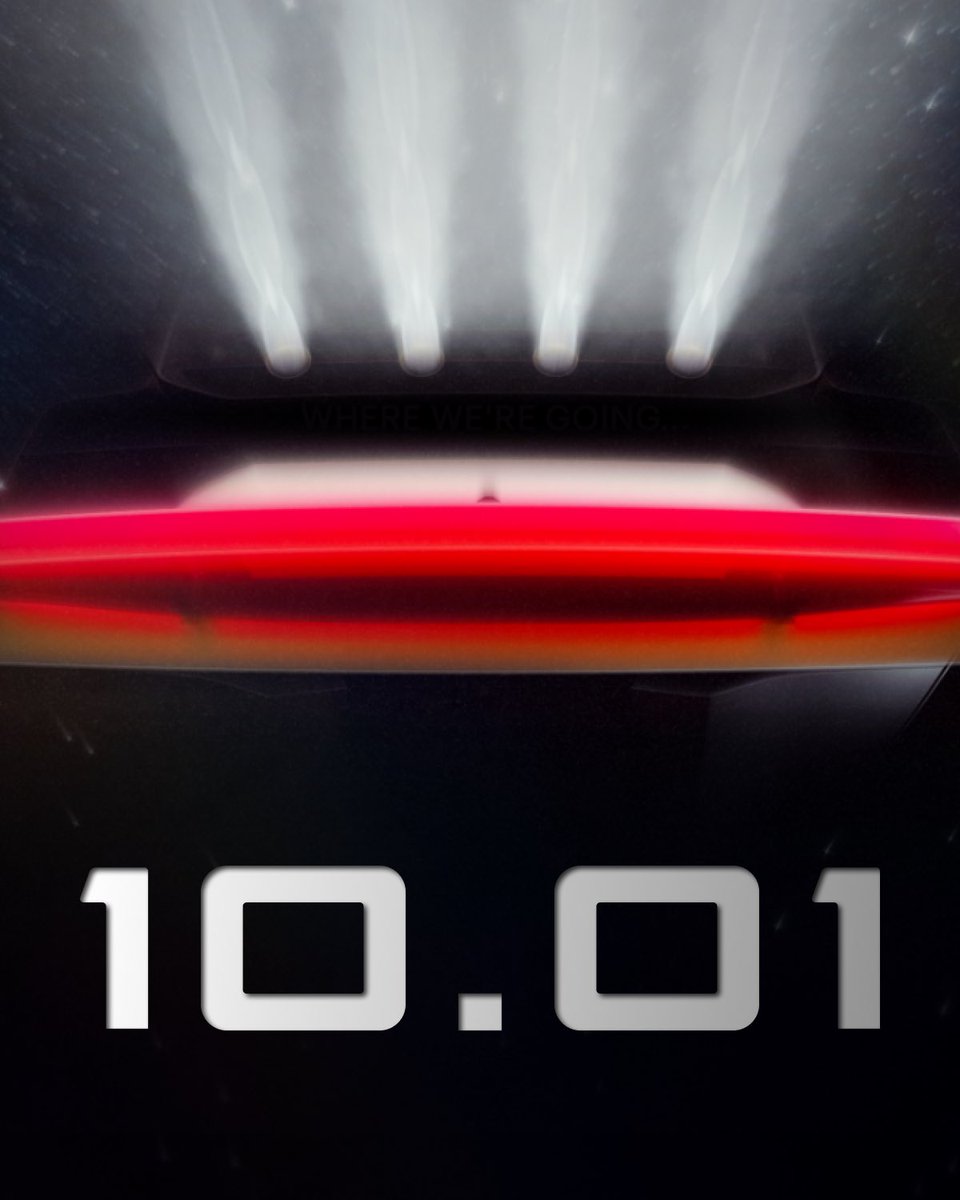
BREAKING: FAA restricts airspace above Waco, TX for the Tesla Roadster's October 1st reveal, as speculation grows it could be equipped with SpaceX rocket trusters.
My current thoughts on the $TSLA $SPCX merger. This will probably change by tonight. All criticism welcome. Been researching non-stop over the past couple of days.
TLDR: My base case currently is an announcement at the Roadster demo because the incentives favor moving now. A $450 floor gets the deal signed. A fixed exchange ratio is what gets it voted through. Let me explain:
I believe that the merger is closer than most people are positioned for. If the Roadster demo carries the announcement, the calendar starts to make sense: an S-4 within weeks, several months of SEC review, a shareholder vote around March to May 2027, and regulatory work continuing through the rest of the year. Waiting another year means trying to close a trillion-dollar related-party transaction as the 2028 political cycle ramps up, with SpaceX's defense exposure and Tesla's China operations already guaranteeing intense scrutiny. There is also a real cost to remaining separate. Terafab and SpaceX's Megapack purchases from Tesla currently sit inside a related-party framework with the governance and disclosure that comes with it. One corporate structure removes much of that friction. When both companies are racing to build gigawatts of compute, every additional quarter of separation has a cost.
The $450 number is mostly arithmetic. At roughly $140 SPCX, a 3.2x exchange ratio implies about $448 per Tesla share and leaves legacy Tesla shareholders with roughly 49% of the combined share count. The 50% crossover is around $470, so $450 is close to the highest valuation that still leaves legacy SpaceX shareholders on the majority side of the combined company. That means the headline price probably cannot do all the persuading. The structure has to. What I am picturing is a fixed exchange ratio above a collar, with minimum-value protection below it, because a 3.2x ratio by itself cannot guarantee $450 if SPCX falls. Above the protected level, Tesla holders retain roughly 49% ownership and participate directly in SpaceX appreciation before closing. A fixed-dollar payout does the opposite. If SPCX rises 40%, their ownership falls to roughly 41%. If SPCX doubles, it falls to around 32%. The better SpaceX performs, the less of the combined company Tesla shareholders receive. That becomes extremely difficult to sell in a vote requiring a majority of shares outstanding, particularly when Musk cannot carry it alone and the 423.7M unearned shares under his 2025 award vote proportionally through an irrevocable proxy.
The real question, then, is not whether Tesla is valued at $1.75T or $2T on announcement day. It is what shareholders are actually voting to receive several months later. My view is that SpaceX materially outperforms over that window. Last quarter, revenue grew 92% to $7.81B, adjusted EBITDA rose 191%, contracted AI cloud sales reached $14.1B against a $47.5B backlog, Starlink passed 12M subscribers, and compute capacity reached 1.4GW on the way toward potentially roughly 10GW by the end of 2027. Much of that future capacity has not yet flowed through the financials. Tesla, meanwhile, is running negative free cash flow, is down roughly 24% YTD, and a robotaxi ramp that still needs to prove itself. I am extremely bullish on TSLA, but I strongly believe SpaceX will outperform over the next couple of years.
At a 3.2x ratio, SPCX at $175 implies roughly $560 per TSLA share and $200 implies about $640. But after announcement, SPCX increasingly trades as a claim on the expected combined company. At roughly 25.8B pro-forma shares, $200 SPCX implies a combined equity value around $5.2T. That is why the SpaceX outperformance thesis is load-bearing: the deal becomes meaningfully more attractive to Tesla shareholders only if SpaceX's growth drives a substantial rerating while the fixed ratio keeps their ownership percentage intact. I believe this is exactly what will happen.
Terms this favorable are possible because of where the votes sit. Musk held roughly 84%
This is a must watch. I’ve actually slept on Dave Lee. This dude is based af. Most insightful big Tesla person I’ve seen in a sec. I’m sure most already know this.
Fanta Orange was created in Italy in 1955 and in Italy it has orange juice in it. In the US it has none. American Fanta is carbonated water, high fructose corn syrup, citric acid, natural flavors, and Yellow 6 and Red 40 for the color. UK Fanta starts with water and orange juice from concentrate, gets its color from carrot and pumpkin extract, and has about a third of the sugar, 4.5g per 100ml against 12.4g in the US.
The UK version isn't clean either. It hit that sugar number by adding acesulfame K and sucralose after Britain put a sugar tax on soda in 2018.
The Italian one is a different drink. Water, orange juice at 12%, sugar, carbonation, citric acid, natural citrus flavors, acacia gum and vitamin C. The oranges are all Italian, mostly Sicily and Calabria, and Coca-Cola says it buys about a quarter of the Italian orange juice that goes into soft drinks. It still can't be called an aranciata. Italian law says you need 20% juice to use that word.
My current thoughts on the $TSLA $SPCX merger. This will probably change by tonight. All criticism welcome. Been researching non-stop over the past couple of days.
TLDR: My base case currently is an announcement at the Roadster demo because the incentives favor moving now. A $450 floor gets the deal signed. A fixed exchange ratio is what gets it voted through. Let me explain:
I believe that the merger is closer than most people are positioned for. If the Roadster demo carries the announcement, the calendar starts to make sense: an S-4 within weeks, several months of SEC review, a shareholder vote around March to May 2027, and regulatory work continuing through the rest of the year. Waiting another year means trying to close a trillion-dollar related-party transaction as the 2028 political cycle ramps up, with SpaceX's defense exposure and Tesla's China operations already guaranteeing intense scrutiny. There is also a real cost to remaining separate. Terafab and SpaceX's Megapack purchases from Tesla currently sit inside a related-party framework with the governance and disclosure that comes with it. One corporate structure removes much of that friction. When both companies are racing to build gigawatts of compute, every additional quarter of separation has a cost.
The $450 number is mostly arithmetic. At roughly $140 SPCX, a 3.2x exchange ratio implies about $448 per Tesla share and leaves legacy Tesla shareholders with roughly 49% of the combined share count. The 50% crossover is around $470, so $450 is close to the highest valuation that still leaves legacy SpaceX shareholders on the majority side of the combined company. That means the headline price probably cannot do all the persuading. The structure has to. What I am picturing is a fixed exchange ratio above a collar, with minimum-value protection below it, because a 3.2x ratio by itself cannot guarantee $450 if SPCX falls. Above the protected level, Tesla holders retain roughly 49% ownership and participate directly in SpaceX appreciation before closing. A fixed-dollar payout does the opposite. If SPCX rises 40%, their ownership falls to roughly 41%. If SPCX doubles, it falls to around 32%. The better SpaceX performs, the less of the combined company Tesla shareholders receive. That becomes extremely difficult to sell in a vote requiring a majority of shares outstanding, particularly when Musk cannot carry it alone and the 423.7M unearned shares under his 2025 award vote proportionally through an irrevocable proxy.
The real question, then, is not whether Tesla is valued at $1.75T or $2T on announcement day. It is what shareholders are actually voting to receive several months later. My view is that SpaceX materially outperforms over that window. Last quarter, revenue grew 92% to $7.81B, adjusted EBITDA rose 191%, contracted AI cloud sales reached $14.1B against a $47.5B backlog, Starlink passed 12M subscribers, and compute capacity reached 1.4GW on the way toward potentially roughly 10GW by the end of 2027. Much of that future capacity has not yet flowed through the financials. Tesla, meanwhile, is running negative free cash flow, is down roughly 24% YTD, and a robotaxi ramp that still needs to prove itself. I am extremely bullish on TSLA, but I strongly believe SpaceX will outperform over the next couple of years.
At a 3.2x ratio, SPCX at $175 implies roughly $560 per TSLA share and $200 implies about $640. But after announcement, SPCX increasingly trades as a claim on the expected combined company. At roughly 25.8B pro-forma shares, $200 SPCX implies a combined equity value around $5.2T. That is why the SpaceX outperformance thesis is load-bearing: the deal becomes meaningfully more attractive to Tesla shareholders only if SpaceX's growth drives a substantial rerating while the fixed ratio keeps their ownership percentage intact. I believe this is exactly what will happen.
Terms this favorable are possible because of where the votes sit. Musk held roughly 84%