Day 1 at @nextblockexpo in Warsaw 🇵🇱📡
The industry talks a lot about markets —
but the most interesting conversations usually start with structure and execution, not charts ⚙️🧠
If you’re at NBX and working on listings, liquidity design, or market structure,
feel free to reach out.
Always open to exchanging ideas.
#NextBlockExpo #Liquidity #MarketStructure #CryptoMarkets
[5/5]
Every trader, BD, dev, designer — basically anyone — can now afford a personal AI operator for the cost of two average dinners.
That changes the baseline.
You either build systems around it — or compete with people who did.
It’s already here.
[1/5]
Was offline for a few days.
I’m on a “Junior AI Integrator” probation at Key Labs and had a lot to unpack.
Too many insights. Let’s start with one.
People are still hunting for airdrops like it’s 2021.
[4/5]
It’s also harder than ChatGPT. The barrier is higher. Which means the edge is still there — for now.
Even if you think AI won’t replace your job, you should rethink your routine.
Budgeting. Email. Calendar. Repetitive ops.
Anything procedural is a candidate.
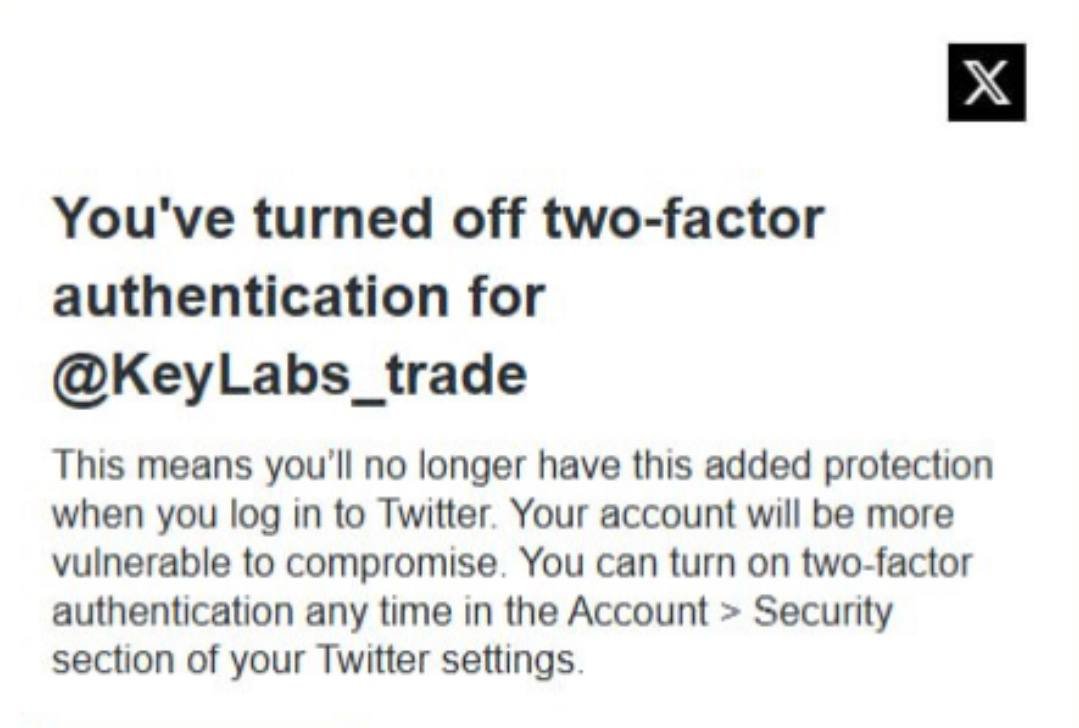
⚠️ Security notice
Our X (@KeyLabs_Trade) account has been compromised.
We no longer have control over account access, and any posts published from today onward are NOT made by our team.
We are working with X Support to restore access.
Please disregard any recent activity until further notice.
[6/6]
The new baseline: your role + an AI mini-team.
You either build systems and use AI to amplify your impact, or you “just do your job” until your job becomes a checklist.
Question: what part of your work did you hand to AI this month?
[1/6]
Amazon is reportedly cutting ~16,000 people. 16k humans are back on the job market… while a chunk of their daily routine is already done by AI. Quiet shift: AI stopped being a “smart search box” and became labor.
[5/6]
Interviews need a dedicated AI block.
Not “do you know ChatGPT?”, but: What workflows did you automate? Which tools? What did you integrate? How do you measure output quality? “I prompt sometimes” is the new “I can use email.”
Markets don’t deteriorate because activity slows.
They deteriorate when price signals stop being reliable.
A market can print large volumes and still fail its primary function: enabling real execution.
When flow is directional, shallow, or incentive-driven, prices move but information quality collapses.
This is the distinction @KeyLabs_trade is built around.
Rather than treating volume as proof of health, the focus is on whether markets remain usable: Can size be executed without distortion?
Does liquidity persist after incentives rotate out?
Do books normalize after stress, or thin further?
Those answers determine whether a market can support real participants, not just short-term activity.
Sustainable markets aren’t defined by how loud they look at launch.
They’re defined by how they behave when attention fades.
Execution quality is the signal.
Everything else is noise.