The Epstein Files: Intelligence, Organized Crime & the Blackmail Machine
The true story of Jeffrey Epstein isn’t just about a depraved financier running an elite blackmail ring—it’s about the deep entanglement between intelligence agencies, organized crime, and the global elite.
Epstein wasn’t a lone predator; he was a small piece of a vast system stretching back to Meyer Lansky’s criminal empire—where blackmail, financial corruption, and geopolitical manipulation go hand in hand.
Now, after years of delay, Pam Bondi claims the Epstein files are finally being released. But ask yourself: **Who will be protected? Who will be erased from history? And who will be sacrificed to maintain the system?**
Epstein’s Real Power: The Blackmail-Industrial Complex
Whitney Webb’s *One Nation Under Blackmail (Vol. 2)* exposes Epstein’s true role—a high-level operative in an intelligence-backed, mafia-run network that didn’t just entrap politicians and CEOs but shaped entire global power structures.
Mossad, CIA, and the Cartel of Silence
- Epstein’s rise mirrors figures like Roy Cohn, who used legal, financial, and political blackmail to manipulate power in the Cold War era.
- Ghislaine Maxwell’s father, Robert Maxwell, was suspected of being a Mossad asset, deeply involved in high-level espionage.
- The CIA and Israeli intelligence have a long history of leveraging organized crime to control political and corporate figures.
Epstein’s properties weren’t just lavish retreats—they were wired surveillance hubs, gathering leverage on billionaires, politicians, and intelligence officers. Those “client lists” weren’t just names; they were tools for power, blackmail, and control.
The Release Strategy: Controlled Exposure
Pam Bondi insists the files are coming, but will we get the full truth?
- Real power players? Likely scrubbed from the records.
- Expendables? Thrown under the bus for public spectacle.
- Intelligence involvement? Buried under “national security” justifications.
From *Iran-Contra* to Epstein, the playbook is always the same: Controlled leaks, a few sacrificial lambs, and a system that stays intact.
The Big Question: Who Owns the Owners?
Epstein wasn’t in charge—he was a facilitator, funneling billions into black-budget intelligence operations, laundering money, and serving elite power networks. His death? A cleanup job.
The real story isn’t about one dead man—it’s about the powerful figures who made him, protected him, and continue to walk free.
The Files: A Curated Lie?
According to *The New York Post*, the so-called “Epstein Files” being released today won’t contain a client list—only a vague **"list of contacts"** with no context.
Multiple Epstein address books have already surfaced in the past, and this new release might just be a repackaged distraction.
Jack Posobiec, who received the files, suggests that the contact sheets could be similar to previous leaks—meaning nothing truly new will come to light.
Prepare for the disappointment. The real secrets will remain buried.
#EpsteinList
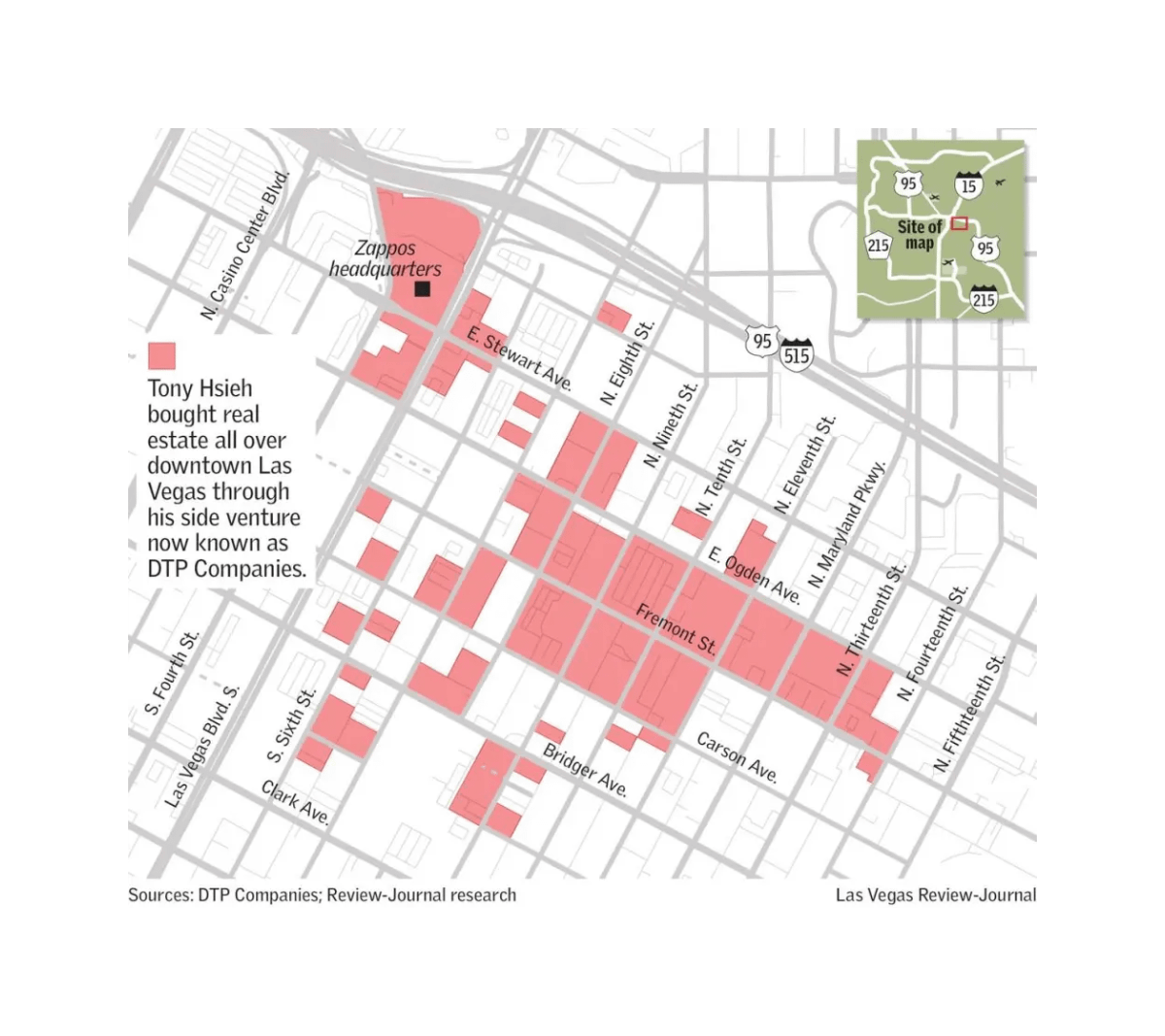
Tony Hsieh BURNED $350,000,000 to rebuild Las Vegas in 2012.
Not because of money or fame...
But because of his strange addiction no one understood.
Here's the irony of the billionaire who sold "Happiness" to Bezos for $900M and then lost his mind: 🧵
DeepSeek Trading bot HACKED PUMPFUN.
In just 5 days of testing the DeepSeek trading bot, I made 52 $SOL from 0.1.
The best part? No coding skills needed—anyone can do this.
Here’s exactly how I did it [with full code]: 👇🧵
I've built an AI-powered bot using DeepSeek.
It finds memecoins before they 150x, analyzing insiders, whales, and influencers in ways no human can.
Insiders hate me for sharing this secret, but I'm doing it for free 🧵
1/12
The new black swan for crypto has emerged unexpectedly, and it's called DeepSeek.
This AI model is similar to ChatGPT 4.0, but it's:
· Faster
· Cheaper
· Smarter
Here's everything you need to know about it and what it means for crypto 👇🧵
RIP ChatGPT!
It's been just a week since Deepseek R1 was released, and it's already the talk of the town!
Yes, it's that good.
Here are 10 mind-blowing examples you need to see (don't miss #5):
This is Gordon Moore.
The famous "Moore's Law" is named after him.
It’s the best mental model for understanding how exponential computing progress ACTUALLY happens.
A thread...
AI just won't stop getting crazier 🤯
13 most incredible developments from OpenAI, META, Midjourney, StabilityAI, MoveAI, Grok that are taking the industry by STORM.
1. MoveAI now creates real-time CGI with just a single phone
The ocean is shrouded in mystery. It covers about 71% of the Earth’s surface, yet we know very little about it when you consider how vast it is - A Thread
1. This fisherman with a deep sea Wolf Eel
Unrealized Losses: The Financial Pig in the Details
Capitalism without financial failure is not capitalism at all, but a kind of socialism for the rich. - James Grant
Many mainstream journalists claim unrealized losses from long-dated bonds on commercial bank books are insignificant.
However, consider the collapse of Silicon Valley Bank early last year.
Its extensive portfolio of long-dated bonds lost value as interest rates surged, leading to a run on the bank.
Billionaires were pleading for a bailout, and they ultimately received one.
Instead of allowing the system to cleanse itself, we witnessed the usual response:
Mistakes got erased by a financial bailout.
Fast forward to now,
In Q1 2024, unrealized losses on securities held by commercial banks rose by $39 billion (8.1%) from Q4, which now total $517 billion.
The United States is putting allied countries such as Japan on a currency monitor list as they scramble to prevent their currencies from collapsing under the pressure of a strong dollar.
Japan has already intervened in the currency market this year, spending $62.25 billion between April 26 and May 29.
This has not resolved the issues concerning the Japanese yen, and as you are all well aware:
Japan is the largest holder of United States treasuries.
If the yen continues to weaken, Japan is likely to use its holdings to defend its currency.
The Japanese yen has declined nearly 40% against gold over the past year, highlighting my theory that gold is a hedge against stupidity.
Japan's economy is like a chaotic circus, a wild ride where fools are at the wheel.
The financial system?
It's a twisted monopoly controlled by the central bank, pulling strings from behind the scenes, making the whole show an absurd spectacle where they have essentially bought up everything.
This is a central bank that has long experimented with negative interest rates and holds about 7% of the Japanese stock market through ETFs.
This doesn't even touch on the mountain of government bonds it owns.
But now?
They are starting to panic as this prolonged monetary experiment has started to catch fire.
But now, another dilemma has emerged.
Norinchukin Bank plans to sell roughly $63 billion in U.S. and European sovereign bonds to counteract losses from incorrect interest rate bets.
The bank is warning that losses this fiscal year may swell to $9.5 billion, triple the estimate made less than a month ago.
Japan's bankruptcies have now also climbed to a 12-year high.
As Japan attempts a desperate unwind, it will be fascinating to see the impact on the United States, especially if the yen remains weak, which could directly affect the demand for American debt.
It is never a dull day in the financial world; it is time for the system to cleanse itself, which has been long overdue.
With record global debt, aggressive gold purchases by countries worldwide, and a fragmented world starting to take shape, a reset of sorts may be closer than we think.
Remember,
"Never wrestle with a pig. You just get dirty, and the pig enjoys it." - George Bernard Shaw.
The entire system is filled with pigs.
There are lots of pigs currently wrestling with each other right now.
RELEASE DAY
After almost 10 years of hard work, tireless research, and a dive deep into the kernels of computer science, I finally realized a dream: running a high-level language on GPUs. And I'm giving it to the world!
Bend compiles modern programming features, including:
- Lambdas with full closure support
- Unrestricted recursion and loops
- Fast object allocations of all kinds
- Folds, ADTs, continuations and much more
To HVM2, a new runtime capable of spreading that workload across 1000's of cores, in a thread-safe, low-overhead fashion. As a result, we finally have a true high-level language that runs natively on GPUs!
Here's a quick demo:
My main conviction for 2024 is a new category of token called Provenance Coins. I’ve written my thesis on this below, as a long form tweet.
The blockchain allows us to track the history and origin of all assets created on it. Because of this, NFTs are a common way for artists to mint works that, among many other features, can be easily authenticated.
The authenticity of an object is something of great controversy in the art and collectibles world. Physical objects have foggy chains of ownership, and “experts” can spin up stories to make something real; as much as 20% of art in public museums may be fake. The blockchain solves the problem of provenance by recording every transaction, forever. If an artist mints an artwork, it is trivial to record and then verify the token at a future date.
Why do people care about authenticity? People are enthralled by stories. If they can be convinced that an object (physical or digital) has really experienced the events it is claimed to have experienced, it is imbued with this magical property, first through the individual and then through the social network of people who have their imaginations captured the same way. This is why people desire the real thing instead of an identical faux replica; this is how, through NFTs, a digital image can have value.
This on-chain use of provenance is mostly utilised by artists making art and brands making collectibles. The concept can of course be expanded further. It makes the most sense that digitally native objects and stories should be recorded this way. The most obvious example of this would be memes. While memes have many tokens named after them, the vast majority have no link to their origins; #Dogecoin was created by fans of the image of Kabosu, with no actual link to her; the recent $PEPE has no link to Matt Furie, despite him already creating NFTs.
Memes are viral phenomenons, but they are mostly minted as 1 of 1 NFTs, and in some cases open editions or collections. The limited divisibility enforced by these models is a barrier to virality. As we have seen with $DOGE et al., price function greatly benefits from fungibility and liquidity, regardless of authenticity. This leads me to introduce an entirely new category of tokens: Provenance Coins.
Provenance Coins combine the markets of art and memecoins into one asset. They disrupt the current memecoin paradigm by creating indisputably legitimate tokens, underpinning it with a substance that existing tokens like Dogecoin are devoid of. For example, $DOG is backed by the original photo taken by @kabosumama. This photo is globally recognized and, for more than ten years, has been used endlessly as a format for conveying ideas. This image can be owned collectively through fractionalization.
Fractionalization works using a smart contract that splits the original NFT into tokens, which can be redeemed proportionally for the sale price of the #NFT if it is won by auction through the same smart contract. The token holders can vote on the reserve price of the auction.
The first example of this was a fractionalized version of Yellow Glasses Guy, $YGGC. In late 2021, I launched $NFD, which was a fractional token of another, less famous (and more affordable) image of Kabosu that was captured and auctioned off by Atsuko Sato. Shortly after, $DOG was created. I have since joined @ownthedoge to direct tokenomics. Many other Provenance Coins exist, for example, through @DankBankHQ who have collected many famous images with the intention of fractionalizing them.
The success of the fractionalized tokens in turn pushes up the value of these 1 of 1 NFTs, benefitting their creators. This transformation of the memecoin market also appeals to more sceptical and outside investors, especially when the subject is something they may recognize, by giving them a trusted vehicle. Greater respect for truth encourages reciprocation of the same - it will draw in those who care about history, and make them comfortable through verification.
Some DAOs exist that focus on collecting these pieces of internet culture. Examples are Feisty DAO (@NFDtoken) and @PleasrDAO. Feisty DAO has created an ecosystem with NFD as the central token. It uses defi to create new functions, like prints of the original image, which can be created by locking some of the token. It also fractionalized Angry Doge as $ANFD, which can be earned by staking NFD-ETH LP, so liquidity is incentivized by the opportunity to ‘mine’ a cultural image. It also holds $HARAMBE, one of the original famous Gigachad images by Sleekntears, and some of Sminem’s 1 of 1s. PleasrDAO have created the ‘pixel portal’, where you can lock some DOG to generate a single pixel of the original doge image as an NFT. They also helped launch $FREE, a fractional token of @RealRossU’s art that was won at auction.
Provenance Coins can also be created directly. For example, $OGSM was created by Roman @thesminemverse, the boy in the famous Sminem image. He did this by simply creating an ERC-20 himself; there is no need for fractionalization, as it is implicitly representative of the meme, and he profits through his share of the supply. This allows him to benefit directly from his internet fame - something he was unable to do before crypto. Many creators in similar positions are empowered the same way by the blockchain, typically through NFTs. People like @saint_whynne, the creator of trollface, and @solidbadluck, the creator of Bad Luck Brian, have minted their creations in order to gain financial success that was not otherwise available to them. It is very common for these creators to see their work reproduced endlessly without credit, be it through fast fashion or creditless reposts. The blockchain allows them to apply authenticity to their work online without having to rely on the outdated copyright system.
A combination of treasury and LP mismanagement in the bear market meant that DOG saw a significant price slide, wth holders losing confidence in the concept. Many similar assets saw the same mispricing. I took this as an opportunity.
DOG is currently valued at $40m FDV. Gigachad sold for just $50k. Compare this to other famous images and works of art; the value discrepancy is huge. The Mona Lisa is hard to value, but would be upwards of $20b. This discrepancy is also true when compared to other popular memecoins. It is not difficult to imagine that the authentic examples of these ideas should be worth far, far more than they are now.
Traders and collectors alike like to signal status through veblen goods. This is an idea shared by many large traders. NFTs are an obvious digital example of this, but Provenance Coins have the potential to capture some of this demand through clever use of Dapps. Prints allow the tokens to be converted to a format that can be displayed, just the same as any other NFT, while still carrying the authenticity of the original token as it can be traced back through the contract. This can make a single image much like a pfp collection; it can be worn by many owners, without the same divisibility and liquidity problems faced by 10k collections.
Illegitimate namesakes can be mass produced. We see countless tokens spun up, with many bought instantly by insiders and promoted through pseudonymous networks. They play a confidence game purely for profit, sometimes with a forced ‘culture’ that does not escape CT. There is rarely a long term outlook and it can be repeated without consequence. On balance, there are many great grassroots communities that have formed organically this way; people love comeback stories after the dev rugs. But this is a drain on honest participants who keep rewarding the bad actors.
Authenticity creates a more reliable scarcity. If there is a verifiable creator or piece of art you enjoy, you should rally behind it. This sincerity gives rise to a long term care for culture and does away with tiring, stressful musical chairs that give the industry the image it has today. This isn’t me saying I haven’t contributed to that in any way - I play this game too - but we can aspire to change it.
People often talk about ‘metas’, local zeitgeists, to inform and guide their investment strategy. While it’s important to have an understanding of behavioural psychology to be a good trader, people often become trapped in their own frameworks without even realizing it. You do not have to be a slave to the repeated cycle of meaningless pump and dumps to ‘make it’. Some ideas are evergreen; in crypto, we have created eternal world computers that will outlive us. We must take advantage of this long term capability to form new outlooks. By creating tokens that have real historical meaning at their inception, we can ignite a multi-generational ethos that ends the culture of nihilistic throwaway scamcoins, and forges a new system for real creators and the followers who care about them. You can enable this and take part in its success by simply deciding to do so.
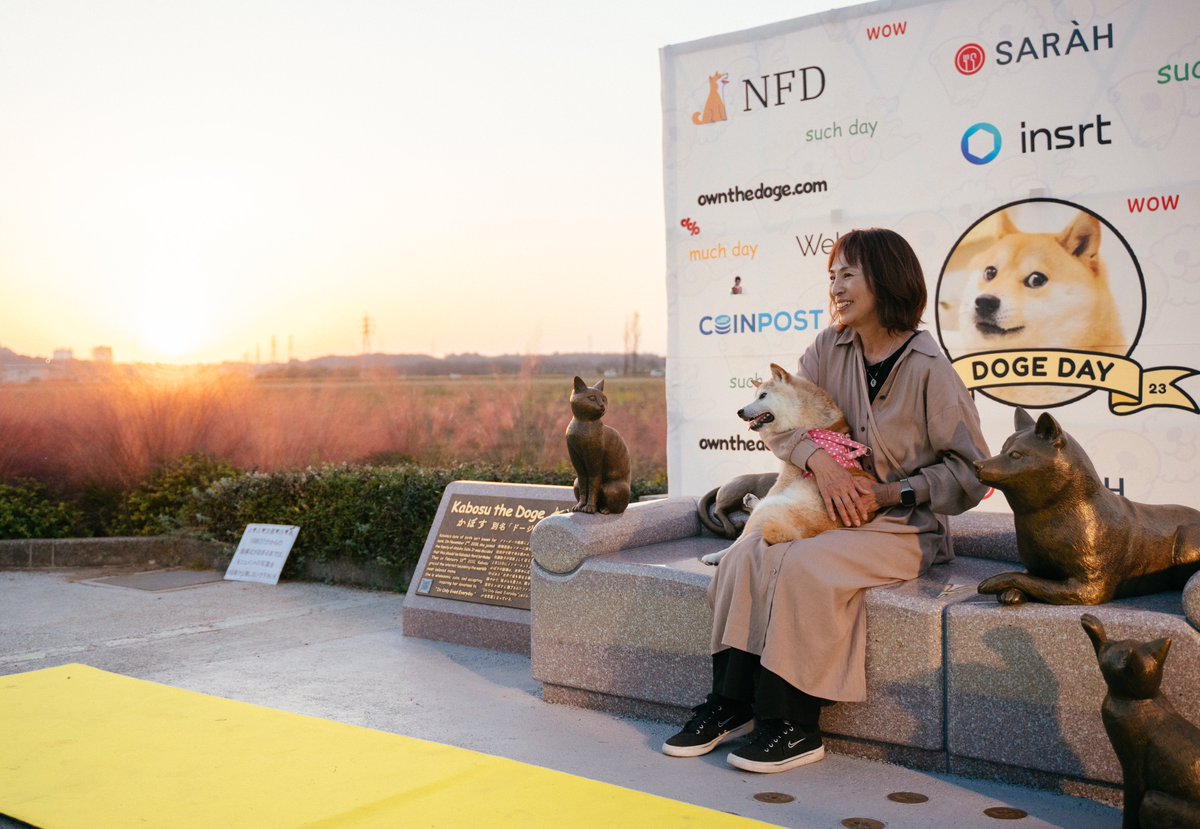
My main choices for this category are $DOG and $NFD. Ownthedoge is a more mainstream oriented brand that impacts the real world through installations like the doge statue (pictured) and official doge merchandise. It is also the most recognizeable of all existing tokens, making the value proposition easier to convey to new market participants.
Feisty DAO focuses on consolidating a hold on the crypto-native space. It is smaller and therefore more able to move fast and break things. It has an already impressive collection, and many incubated community projects like @RetroDogesNFT contribute to the community’s ecosystem.
If you read this far, thank you. This is a sincere explanation of what I consider to be the most promising non-technical innovation in the space. It is a construct I have worked with for years now, and intend to see through to acceptance, to the benefit of all honest actors. Happy new year, and I wish you a great 2024.
I'm 36.
Stress controlled me for years so I turned to neuroscience.
After 1200+ hours studying elite athletes, CEOs & psychologists, my toolkit is now full of powerful neuro-hacks.
Here are the top 7 that will change your life:
This is Mark Hyman.
The world’s leading longevity expert.
His message? Food is medicine. You can choose healing or you can choose disease.
Here’s his longevity-boosting nutrition protocol (backed by science):


![0xNonceSense's tweet photo. DeepSeek Trading bot HACKED PUMPFUN.
In just 5 days of testing the DeepSeek trading bot, I made 52 $SOL from 0.1.
The best part? No coding skills needed—anyone can do this.
Here’s exactly how I did it [with full code]: 👇🧵 https://t.co/TTexIsUJ29](https://pbs.twimg.com/media/GiUOy0EbEAEkyLK.jpg)