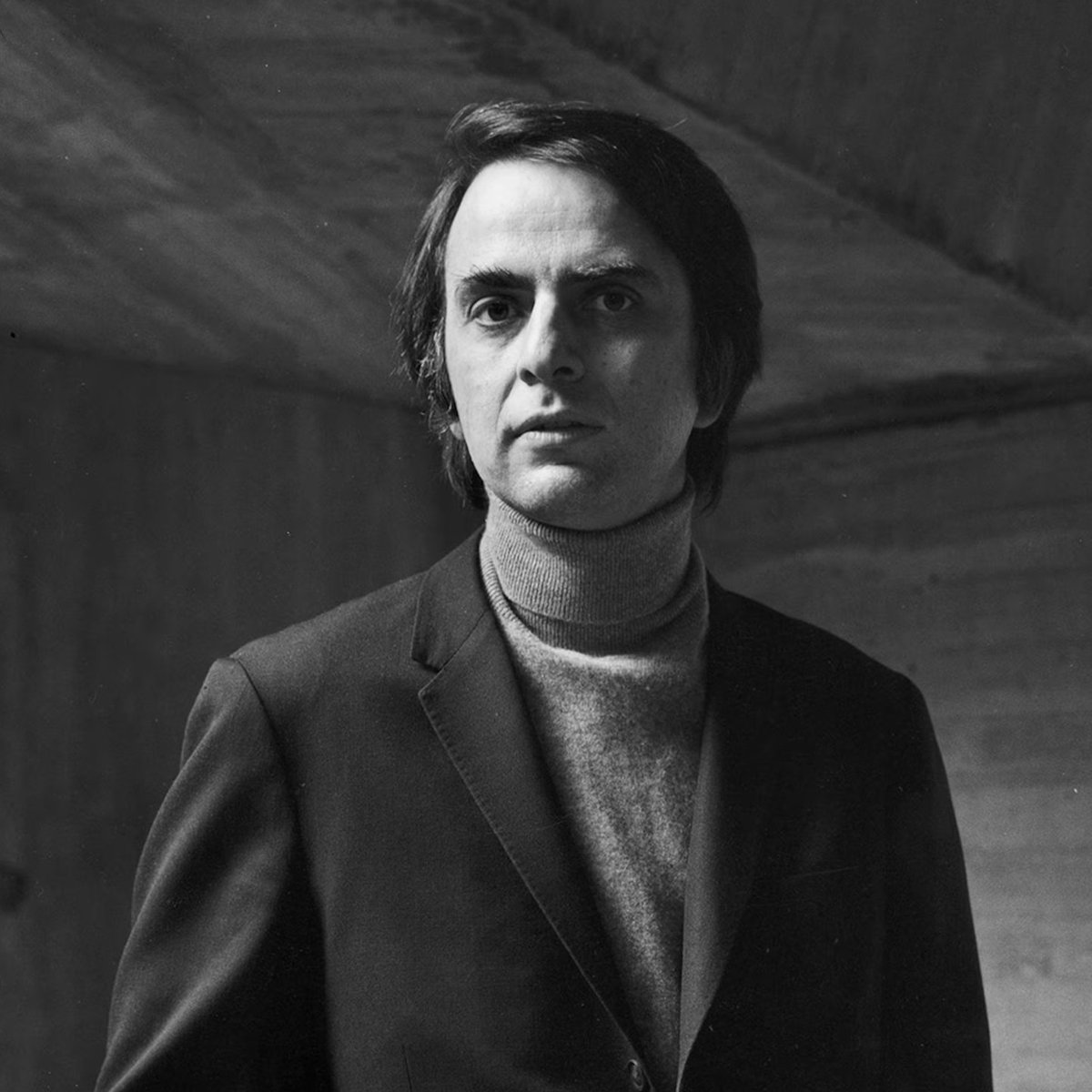
“I have a foreboding of an America in my children's or grandchildren's time -- when the United States is a service and information economy; when nearly all the manufacturing industries have slipped away to other countries; when awesome technological powers are in the hands of a very few, and no one representing the public interest can even grasp the issues; when the people have lost the ability to set their own agendas or knowledgeably question those in authority; when, clutching our crystals and nervously consulting our horoscopes, our critical faculties in decline, unable to distinguish between what feels good and what's true, we slide, almost without noticing, back into superstition and darkness...
The dumbing down of American is most evident in the slow decay of substantive content in the enormously influential media, the 30 second sound bites (now down to 10 seconds or less), lowest common denominator programming, credulous presentations on pseudoscience and superstition, but especially a kind of celebration of ignorance”
― Carl Sagan, The Demon-Haunted World: Science as a Candle in the Dark
1. I didn't want to talk about this today. I had planned on writing a very clever and highly nuanced commentary on American patriarchy. But the man who runs the Centers for Medicare and Medicaid Services, which oversees the Affordable Care Act, forced my hand.
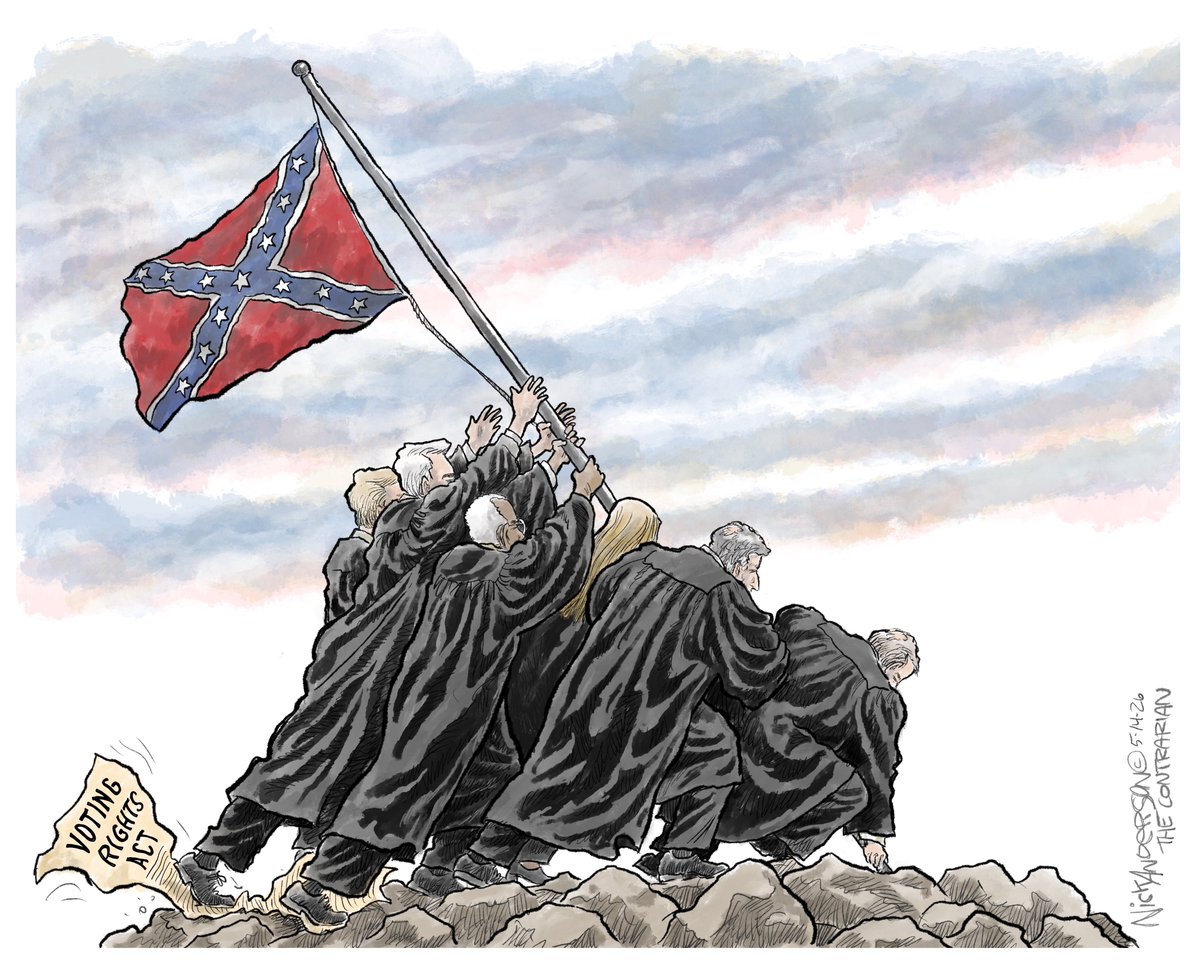
In Louisiana, an unspoken agreement between the appellate judges in the 5th Circuit was to deny and ignore EVERY petition by a Black person seeking appeal. This horrific evil was revealed when one of the 3 people who tried to expose this committed suicide and left a note
@propublica.org reports: https://t.co/NnpTTG35ht
A community college professor named Marty Lobdell taught the same study skills lecture for 30 years. The video quietly became one of the most watched educational recordings online, with over 10 million views.
He spent his career watching students fail not because they were lazy, but because no one had taught them how their brain actually works when learning something difficult.
The lecture, “Study Less Study Smart,” contains a powerful framework.
Your brain cannot sustain focus the way most people believe. Studies show the average learner hits a wall between 25 and 30 minutes. After that, efficiency collapses. You’re still sitting there, but almost nothing is being absorbed.
Lobdell told the story of a student who planned to study 6 hours a night, 5 nights a week. Thirty hours total. She failed every class. She was not lacking effort. She was confusing time near books with actual learning. The fix is simple: when focus drops, stop, take a 5 minute rewarding break, then return. That reset makes a massive difference.
He also destroyed the myth of highlighting and re reading. Recognition is not the same as recall. To prove it, he read 13 random letters. Almost no one remembered them. Then he turned them into “Happy Thursday.” The entire room recalled them instantly. The brain stores meaning, not repetition.
This is why elaborative encoding works so well.
Finally, he shared the most important principle: 80 percent of study time should be active recitation. Close the book and explain the material in your own words. Teach it to someone else or an empty chair. Retrieval is where real learning happens.
His closing line stuck with me: If this information does not change your
behaviour, you have not actually learned it.
The best students do not study more hours. They stop confusing the feeling of studying with the reality of learning.
Bombshell: Leaked audio recordings prove Argentina's libertarian President Javier Milei is conspiring with the drug lord Juan Orlando Hernández -- the drug-trafficking former dictator of Honduras, whom Trump freed from prison.
In a recording between Milei and the drug lord, Hernández proposed creating a right-wing fake news operation, with the support of the US government, in order to spread propaganda online to "eliminate the left" in Latin America, targeting Mexico, Brazil, Colombia, Venezuela, and the left-wing opposition in Honduras.
The self-declared "anarcho-capitalist" Milei offered to contribute $350,000 USD of Argentine government money to help fund this disinformation operation, while millions of Argentines are suffering in poverty, and they have to eat donkey meat, because they can't afford local beef.
Link: https://t.co/S8lJQtnldc
@DarrinKnowles1 This happened to my father. Was a bit nervous about him getting into a national cemetery but thankfully they had enough to prove he served.
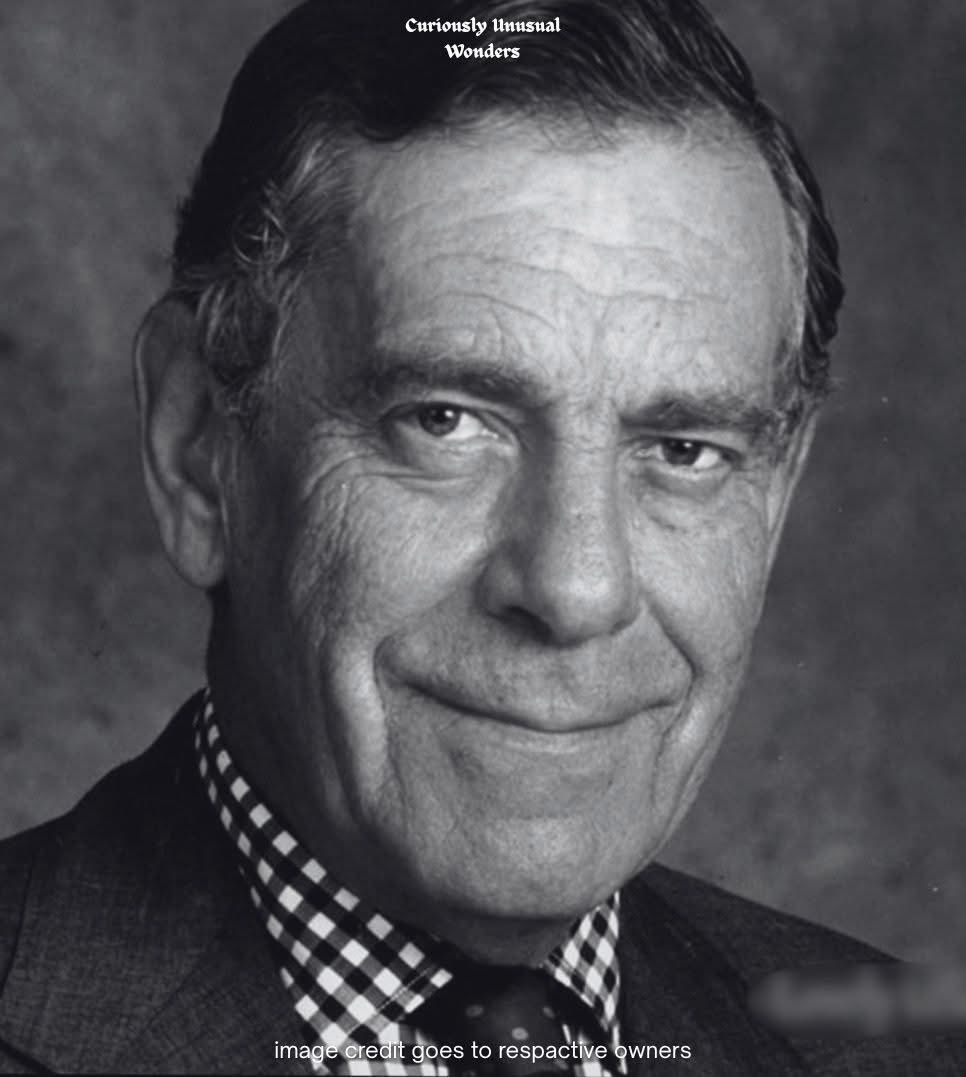
On the morning of August 3, 1965, CBS News correspondent Morley Safer was having coffee with Marine officers in Da Nang, Vietnam, looking for a story to cover. A lieutenant mentioned his unit was heading out on an operation the next morning and invited Safer along. The destination was Cam Ne, a small village in South Vietnam suspected of sheltering Viet Cong fighters. Safer agreed, brought his camera crew, and climbed into an armored vehicle heading toward the village before sunrise.
What he saw when they arrived was not a military battle. It was a village full of women, children, and elderly men.
The Marines moved through Cam Ne methodically. When villagers could not answer their questions, or simply did not understand English, soldiers pulled out cigarette lighters and flamethrowers and began setting the thatched roofs on fire. Old women pleaded with the Marines to wait, begging for time to remove their possessions. Their pleas were ignored. Rice stores were burned. Belongings were burned. By the time the operation ended, 150 homes had been destroyed. Three women were wounded. One baby was killed. The only prisoners taken were four elderly men who could not understand a word of English and had no idea what an identification card was.
Safer kept his cameras rolling through all of it.
That evening, he shipped the film and his narration back to New York, where CBS News president Fred Friendly and anchor Walter Cronkite watched the footage together. Both were stunned. Both agreed it was too important not to broadcast.
On August 5, 1965, the report aired on the CBS Evening News. Within hours, CBS was flooded with letters and phone calls from viewers outraged at the negative portrayal of American troops. Then came the call that no network executive ever wants to receive.
Early the next morning, CBS president Frank Stanton was woken by his telephone. The voice on the other end did not introduce itself politely. It said: "Frank, are you trying to silence me? Frank, this is your president, and yesterday your boys shat on the American flag." Lyndon Johnson was furious. He immediately ordered a background investigation into Safer, personally convinced that a journalist capable of such a report had to be working for the communists. The investigation found nothing. Johnson then ordered an investigation into the Marine officer in charge at Cam Ne, certain Safer must have bribed him to stage the burning. Nothing came of that either. The Pentagon formally demanded that CBS remove Safer from Vietnam entirely. The general commanding the Marine Corps area of operations in South Vietnam banned Safer from entering Marine territory.
CBS refused to pull him.
The network stood behind the report. The ban on Safer was eventually lifted. But the consequences did not disappear. Safer received death threats. He slept with a loaded pistol beside his bed. One night, a drunken voice outside his window screamed accusations and fired a gun into the air.
The military was also forced to respond. After the Cam Ne broadcast, Marines were prohibited from burning villages. Within weeks, General William Westmoreland issued new guidelines explicitly banning the indiscriminate destruction of populated areas. Any future operations near civilians were required to include warning leaflets, loudspeakers, and South Vietnamese troops to help communicate with villagers. A single television report had changed official military policy.
Later, the New York University Department of Journalism named the Cam Ne broadcast one of the top 100 works of journalism in the United States in the entire 20th century.
Morley Safer went on to join 60 Minutes in 1970, where he spent 46 years as the program's longest-serving correspondent. He earned 12 Emmy Awards, three Peabody Awards, and became one of the most recognized faces in American broadcast journalism. He passed away on May 19, 2016, at the age of 84, just days after announcing his retirement.
(More Story in replies)
The scariest finding in this paper: the subjects couldn't tell it was happening.
UPenn ran this study on 48 healthy adults. One group slept 8 hours. Another slept 6. Another slept 4. For 14 straight days. They tested cognitive performance every 2 hours from 7:30am to 11:30pm.
The 6-hour group's reaction times, working memory, and sustained attention deteriorated on a near-linear curve. By day 14 they were performing at the same level as someone who hadn't slept at all in 48 hours. The 4-hour group hit that threshold by day 6.
Here's the part that should unsettle everyone who thinks they "do fine" on 6 hours: the subjects' self-reported sleepiness flatlined after the first few days. Their brains kept getting worse. Their perception of how impaired they were stopped updating. The cognitive decline was invisible to the person experiencing it.
The researchers found a hard threshold. Any wakefulness beyond 15.84 hours in a day produces cumulative neurobiological cost. That cost compounds every single day you exceed it and does not reset with a weekend of sleeping in.
About 35% of American adults sleep less than 7 hours a night. 40% of those get 6 hours or less. In 1942 that number was 11%. We built an entire professional culture around a sleep schedule that this paper says is functionally equivalent to pulling consecutive all-nighters.
"I'm fine on 6 hours" is the most common response to sleep research. The first thing chronic sleep debt destroys is your ability to notice chronic sleep debt.
The "invisible guest theory" is a 25-year-old psychology experiment with a TikTok rebrand, and the actual mechanism is more useful than the viral version.
Cornell ran this in 2000. Made students wear a Barry Manilow t-shirt into a room full of strangers. Students predicted 50% of the room noticed the shirt. Actual number: 23%. Less than half what they expected. The researchers called it the spotlight effect.
The mechanism is anchoring. Your brain starts with your own experience of the moment, which is extremely vivid and detailed because you're living it, and then tries to adjust for how much less other people are paying attention. The adjustment is always too small. You feel 100% of your own embarrassment and assume everyone else feels at least 60% of it. They feel about 15%.
But here's what the viral version leaves out. Gilovich ran a follow-up and found the effect works in BOTH directions. People also overestimate how much others notice their positive contributions. You think your clever joke landed with the whole room. It didn't. You think everyone saw you handle that tense moment well. They didn't. The spotlight shines equally on your wins and your failures, which means both are mostly invisible.
The real freedom isn't "nobody's judging you." The real freedom is that nobody's paying nearly as much attention as you think, to anything you do, good or bad. Once you internalize that, you stop performing entirely.
NEW: A stunning new report claims that the Pentagon summoned Pope Leo XIV’s top American diplomat and threatened him after the U.S.-born pontiff gave his January state-of-the-world address.
Leo used the address to denounce a world ruled by “a diplomacy based on force” and “zeal for war.”
https://t.co/hvlb31VfM7
@KerryFinnan@peterawolf Well, apparently it still matters to me and you cause here we are going round round on it. I’m just saying it was BS then and it’s BS now.
@KerryFinnan@peterawolf And yet you’re still also out here peddling this nonsense. The man continues to walk around ride bikes and be a very active person who clearly does not have dementia but here you are still repeating that.