If you’ve made an impact, this is your last chance to get nominated and let your work inspire others.
📅 Apply by: 28 August 2026
🌐 https://t.co/rvppLKabGv
#NationalWaterAwards#applynow#jalshakti
आंध्र प्रदेश के प्राकृतिक खेती वाले खेतों में:
- मिट्टी का कार्बनिक कार्बन 8 से 21% अधिक।
- सूक्ष्म जीव जैव भार 13 से 27% अधिक।
- लाभदायक सूक्ष्म जीव पौने दो गुना अधिक।
ये ICAR-NAARM और नीति आयोग के मैदानी आँकड़े हैं।
बहस के लिए नहीं, फ़ैसले के लिए हैं।
#NamamiGange #प्राकृतिकखेती
The 7th National Water Awards 2026 recognize efforts that contribute to better water conservation and management, encouraging effective practices and initiatives across the country.
Eligible States, Districts, Urban Local Bodies, Dam Owner Agencies and Industries can submit their applications.
Apply By: 28th August 2026🔗 https://t.co/pn69HaP7jG
केन-बेतवा लिंक परियोजना के अंतर्गत मध्य प्रदेश के 9 जिलों (पन्ना, टीकमगढ़, छतरपुर, सागर, दमोह, दतिया, विदिशा, शिवपुरी एवं रायसेन) तथा उत्तर प्रदेश के 4 जिलों (बांदा, महोबा, झांसी एवं ललितपुर) में लगभग 10.62 लाख हेक्टेयर कृषि भूमि में वार्षिक सिंचाई की उपलब्धता सुनिश्चित होगी।
#kenbetwa #bundelkhand #irrigation #jalshakti
Factual position on Ken–Betwa Link Project
There are certain media reports which have claimed that symbolic protests such as “Chita Andolan”, “Fansi Pradarshan” and “Jal Satyagraha” are being organized in certain areas of Madhya Pradesh against the Ken–Betwa Link Project, alleging displacement of tribal families without compensation.
The allegations that affected families have not been compensated or rehabilitated are incorrect and misleading. Most eligible families have received full compensation and rehabilitation benefits, and only procedural formalities remain in a few cases. The Government of India, Government of Madhya Pradesh, and the Ken–Betwa Link Project Authority remain fully committed to ensuring transparent, just, and time-bound compensation and dignified rehabilitation for all genuinely affected families.
The fact of the matter is that the Ken–Betwa Link Project, India’s first major river-linking initiative under the National Perspective Plan, aims to transfer surplus water from the Ken River to the Betwa River to provide irrigation, drinking water supply, and hydropower benefits to the Bundelkhand region of Madhya Pradesh and Uttar Pradesh.
The project will ensure irrigation for 10.62 lakh hectares, drinking water for nearly 62 lakh people, and 103 MW of hydropower generation. Of the total estimated cost of ₹44,604.99 crore, ₹12,445.85 crore has been spent up to July 2026. The project is being implemented by the Ken–Betwa Link Project Authority.
Land acquisition, rehabilitation, and resettlement activities are being carried out strictly in accordance with the RFCTLARR Act, 2013, and the Special Rehabilitation Package approved by the Government of Madhya Pradesh on 13 September 2023. Compensation for acquired land is being provided either as per the Act or at ₹12.50 lakh per hectare, whichever is higher. Compensation for houses, trees, wells, tube wells, and other immovable assets has been determined as per statutory provisions.
Eligible families are being provided ₹7 lakh for rural plots and ₹6.50 lakh for urban plots, while those opting out of plots receive ₹12.50 lakh as one-time assistance. Additional financial support is being extended to eligible Scheduled Caste and Scheduled Tribe families in Scheduled Areas to ensure a fair and balanced rehabilitation process.
It is also stated that as of July 2026, awards amounting to ₹360.66 crore have been passed for 10,913 affected persons (agricultural land compensation), of which ₹320.45 crore (88.85%) has already been disbursed. For habitation areas (house related properties), ₹149.63 crore has been awarded, with 93.97% disbursed. A total of 5,039 affected families to be rehabilitated have been identified, with awards of ₹629.87 crore, out of which ₹590.74 crore (93.78%) has been paid. Remaining payments will be made upon completion of legal formalities. Continuous verification of land records is being undertaken to ensure that no eligible family is deprived of benefits.
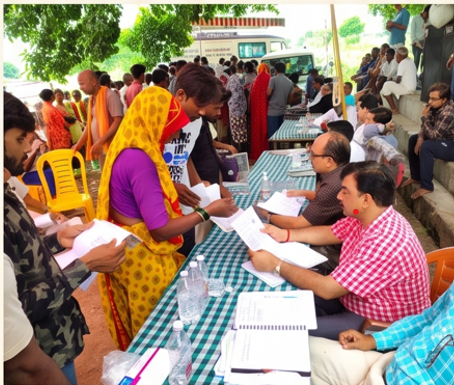
Under the Jan Vishwas programme, the district administration recently organized a special camp at Karaondia to address issues of displaced families. Approvals were granted for applications related to animal husbandry, social security, poverty line, Ladli Behna and Ladli Lakshmi schemes. Health services were provided to 178 persons, AYUSH medicines were distributed, handpumps were repaired, and scholarship mapping and book distribution were conducted for students. In the last ten days alone, ₹10.42 crore has been sanctioned to 86 affected persons.
These facts clearly demonstrate that the protests highlighted in the media are misleading, and names of individuals participating in recent protests do not appear in the list of project-affected families, land records, or compensation registers. These activities are largely being conducted by external elements with the intent to circulate misleading and factually incorrect narratives regarding the project. https://t.co/Cs5Jp3w3cH
हर घर तिरंगा केवल एक अभियान नहीं, बल्कि राष्ट्र के प्रति सम्मान और गौरव की सामूहिक अभिव्यक्ति है।
इस स्वतंत्रता दिवस, 9 से 17 अगस्त तक अपने घर तिरंगा फहराकर इस अभियान का हिस्सा बनें।
तिरंगे के साथ अपनी तस्वीर साझा कर देशभक्ति की इस भावना को और व्यापक बनाएं।
#HarGharTiranga
बांध सिर्फ पानी जमा करने का साधन नहीं हैं। 💧
बहुउद्देशीय बांध सिंचाई, पेयजल, जलविद्युत उत्पादन और बाढ़ प्रबंधन जैसी विभिन्न जरूरतों में महत्वपूर्ण भूमिका निभाते हैं। इसलिए बांधों का प्रबंधन जल संसाधनों के संतुलित और प्रभावी उपयोग का महत्वपूर्ण हिस्सा है।
#Dams#JalShakti
🇮🇳💧 15 अगस्त केवल आज़ादी का पर्व नहीं, बल्कि ग्रामीण भारत के जीवन में आए एक बड़े परिवर्तन का भी प्रतीक है।
माननीय प्रधानमंत्री श्री @narendramodi जी के नेतृत्व में प्रारंभ हुआ #JalJeevanMission इस स्वतंत्रता दिवस पर अपने 7 गौरवशाली वर्ष पूर्ण कर रहा है।
इन 7 वर्षों में करोड़ों ग्रामीण परिवारों तक सुरक्षित पेयजल पहुंचा है। हर नल कनेक्शन ने महिलाओं को समय, बच्चों को बेहतर स्वास्थ्य और परिवारों को सम्मान व सुविधा प्रदान की है।
आज जब हम तिरंगे को नमन करें, तब उन जलापूर्ति परिसंपत्तियों पर भी गर्व करें जिन्हें जनभागीदारी से बनाया गया है। आइए संकल्प लें कि हम अपनी ग्राम जल योजनाओं, ओवरहेड टैंकों, पंप हाउसों, जल स्रोतों और पाइप नेटवर्क की रक्षा करेंगे तथा आने वाली पीढ़ियों के लिए इन्हें सुरक्षित रखेंगे।
तिरंगे का मान, जल संरचनाओं का सम्मान।
जनभागीदारी से बना यह अमृत, सबकी जिम्मेदारी से रहेगा सुरक्षित।
#PeyjalSevaKaSaatSaal #7YearsOfJJM #HarGharJal #ViksitBharat
हर घर तिरंगा — हर घर जल संरक्षण। भारत के 80वें स्वतंत्रता दिवस पर तिरंगा फहराएँ और जल बचाने का संकल्प लें। जो धरती पर तिरंगा लहराता है, उसे सींचने की ज़िम्मेदारी भी हमारी है। Selfie: https://t.co/pNcrIuM1Gt
#HarGharTiranga#BetwaRiverBoard#BRB 🇮🇳
@nwmgoi extended a warm welcome to @archanavarmaIAS Secretary, DoWR, at the briefing meeting held today at CGO Complex. The Secretary shared valuable suggestions & encouraged team to continue its dedicated efforts towards water conservation in line with objectives of the Mission!
हर संख्या के पीछे ग्रामीणों की खुशहाली है!
7 साल में, #JalJeevanMission ने करोड़ों घरों तक सुरक्षित पेयजल पहुंचाया।
ये सफर आसान नहीं था,
पर हर दिन एक नया कनेक्शन,
एक नई उम्मीद जोड़ता गया। 🇮🇳
#PeyjalSevaKeSaatSaal इस मिशन के 7 गौरवशाली सालों का जश्न है।
@PMOIndia@CRPaatil
Community Participation, Citizen Science & Nature-Based Solutions
At Technical Session-III of the Regional Workshop on Small River Rejuvenation Framework, Dr. Mrittika Basu, Senior Conservation Scientist, Nature Conservancy India Solutions, shared insights on community engagement, citizen science and nature-based solutions.
She highlighted the engagement of communities through trainings, capacity-building activities, farmer field schools, exposure visits and SHG trainings. The presentation also discussed the involvement of local youth as citizen scientists, supporting the collection and sharing of rainfall, water and soil-related data.
The presentation further highlighted the development of a data dashboard to support monitoring of interventions, impacts and changes in the field.
Dr. Basu also emphasised the need to integrate nature-based solutions into existing programmes and Village Development Plans, while strengthening clear indicators, inter-departmental collaboration, and awareness and technical and planning capacities at different levels.
#CommunityParticipation #CitizenScience #NatureBasedSolutions #SmallRiverRejuvenation #RiverConservation #WaterManagement #NRCD
Exploring decentralised approaches to sustainable wastewater management.
During Technical Session-II on Pollution Abatement, Water Resources Management and Nature-Based Solutions, Dr. Basavaraju Manu, Associate Professor, Department of Civil Engineering, NIT Surathkal, shared his perspectives on Decentralized Wastewater Treatment Systems (DEWATS).
The presentation examined the potential of decentralised wastewater treatment approaches for different settings, including individual premises, clusters of buildings and communities, with treatment undertaken closer to the point of wastewater generation.
The discussion also highlighted the importance of appropriate design, operation and maintenance, along with the potential for treated wastewater reuse and recycling, as part of sustainable wastewater management.
#SmallRiverRejuvenation #WastewaterManagement #DEWATS #WaterManagement #PollutionAbatement #NatureBasedSolutions #NRCD
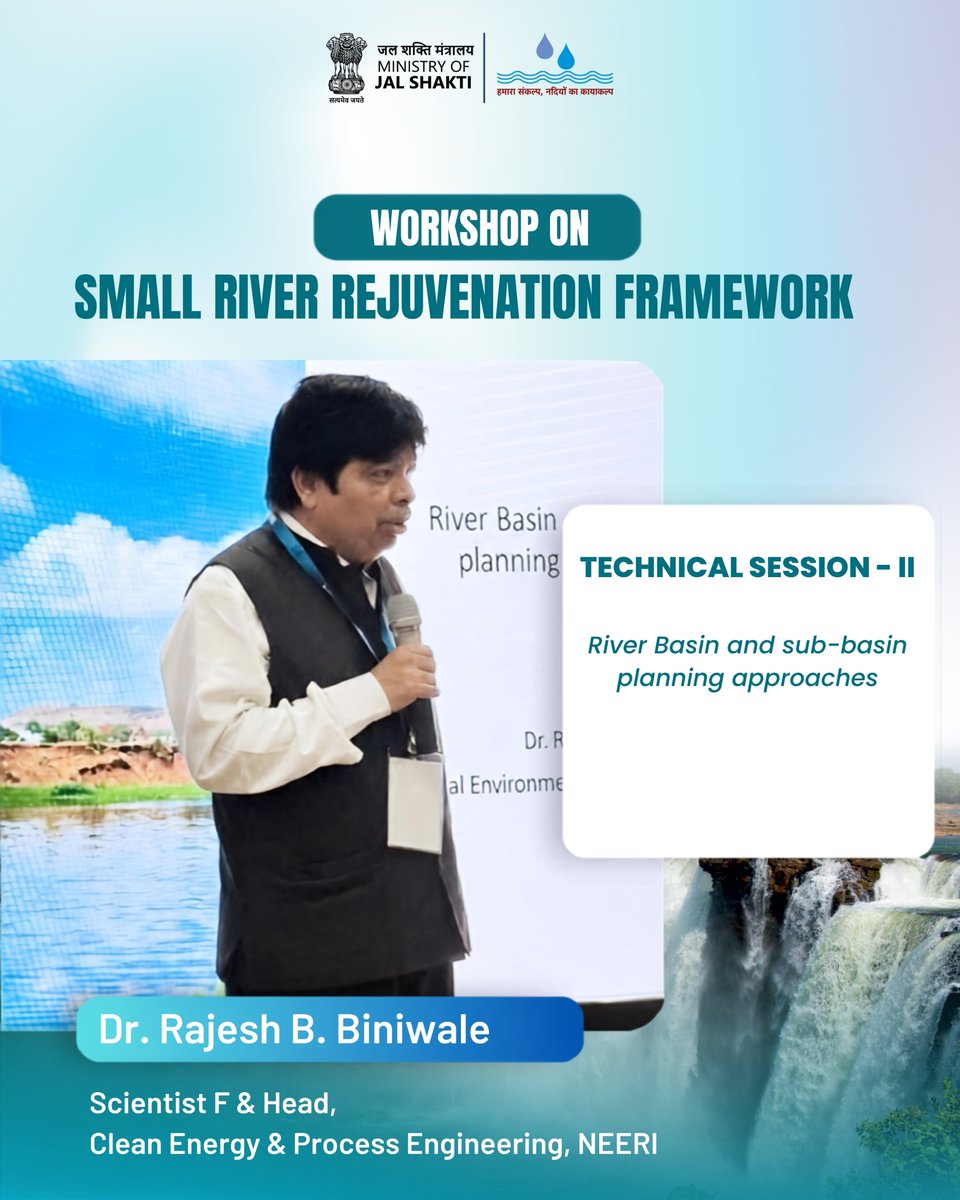
Technical Session II | River Basin and Sub-basin Planning Approaches
Dr. Rajesh B. Biniwale, Scientist ‘F’ & Head, Clean Energy and Process Engineering, NEERI, shared insights on adopting an integrated river basin and sub-basin approach for river planning and management, drawing from work undertaken in the Godavari River Basin.
He emphasised the need to identify and map rivers, tributaries and smaller rivulets, including those that may have been overlooked or are no longer widely recognised. He also highlighted that planning should follow watershed boundaries alongside administrative boundaries, supported by an understanding of the water balance.
The presentation covered key aspects of basin-level planning, including pollution-source mapping, sewage and industrial pollution, solid waste, GIS-based mapping and integration of data from different sources to identify priority areas and appropriate interventions.
Drawing on the Godavari experience, Dr. Biniwale also highlighted how forest cover, soil erosion, climate-related factors and river flows can be studied together to understand river-system changes and guide interventions.
The presentation underscored the importance of integrated, data-driven and basin-level planning for effective river management, with approaches that can also inform the rejuvenation of smaller rivers and their sub-basins.
#SmallRiverRejuvenation #RiverBasinManagement #SubBasinPlanning #RiverConservation #WaterResourcesManagement #PollutionAbatement #GISMapping #WatershedManagement #NatureBasedSolutions #NEERI #NRCD #NMCG
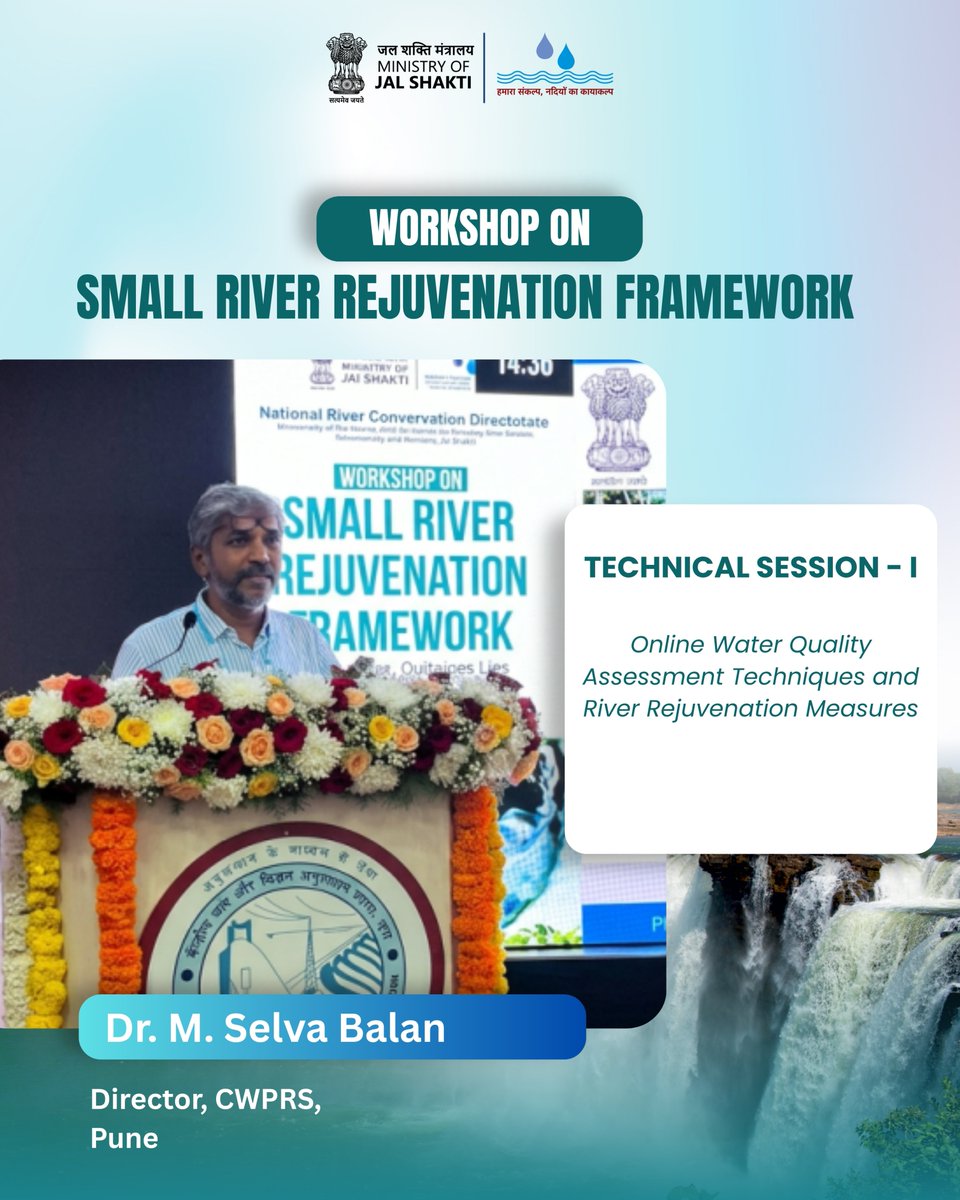
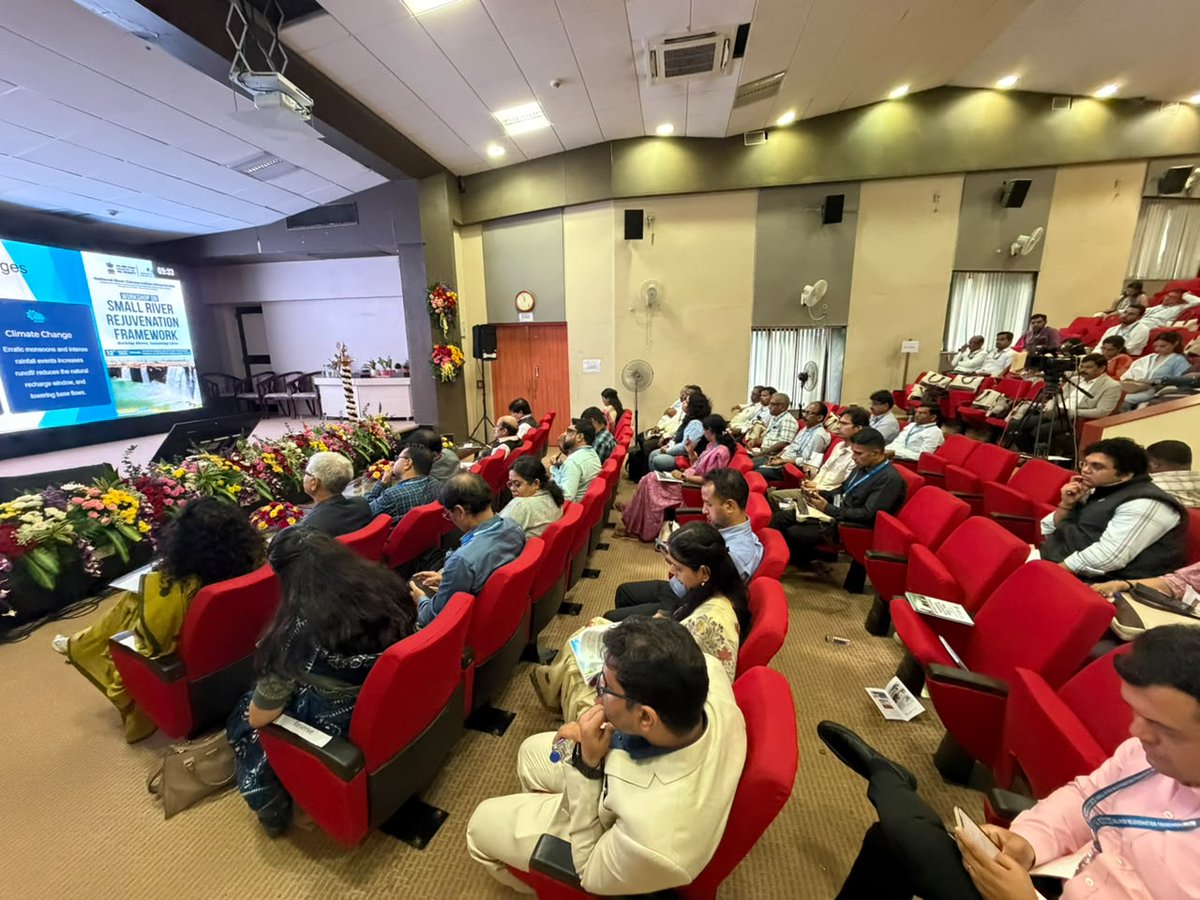
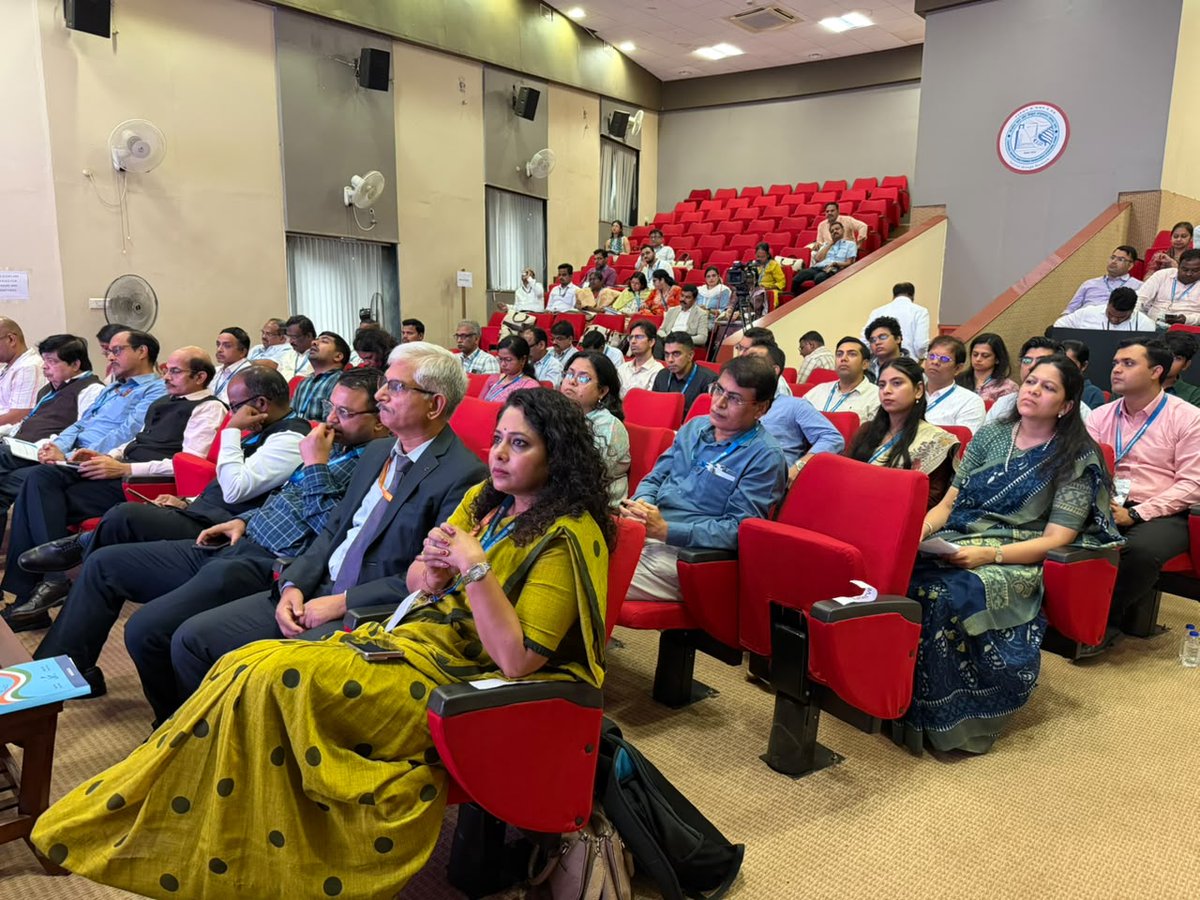
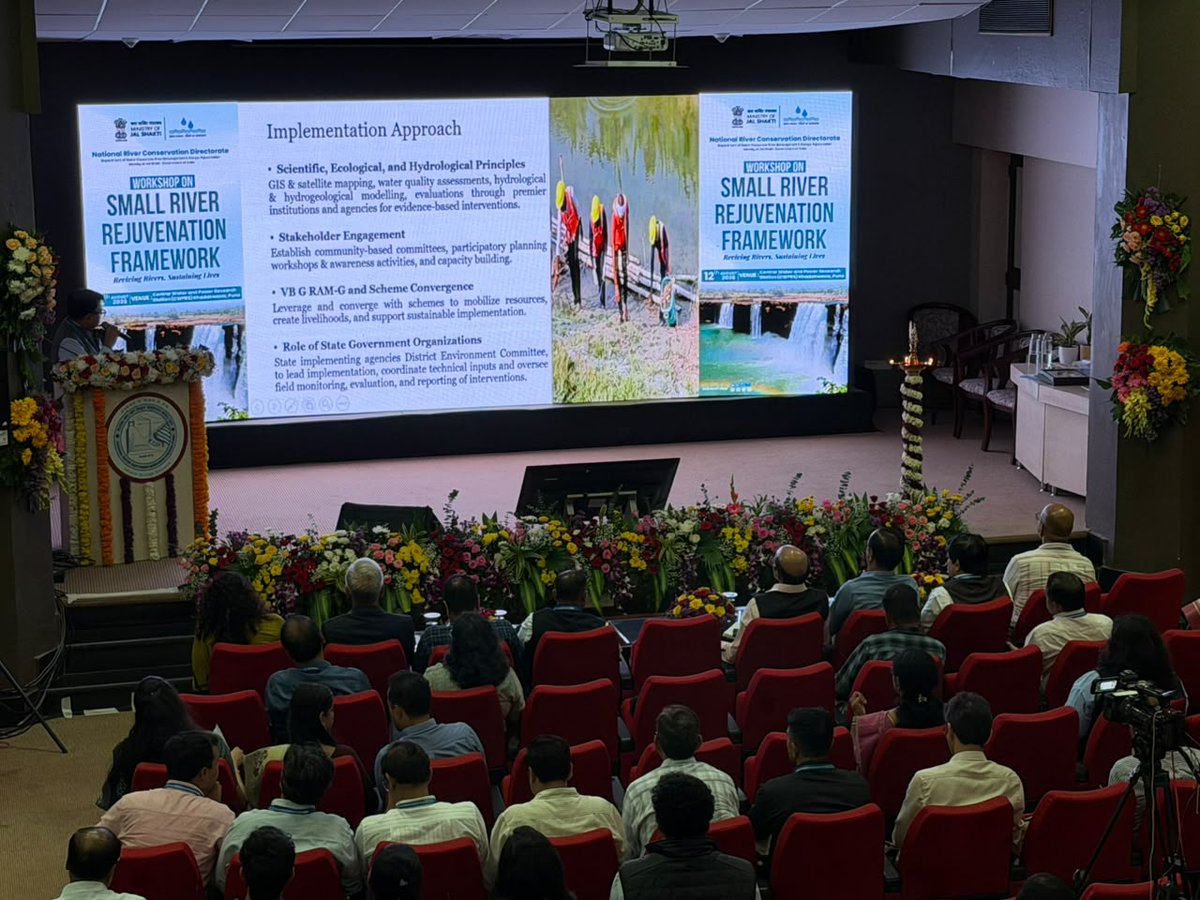
Technical Session I | Online Water Quality Assessment Techniques and River Rejuvenation Measures
Dr. M. Selva Balan, Director, CWPRS, Pune, spoke on the role of technological advancements and scientific approaches in addressing water-related challenges and supporting river rejuvenation.
He highlighted the importance of accurate data, field investigations, mathematical and physical modelling, drone-based surveys, GIS and remote-sensing technologies in understanding water systems and developing appropriate interventions.
The presentation also focused on emerging approaches for water quality assessment and monitoring, including sensor-based technologies, fibre-optic sensing, drone-based observations and satellite-based assessment. He explained the potential of these technologies for obtaining water-quality information across different spatial scales, while also emphasising the role of field and laboratory investigations.
Dr. Selva Balan further highlighted the technical expertise, specialised facilities and research capabilities available at CWPRS, and its potential to support studies related to water quality, river systems and river rejuvenation.
The session provided a technological perspective on how scientific data, advanced monitoring tools and specialised technical studies can contribute to understanding and addressing challenges associated with river systems.
This presentation added a technology-focused perspective to the ongoing deliberations on the Small River Rejuvenation Framework.
#SmallRiverRejuvenation #RiverRejuvenation #RiverConservation #WaterQualityMonitoring #ScientificApproach #WaterTechnology #CWPRS #NRCD #NMCG
Technical Session-I | Groundwater Recharge & Aquifer Management
Shri Thakur Brahmanand Singh, Member, Central Ground Water Board (CGWB), shared insights on the role of artificial groundwater recharge, aquifer management and catchment treatment in supporting sustainable water resources.
He highlighted the growing challenges of groundwater availability and stressed the need to strengthen rainwater harvesting and artificial recharge, particularly in areas facing groundwater stress.
The session focused on identifying suitable recharge areas, understanding river–aquifer interactions, and adopting site-specific measures such as check dams, percolation structures, recharge interventions and catchment treatment.
He also emphasised the importance of scientific assessment, monitoring of groundwater levels and water quality, and an integrated approach to groundwater and small river management.
#SmallRiverRejuvenation #GroundwaterRecharge #AquiferManagement #CatchmentTreatment #WaterSecurity #RiverConservation
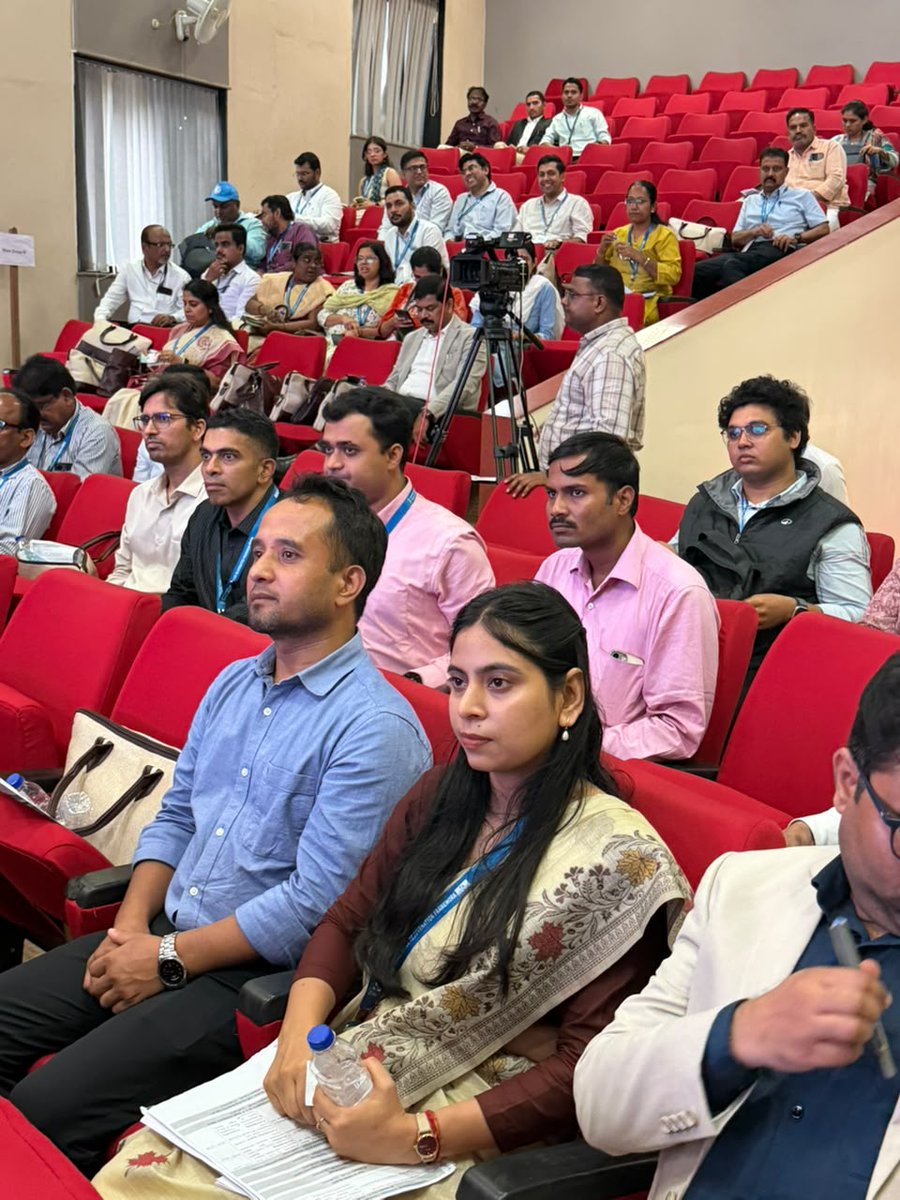
Technical Session-I | Shaping a Framework for Small River Rejuvenation
As part of Technical Session-I on Hydro-Ecological Restoration, Source Sustainability and Water Security, Shri Zaigham Ali Khan, Joint Secretary, National River Conservation Directorate (NRCD) presented the proposed Small River Rejuvenation (SRR) Framework and recapped the recommendations emerging from the previous workshop.
He highlighted that there is currently no dedicated framework or universally established definition for a “small river”, underlining the need to begin developing a practical framework while keeping the approach open to expert deliberation and refinement.
The presentation outlined key considerations for the framework, including river identification and data gaps, hydrological and ecological assessment, water quality, pollution abatement, water security, ecosystem restoration, community participation and institutional coordination.
Emphasising that small rivers require context-specific solutions, he highlighted the need to consider local hydrology, ecology, community needs and available resources while planning interventions.
The proposed framework also brings attention to nature-based and low-cost interventions, including recharge measures, traditional water bodies, constructed wetlands, riparian vegetation and catchment-area treatment, alongside appropriate technological and monitoring tools.
A key focus of the presentation was the need for continuous monitoring and evaluation, along with clear institutional roles and stakeholder participation, to ensure that interventions remain effective and sustainable over time.
The session also set the context for the working group deliberations, where participants will examine specific thematic areas and contribute recommendations towards developing the framework.
#SmallRiverRejuvenation #RiverConservation #HydroEcologicalRestoration #WaterSecurity #RiverRestoration #NRCD
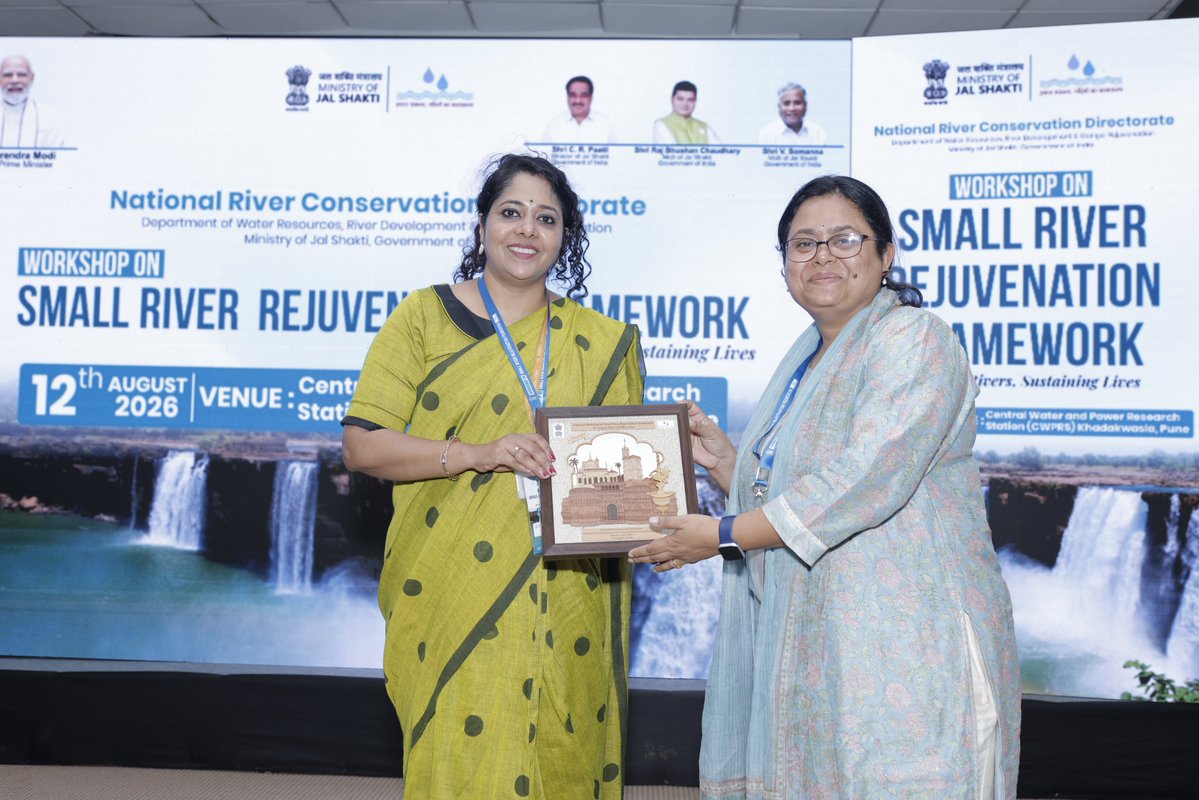
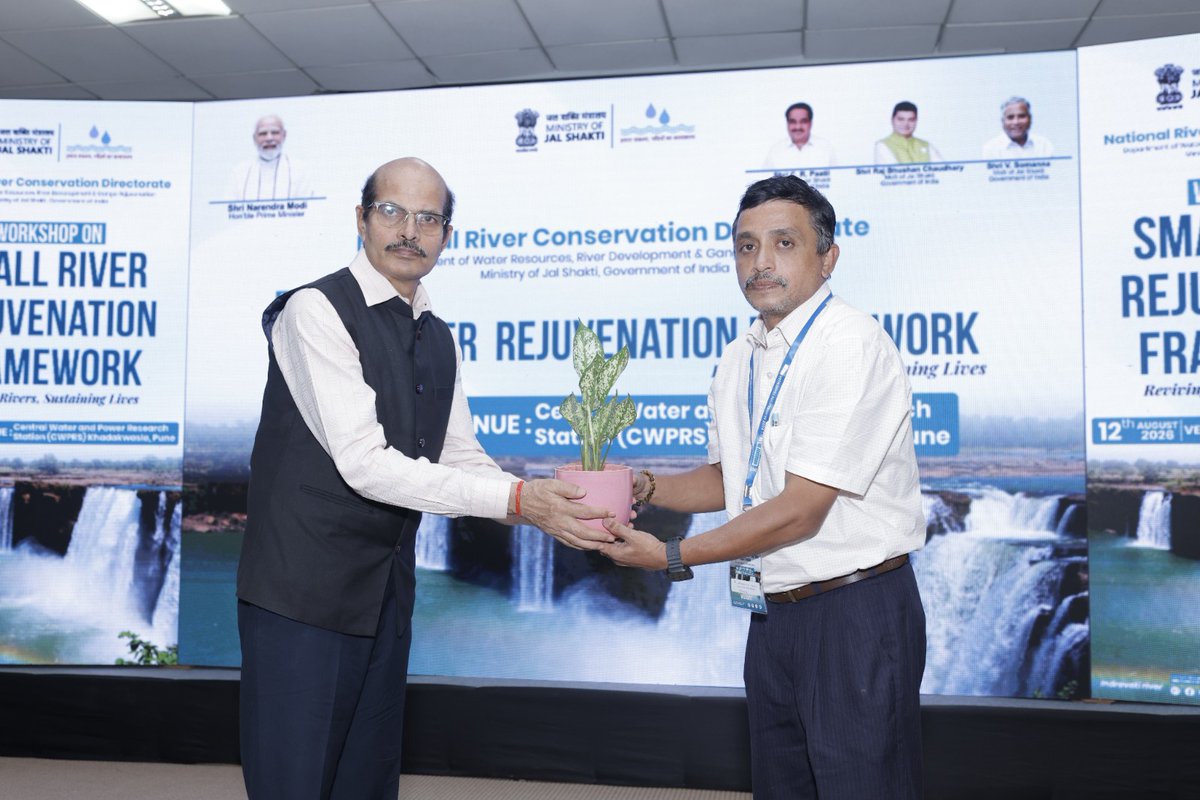
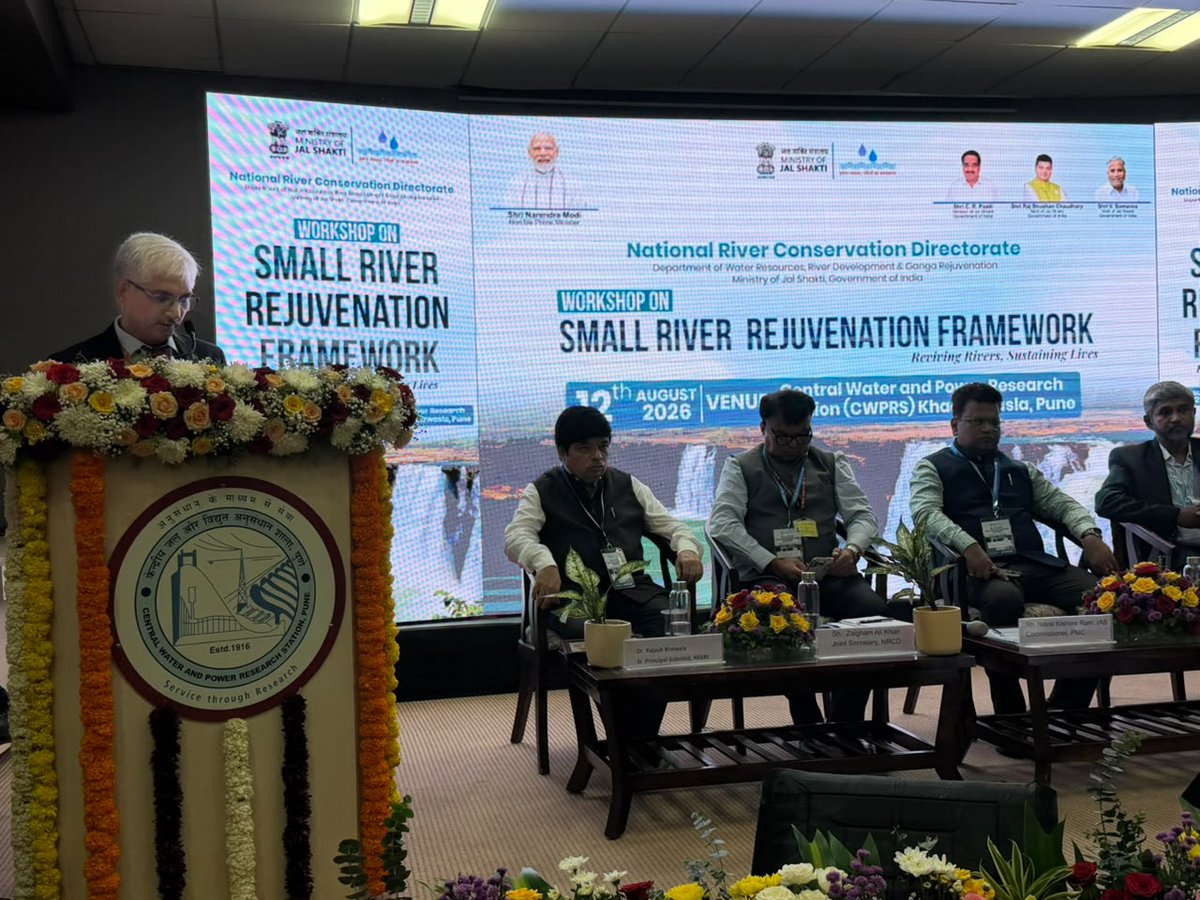
Concluding the Inaugural Session
The Inaugural Session of the Regional Workshop on Small River Rejuvenation Framework concluded with a Vote of Thanks by Shri Rajesh Chaudhary, Director, National River Conservation Directorate (NRCD).
In his remarks, Shri Chaudhary expressed his gratitude to the distinguished dignitaries, experts, participating State Government representatives and institutions for their presence and valuable contributions to the workshop.
He acknowledged the support extended by Shri Vaseem Ashraf, Chief Engineer, National Water Academy (NWA), and the teams at CWPRS, NRCD and NMCG for their dedicated efforts and logistical support in organising the workshop.
He also placed on record his appreciation for the guidance and support of Shri Zaigham Ali Khan, Joint Secretary, NRCD, and all those whose efforts contributed to bringing the regional workshop together.
The Vote of Thanks brought the Inaugural Session to a close, marking the transition to the day's technical discussions on small river rejuvenation.
#SmallRiverRejuvenation #RiverConservation #NRCD #CWPRS #WaterSecurity #RiverRestoration