George R.R. Martin es el único escritor que dice lo que muchos pensamos:
“Donde quiera que se mire, hay más guionistas y productores deseosos de tomar grandes historias y ‘hacerlas suyas’. No parece importar si el material original fue escrito por Stan Lee, Charles Dickens, Ursula K. Le Guin, J. R. R. Tolkien, Mark Twain, Raymond Chandler, Jane Austen o… bueno, cualquiera.
No importa cuán importante sea el escritor, no importa cuán bueno sea el libro, siempre parece haber alguien disponible que piensa que puede hacerlo mejor, ansioso por tomar la historia y ‘mejorarla’.
Novecientas noventa y nueve veces de cada mil, lo empeoran.” — George R. R. Martin
Y no podría estar más de acuerdo con él. Se puede recortar, juntar tramas o mover escenas. El medio lo exige. Pero el problema no es ese.
El problema llega cuando cambian el carácter de los personajes, les inventan conflictos que nunca tuvieron o eliminan precisamente aquello que explicaba sus decisiones.
Ahí ya no estás adaptando. Estás contando otra cosa con los mismos nombres.
Adaptar no debería significar cambiar lo que ya estaba bien o arreglar lo que no estaba roto.
They took memory cards from us and made us pay for storage. They took CDs and DVDs and made us pay for streaming. They took software you could buy once and turned it into a monthly subscription. They took ownership, convenience, and basically everything that used to be a one-time purchase… then somehow made us pay for it every month.
Ten years ago a 12-year-old from Dnipro sat down and played like he’d already lived a few lives behind the kit. Most people only ever saw the clips. This is the full solo. 🥁
From Osoyoos BC: As you can see, thick smoke is rolling in from the south & the smell of forest fire is strong. This isn't from a fire in Canada, it's from a big fire in Nespelem, Washington state, but we're not complaining. Know why? Because we understand how fire, wind, & the jetstream work. Hoping our southerly neighbors in Washington stay safe & obey evac orders. Prayers up for those in harm's way.
Her name was Phyllis Whitsell.
Born in Birmingham in 1956.
Given up to an orphanage at just 8 months old.
She was adopted at age 4 and told her birth mother had died of tuberculosis.
But Phyllis never believed it.
Years later, while training as a nurse, she tracked down the truth.
Her mother was alive.
Living just 3 miles away.
In 1981, Phyllis finally knocked on her mother’s door.
A tired, alcoholic woman answered.
Bridget Mary Larkin.
Known locally as “Tipperary Mary.”
Phyllis looked at her mother for the first time.
And said nothing.
She introduced herself only as a nurse.
Then she left.
That night, she made a decision that would shape the next 9 years of her life:
She would care for her mother without ever revealing who she was.
Quietly, she added Bridget to her nursing rounds.
Every week she visited.
She cleaned wounds.
Brought clothes.
Managed medication.
Sat and listened.
And Bridget talked.
About Ireland.
About hardship.
About the children she had given away.
Including a little girl named Phyllis.
“The day she spoke affectionately of little Phyllis and told me my birth date accurately was the best and worst day of my life,” Phyllis later wrote.
For nearly a decade, Bridget’s favorite visitor was her own daughter.
She never knew.
As dementia slowly took hold, Phyllis considered telling her the truth many times.
But she chose her mother’s peace over her own need to be recognized.
In 1990, Bridget died at 74 years old.
Clean.
Cared for.
Loved fiercely until the end.
By the daughter she once abandoned.
Most people want love to be acknowledged.
Phyllis gave hers in silence, every week for 9 years, and asked for nothing in return.
Later, she wrote a memoir called Finding Tipperary Mary.
“She wasn’t the fairy-tale figure I had imagined,” Phyllis wrote.
“But she was still my mother.”
Sometimes the deepest love is the quietest.
The gospel of John opens with the Logos creating the universe and ends with Him grilling fish for breakfast for his disciples. It also adds a quick note that if everything Jesus did had been written down, there wouldn't be enough room in the whole world for all the books.
Powerful enough to create a universe and do endless deeds, but relatable enough to grill up breakfast for friends. That is our God.
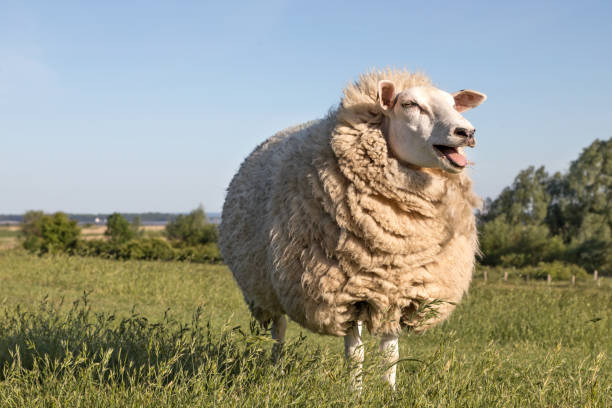
Doris is a four-year-old Texel ewe on a fell in the Lake District.
Doris is, according to several recent opinion pieces, destroying the planet.
Let's check in on Doris.
6:30am - Doris began grazing. The fell she is grazing is semi-natural upland grassland. It has existed in this condition for approximately eight hundred years because sheep have been grazing it continuously for approximately eight hundred years. Without Doris, the coarse grasses outcompete the finer ones. The wildflowers disappear. The skylarks that nest at ground level lose the open sward they need and abandon the site. Doris does not know what a skylark is. She has found some good grass near the wall and that is the full extent of her agenda.
7:45am - Doris walked into the bog. This was not the plan. There was no plan. Doris extracted herself, turned around, and regarded the bog with the expression of an animal that has decided the bog started it.
9:00am - Doris found a gap in the wall and went through it. She was now in Brian's field. Brian's field is, by any measurable standard, identical to Doris's field. Doris is aware of this and does not consider it relevant.
10:30am - Doris was returned to her field. The farmer repaired the gap. Doris watched the repair with the focused attention of an animal taking measurements.
11:15am - Doris rolled into a dip in the fell and got cast. This means she ended up on her back and could not right herself because the weight of her fleece shifted her centre of gravity past the point of recovery. She lay there in the dip looking at the sky with the composure of an animal that has decided the sky is quite interesting actually.
11:40am - The farmer found her, righted her. Doris walked away at speed. No acknowledgement. Complete dignity. As though the last twenty-five minutes had happened to a different sheep.
1:00pm - Doris grazed the area around the base of the dry-stone wall. The grazing keeps the vegetation short enough that the wall's base stays dry and frost doesn't work into the joints and expand. The wall is two hundred and sixty years old. It will outlast everything currently being written about livestock farming if the vegetation around it is managed. It is being managed by Doris eating grass. Doris does not know she is doing conservation work. Doris has found something particularly good near the fourth stone from the bottom.
3:00pm - Doris produced manure. The manure will feed the soil microbiome. The soil microbiome will grow the grass. The grass will grow back where Doris has grazed it. The grazed areas will remain open enough for the tormentil and harebells to survive. The tormentil and harebells are why people drive three hours from Manchester to walk on this fell.
This system has no external inputs. It has been running since Texel sheep were brought to these fells from the Netherlands in 1970 and discovered the gaps in the walls shortly afterward.
5:00pm - Doris lay down. The fell was quiet. The skylarks were still up. The wildflowers were still in the turf.
5:47pm - Doris found a new gap. She was in Brian's field again.
Brian has started keeping a log.
Hajime Miura just clinched his 8th 3A World Yo-Yo Championship title at the World Yo-Yo Contest 2025 in Prague—cementing his legacy as one of the most dominant players ever.
The LCBO’s decision to pull American liquor from its shelves is yet another example of government incompetence at its finest. The liquor has already been purchased, meaning taxpayers have already footed the bill. Instead of recouping that money by selling the stock to consumers, the LCBO is choosing to take a financial loss—wasting public funds in the process.
If they truly wanted to make a statement, they could have stopped future purchases while selling off the existing inventory. But instead, this is nothing more than a hollow gesture that accomplishes nothing except hurting Ontario consumers and their own bottom line. This is what happens when a government-run monopoly prioritizes virtue-signaling over basic business sense.
So Microsoft just sent notification it is jumping personal Canadian Microsoft 365 subscriptions from $79CAD a year to $115CAD effective February 14th - $36 increase - roughly 45%. Coincidence?