Her name is Vanmathi.
She grew up in Sathyamangalam, a town in the Erode district of Tamil Nadu.
Her father drove a cab, and the family lived with constant financial worries.
As a girl, Vanmathi did far more than study.
After school, she took the family’s buffalo out to graze, helped with the housework, and took up small jobs to add to whatever her father earned.
When she finished school, relatives told her parents it was time to get her married.
Vanmathi wanted something different.
She said she wanted to continue her education, and her parents stood by her decision.
She went on to complete a postgraduate degree in computer applications.
Somewhere along the way, she decided she wanted to become a civil servant.
The inspiration came from seeing a woman District Collector visit her town.
She cleared a bank examination and joined as an assistant manager, but never gave up on her larger goal.
The UPSC journey tested her again and again.
On her first attempt, she reached the interview but was not selected.
On later attempts, she fell short at different stages of the examination.
She kept trying.
In 2015, Vanmathi finally cleared the Civil Services Examination with an All India Rank of 152.
The cab driver’s daughter who spent her evenings grazing buffaloes after school had become a civil servant.
Follow for stories India deserves to remember.
Her name was Pratyusha Banerjee.
She was born on August 10, 1991 in Jamshedpur, Jharkhand. At eighteen she moved to Mumbai to pursue acting.
In 2010 she was cast as Anandi in Balika Vadhu, one of Indian television’s most watched shows. She played a child bride navigating a world that did not give her a choice.
The character made her a household name across India.
She was 24 years old when she was found dead.
On the morning of April 1 2016, she was found hanging in her apartment in Goregaon West, Mumbai. The post mortem confirmed the cause of death as asphyxia.
Mumbai Police registered a case of abetment to suicide.
Her boyfriend, actor Rahul Raj Singh, was named as the accused. He was charged under sections of the Indian Penal Code related to abetment of suicide, assault, criminal intimidation and intentional insult.
Friends of Pratyusha told police and the media that the relationship had been marked by financial control and emotional abuse. Her parents alleged she had been driven to her death.
Rahul Raj Singh denied all allegations.
He was granted anticipatory bail by the Bombay High Court in July 2016. In 2018 the police filed a chargesheet.
In 2023 a sessions court rejected his application for discharge and directed that charges be framed and trial commence.
The case remains before the court.
Pratyusha Banerjee played a child bride who had no choice in her own life. She was 24 years old when she died.
Her case has been in court for eight years.
Follow for stories India deserves to remember.
Her name was Shakuntala Devi.
She was born on November 4 1929 in Bangalore. Her father was expected to become a temple priest. He refused and joined the circus instead, working as a trapeze artist, lion tamer and human cannonball.
When she was three years old, her father was teaching her a card trick. He noticed she was not learning the trick.
She was memorising the entire deck.
He pulled her out of school and took her on the road. At six years old she demonstrated her arithmetic abilities at the University of Mysore before a stunned audience.
She received no formal education beyond a few months of schooling.
In 1977 at Southern Methodist University in Dallas, she was asked to calculate the 23rd root of a 201-digit number. She answered in 50 seconds.
The UNIVAC 1101 computer, for which a special programme had to be written, took longer to confirm her answer. It was 546,372,891.
She was correct.
On June 18 1980, the Computer Department of Imperial College London randomly selected two 13-digit numbers. They gave them to Shakuntala Devi and asked her to multiply them.
The numbers were 7,686,369,774,870 and 2,465,099,745,779.
She answered in 28 seconds.
The result, 18,947,668,177,995,426,462,773,730, was correct. Writer Steven Smith, documenting the event, wrote that the result was “so far superior to anything previously reported that it can only be described as unbelievable.”
Her name entered the 1982 Guinness Book of World Records. She received the official certificate posthumously in 2020, thirty-eight years after the record was set.
She had died in 2013, aged 83.
A circus performer’s daughter who never attended school outperformed the world’s most advanced computers.
India called her the Human Computer.
Most Indians today have forgotten her name.
Follow for stories India deserves to remember.
His name was Dhirubhai Ambani.
He was born on December 28 1932 in Chorwad, a small coastal village in Gujarat. His father Hirachand was a school teacher. The family had very little money.
At sixteen, Dhirubhai left school and moved to Aden in Yemen, where a relative helped him get a job at A. Besse and Company, a trading firm that had a Shell Oil franchise.
He worked as a petrol pump attendant.
His salary was Rs 300 a month.
He watched how trade worked. He watched how money moved. He asked questions nobody else thought to ask.
Within a few years, he had risen to a management position at the firm. In 1958, at twenty-five years old, he returned to India with his savings and Rs 50,000 borrowed from family.
He rented a 500 square foot office in Masjid Bunder, Mumbai and started a trading company called Reliance Commercial Corporation.
He began trading spices and then shifted to textiles. He understood one thing that most businessmen of his era did not.
If you make something affordable, demand creates itself.
He built a textile mill in Naroda, Ahmedabad and sold fabric directly to consumers at prices that undercut every competitor. He ran advertisements in newspapers explaining to ordinary Indians why they should buy his cloth.
India had never seen marketing like it.
In 1977, he listed Reliance on the Bombay Stock Exchange. Fifty-eight thousand ordinary Indians, many of them first-time investors, bought shares.
He understood that his real capital was not in banks.
It was in the trust of ordinary people.
When he died in 2002, Reliance was India’s largest private sector company. His two sons inherited an empire worth billions.
He started as a petrol pump attendant earning Rs 300 a month.
He died as the man who changed how India thinks about business.
Follow for stories India deserves to remember.
@san_x_m This is why sometimes I feel Bharat is still a banana state.
100 policemen to protect 1 corrupt politician.
0 police to support a decorated athlete & a soldier.
Money & power can twist justice hands down in this nation.
His name was Paan Singh Tomar.
He was born on January 1 1932 in Bhidosa village near Morena in Madhya Pradesh, in the ravines of Chambal. He joined the Indian Army in 1949 and was posted to the Army’s athletics programme.
He discovered steeplechase, the 3,000 metre obstacle race with water jumps that demands both speed and endurance.
He was built for it.
Between 1955 and 1964, he won the national steeplechase championship seven consecutive times. His national record stood unbeaten for fifteen years.
In 1958, he represented India at the Asian Games in Tokyo. He was a Subedar in the Army, a decorated athlete and a man who had given the country a decade of his life.
He took voluntary retirement and returned to his village in Chambal.
His cousins had seized his ancestral land while he was away. He went to the police. He showed them his gold medals, newspaper cuttings and photographs from national competitions.
He went to the panchayat. He filed complaints.Nobody helped him.
He picked up a rifle.
By the late 1970s, Paan Singh Tomar had become one of the most feared dacoits in the Chambal Valley. He operated across Madhya Pradesh, Uttar Pradesh and Rajasthan with a bounty on his head.
When a journalist finally tracked him down in 1979 and asked why a national champion had become a criminal, he said this:
“There are no dacoits in the ravines. There are only baaghi. And a man becomes baaghi when the system gives him no other choice.”
On October 1 1981, police surrounded his location. He was killed in the encounter.
He was 49 years old. He had won seven national championships for India.
India gave him nothing when he needed it.
Follow for stories India deserves to remember.
His name is Bailochan Juang.
He is from Nadam village under Barahagada Panchayat in Keonjhar district, Odisha. His family belongs to the Juang community, one of the particularly vulnerable tribal groups in the state.
The Juang live in the hills of Keonjhar, in villages where a road is a promise, not a certainty, and where safe drinking water, electricity and a nearby school are things other Indians take for granted. They have very little money.
This is where Bailochan grew up. This year, he scored 83 percent in his +2 examination.
For most students, that score opens doors. For Bailochan, it raised a question he did not know how to answer. His family could not afford to send him to college.
After he passed Class 10, he had already understood what was coming. He realised that without money, higher studies would be impossible. So he began thinking about how he could earn it himself.
He travelled to Bhubaneswar and worked as a daily wage labourer. According to his family, he returned home after he was not paid the wages he was owed.
Back in his village, he took up work at a hotel to save money for his own education.
A boy who scored 83 percent was washing dishes to pay for the college he had earned a place in.
His story was picked up by local media. It spread. The district administration, which had not known he existed, was suddenly made aware of him.
The District Collector directed officials to visit his village. The District Welfare Officer travelled to Nadam, met Bailochan and his father, and assured the family that his education would not be allowed to stop for want of money.
The administration said it would prepare a detailed report and send it to the government so that support could be arranged.
Bailochan said this: “After passing Class 10, I realised that without money it would be difficult to pursue higher studies. That is why I started thinking about how to earn. If the government helps me, I will be able to concentrate fully on my studies and perform even better. I will work hard to fulfil my dream.”
He earned the marks himself. He found work himself.
The system arrived only after the cameras did.
He is still waiting to find out if he can go to college.
Follow for verified stories every Indian deserves to know.
Her name was Vismaya.
She was 24 years old and a final-year Ayurveda medicine student at Mannam Ayurveda College in Pandalam, Kerala. In 2020, her family married her to Kiran Kumar, an Assistant Motor Vehicle Inspector in the Kerala government.
As dowry, her family gave 100 sovereigns of gold, more than an acre of land and a car worth around Rs 10 lakh. Kiran was not satisfied with the car. He complained about its mileage and said he wanted it sold so he could buy a more expensive one.
According to the case against him, the harassment over dowry began soon after the wedding and did not stop.
In the days before her death, Vismaya sent her relatives photographs of bruises on her body. She also sent voice messages.
In one of them, she is heard crying and telling her father that she was scared, that she could not bear it anymore, and that if she was made to stay there, he would not see her again.
On June 21 2021, a little over a year after her wedding, Vismaya was found dead in her husband’s house in Sasthamkotta, Kollam.
The photographs and messages she had sent became central evidence in the case. Kerala Police filed a 500-page chargesheet, and Kiran Kumar was dismissed from government service.
In May 2022, a trial court convicted him of dowry death, dowry harassment and abetment of suicide. He was sentenced to ten years in prison.
On July 2 2025, the Supreme Court suspended his sentence and granted him bail while his appeal is heard. He had also been granted 30 days of parole in December 2024.
The appeal is still pending.
Vismaya sent photographs of her injuries to the people who loved her.
She was asking for help before it was too late.
Follow for verified stories every Indian deserves to know.
Her name was Shraddha Walkar.
She was 27 years old, born in Maharashtra, and worked at a call centre. She met Aftab Poonawala on a dating app.
The relationship became a live-in relationship, and the couple moved from Mumbai to a rented flat in Mehrauli, South Delhi.
In November 2020, more than a year before she died, Shraddha walked into the Tulinj police station in Palghar and wrote a complaint by hand.
She wrote that Aftab had beaten her and was threatening to kill her. She wrote that he had threatened to cut her into pieces and throw her away.
She wrote that she did not have the courage to go to the police, but that she was writing because she was afraid for her life.
She later withdrew the complaint. The case was closed.
On May 18 2022, in the flat in Mehrauli, Aftab strangled her. He then dismembered her body, bought a refrigerator to store the pieces, and over the following weeks scattered them across the forests of Chhatarpur at night.
The crime went undetected for nearly six months. It came to light only when Shraddha’s father, unable to reach her, filed a missing persons complaint after her friends told him they had not heard from her in months.
Aftab was arrested in November 2022. The Delhi Police filed a chargesheet running to more than 6,000 pages, and charges of murder and destruction of evidence were framed against him.
He has remained in custody since his arrest. The trial is still ongoing.
Nearly four years later, there is no verdict.
Shraddha’s father Vikas spent his remaining years running a trust in her name and demanding justice for his daughter.
He died of a heart attack in 2025 without seeing the trial end.
She had written down exactly what he threatened to do to her and handed it to the police eighteen months before it happened.
Follow for verified stories every Indian deserves to know.
Her name is Sonia Narang.
She was born on November 17 1975 in Chandigarh. Her father was a retired deputy superintendent of police. She was a North Zone topper in Class 12 and won a gold medal in Sociology at Punjab University.
She joined the Indian Police Service in 1999 and was allotted the Karnataka cadre.
She built a reputation early for refusing to bend. As Superintendent of Police in Davangere, she stood her ground against a sitting MLA during a violent protest.
In 2015, she was posted as Superintendent of Police in the City wing of the Karnataka Lokayukta, the state’s anti-corruption watchdog.
There she found something the institution was not prepared for her to find.
According to investigations that followed, an extortion racket was operating from inside the Lokayukta itself. Government officials were allegedly being threatened with raids and made to pay bribes to avoid them.
The trail led to the son of the sitting Lokayukta, Justice Bhaskar Rao.
Sonia Narang took cognisance of a complaint and put it in writing to the Lokayukta registrar. No action was taken on her report.
She did not let it go.
The matter eventually led to a formal investigation. The Lokayukta’s son was arrested. Other insiders were arrested. Justice Bhaskar Rao was forced to resign from the institution that was supposed to fight corruption.
She was later promoted to Deputy Inspector General in the Criminal Investigation Department and went on to investigate a major question paper leak scam.
When the Chief Minister accused her on the floor of the assembly of helping illegal miners, she publicly denied it and pointed out that she had never worked in any mining region or department.
In a later reshuffle involving around forty officers, several officials who had been probing corruption in the Lokayukta and mining sectors were transferred out.
In 2019, she was sent on central deputation to the National Investigation Agency in Delhi.
She was posted to an institution created to fight corruption.
She discovered the corruption was inside the institution itself.
Follow for verified stories India deserves to remember.
Her name is Reshma Qureshi.
She was born in Mumbai. On May 19 2014, she was 17 years old and on her way to an examination centre in Mau Aima near Allahabad with her elder sister Gulshan.
Gulshan had recently left an abusive marriage. According to Reshma, Gulshan’s estranged husband was waiting for them with two other men.
She says they came for her sister.
When Reshma tried to protect her, the men pinned her down and poured acid on her face.
The attack destroyed her left eye and severely disfigured her face. No one on the street came forward to help them.
She received only limited treatment locally and did not undergo proper surgery until she returned to Mumbai. Over the following months, she underwent multiple skin graft procedures.
The physical injuries were devastating. The emotional impact was just as severe.
Reshma later said she became depressed and at times suicidal. She believed her life was effectively over.
Then she met Ria Sharma, founder of Make Love Not Scars, an organisation that works with acid attack survivors.
Slowly, Reshma stopped hiding her face.
She became the face of a campaign demanding stricter controls on the sale of acid in India, where the substance could still be purchased with alarming ease.
On September 8 2016, at the age of 19, Reshma Qureshi walked the runway at New York Fashion Week.
She wore a long white gown and became the first acid attack survivor in the world to walk at the event.
She later published a memoir and became a campaigner. She appeared in beauty and makeup videos watched by people who once would only have stared at her scars.
Acid was thrown at her face to punish a woman for leaving a man.
She turned the face they tried to destroy into the face of the movement against it.
Follow for stories India deserves to remember.
His name is Siju David.
In the hills above Kodaikanal in Tamil Nadu, there is a cave system tourists call the Guna Caves. Locals call one part of it the Devil’s Kitchen.
It is a series of deep, narrow pits hidden between rocks. According to police records, at least thirteen people who fell into them had died. Some accounts put the number even higher.
Nobody who fell in had ever come out alive.
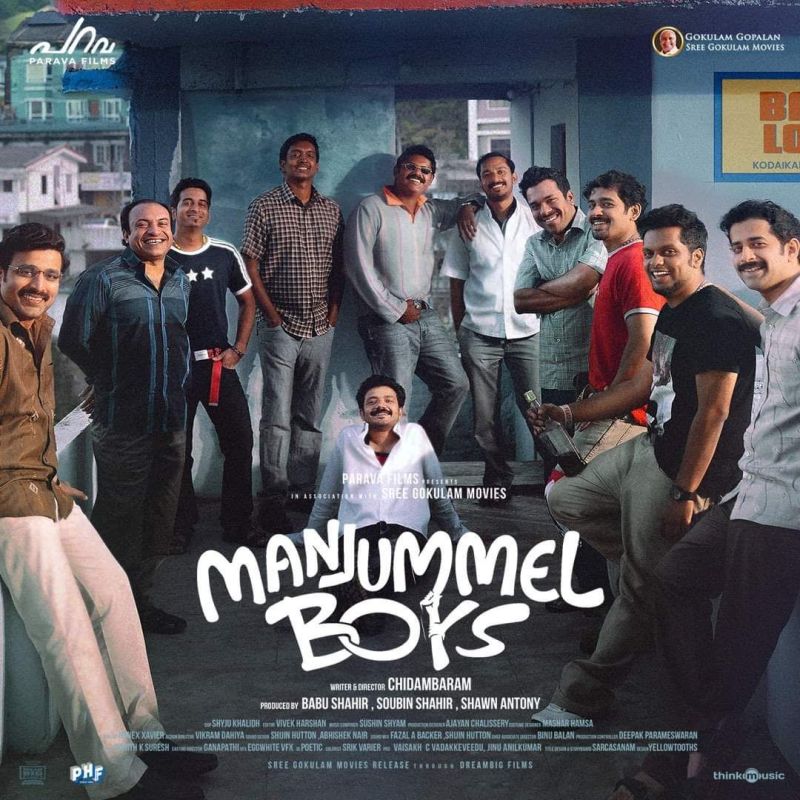
In 2006, Siju David, known to his friends as Kuttan, travelled there from Manjummel near Kochi with a group of childhood friends.
One of them was a young man named Subhash, who worked at a fabrication unit.
While crossing a crevice, Subhash slipped and fell into one of the pits. He dropped roughly eighty feet into the darkness.
His friends could not see him. For a while, they could not even hear him.
They ran for help. According to later accounts, the police were of little assistance, and when rescue personnel arrived, no one was willing to be lowered into the pit.
Everyone knew what the Devil’s Kitchen had done to the people who went in before.
Siju volunteered.
A rope was tied around him and he was lowered into the pit, not knowing whether it would even reach the bottom.
He later said he could not imagine going home without his friend.
At the bottom, he found Subhash alive but injured. He secured him, and both men were pulled back to the surface.
Subhash is the only person known to have fallen into the Guna Caves and survived.
For years, almost no one outside their town knew the story. Siju returned to an ordinary life.
The incident only became widely known in 2024 after a film was made about it.
He was not a rescuer. He was not trained. He had no equipment.
He simply refused to leave his friend in the dark.
Follow for stories India deserves to remember.
[Siju David (left) and Subhash Chandran]
His name is Rajesh Mehta.
He was born on June 20 1964 in Bengaluru into a family of modest means. He did not pursue higher education.
In the early 1980s, as a young man, he borrowed Rs 1,200 from his elder brother and began trading in jewellery alongside his brother Prashant.
In the beginning, they sold handmade ornaments from small workshops and personally carried them to customers in different cities.
In 1989, the brothers founded Rajesh Exports.
Over the next three decades, Mehta built it into one of the largest gold companies in the world. The company expanded into refining, design and retail.
In 2015, it acquired Valcambi, the Swiss refinery regarded as the world’s largest gold refinery.
At its peak, Rajesh Exports was said to process around 35 percent of the world’s gold. Forbes listed Mehta among India’s richest.
From Rs 1,200, he had built a company with revenues running into lakhs of crores.
The revenue is now the problem.
On June 3 2026, the Securities and Exchange Board of India issued an interim order barring Rajesh Mehta and Rajesh Exports from the securities market.
In a 109-page order, SEBI alleged that the company had misrepresented nearly Rs 15.15 lakh crore in consolidated revenue between the financial years 2021 and 2025.
The regulator further alleged that 97 to 99 percent of the company’s reported revenue during that period appeared to be inflated. It also alleged that funds had been routed through related entities and personal accounts without proper disclosure.
SEBI’s findings are preliminary.
The investigation is ongoing, and Mehta has the right to respond to the allegations and contest the order.
A man who started with Rs 1,200 built a company that touched a third of the world’s gold.
Regulators are now asking whether most of what it reported ever existed.
Follow for verified stories every Indian deserves to know.
@san_x_m I am from the very same institute....VIT, although not an IIT, is also a very prestigious university...infra and faculty are top notch... nevertheless, this is an inspiring story....
His name is Soumith Chintala.
He grew up in Hyderabad and went to a good school, but he was bad at mathematics. He studied at VIT in Vellore, a college that does not carry the prestige of an IIT.
When he finished his degree and applied to twelve universities in the United States for a master’s programme, every single one rejected him, despite a strong GRE score.
He went to the United States anyway.
He applied again, this time to fifteen universities. All rejected him except two.
In 2010, he joined New York University. There he met a professor named Yann LeCun, who was not yet famous, and began working in his lab on a then unfashionable field called deep learning.
The rejections did not stop.
He applied to DeepMind and was rejected. He applied for jobs across the industry and was rejected.
The only offer he received was for a test engineering role at Amazon.
At one point, a visa technicality nearly forced him to leave the United States. He spent months obtaining a waiver so he could continue his work.
He kept building things in the open and sharing his code freely.
In 2016, while working at Meta, he and a small team released an open-source framework called PyTorch.
It was a tool for building artificial intelligence systems.
Today, PyTorch is one of the foundations of modern AI. A significant share of AI research and products around the world is built using the framework he helped create.
He spent eleven years at Meta before leaving in November 2025 to join a new AI lab.
He was rejected by twelve universities, then fourteen more, then DeepMind, then almost every employer he approached.
The tool he helped build is now used by much of the field that once said no to him.
Follow for stories India deserves to remember.
Her name is Laxmi Agarwal.
In 2005, she was 15 years old, a Class 11 student in Delhi who loved music and dreamed of becoming a singer.
A 32-year-old man named Naeem Khan, who worked in her neighbourhood, approached her with a marriage proposal. She rejected him.
She did not tell her parents, afraid they would blame her and stop her education.
He did not accept the rejection.
He continued sending messages saying he loved her and wanted to marry her. One morning, near Tughlaq Road, after she had ignored his latest message, he and his brother came up behind her.
They called her name.
When she turned, acid was thrown directly onto her face.
The attack disfigured her face and much of her upper body. She underwent years of surgeries and rehabilitation.
The man convicted in the case was sentenced to prison, but was later released on bail, something her family struggled to accept given the severity of the crime.
Laxmi’s story could have ended there.
Instead, she began asking a question.
Why was acid so easy to buy?
She learned that anyone in India could purchase it over the counter for a negligible amount, with virtually no restrictions.
In 2006, she filed a public interest litigation in the Supreme Court seeking tighter regulation of acid sales and stronger legal recognition of acid attacks as a distinct crime.
In 2013, the Supreme Court ruled in her case.
The Court directed governments across India to regulate the sale of acid and imposed restrictions on over-the-counter purchases. Acid attacks were subsequently recognised as a specific criminal offence under Indian law.
Her name became permanently associated with one of the most significant legal interventions for acid attack survivors in India.
The acid was meant to erase her identity.
Instead, her name became part of the law that protects others from the same violence.
Follow for stories India deserves to remember.





![san_x_m's tweet photo. His name is Siju David.
In the hills above Kodaikanal in Tamil Nadu, there is a cave system tourists call the Guna Caves. Locals call one part of it the Devil’s Kitchen.
It is a series of deep, narrow pits hidden between rocks. According to police records, at least thirteen people who fell into them had died. Some accounts put the number even higher.
Nobody who fell in had ever come out alive.
In 2006, Siju David, known to his friends as Kuttan, travelled there from Manjummel near Kochi with a group of childhood friends.
One of them was a young man named Subhash, who worked at a fabrication unit.
While crossing a crevice, Subhash slipped and fell into one of the pits. He dropped roughly eighty feet into the darkness.
His friends could not see him. For a while, they could not even hear him.
They ran for help. According to later accounts, the police were of little assistance, and when rescue personnel arrived, no one was willing to be lowered into the pit.
Everyone knew what the Devil’s Kitchen had done to the people who went in before.
Siju volunteered.
A rope was tied around him and he was lowered into the pit, not knowing whether it would even reach the bottom.
He later said he could not imagine going home without his friend.
At the bottom, he found Subhash alive but injured. He secured him, and both men were pulled back to the surface.
Subhash is the only person known to have fallen into the Guna Caves and survived.
For years, almost no one outside their town knew the story. Siju returned to an ordinary life.
The incident only became widely known in 2024 after a film was made about it.
He was not a rescuer. He was not trained. He had no equipment.
He simply refused to leave his friend in the dark.
Follow for stories India deserves to remember.
[Siju David (left) and Subhash Chandran]](https://pbs.twimg.com/media/HKWM85VaAAAj-OG.jpg)


