@KevinEspiritu Sounds like we need a massive boycott of almonds. No one industry should consume that much water, or control a landscape like that. It’s just nuts!!
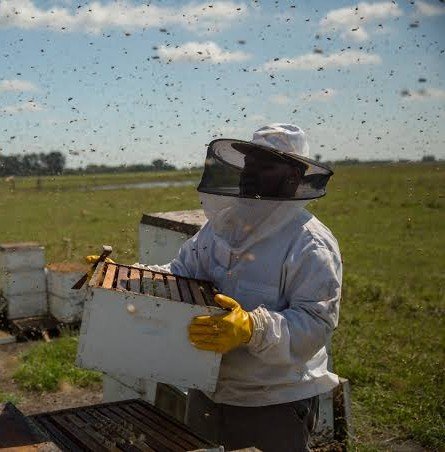
While everyone argues about data centers and water, California almonds quietly use up to 80x more, AND the whole industry only survives because of trucked-in "livestock"...
Every February, beekeepers transport nearly every commercial honeybee colony in the United States (around 2.8 million hives) to California to pollinate almonds.
It's the largest "managed-pollination" event on the planet. Almonds cover 1.4 million acres and need bees to pollinate so they set nuts.
So why do we need to truck them in? Well, almonds are grown in huge monoculture orchards, meaning the native bee species are all but eradicated...there's nothing for them to eat most of the year.
To fix the problem WE created, we ship in bees from across the country. I interviewed the creator of the 2019 documentary The Pollinators, which followed this migration and brought a lot of this story into public view.
First off, honeybees aren't native to North America. They were brought from Europe in the 1600s. The "bee crisis" you read about, with national colony losses around 55% last year and some commercial keepers losing 60 to 70% in a single season, is happening to a managed, introduced species.
It's a livestock collapse driven by long-haul transport, pesticide exposure at bloom, hives packed together spreading mites and viruses, and a monoculture diet.
Meanwhile, North America has roughly 4,000 native bee species. Most are solitary, don't make honey, don't sting, and quietly pollinate everything from squash to blueberries.
Research out of UC Davis and UC Berkeley has been direct about this: when blue orchard bees, bumble bees, and other natives forage alongside honeybees in almond orchards, fruit set goes UP, not down.
The presence of wild bees changes how honeybees move through the trees and makes the honeybees themselves more effective pollinators.
So the fix isn't more honeybee hives. It's hedgerows, wildflower strips, bare ground for ground-nesting bees, and uncut field edges, aka habitat for the natives who were doing this work long before we started trucking in livestock.
Honeybees are livestock. Native bees are the wildlife, and we should be planting to include them in our agriculture.
Life doesn’t have to be serious all the time.
We can be kind, grateful, and still a little wild and silly. We can work hard and still play hard. We can be responsible and still dance like no one’s watching!!
You have likely been tempted into giving up hope.
The modern world is full of distractions and strategies to steal your attention, discourage your confidence and tempt you to desire more temporal goods, experiences and pleasures.
You are constantly berated with a near whisper that what you have is not enough and what you want is out of reach.
This is not good. It’s in marketing, advertising, social pressure and more.
Just be still. Take a breath. Pray. We need to be strong.
Skip, splash, and snuggle through Bumpy’s first days with us.
This little hippo was rescued by the Kenya Wildlife Service over the weekend, after his mother died — likely defending her baby’s life in a territorial fight. Bumpy remained huddled by her body until help arrived.
Now, Bumpy has a family with us and a wild future ahead. Discover his story: https://t.co/qAEjrv6DMc
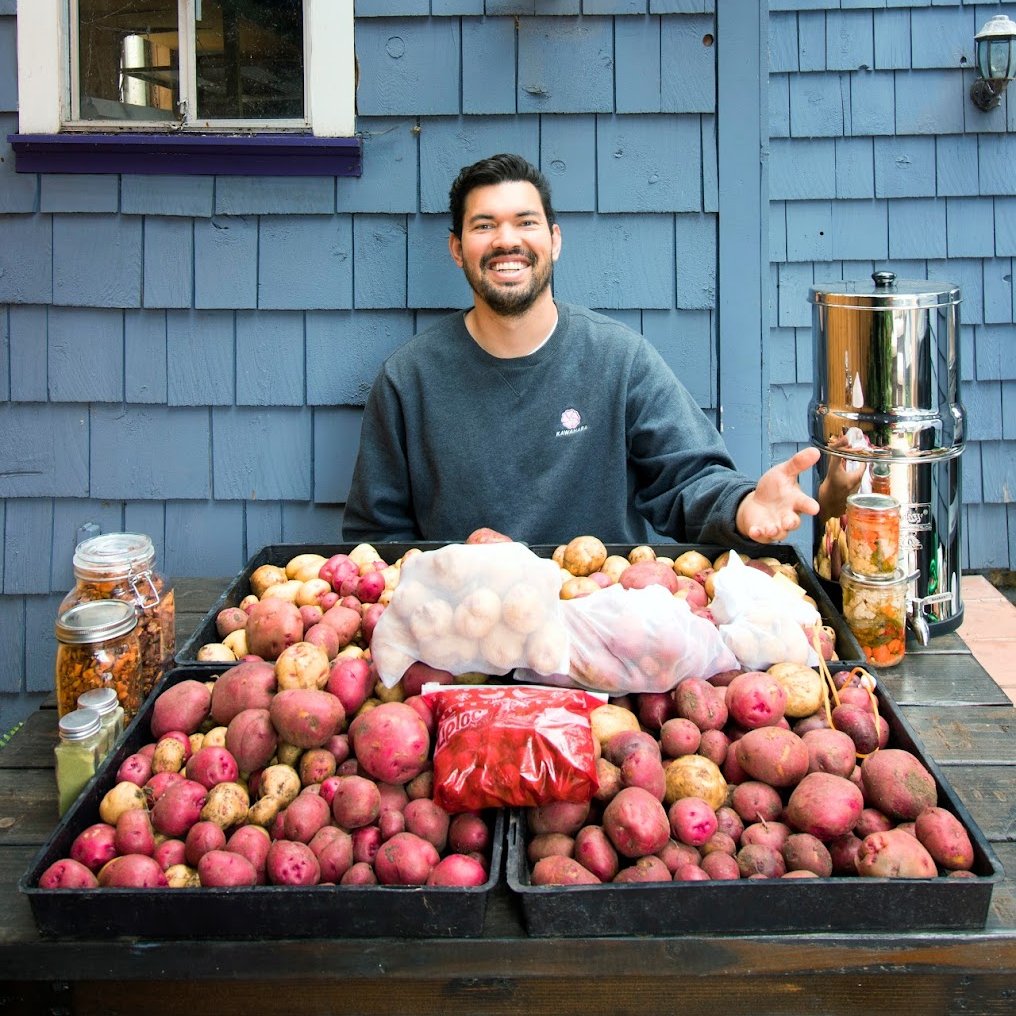
I've grown enough food to live off of in my front & back yard for a few years, here's what to focus on if you're trying to do the same:
Veggies and greens are the easiest to hit. Any leafy green (lettuce, kale, spinach, chard, collards, etc.) grows the same way.
You're only eating the leaf tissue of these plants and you harvest them before their full life cycle completes (most people don't know lettuce & greens produce flowers and seeds!)
A simple way to grow any leafy green:
Say time to harvest is ~30 days and you want ~4 heads of lettuce per week.
Start 4 heads Week 1, 4 on Week 2, 4 on Week 3, 4 on Week 4.
By Week 4, the Week 1 batch is ready. Keep starting 4 every week. After 4-5 weeks you'll have a repetitive cycle. This is succession sowing...great for crops you: 1. Consume often 2. Don't need a ton of 3. Don't store well.
For other veggies, two basic seasons: warm and cool.
Tomatoes, peppers, eggplants, okra, squashes = warm season. Start them 1-2 months before spring kicks off (first day temps aren't reliably freezing) and get them in the ground to enjoy spring through summer.
Broccoli, cabbage, brussels sprouts, beets, radishes = cool season. Start late winter for a spring harvest, or late summer for fall/early winter harvest.
Fruit is harder to fully self-supply. I have 25 fruit trees on my property, so I've achieved this, but most don't have the space, time, or knowledge for urban cultivation.
The BEST fruit to grow is the strawberry. They grow in clumps, self-replicate via runners, and don't require crazy soil or conditions. Pick June-bearing for HUGE berries with clustered harvests, or ever-bearing for smaller berries spread across late spring → summer.
For growing CALORIES, only a handful of crops satisfy this: potatoes, sweet potatoes, and beans.
Potatoes are easiest, a "pioneer crop" that doesn't need much soil or water. I've grown hundreds/thousands of pounds in a single season.
Potatoes aren't planted via seed. You use a "seed potato" that sprouts from the eyes and replicates via underground stems called "stolons." Plant ~6" deep, water once you see sprouts, harvest once leaves die back. Expect ~10x yield in weight from each seed potato.
Nutritionally, FAT is the hardest to grow at home. Avocados would be best but are difficult even in the right climate. Get your fats from animal consumption, eggs, etc.
This is the most concise breakdown I could write in 10 minutes. If there's interest for more of this, happy to write more - just follow
Ayer Kike llegaba hasta el santuario.
Y no podéis perderos estos primeros momentos 🤩🤩🤩
Era una mezcla de miedo por no saber dónde estaba, curiosidad e ilusión de volver a nacer después de doce años atado y solo. Kike merece toda la paciencia y cariño que nunca han tenido con el. 🫂
Lo vivimos muy emocionados en el santuario pero la mayor emoción se la llevó él y podéis verlo al final del vídeo: corriendo en libertad por primera vez.
Kike tiene sus cascos fatal debido a la falta de cuidados, está muy cojo y hasta que no pueda ser esterilizado en el hospital veterinario con las mayores garantías no podrá estar con el resto, pero él ya ha ganado su vida. Él ayer moría atado a una cadena recibiendo el último palo y renacía en el santuario.
Bienvenido Kike ❤️
Ayúdanos a salvar vidas como la de Kike, el rescate es solo el comienzo de una nueva vida.
Bizum ONG 02167
PayPal: [email protected]
❣️Puedes donar a la campaña desde el link de nuestra BIO
https://t.co/73XVMrzeB3
❣️Hazte socia/o→ https://t.co/in9QiJkdQr
❣️Amadrinando→ https://t.co/wyKywoxqJp
❣️Donativos Paypal: [email protected]
Otras formas de colaborar
► Por solo 1€/mes Teaming →
https://t.co/eYXro9TCun
I want to know what creative hobbies people have that don't involve 1) screens, or 2) the gym. Like good old-fashioned analog activities that involve making something by hand, tending to critters (e.g. chickens, alpacas, star-nosed moles), gardening, etc etc.
Bonus points for photos.
Mr Buster lived on his chain living on the cold concrete for years. Complete neglect as he was "Vicious and dangerous" according to his owners.
Just look at this big gentle baby boy now!
The biggest lesson we’ve learned during our journey to change how we think, eat, and live... is that you don’t have to change everything at once.
Start with one better choice.
Then another.
Then another.
Give it time and one day you’ll look back and realize the small steps carried you further than you ever even expected!!