“In a nutshell, tell us, in practical terms, how you will move Nigeria from consumption to production and what timeline we should expect.”
Peter Obi forgot the question and started telling a story.
If you had an option between saving money for Nigeria and spending money to reduce Nigeria infrastructure deficits, which option would you take ?
Peter Obi : 👇🏻👇🏻👇🏻👇🏻
Lerry wey bat supporters wan injure few weeks ago?
The reason you guys are coming for him is because he's supporting Seyi Makinde and I'm feeling this obidient movement of a thing is a tribal agenda.
Chinua Achebe was one of those early civil servants who lived at Ikoyi by virtue of his job at the NBC.
He had joined the Nigerian Broadcasting Service in 1954, soon after graduating from University College Ibadan, starting as a talks producer. By 1961 he had risen to Director of External Broadcasting, in charge of the Voice of Nigeria.
That senior post came with the kind of official quarters that placed him in Ikoyi, then the reserved, tree lined quarter for senior government officers in Lagos.
It was not a writer's retreat. It was a civil servant's house, with a garden, a driver and the quiet that allowed him to write after office hours.
That is what makes the photograph so important. It is dated August 62, and it shows Langston Hughes standing with the then young author Chinua Achebe outside Achebe's home in Ikoyi, Lagos, Nigeria.
Hughes, the great African American poet, was 60 years old at the time. Achebe was only 31.
They had first met a few weeks earlier, in June 1962, at the Conference of African Writers of English Expression at Makerere University College in Kampala, Uganda. That gathering brought together Achebe, Wole Soyinka, Kofi Awoonor, Ezekiel Mphahlele, Lewis Nkosi, Grace Ogot, and a young Kenyan student then called James Ngugi.
Hughes came as the elder voice of the Black diaspora, and one of the questions they debated was whether African literature should include writing from the diaspora or only writing from people living on the continent.
After Makerere, Hughes travelled on to Lagos.
The visit captured in this photograph came at a very full moment in Achebe's life. His first novel, Things Fall Apart, had already made him famous around the world since 1958. No Longer at Ease had followed in 1960. He had married Christie Chinwe Okoli in 1961. His first child, his daughter Chinelo, had been born on July 11, 1962, just weeks before this photograph was taken.
He was also writing Arrow of God, which would appear in 1964, and in that same year, 1962, he was asked to become the founding editor of Heinemann's African Writers Series, with Things Fall Apart as its first title.
So the image is not just two writers posing for a camera. It is a meeting between generations. Hughes, who had been writing since the Harlem Renaissance of the 1920s, was passing a kind of blessing to the new African writing that Achebe represented.
Achebe, still a serving NBC director living in government quarters, was standing at the centre of that new writing, in the very city where Nigerian broadcasting, publishing and literature were all being made.
Only a few years later that Ikoyi calm would break. In 1966, as the crisis that led to the civil war deepened, Achebe and his family had to flee Lagos for the East.
That memory stayed with him and shaped There Was a Country, his personal history of Biafra.
That is why this quiet August 1962 photograph matters. It catches Achebe at the height of his early promise, at home in Ikoyi, in conversation with Langston Hughes, just before Nigeria and his own life turned.
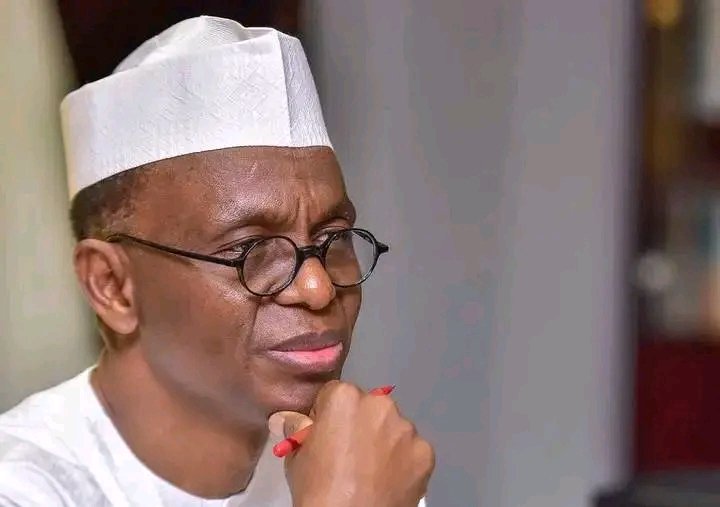
BREAKING: El-Rufai denies intercepting NSA Nuhu Ribadu’s telephone communications, says his 'tapped' remarks were rhetorical and exaggerated.
Opening his defence in his ongoing phone-tapping case at the Federal High Court in Abuja, El-Rufai told the court that he had never owned any equipment used to intercept telephone calls and had no technical knowledge of how to do so.
He also denied having access to NSA Nuhu Ribadu's communication networks or devices, while maintaining that his comment during an interview on Arise TV in February was political rhetoric and not an admission that he had intercepted Mr Ribadu’s telephone.
El-Rufai said, “I used ‘we’ to refer to opposition politicians. When I said ‘tapped’, it was an embellishment intended to make the government feel the pain we are feeling.
It was rhetorical and exaggerated. My objective was to engage in political retort and linguistic flourish,” he told the court.
El-Rufai had during an Arise TV interview some months ago responded to how he obtained the information that the NSA Nuhu Ribadu was behind the plan to arrest him. He replied in the interview, saying, “He made the call because we listen to their calls.”
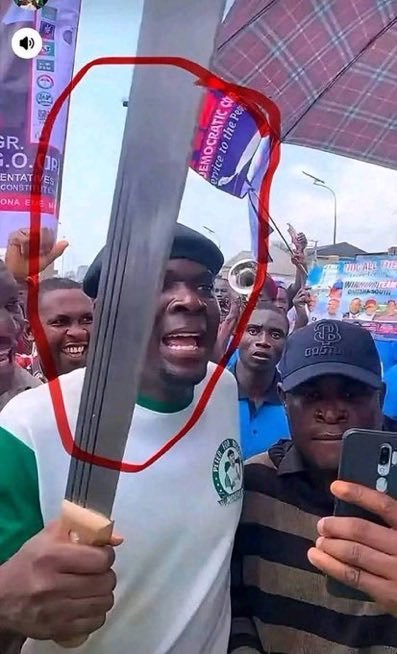
@K_Basharr@AdebimpeAyodeji The people seen in videos with cutlass and sticks last week were obidients.
In Ughelli, they were obidients carrying machetes.
Obi lied needlessly.
Do you see Peter lied and threw RMK's followers under the bus, albeit needlessly. Hence, the outrage.
At some point, you Obi's followers would come to agree that the man is not as bright as you all paint him to be.
@Maga_Yila@Animal_Conect Let me simplify it for you.
Tinubu/APC will be competitive across the country.
Anywhere he doesn't win, he will be second.
You cant say the same for ADC or NDC.
NDC will not be competitive in the North, ADC will do very poorly in the south.
That's how APC wins.