A Democrat was in the White House when my family was sent to the internment camps in 1941. It was an egregious violation of our human and civil rights.
It would have been understandable if people like me said they’d never vote for a Democrat again, given what had been done to us.
But being a liberal, being a progressive, means being able to look past my own grievances and concerns and think of the greater good. It means working from within the Democratic party to make it better, even when it has betrayed its values.
I went on to campaign for Adlai Stevenson when I became an adult. I marched for civil rights and had the honor of meeting Dr. Martin Luther King. I fought for redress for my community and have spent my life ensuring that America understood that we could not betray our Constitution in such a way ever again.
Bill Clinton broke my heart when he signed DOMA into law. It was a slap in the face to the LGBTQ community. And I knew that we still had much work to do. But I voted for him again in 1996 despite my misgivings, because the alternative was far worse. And my obligation as a citizen was to help choose the best leader for it, not to check out by not voting out of anger or protest.
There is no leader who will make the decision you want her or him to make 100 percent of the time. Your vote is a tool of hope for a better world. Use it wisely, for it is precious. Use it for others, for they are in need of your support, too.
Joseph Douglass, Director of the Department of Music at Howard University and his Grandfather Frederick Douglass.
—Joseph Henry Douglass (1869-1935) was the second child of Charles Douglass and his first wife Libbie. With moral and financial support from his grandfather Frederick Douglass, he studied violin at the Boston Conservatory and became a renowned violinist.
Joseph Douglass, grandson of Frederick Douglass, was the first nationally-known black concert violinist. His interest in music stemmed from his father and grandfather, both of which played the violin.
Douglass was also the first black violinist to tour the world as a performer. When he was 22 years old, Joseph Douglass performed at the Chicago World’s Fair, which was a day to celebrate the 400th anniversary of Christopher Columbus’ arrival in the New World. He shared the lineup that day with poet, Paul Laurence Dunbar. It was the beginning of his career that spanned over three decades.
Joseph Douglass was born in the Anacostia area of Washington D.C. in 1869 to Charles and Mary Elizabeth Douglass. He was the only child of the couple that would live to be an adult. He received his formal musical training from conservatories in New England and Boston.
Joseph Douglass was the first violinist of any race to record music for the Victor Talking Machine Company in 1914. He performed for several U.S. presidents, including William McKinley, Teddy Roosevelt, and Howard Taft. By 1910, he was performing at Carnegie Hall. Douglass also appeared at the Grand Military Concert sponsored by the U.S. Marine Band in Washington to commemorate the presidential inauguration of Grover Cleveland.
Unfortunately, his recordings with the Victor Talking Machine Company were never released.
Aside from his work in music, Douglass was a conductor at Howard University. He often played slave spirituals that he learned as a child for family members.
Douglass’ widow, Fannie Douglass, donated his violin (which was a copy of the German Stradivarius) to the U.S. Dept of Interior after his death in 1935
🖋️if you love our content, please consider supporting our page on https://t.co/MkzBtV9AwG
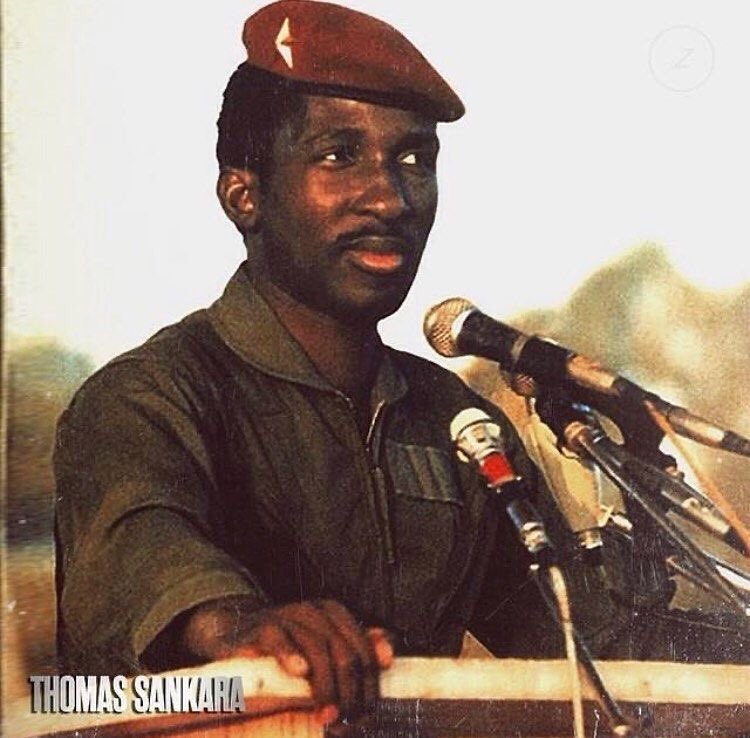
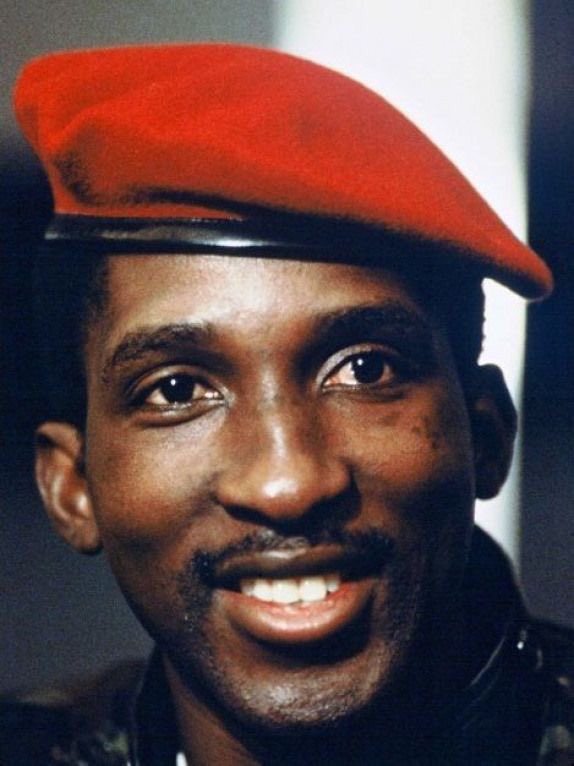
36 years ago today, Thomas Sankara, a revolutionary African leader, was assassinated by French imperialists.
Sankara drove out French imperialism from Burkina Faso and withdrew from IMF and made the country non-reliant on foreign aid.
He was assassinated in a coup led by his close ally, Blaise Compaoré supported by French imperialists
As far as African leadership goes, Thomas Sankara was cut from a different piece of cloth.
Here are some of his accomplishments, ONLY 4 YEARS in power (1983-87):
– He vaccinated 2.5 million children against meningitis, yellow fever and measles in a matter of weeks.
– He initiated a nation-wide literacy campaign, increasing the literacy rate from 13% in 1983 to 73% in 1987.
– He planted over 10 million trees to prevent desertification
– He built roads and a railway to tie the nation together, without foreign aid
– He appointed females to high governmental positions, encouraged them to work, recruited them into the military, and granted pregnancy leave during education.
– He outlawed female genital mutilation, forced marriages and polygamy in support of Women’s rights
– He sold off the government fleet of Mercedes cars and made the Renault 5 (the cheapest car sold in Burkina Faso at that time) the official service car of the ministers.
– He reduced the salaries of all public servants, including his own, and forbade the use of government chauffeurs and 1st class airline tickets.
– He redistributed land from the feudal landlords and gave it directly to the peasants. Wheat production rose in three years from 1700 kg per hectare to 3800 kg per hectare, making the country food self-sufficient.
– He opposed foreign aid, saying that “he who feeds you, controls you.”
– He spoke in forums like the Organization of African Unity against continued neo-colonialist penetration of Africa through Western trade and finance. • He called for a united front of African nations to repudiate their foreign debt. He argued that the poor and exploited did not have an obligation to repay money to the rich and exploiting
– In Ouagadougou, Sankara converted the army’s provisioning store into a state-owned supermarket open to everyone (the first supermarket in the country).
– He forced civil servants to pay one month’s salary to public projects.
– He refused to use the air conditioning in his office on the grounds that such luxury was not available to anyone but a handful of Burkinabes.
– As President, he lowered his salary to $450 a month and limited his possessions to a car, four bikes, three guitars, a fridge and a broken freezer.
– A motorcyclist himself, he formed an all-women motorcycle personal guard.
– He required public servants to wear a traditional tunic, woven from Burkinabe cotton and sewn by Burkinabe craftsmen. (The reason being to rely upon local industry and identity rather than foreign industry and identity)
– When asked why he didn’t want his portrait hung in public places, as was the norm for other African leaders, Sankara replied “There are seven million Thomas Sankaras.”
– An accomplished guitarist, he wrote the new national anthem himself
🖋️if you love our content, please consider supporting our page on https://t.co/MkzBtV9AwG (follow the ko-fi page too for weekly posts roundup)
The level of misinformation in all directions at this moment is incredibly high, especially on this platform.
If you see a claim, photo, or video that triggers a strong emotional reaction, take a moment to pause and check for veracity/confirmation from multiple sources.
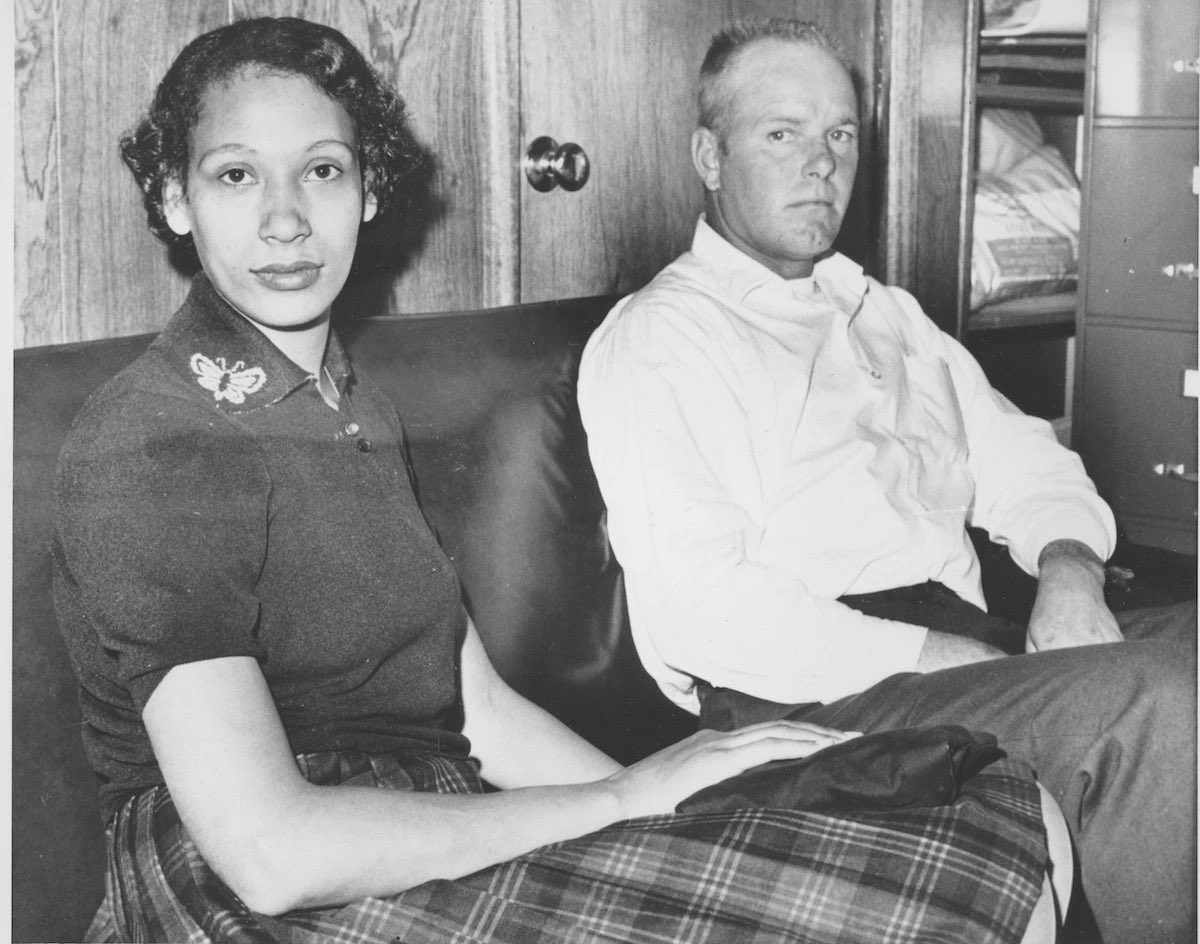
On July 11, 1958, at 2 a.m., Richard and Mildred Loving, who had recently married, were abruptly awakened in their bedroom by a Virginia sheriff. The sheriff questioned Richard, a white man, asking, "What are you doing in bed with this woman?" Mildred, a woman of both Black and Indigenous American heritage, responded, "I'm his wife." The sheriff retorted, "Not here you're not."
During that era, Virginia still had laws against interracial marriage, and the Lovings were taken into custody for their unlawful cohabitation.
For nearly nine years, the couple was forced to live away from their hometown, but they eventually made the bold decision to challenge the state's discriminatory laws in the Supreme Court. In 1967, the groundbreaking Loving v. Virginia ruling effectively decriminalized interracial marriage throughout the entire United States.
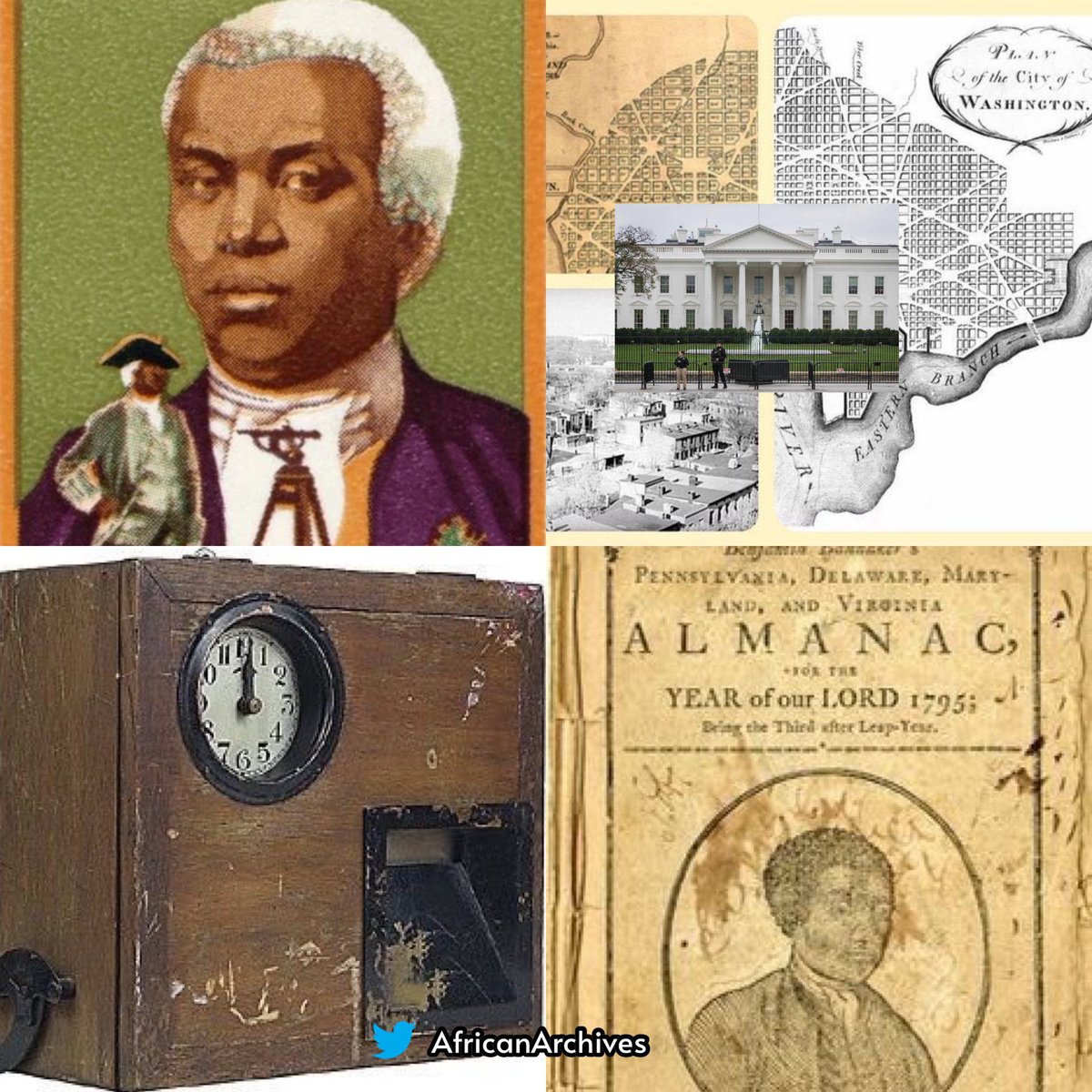
On this day in 1806, Benjamin Banneker died.
In 1753, he created the first functioning clock in the U.S entirely out of wood, it was so advanced it kept accurate time for over 50 years.
During his funeral, all his belongings including the clock were destroyed in a mysterious house fire.
He also helped survey and design Washington D.C.
—Benjamin Banneker. A Mathematician and astronomer who planned all the construction of the U.S. Capitol, in Washington D.C., Benjamin Banneker is known for The first African American To create a scientific book, an almanac published in 1791. Banneker’s book contained information on many subject including weather forecasting, ellipses, medicine and essays calling for the free education and the abolition of physical punishment of school children. President Jefferson sent copies of Banneker's almanac to the French commons and The British House of commons as a proud example of America's scientific and cultural accomplishments. Banneker is also credited with building the first Clock in assembled in the U.S.
Born in Maryland in 1731, Banneker was the son of an African American who freed himself. Banneker worked as a farmer while studying science in his spare time. After inventing his clock, he predicted the eclipse of the sun in 1789. In 1791 he was appointed by President Washington to assist surveyor Andrew Elliott and architect Pierre L'Enfant in planning the capitol building. After L'Enfant resigned and took his maps with him to France Banneker become responsible for completing the the white house. He’s credited with designing Washington DC in its ENTIRETY. —
🖋️if you love our content, please consider supporting our page on https://t.co/16fHyPFENu (follow the ko-fi page too for weekly posts roundup)
All Americans should be horrified and outraged by the brazen terrorist attacks on Israel and the slaughter of innocent civilians. We grieve for those who died, pray for the safe return of those who’ve been held hostage, and stand squarely alongside our ally, Israel, as it dismantles Hamas. As we support Israel’s right to defend itself against terror, we must keep striving for a just and lasting peace for Israelis and Palestinians alike.
When I was a little boy, the Japanese military attacked Pearl Harbor. It was a surprise attack, and thousands of U.S. servicemembers perished. As a nation, we were stunned. And we vowed to strike back. Revenge was understandably on everyone’s mind, including many Americans of Japanese descent who opposed the emperor and were peaceful and law-abiding U.S. citizens and residents.
In its zeal to exact that revenge, however, the U.S. government overreacted, out of fear and bigotry. They targeted everyone who happened to look like the people who had carried out the attack. Those of us who had done nothing wrong were forced to pay the consequences for the decisions of others far away and disconnected from us. We were interned for years, in open-air prisons, while America went off to fight Japan, Germany and Italy.
It’s so important that we carry the lessons of the past through to today. Merely because one group commits atrocities and acts with depravity does not mean vast hundreds of thousands or even millions of others should be lumped together with them and made to suffer. We must never paint with the brush of justice and retaliation too broadly, or the toll of human suffering will rise immeasurably.
Alabama has a new, fairer congressional map that gives Black voters an equal opportunity to elect a candidate of their choice.
This is a historic win for voting rights and democracy, and it happened thanks to the hard work of Black voters, advocates, and organizations like @RedistrictFdn.
BREAKING NEWS
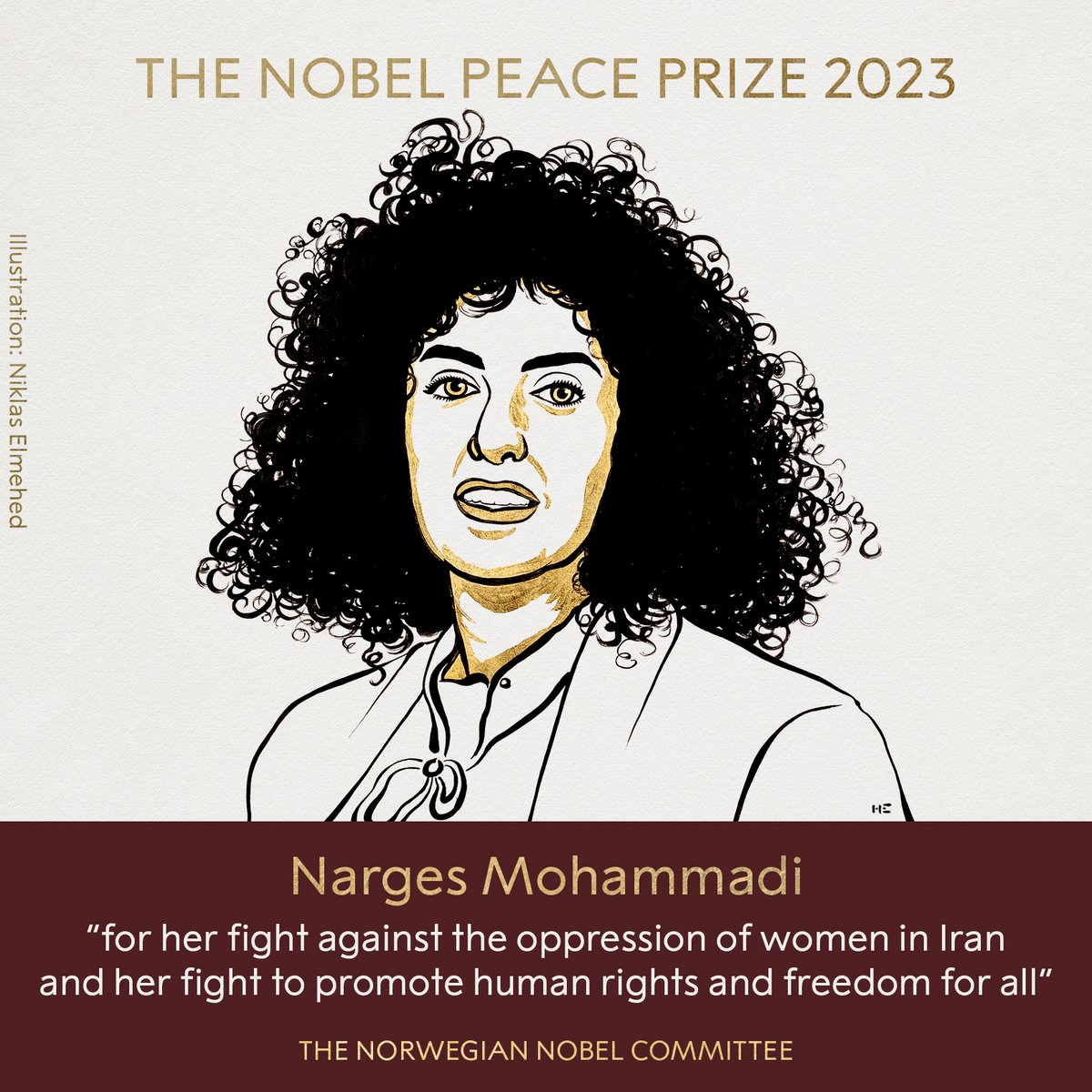
The Norwegian Nobel Committee has decided to award the 2023 #NobelPeacePrize to Narges Mohammadi for her fight against the oppression of women in Iran and her fight to promote human rights and freedom for all.
#NobelPrize
Hattie McDaniel accepted her Oscar at a segregated "No Blacks" hotel in Los Angeles for her role in "Gone with the Wind." She made history as the first Black American to win an Oscar. Sadly, all of the film's Black actors, including McDaniel, were prohibited from attending the film's premiere in 1939 at the Loew's Grand Theatre in Atlanta, Georgia. Clark Gable, one of the film's stars, refused to attend if Hattie wasn't allowed, but she convinced him to go without her. Even though McDaniel was eventually allowed into the hotel, she had to be escorted and was relegated to the back of the room, separated from her white co-stars.
This is Marcel Marceau, a French mime who used his acting skills to save the lives of Jewish children during World War 2. Marceau was recruited by his cousin, Georges Loinger, to become a member of the French resistance during the German occupation of France. Their mission was to smuggle out all the Jewish children from a French orphanage and get them safely across the border to Switzerland.
Marceau and the children disguised themselves in Boy Scout uniforms and traveled discreetly through the forests of France. Marceau posed as the leader and made sure to hide all the children's passports and resistance documents in mayonnaise-drenched baguette sandwiches. According to Marceau's logic, the Nazis would not inspect these sandwiches too thoroughly as they would not want to get any of the mayonnaise on their gloves or uniforms. This earned him the nickname, "Monsieur Mayonnaise."
According to Loinger, "The kids loved Marcel and felt safe with him. He had already begun doing performances in the orphanage, where he had met a mime instructor earlier on. The kids had to appear like they were simply going on vacation to a home near the Swiss border, and Marcel really put them at ease."
When the group finally reached the border, Marceau threw a ball over to the Swiss side and told all the children to go get it. He ended up saving 70 lives. Marceau survived the war and went on to become a world-famous mime and actor.
"After the war, I didn't want to speak about my personal life. Not even that my father was deported to Auschwitz and never came back. I cried for my father, but I also cried for the millions of people who died. And now we had to reconstruct a new world. I was twenty-two years old when I said, 'What character will I create?'"