The UK government is reportedly considering plans to force tech companies to stop children from viewing, sending, receiving or sharing nude images on phones and other devices.
Most people agree children should be protected online. The concern is how these rules would work in practice.
Silkie Carlo from Big Brother Watch said: “This will only result in population-wide ID checks for all of us to use our phones, tablets and laptops.
These plans would replace efforts for meaningful tech and parental responsibility with performative, authoritarian government control that children can easily circumvent by accessing adult-registered devices.”
People say children will still find ways around the restrictions, while adults could lose more privacy when using everyday technology.
Is the UK on the verge of banning VPNs?
On May 26, the consultation intended to help the British government make decisions on age verification for websites, digital services, and social media platforms came to an end. Some form of restrictions regarding at least age limits for social media already appear inevitable; government officials have confirmed as much. The only question is what kind of restrictions will be imposed.
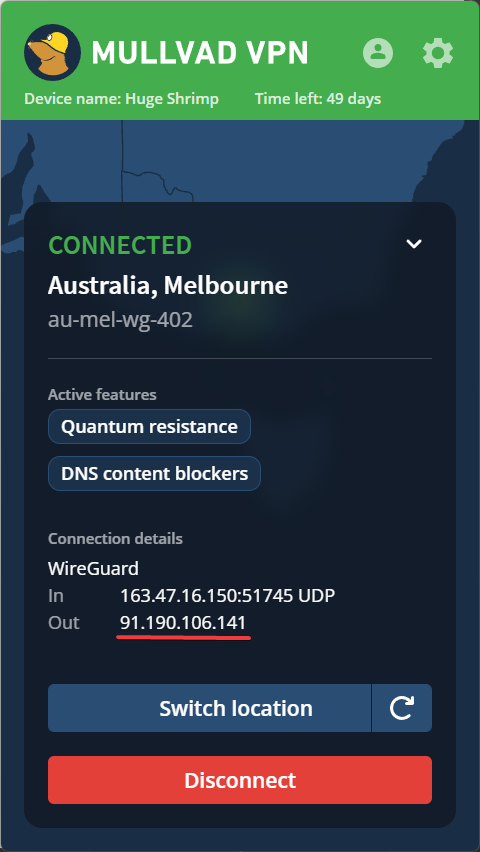
For example, the age verification restrictions could end up including VPN services. National restrictions for websites and social media can be bypassed using tools such as VPNs, virtual phone numbers, eSIM cards, Tor and dedicated services. It is therefore unsurprising that politicians have begun looking toward VPN services, which are the most common and accessible method of changing one’s geographic location.
In early 2026, the House of Lords sent an amendment(regarding the Children’s Wellbeing and Schools Bill) to the House of Commons, proposing an 18-year age limit for using VPN services. The House of Commons rejected the House of Lords amendment four separate times. However, the House of Commons instead introduced its own proposal, which was passed and has now become law. This agreement grants the government the power to introduce restrictions through secondary legislation, with only limited parliamentary scrutiny.
Unfortunately, the risk that the UK government will crack down on VPN services is real – effectively joining countries such as China and Russia in opposing VPN services. Officials have already hinted that they may consider introducing age restrictions for VPN usage under the slogan “No platform gets a free pass”.
If VPN services were to implement identity verification, this would mean collecting data that could be abused through either malice or incompetence. It would, for example, make such services risky for whistleblowers and activists, make it harder for journalists to work with sensitive information, and create a chilling effect on online debate (VPNs can help people post anonymously on social media). In a society like the UK, where 30 people are arrested every day for writing something online that authorities classify as “grossly offensive”, VPN services are an important tool for free speech.
If VPN providers were to impose an age limit on their service, this would also mean that underage users would effectively lose their right to online privacy. Ironically, one consequence would be that social media companies mapping people’s lives through third-party trackers on websites could continue monitoring young people’s online behavior via their IP addresses without any interference. In other words, politicians would remove one of the protections children have against the very companies they claim to want to protect children from.
The EU age verification app is presented as “completely anonymous”. But the risk is that member states (the countries are supposed to create their own versions of the open-source EU app) use it to introduce identity verification that makes it impossible to post anonymously on social media.
The idea behind “completely anonymous” is to use Zero-Knowledge Proof (ZKP) cryptography to break the link between the age credential issuer (EU governments) and the regulated services/sites. Currently, the EU app does not have ZKP functionality, contrasting Ursula von der Leyen’s claim that the app ”is technically ready to be used”. But more importantly, the app is designed to always function without ZKP technology; if ZKP is unavailable, the app falls back to a non-ZKP model. Even if fully developed ZKP technology could be implemented in the future, it would remain an optional extra feature that countries may choose to disable and that the EU could remove at any time.
This means that the EU could decide at any time that ZKP may no longer be used, and in one stroke the app would fall back to its default mode, meaning that every post on social media carries an ID tag. By that point, an infrastructure will already have been rolled out; people will have gotten used to it, and it will be harder to roll it back.
More details on https://t.co/wTVKHMS1zg
So-called age verification for social media is spreading across the world, framed as an effort to create a safer internet for children. In reality, age verification lays the foundation for a fully controlled internet.
The age verification rush must be slowed down, and politicians need to recognize the consequences of different types of legislation and systems.
Age verification is the wrong approach to fix “the social media problem”
The big tech social media companies are bad. Their business model is bad; it is based on mass surveillance and manipulation, and they cooperate with governments in mapping entire populations. But age verification is fundamentally the wrong approach to preventing children from using big tech social media platforms. Introducing age verification is based on coercion; the state forces social media companies to verify their users’ identities. But the big tech social media platforms already know which of their users are children. Their business model depends on knowing this. They know how old users are, and they know exactly what type of person they are. As age verification is based on coercion, politicians could instead force platforms to stop doing the things politicians consider harmful to children, or force them to block children (again, they know who they are) from using their services. But instead, politicians seek to massively invade everyone’s privacy and undermine democratic rights on a global scale. In other words, the latter is the real objective – they do not want to protect children; they want to impose control.
Slippery slope of age verification
It is undeniable that age verification threatens freedom of expression, risks increasing mass surveillance, and is likely to lead to censorship. It will not only shrink the online world and reduce young people’s right to privacy (for example, if VPN services were to be restricted); but also risks becoming a significant step toward a controlled internet for everyone.
Most age verification is identity verification
Most countries are now considering introducing age verification systems, meaning that everyone would have to identify themselves either to the service/website they want to use or to a third party capable of linking them to their activity on that service or website. This is not age verification but identity verification, and the consequence is therefore that freedom of information is restricted (you can no longer visit regulated websites anonymously) and that you can no longer post anonymously on social media. This is a major problem in countries like the UK and Germany where the police conduct raids on people’s homes for posting content on social media that the authorities dislike. Or in the United States, where authorities are trying to pressure tech companies into revealing the identities behind accounts protesting ICE. Social media identity verification removes important tools for activists in countries where criticizing those in power is dangerous.
Restrictions on app store or operating system level
Some countries are looking to impose identity verification at the app store level or even within the operating system itself. This is an exciting experiment, since this is possible to circumvent using open-source operating systems. Some countries are already looking to include open-source systems. Since open-source systems cannot be controlled, politicians would ultimately need to ban devices that are not controlled by the state. The end point: telescreens like those in Orwell’s 1984, devices that both monitor you and broadcast only the information approved by the state.
The Zero-Knowledge Proof (ZKP) alternative and the EU
The EU has presented its own age verification app as “completely anonymous”. The idea is to use Zero-Knowledge Proof (ZKP) cryptography to break the link between the age credential issuer (EU governments) and the regulated services/sites. Currently, the EU app does not have ZKP functionality, contrasting Ursula von der Leyen’s claim that the app ”is technically ready to be used”. But more importantly, the app is currently designed to always function without ZKP technology; if ZKP is unavailable, the app falls back to a non-ZKP model. Even if fully developed ZKP technology could be implemented in the future, it would remain an optional extra feature that countries may choose to disable and that the EU could remove at any time.
Read more on our site.
https://t.co/wTVKHMS1zg
It’s two minutes to midnight. The time for talking is over; the time for action is now. That’s why we are presenting the first-ever patriotic European Citizens’ Initiative: the @SaveEuropeAct.
Acknowledging the ethnocultural continuity of Europe’s peoples as crucial for the preservation of Europe, we demand an immediate and total halt to immigration and the creation of a comprehensive European Remigration system.
To achieve that, we need your help. With a million signatures, the European Commission must meet with us face-to-face and take a stance on remigration and the future of Europe as a whole.
"Say no right now."
Former vice president at Pfizer, Dr. Mike Yeadon, urges you to reject digital ID, CBDCs, and UN Agenda 2030.
"By 2030... you will not be able to leave [the country]... you will not own private transport, you will have a digital ID to do everything, and you will only have electronic money with which to transact."
"I would say, at that point, you are a slave."
"And because you can see them coming, you should say no. Say no right now."
meta gave their AI support agent the ability to modify your instagram account. no identity verification. people figured this out and accounts are being taken over right now
❗️🚨 BREAKING: Security researchers are now handing Nightmare-Eclipse vulnerabilities for free, in what looks like both a show of support and a reaction to how Microsoft treats researchers. First up: "Bitskrieg," violates Secure Boot trust and fully bypasses BitLocker.
It seems aimed squarely at Microsoft's recent blog, where the company said its Digital Crimes Unit would bring cases against threat actors "and those that enable their criminal activity," language many researchers read as a threat pointed at them.
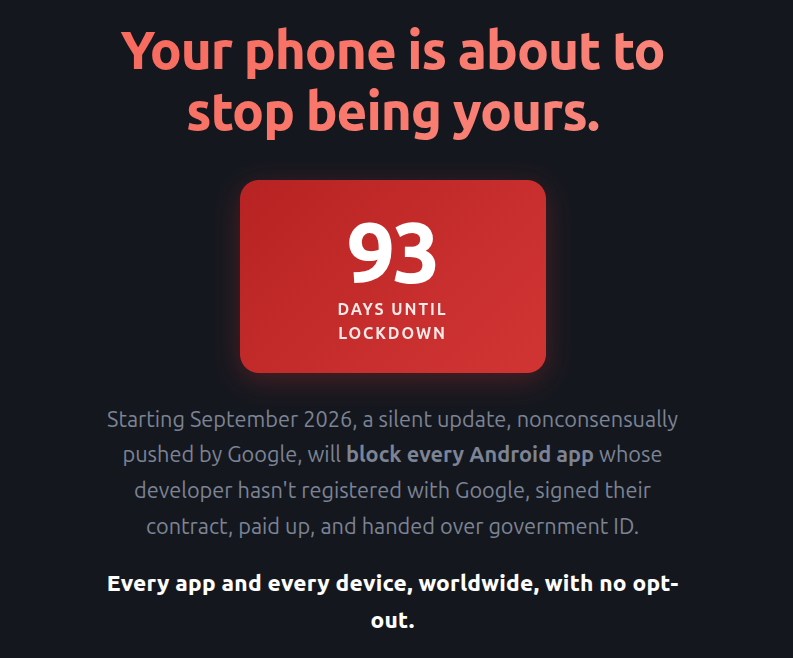
Your phone is about to stop being yours.
Android was sold to us as an open platform.
Now Google wants every developer to register and submit ID just to let you install their apps.
Every app and every device, worldwide, with no opt-out.
TikTok just quietly installed a new feature onto everyone’s accounts without telling anyone
It automatically gives them permission to take your images, your voices, and plug them into AI and use them for whatever content they want to make
That means they can now make make AI content that looks like you and say things that sound like you, doing stuff you would never say or do
TikTok rolled out a new setting called “Allow AI to Remix Content”
- It was turned on by default for existing and new videos.
- This allows other users and TikTok’s AI tools to use your video clips, images, and audio to create AI-generated remixes, memes, or new content featuring your likeness and voice
If you don’t want this you can opt out
However, The opt-out is per video, there is no account wide toggle. You must go into each individual video’s privacy settings to turn it off
This make it much more difficult and annoying to opt out every time so eventually you’ll likely just stop opting out and they can steal your likeness for their AI
TikTok says this setting is mainly about letting other users remix your content with AI, not necessarily TikTok secretly training models on everything
But that’s not true, because training data permissions are covered in their broader terms
They are literally stealing your likeness and voice for training models
Texas Attorney General Ken Paxton is suing Discord to push for mandatory age verification for all users.
If successful, people may have to upload a government-issued ID, complete a facial scan, and pass identity checks before they can create or access an account.
Discord previously suffered a data breach that reportedly exposed tens of thousands of uploaded ID documents.
Microsoft has released the optional Windows 11 KB5089573 update, which focuses on system responsiveness and performance improvements rather than cosmetic changes.
- Faster Start menu and Search performance
- Reduced latency when opening apps
- Improved File Explorer responsiveness
- Better touch and input handling
- Faster clipboard history and system flyouts
- Improved Microsoft Store download efficiency
The update also adds internal optimizations to reduce UI lag and make Windows 11 feel lighter during everyday use.
Additional features:
- Shared Bluetooth LE Audio support
- Multi-app camera access
- Expanded NPU monitoring in Task Manager
- Accessibility improvements
KB5089573 is currently an optional preview update available via Windows Update. A wider rollout is expected in the next Patch Tuesday cycle.
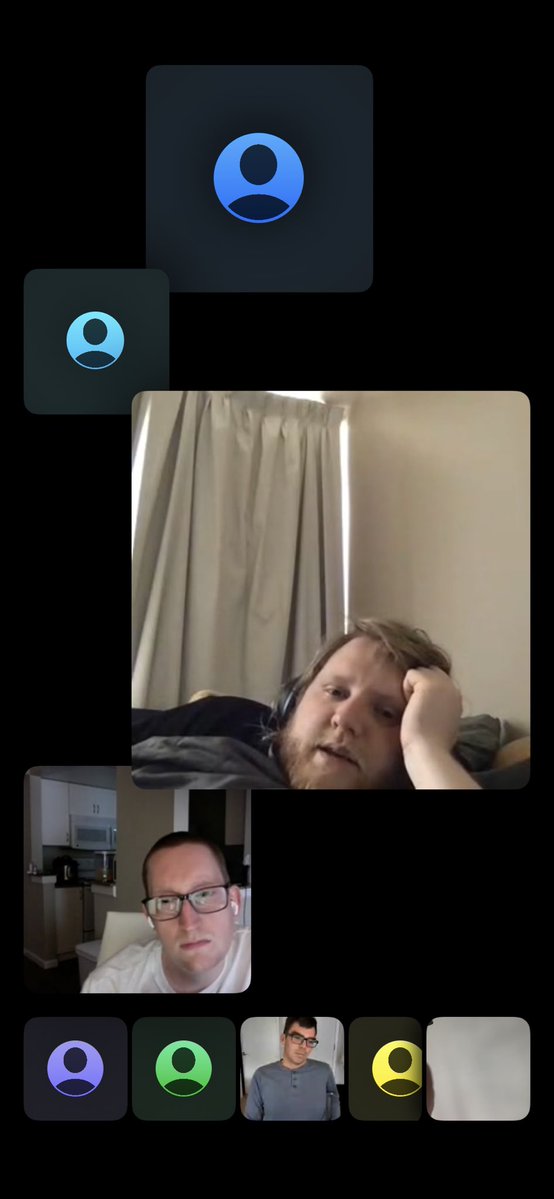
Fun fact. Apple did this to me in 2019 over a messages 0-click bug. So I did some magic and got myself added to their daily bug bounty standup call, which was just a FaceTime group call. I submitted another vuln with a screenshot of their call and got a threatening letter.
So let me get this straight. Peter Thiel creates the foundation for a surveillance state, then moves his family to Argentina because of the future of America. Not concerning at all lol.
Dutch political commentator Eva Vlaardingerbroek: Under the banner of UN Agenda 2030, unelected globalists are using the climate agenda as a pretext to shut down agriculture, leaving people no option but to consume insects and lab-grown meat.
"The people behind this want to establish a one world government—a 'New World Order'—in which they decide what we eat, when we eat, where we travel, when we travel, who we meet, and what we are allowed to spend our money on. Basically, control over every single aspect of our lives."
"They don't want us to eat foods that make us strong. They want us to eat synthetic meat created by Bill Gates. They want us to eat bugs, they want us to drink soy milk, so that we become weak and obedient, and we do as they say."
Credit: @EvaVlaar
Protecting children is their parents’ responsibility, not that of unelected bureaucrats who are just using them as an excuse to push for mandatory age verification through Digital ID; a system designed to censor speech and deny internet access to those who don’t follow their narrative.
‼️MAJOR BREAKING:
This has exploded open!
A NEW full list of tech companies speaking out against Carney's bill C-22, with many threatening to EXIT Canada entirely.
Some are CANADIAN companies!
👇🏼👇🏼
Meta (Facebook, Instagram, WhatsApp): Opposes Part 2, warning it could force backdoors or spyware installation. Testified before Parliament. The bill would “conscript private companies into service as an arm of the government surveillance apparatus.”
Apple: publicly warned the bill could force encryption backdoors and undermine device security.
Quote: “This legislation could allow the Canadian government to force companies to break encryption by inserting backdoors into their products—something Apple will never do.”
Windscribe (Canadian VPN provider): Joins Signal and threatens to relocate its headquarters or follow suit. Quote: “We won’t be far behind if C-22 passes. In its current state, VPNs would almost certainly require us to log identifying user data.
Shopify CEO Tobi Lütke: Vocal Canadian tech leader warning of broader economic damage.
Quotes (on X): “C-22 is looking like a huge mistake. It worries me a great deal. There is so much nonsense in there that it may well end up dealing a death blow to Canadian tech viability.”
Signal: VP Udbhav Tiwari said they would rather pull out of Canada entirely than compromise end-to-end encryption and privacy promises to users.
NordVPN: Warned they would "remove our presence from Canadian jurisdiction" before complying, to protect their no-logs policy and encryption.
The Chair of the the US House Judiciary Committee and Chair of the House Foreign Affairs Committee are now also investigating.