What if I had never come to Varanasi?
No walks by the Ganga.
No unexpected experiences.
No memories of these blessed days.
One decision & completely different set of experiences.
How we can never know what we're missing on the paths we don't take.
#CuriosityUnfolded
Rooms were available but not for solo traveller. After lot inquiries, I finally found room.
Humm.. having fewer needs doesn't always make things easier.
Of course, every place has its security concerns. But how often genuine safety concerns turn to barriers for solo travellers?
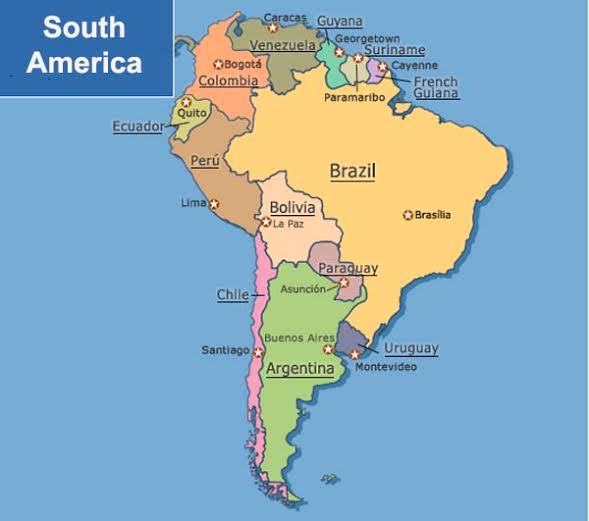
5/5 Today, Bolivia can still access the Pacific through arrangements for transit and port use, but it has no sovereign coastline.
One war changed Bolivia's geography and the consequences still shape its relationship with Chile today.
#CuriosityUnfolded#Geography#SouthAmerica
How Bolivia Lost Its Coastline
1/5 Today, Bolivia is landlocked.
But before the late 19th century, it had access to the Pacific Ocean.
So how did a country lose its coastline and why has it remained landlocked ever since?
4/5 A coastline lost
In 1904, Bolivia & Chile signed a peace treaty that formally recognized Chilean sovereignty over the former Bolivian coastal territory.
Bolivia has remained landlocked ever since, although it continues to seek a sovereign route to the sea through diplomacy.
4/4 Chile emerged with major territorial gains.
It acquired Tarapaca from Peru and took control of Bolivia's coastal territory, leaving Bolivia landlocked.
A desert reshape the map of South America.
#CuriosityUnfolded#Geography#History
The desert that changed a country's borders.
1/4 Imagine a place so dry that some weather stations have recorded years without rain.
Now imagine that this same desert becomes the reason countries go to war.
Welcome to the Atacama Desert in South America.
3/4 But the region's borders were disputed.
Chile, Bolivia and Peru had competing territorial and economic interests. In 1879, Chile went to war against Peru and Bolivia.
The conflict became known as the War of the Pacific.
Why do rivers rarely take the shortest route to the sea?
1/ A river flows downhill.
You might expect it to follow the shortest path to lower ground.
But many rivers curve, bend, and form enormous loops.
Why?
5/ Here's the interesting part:
A river doesn't plan its route. Its path emerges from gravity, water flow, erosion, sediment, and the landscape.
The shortest path isn't necessarily the path that develops.
6/ This is known as the birthday paradox.
There's no contradiction. Our intuition simply underestimates how quickly the number of possible pairs grows.
A small group can create a surprisingly large number of comparisons.
#CuriosityUnfolded
Why do 23 people have a surprisingly high chance of sharing a birthday?
1/ Put 23 people in a room.
What are the chances that at least two share the same birthday?
Most people guess around 5–10%.
The actual answer is about 50.7%.