breaking my self-imposed silence, but this is beyond bonkers. iirc back in 2024 Tao called SoTA about as useful as an underperforming grad student, but also said that it would autonomously solve a ton of problems in a few years, and I thought that timeline was short.
Today, we share a breakthrough on the planar unit distance problem, a famous open question first posed by Paul Erdős in 1946.
For nearly 80 years, mathematicians believed the best possible solutions looked roughly like square grids.
An OpenAI model has now disproved that belief, discovering an entirely new family of constructions that performs better.
This marks the first time AI has autonomously solved a prominent open problem central to a field of mathematics.
I'm not really sure how people believe this, considering the vast differences in every material aspect between the sides, but apparently tons of people believe that? Like, you can just say the war is going poorly because the US cannot execute a regime change!
TIL there's an entire alternate universe where Iran hasn't taken any significant damage, and the US and Israel are on the verge of collapse in the Gulf. I mean, the war is going poorly for the US, but Iran has taken like thousands of times more damage than the U.S. + allies lol
The funny part about this is that the US has too much home ownership IMO, and more people should be renting! We just have a very large cultural bias towards owning.
It's wild to watch the federal push for more housing collapse in real time b/c of baseless panic about large investors owning homes.
Senate just voted 89-9 to advance an effective ban on build-to-rent homes, which would reduce new supply by an est. 50k a year.
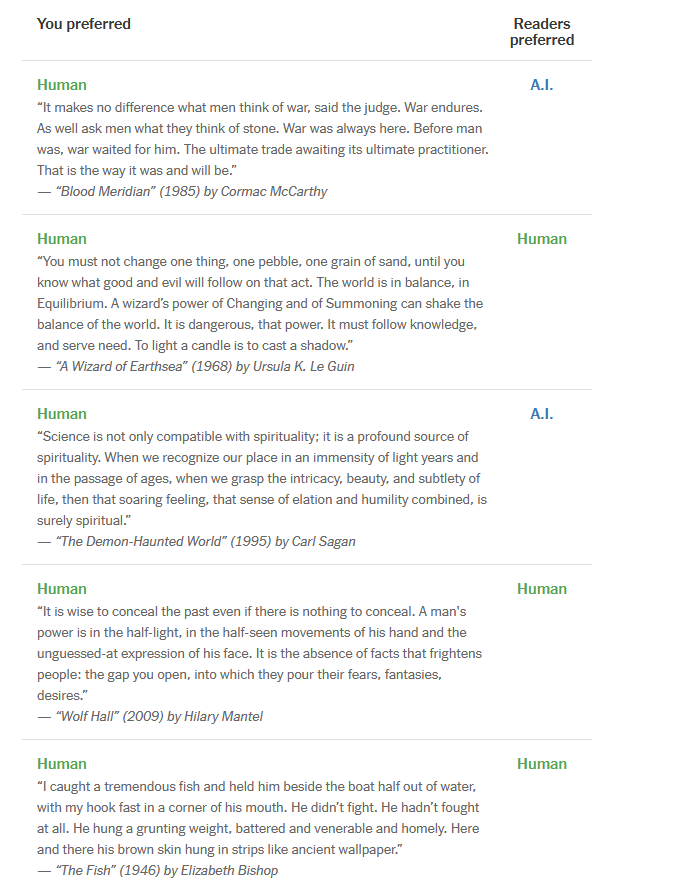
@StatisticUrban Apparently I also have a very strong human bias. I wonder if more exposure to LLM writing is biasing people against it? At least, that's what I seem to be noticing
The answer is that it is unironically Canadian cultural influence in American politics. Why is it that the one time influence goes the other way, we get the worst canadian pathology?
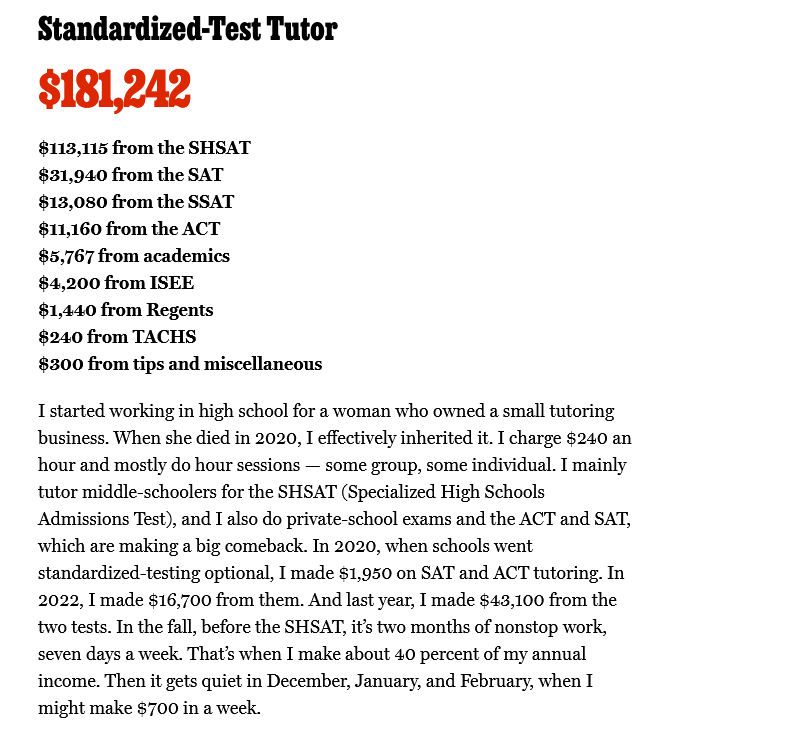
@brsgr4049 yeah, the SHSAT is massive. But even then, the vast majority of people I know who had tutoring went to one of those cram schools, and the instructors seemed like they'd be paid normally? I guess it's just a larger business than I thought.
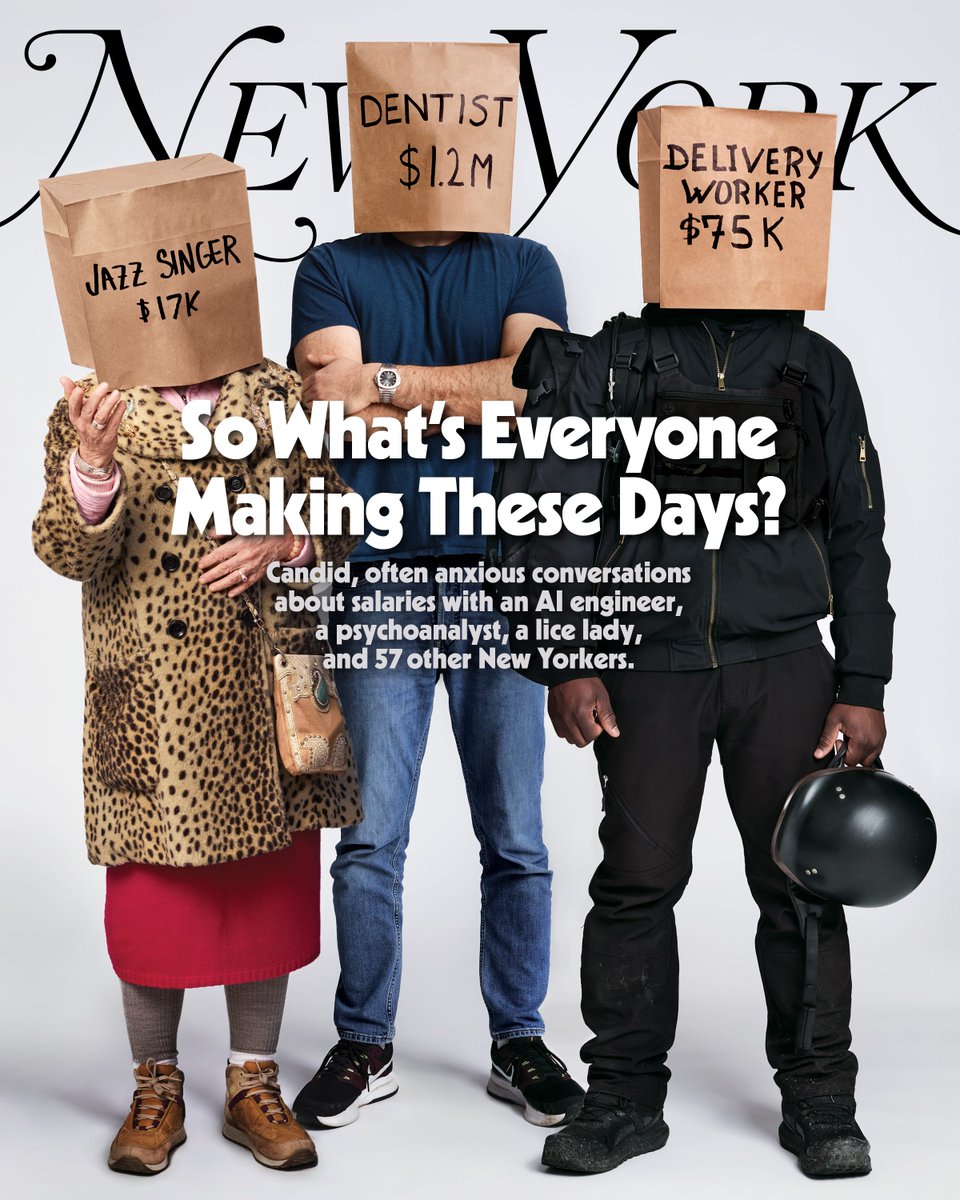
The last time we surveyed New Yorkers about their paychecks, the math was easy. Well, easier. In 2005, a blogger at Gawker made $30,000 and the CEO at Lehman Brothers more than $35 million. Back then, there was no “gig economy,” at least not as we know it today, and coffee shops from Bed-Stuy to the Upper East Side weren’t lousy with model–pickleballer–nanny–actor–producer–DJ–creative directors.
Some 20 years later, amid a radically different economic environment in which the nature of work feels as if it’s about to change forever, we set out to conduct a similar experiment. We reached into our network of sources, blind-messaged LinkedIn profiles, put out a casting call on Instagram, even stopped strangers in Union Square.
What we discovered, just before a jobs report earlier this month confirmed a dwindling labor market, is that salaries across most industries have not kept up with inflation in a city that has become exorbitantly expensive. Of course, there are plenty of people, especially at the very top, doing all right on their salary plus bonus and stock options.
The aim of our latest investigation wasn’t simply an excuse to be nosy. The hope was to capture this moment and provide some sideways service to those wondering what else there might be to do. It’s not too late to try to become a tugboat engineer, is it?
60 New Yorkers share what they do and how much they make for our latest cover story: https://t.co/5YVU6v6F4Q