An exclusive look into AI-powered workflows.
#WorkHub24 presents “Your Workflow, Built by AI” - a bi-weekly webinar series for forward-thinking teams.
Live sessions. Practical insights. Full access to recordings.
Register now at https://t.co/mJ1GPAQIDd
The Anthropic Claude Code incident is a reminder:
500K+ lines of internal code
- exposed via a packaging issue
- through a normal release
No hack. No attacker.
Lesson:-
Your IP doesn’t just live in prod anymore. It lives in your pipelines, tools, and AI layer.
No issue with vibe coding. Vibe coding compresses build time.
But it does not compress the responsibility that comes with production software.
The gap between “it works” and “it is safe”
is where hacker’s paradise lives.
Everyone wants AI in their workflows.
Very few ask the harder questions:-
- Should it be allowed to act?
- When does it need approval?
- What data should it never see?
- How do we audit its decisions?
That’s where enterprise AI becomes real.
@mawaqiAI 100% agree.
Humans tolerate ambiguity and compensate for broken workflows where agents force clarity.
That’s why automation is harder than it looks in most enterprises.
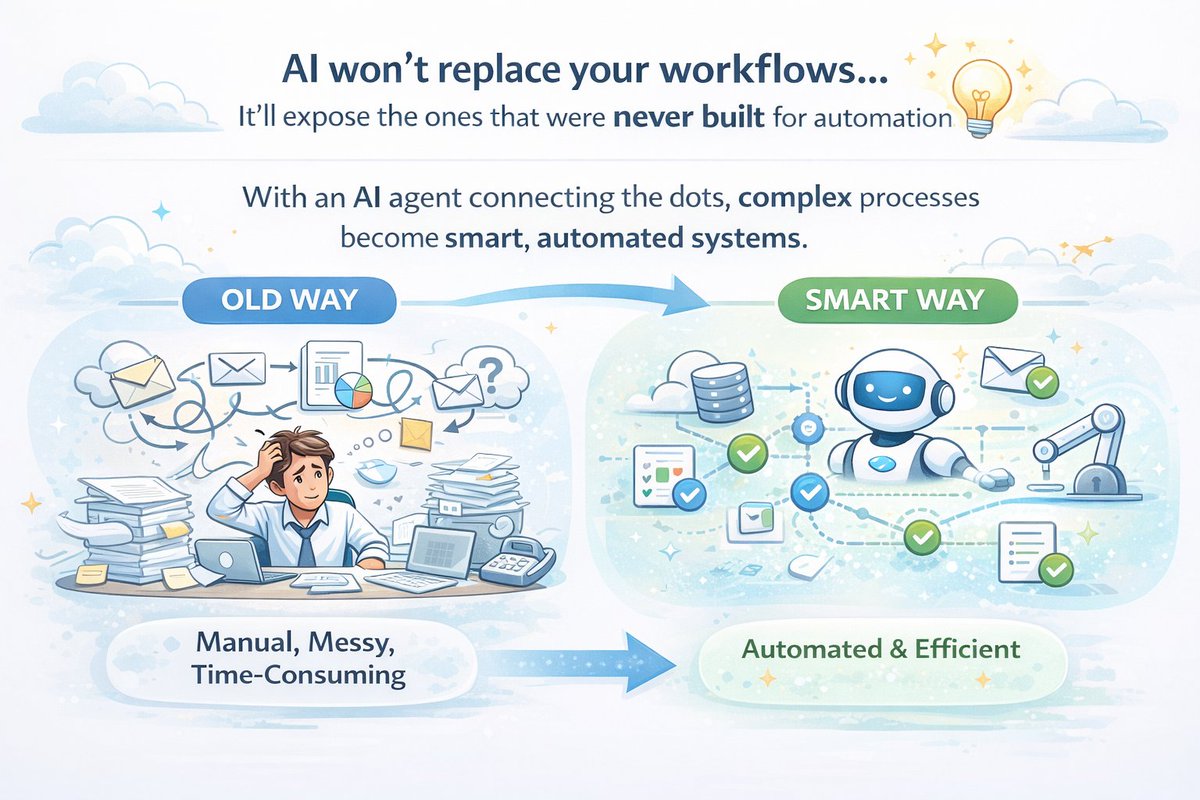
AI agents won’t replace enterprise workflows.
They’ll expose which workflows were never designed for automation in the first place.
Once an agent can read data, call tools, and trigger actions, your workflow design becomes a control system.
Not just a process map.
AI reporting is about to stress-test every SaaS database design
Why?
Because AI generates queries humans never wrote.
- Unexpected joins
- Large scans
- Cross-table correlations
Your schema suddenly becomes both:
- a performance boundary
- and a security boundary
Vibe coding can generate a working product in hours.
But governance problems don’t appear in the prompt.
When users start storing PII
When compliance asks questions
When data access becomes sensitive
Software is getting easier to build
Responsible systems still aren’t
Adding a PII field in a workflow system sounds simple.
It isn’t.
Because the moment you introduce PII you must think about:
• Encryption
• Masking in UI
• Access control
• Audit logs
• Export restrictions
In multi-tenant SaaS, data design becomes security design.
Multi tenant SaaS isn’t just an architecture challenge.
It’s a data governance challenge.
When you allow custom forms, users will store PII. Treating it as just “text” is a design flaw.
Security shouldn’t depend on user discipline.
When we built multi tenant at WorkHub24, everything worked great.
Until customers asked:
“Can we build advanced reports with AI?”
That’s when we realised:
Transactional design ≠ analytical design.
The database didn’t slow down.
The architecture did.