🤬“Those f***ing Ukrainians, for f***’s sake!” Or was it “That f***ing Ukrainian b***h, for f***’s sake!”?
These are the words 🏳️ Aryna Sabalenka appears to be saying in Russian, judging by her lip movements during her WTA Finals match against 🇺🇦 Elina Svitolina.
What a remarkable display of respect and sportsmanship from the world No. 2.
But sure, let's keep asking Ukrainian players why they refuse to shake hands with their Russian and Belarusian opponents.
Apparently, that's still the bigger problem in tennis.
🇵🇱 Never before has Poland had such a competent and charismatic foreign minister
Radosław Sikorski demonstrates a remarkably clear-eyed understanding of the situation. A rarity these days.
This time, Poland's foreign minister addressed the country's president, Karol Nawrocki. Here's what he said:
“I know that the president is Ukraine-skeptical, to put it as gently as possible.
But it is in Poland's vital interest that an independent Ukraine survives.
The president's role is to use his relationship with Donald Trump to persuade him to put pressure on the aggressor, not on the victim of aggression.”
Video: TVP Info
EU to Kushner: Fuck off. “There will be no simultaneous negotiations on European security until the war [against Ukraine] is over. Besides, we know what the Russians mean by that and it will not happen.” https://t.co/JA9VljeBOd
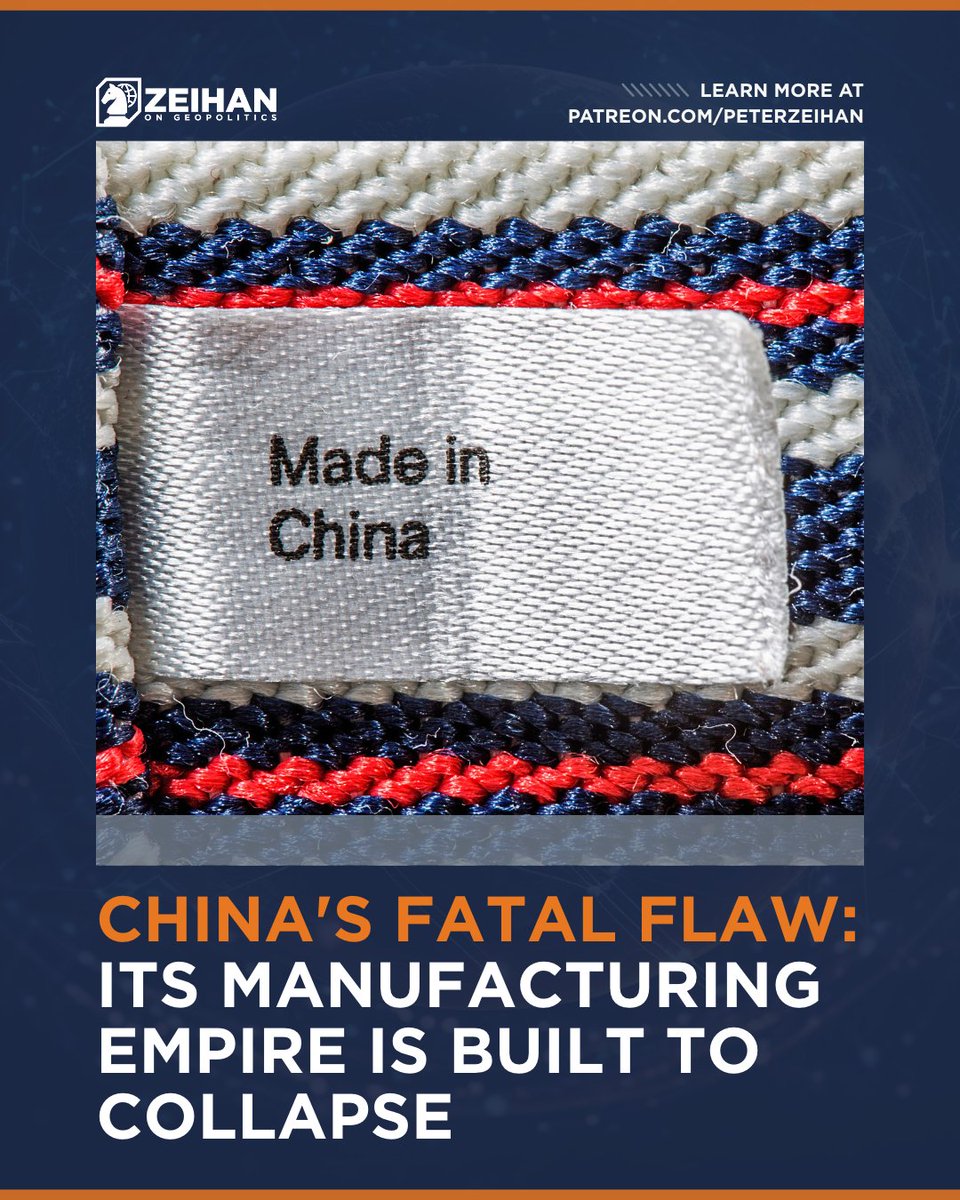
The Chinese never walk away from a sector that they've dominated. They keep it, and just subsidize it more.
So, for example, in the early 2000s, the Chinese moved into textiles in a very big way. But Chinese labor costs have gone up by more than a factor of ten since then, and the Chinese are wildly, wildly noncompetitive in that sector now. Normally, that industry would have been offloaded to a less advanced economy ten years ago. That might have been Vietnam. Today, it might be Laos, Cambodia, or someplace in Africa. But the Chinese don't do that. They keep it all under lockdown.
You get local governments basically allocating 20 to 30% of their budgets to sectors that are noncompetitive because, from their point of view, it's the only way to generate revenue and taxes and keep their people employed. If you saw an outflow based on labor costs and labor productivity, easily half of the industries in China would pick up and leave. But they're basically not allowed to. Money just keeps getting pumped in.
So you get this debt bubble that is conservatively now 400% of GDP, just in the corporate space. And that's before you start considering that local governments have been borrowing money to keep those subsidies going, and the central government is now starting to get into that activity as well.
#china #manufacturing #geopolitics