Thanks for the tools @AlgoFoundation, template @ganainmtech, and with the agent-skill and vibe-coding @gabrielkuettel. Now let me see how I can make this https://t.co/z2as5aZemT game educational 🥰👍
We recently released Algorand's post-quantum roadmap toward quantum resilience by 2027.
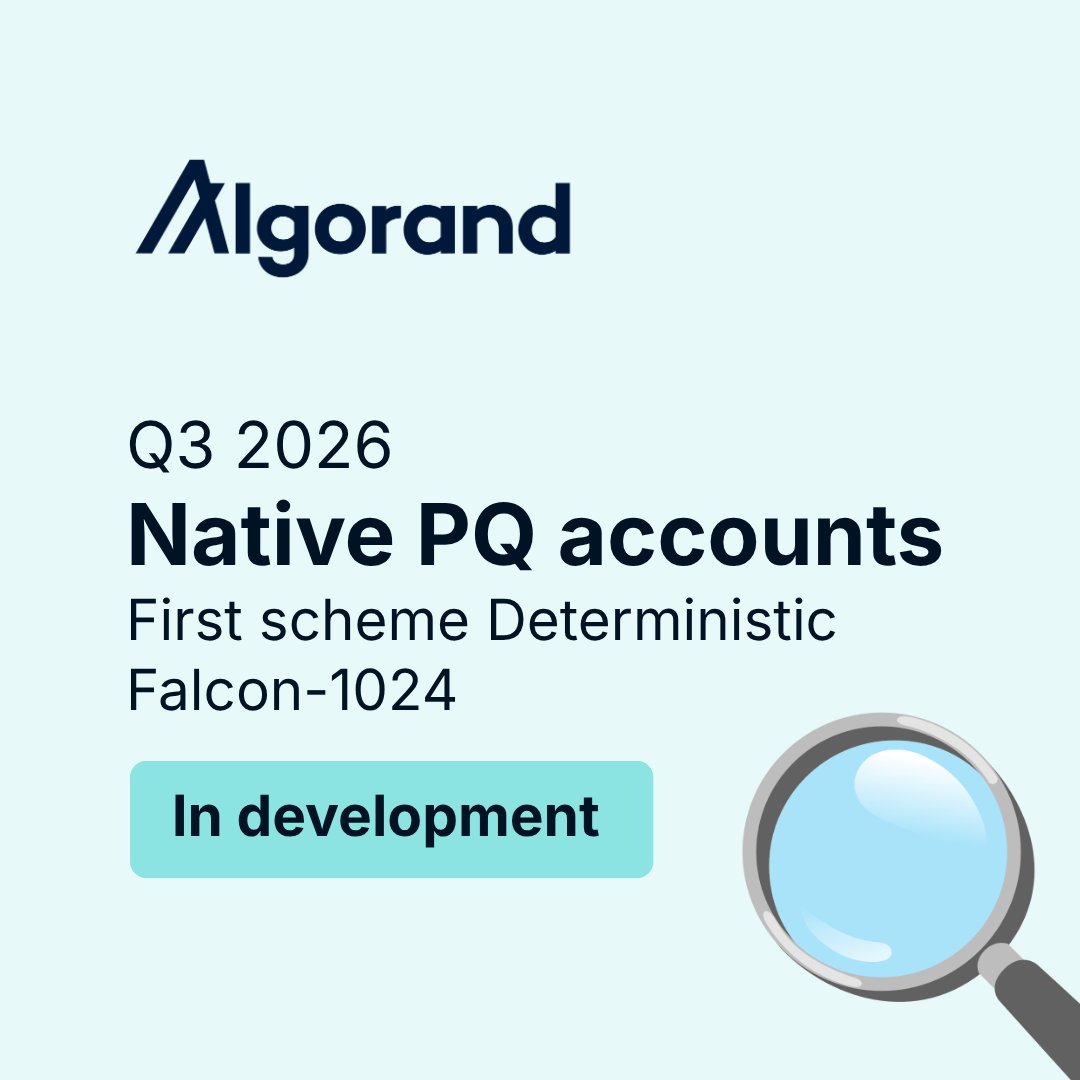
The first major step comes in Q3 2026 with native post-quantum accounts.
But what does "native" actually mean, and how is it different from Falcon accounts today?
Let's break it down 🧵👇
🧵 Algorand just took another major step toward becoming one of the first quantum-resilient blockchains.
The next milestone arrives in Q3 2026 with native post-quantum accounts.
Here’s why that matters. 👇
Every blockchain account is protected by digital signatures.
Today, nearly every major blockchain relies on elliptic-curve cryptography (Ed25519 or secp256k1).
Powerful enough today.
Potentially vulnerable in a post-quantum world.
@Algorand has already been preparing for that future.
In 2025, it executed one of the first post-quantum transactions on a live public blockchain using Falcon LogicSig accounts.
That proved post-quantum transactions were already possible.
But there was one limitation.
Those Falcon accounts relied on LogicSig programs.
They worked…
…but they weren’t native citizens of the protocol.
That’s exactly what changes in Q3 2026.
Native post-quantum accounts become part of the protocol itself.
Instead of existing through smart logic, they’ll be supported directly by the ledger and consensus rules.
That makes them easier for wallets, SDKs, exchanges and developers to support.
Another elegant design choice:
@Algorand keeps its familiar 32-byte account addresses.
Why is that important?
Because Falcon-1024 public keys are around 1,793 bytes.
Rather than exposing those large keys directly, Algorand derives the account address from a cryptographic hash.
Users keep the same address format…
…without bloating the ledger.
That means existing user experience stays familiar while the underlying cryptography evolves.
Perhaps the most important part isn’t the cryptography itself.
It’s the ecosystem.
Algorand plans native support across:
• SDKs
• AlgoKit
• Pera Wallet
Making adoption significantly easier for developers and users.
And this is only the beginning.
Native post-quantum accounts lay the foundation for the rest of Algorand’s roadmap, including:
• Cryptographic agility
• Hybrid accounts
• Post-quantum multisig
• Additional signature schemes
Quantum resilience isn’t a single upgrade.
It’s an architectural transition.
Algorand has been building toward it for years.
Now those building blocks are becoming native parts of the protocol itself.
@AlgoFoundation@Algorand
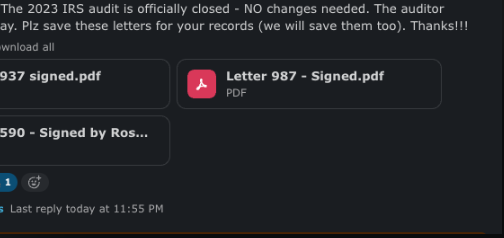
This took over a year to resolve, but @lofty_ai was identified by the IRS for a, supposedly random, audit last year.
Not the type of thing you want to hear or deal with as a startup founder, who still has a ton of work to grow and improve the product.
But happy to announce that as of yesterday, the investigation was closed, no changes/issues/fines, on our end.
Have you ever heard of a pre-series A company getting audited by the IRS lol?
What a journey and at this point, you can tell how much glass we've had to walk through, when I say this was one of the easier things we've had to deal with since our founding lol!
🛡️ @AlgoFoundation is now the #4 most decentralized blockchain by validator count
With 1,542 validators, Algorand now ranks fourth among all blockchains tracked by Chainspect
📊 https://t.co/zTwQ0RQrN4
From over 400 project submissions, we’re thrilled to announce the teams from AlgoBharat’s Hack Series 3.0 that made it to the final round. Great work, amazing to have you all with us at @Algorand India Dev Retreat in Goa, and excited to see what's next.
These @algodevs are ready to fly! Check out what they built . . .
🥇First Place: Team Astreous
Team Astreous’s Pixa agentic wallet enables AI agents to discover services, authorize payments, and transact autonomously using x402. Built as an MCP server, Pixa gives agents programmable access to assets, APIs, and micropayments with configurable spending controls.
Project Details: https://t.co/TemFVQG0h6
🧵 125,000+ wallets now hold native $USDC on @Algorand.
At first glance, it’s just another statistic.
But it points to something much bigger. 👇
Native USDC on @Algorand is issued directly by @circle.
That means users don’t rely on wrapped assets or third-party bridges.
They interact with USDC natively on the network.
Why does that matter?
Because Algorand combines:
• Fixed, ultra-low fees
• Instant finality
• Native asset support
• No network congestion pricing
That makes it particularly well suited for use cases where predictability matters:
• Payments
• Cross-border transfers
• Agentic commerce
• Micropayments
There’s another reason this matters.
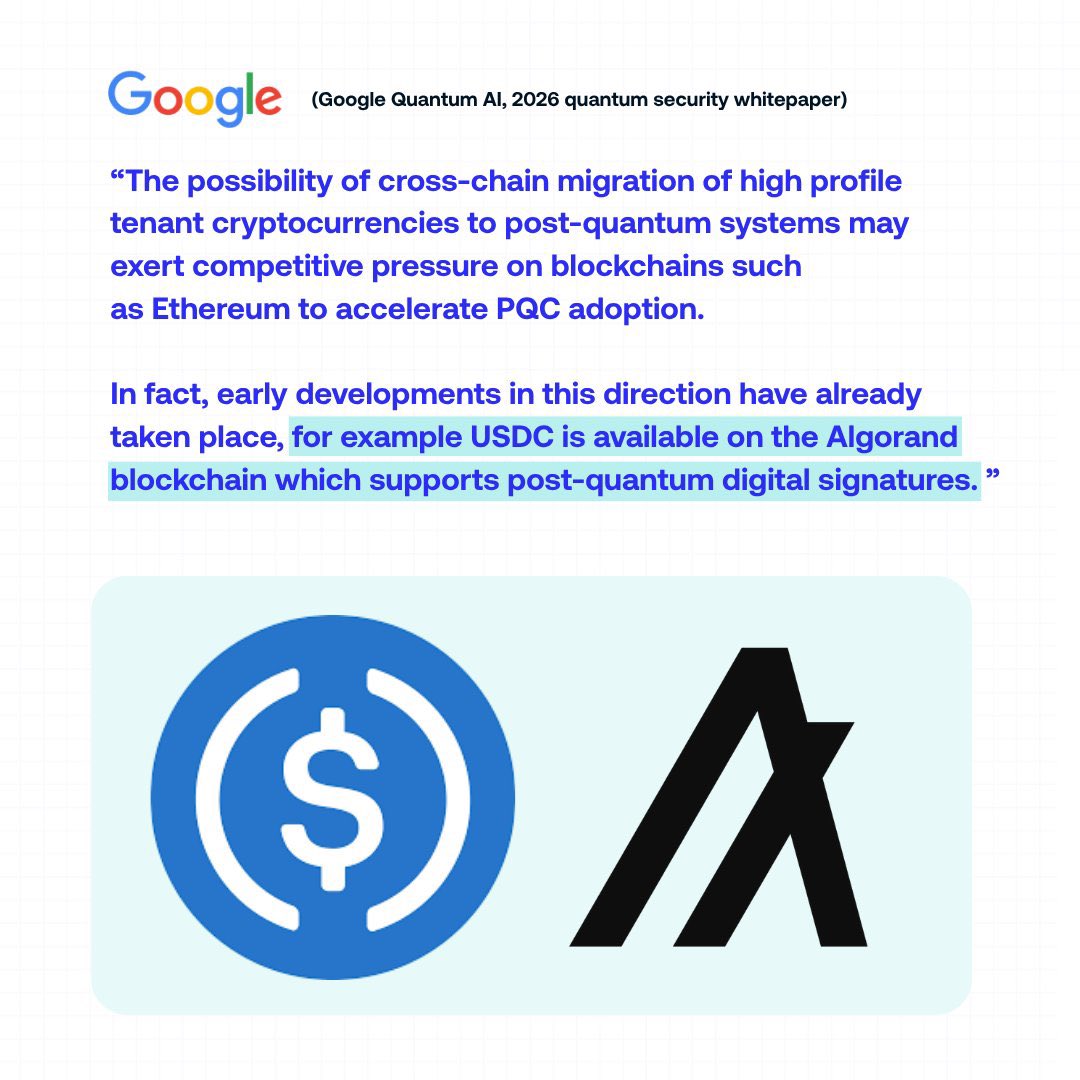
In its 2026 Quantum Security Whitepaper, Google Quantum AI highlighted USDC on Algorand as an early example of blockchain infrastructure supporting post-quantum digital signatures.
As digital dollars continue to grow, future-ready cryptography could become an increasingly important part of financial infrastructure.
The milestone isn’t really about 125,000 wallets.
It’s about the growing adoption of regulated digital dollars on blockchain infrastructure built for everyday transactions.
And infrastructure that isn’t just built for today’s economy…
…but is already preparing for tomorrow’s cryptography.
Infrastructure usually grows quietly…
…until one day everyone realizes it’s already everywhere.
@AlgoFoundation@circle@Algorand
If you're waiting for Q-Day to start migrating, you're already too late!
As highlighted by Algorand CSO @ChrisPeikert, migration takes years.
That's why organizations like Google and Cloudflare are already targeting full post-quantum cryptography by 2029.
Algorand has been preparing for this for years, with a roadmap to achieve broad quantum resilience by 2027! 💪
Don’t wait until Q-Day. Try @Algorand.
Now with Python and typescript programmable $USDC.
Check out AlgoKit and start today. @algodevs
https://t.co/yX53dcNB2H
@JMB_DUNN No not 10%, a nickel fee for a dollar. That still sounds a lot isn't it?
How about a penny for every dollar? Is that not worth for the security, scalability, and decentralization of Algorand?
That still is more than 0.001, a 10% increase to 0.01
Excited to roll this out finally. When we inherited the kick-ass protocol team they were on the path to a more sophisticated fee model based on resource usage, so we are incorporating this into the fee proposal. Next up EAC!
Algorand just won Blockchain Technology for North America at the 2026 World Finance Sustainability Awards.
The room: FedEx, United Airlines, Cargill, Ecolab.
Good company for a carbon-neutral L1.