#DidYouKnow when building a new home or during home renovations are optimal times to add #wildfire mitigation features to your home? 🔥
Upgrades like noncombustible siding, enclosed eaves and dual pane tempered windows can help protect vulnerable parts of your home from wind-driven embers and radiant heat.
Learn more ways to strengthen your property against wildfire: https://t.co/aTa1nAIrUB
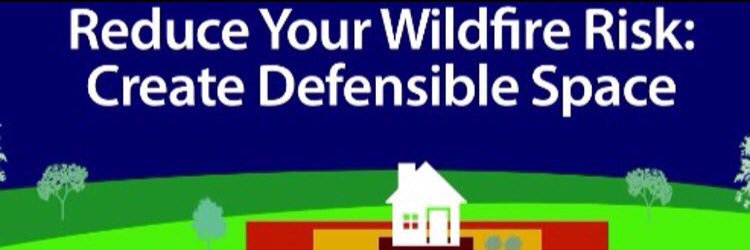
🔥 Lower your wildfire risk with a noncombustible five-foot safety buffer surrounding your home, also called Zone 0. Keep this area clear of anything that can burn, like vegetation, mulch, trash bins and furniture.
Learn more at https://t.co/pWAT7Bssds.
Vent check! ✅ During a wildfire, wind-blown embers can enter your home through vents in your attic, roof, gables and crawlspace and ignite materials inside.
🔥 To keep embers out and better protect your home, install flame- and ember-resistant vents with proper sealants or retrofit existing vents by covering them with 1/8-inch corrosion-resistant metal mesh at roof openings, attic, soffits, wall vents and crawlspace.
Find more ways to protect your home at https://t.co/lJATtjTNe0.
“I will say that the kinds of attributes here are the exact ones that insurers find attractive," IBHS @roysterwright said when describing the details of @KBHome's Stone Canyon to @JamieSkennedy. "And as they seek to grow, this is good risk.”
Stone Canyon brings IBHS’s Wildfire Prepared Neighborhood program to Northern #California for the first time, reflecting a broader move toward making #wildfire resilience a core part of how communities are built in wildfire-prone areas.
Read the full story ⤵️
https://t.co/RZhYU3Vab5
Putting #science into action: @kbhome's Dixon Trail is the first-ever Wildfire Prepared Neighborhood, IBHS’s highest home- and neighborhood-level #wildfire resilience standards.
@justcalmajourno shares the importance of this community in southern #California in @verge: https://t.co/aXxj8KkuDy
Property-level mitigations are your first line of defense against #wildfires. 🔥
IBHS's Wildfire Ready guide offers a science-based, affordable system of mitigation steps that - when implemented together - are proven to meaningfully reduce the risk of home ignition during a wildfire.
Learn about the critical actions that you can take that are proven to reduce your risk at https://t.co/E5XicK85MP.
To go deeper in our research on fire behavior in landscaped environments, IBHS ran tests after post-disaster investigations and recent wildfire discussions to examine how flames move through hedges. 🌿These insights are further shaping our approach to defensible space and advancing wildfire research.
Explore more at https://t.co/nhS9FnJlcK.
Vegetation too close to your home can be fuel for embers. 🔥
🌿 Yet you don’t need to clear all greenery to be Wildfire Prepared. Healthy trees, lush grass and native plants still have a place in your landscaping – as long as the final five feet around your home stays clear of all flammable materials.
Learn more ways to reduce your #wildfire risk at https://t.co/xEyvPB0env.
When it comes to wildfires, the five feet around your home could make all the difference. 🏠
That’s exactly what local leaders witnessed yesterday alongside IBHS experts and @CAL_FIRE.
Wildfire Science In Action 🔥 Lead Research Engineer Faraz Hedayati shared insights from our post-disaster investigations and lab testing with the @washingtonpost that helped inform the science behind the #Wildfire Prepared Home program. Read the full article at https://t.co/tgjEUe0Tlk.