🔸We used to be a society yairambidzwa kunhonga mari muroad, kudya chikafu kudzimba dzevanhu, kupihwa zvinhu zvevamwe kuchikoro - the list goes on. What has happened to us? When did we become this freeloading, prideless and begging people? What happened to the good old Zimbabwean mantra of “sweet comes from sweat”? What on earth have we become? It’s despicable.
We need new leaders.🇿🇼
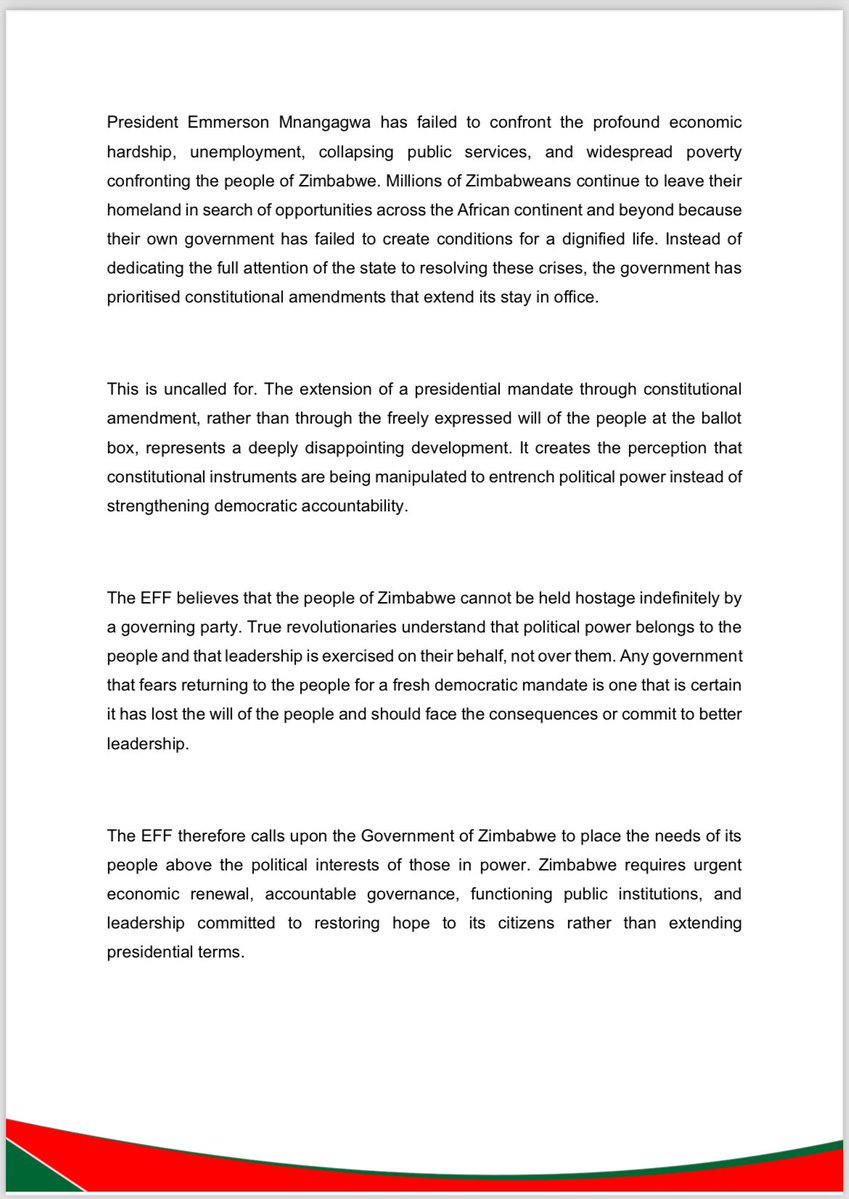
EFF statement on the extension of Zimbabwe President Emmerson Mnangagwa's term of office
—The EFF believes that the people of Zimbabwe cannot be held hostage indefinitely by a governing party. True revolutionaries understand that political power belongs to the people and that leadership is exercised on their behalf, not over them. Any government that fears returning to the people for a fresh democratic mandate is one that is certain it has lost the will of the people and should face the consequences or commit to better leadership.
35 yr old divorcee due to abuse,took her to her kids to her mom.Her mom died, she is now at home with her kids.She isnt well to do piece jobs. kids are at home no fees.She's appealing for fees.$195 per term for 3 Pry kids & 2 Sec kids
For help +263712336972.
Kindly retweet.
Help a brother in this fight | Please Help By Sharing This Post🙏🏾
My name is Marlon Sibiya, a 31-year-old married man and father of a three-year-old daughter. My family and I reside in a rented apartment in Norton.
Before I was diagnosed with Polycystic Kidney Disease (PKD), I was self-employed, operating a small printing business at Katanga Shopping Centre in Norton. Unfortunately, due to my deteriorating health, I am no longer able to manage the business effectively, which has significantly affected my family's source of income.
My health challenges began when I experienced severe shortness of breath, particularly at night, making it difficult to sleep for nearly two weeks. Initially, I thought I was suffering from asthma, so I sought medical attention at a local hospital. After undergoing blood tests and a chest X-ray, the results revealed a serious medical condition, and I was urgently referred to Parirenyatwa Group of Hospitals for specialist care.
Following further medical investigations, I was diagnosed with kidney failure caused by Polycystic Kidney Disease. I was admitted for treatment and dialysis work-up on 11 June 2026 and remained hospitalized for one week before being discharged on 20 June 2026.
I am now undergoing dialysis twice every week as prescribed by my doctors and am taking medication to manage my condition. While dialysis has become essential for my survival, it has placed an enormous financial burden on my family.
My assigned dialysis session is at 3:00 a.m., which requires me to leave Norton around midnight to travel to the hospital. The transport costs at those hours are very high and have become difficult for me to afford, especially since I am no longer able to earn a stable income due to my illness.
In addition to the ongoing dialysis treatment, I have also been advised that a kidney transplant offers the best long-term solution for my condition. However, the costs associated with the transplant process, including medical evaluations, surgery, medication, and post-transplant care, are far beyond my family's financial means.
It is with great humility that I appeal for your assistance. Any support towards the following would be deeply appreciated:
- Dialysis treatment costs.
- Transport expenses to and from dialysis sessions.
- Medication and routine medical care.
- Kidney transplant evaluation, surgery, and post-transplant treatment.
Any other financial or material assistance that may help ease the burden on my family during this difficult time. Your generosity would not only help me continue receiving life-saving treatment but would also give me hope of undergoing a kidney transplant and returning to a productive life to care for my wife and young daughter.
Thank you for taking the time to consider my request. I sincerely appreciate any assistance you may be able to provide. May God richly bless you for your kindness and compassion.
Yours faithfully,
Marlon Sibiya
0777489810 / 0775680877
Norton, Zimbabwe
Ecocash
0777489810
Marlon Sibiya
Innbucks
0777489810
Marlon Sibiya
Paypal: [email protected]
Go Fund Me Link available below🙏🏾
South Africa 🇿🇦 v 🇨🇦 Canada , who is qualifying for the round of 16? Time to vote 🗳️
Correct prediction wins $20.
NB must be in Zim🇿🇼, vote, like , repost, predict 😎
@chirembaPT Our gvt should have ensured that all school children learn both Shona and Ndebele languages but they're not interested because they want to keep us divided. A divided people is a dictator's paradise.
@CrimeWatchZW The police let them operate illegal shebeens and butcheries so they should protect police against hooligans. Cover my back and I cover yours. Simple as that 😅
2 days ago, Madzibaba VeShanduko appealed for financial assistance after spending 8 months in prison for a crime he did not commit & enduring torture.
You responded. We have so far raised £1,989. Thank you.
Please RETWEET so that others can see the link 👇🏿
https://t.co/cWRXPoFO2X
Dear @nickmangwana,
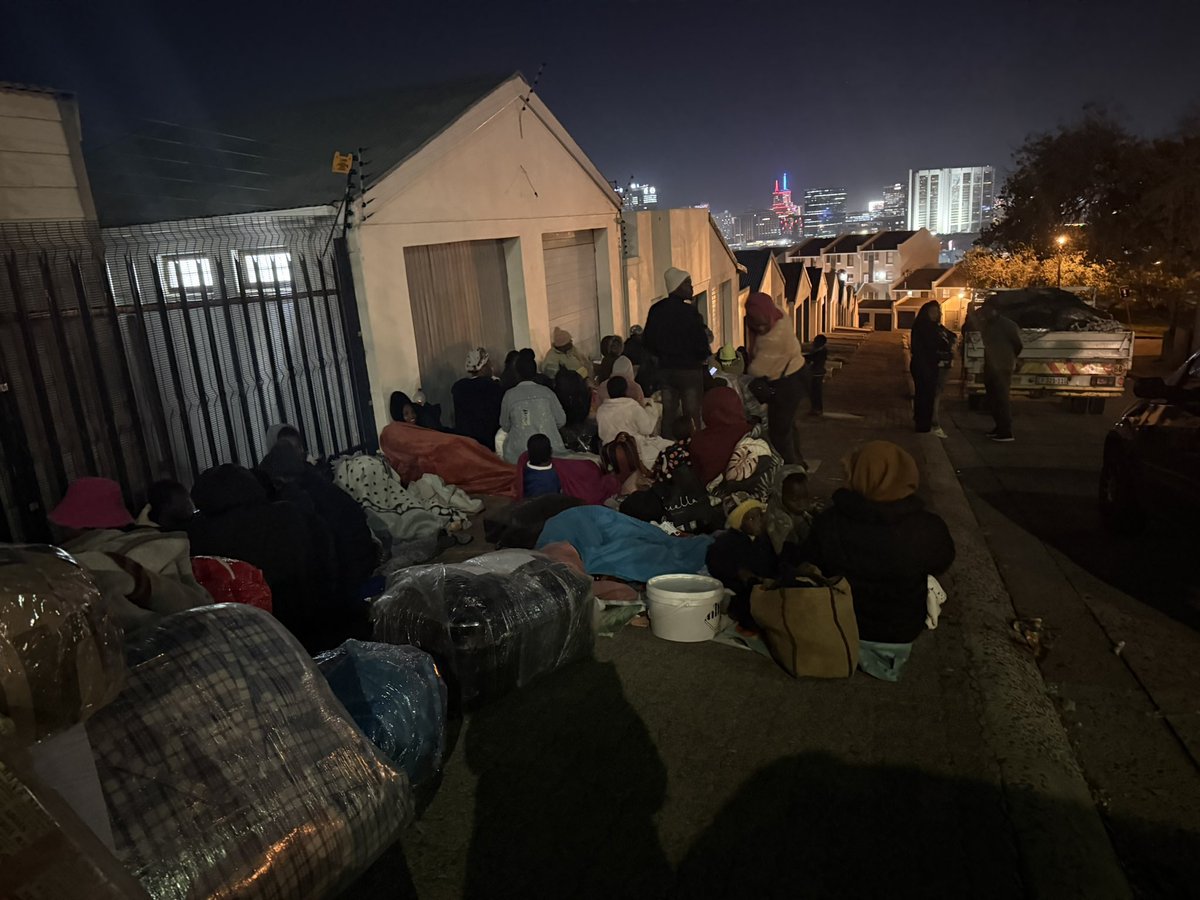
I hope you have seen the pictures that have gone viral on social media showing Zimbabweans sleeping outside the Zimbabwean Consulate in Cape Town in winter temperatures running away from xenophobic harassment, hate and violence.
Surely, as a government, you can do something to assist your own people in such circumstances. Imagine, Nick, if it were your wife and children sleeping outside in the Southern African winter, exposed to temperatures close to zero degrees. No reasonable person would find that acceptable.
The government has the resources and the responsibility to intervene. At the very least, these Zimbabweans should not be left to sleep on the pavement in the cold.
Why do we have to be so cruel to our own people? What is the purpose of having a government if it cannot step in when its citizens are in obvious distress? These are the same Zimbabweans who, in better times, send remittances back home that sustain families and contribute significantly to the country’s economy.
I hope you will not simply look at these images and move on. I hope you will bring this matter to the attention of your principals and urge them to act. Sometimes I wonder whether President Emmerson Mnangagwa is fully aware of situations such as this, because I struggle to believe that any sane and compassionate leader could see fellow citizens enduring these conditions and simply carry on as if nothing is wrong.
These people are not mere statistics. They are Zimbabweans. They deserve dignity, compassion, and assistance from the government that claims to represent them.
I received a call from MadziBaba VeShanduko. He is facing serious financial difficulties and is struggling to pay his children’s school fees and provide for their basic upkeep.
His home was burnt down, and he spent eight months in prison for a political crime he did not commit before later being acquitted by the courts.
We have set up a GoFundMe campaign to help him rebuild his life and support his family during this difficult period.
Please donate whatever you can and help spread the word.
RETWEET.
https://t.co/hsLy1LNsmw
Good day. I hope you are well. Something happened this morning, 11 June 2026, in Waterfalls that really disturbed me.
A schoolgirl was crossing the road at the corner of 4th Avenue and Masotsha Ndlovu Way on her way to school when she suddenly fell in the middle of the road and started convulsing. Fortunately, drivers coming from both directions noticed the danger and slowed down, so she was not run over.
I tried calling 991, but the line was constantly busy. I then rushed to Health 24, which is only about 20 metres from where the girl had fallen. We did not know what was causing her condition, and we were afraid to move her because none of the people present had first-aid training.
When I arrived at Health 24, I asked if they could send an ambulance or a first-aider to assist. The first question I was asked was, "Who is going to pay?" That was heartbreaking. The staff member then said they needed to call their supervisors first, and at that moment I felt that help was either not coming or would be delayed.
I returned to the scene shortly afterwards and was told that a group of Apostolic church members had passed by. One of their leaders stopped to help, and after someone identified the girl, they took her home and prayed for her there. However, from the way she fell, it appeared that she had hit her head and needed medical attention.
This incident has left me thinking. If private health institutions require payment before responding to emergencies, what can be done to ensure that more people have basic first-aid skills? Should first aid be taught in schools and communities so that ordinary citizens can help during emergencies?
Are there places where people can receive first-aid training, even free of charge? The truth is that this young girl could have died while lying just 20 metres away from a health facility.
I also wonder whether private hospitals have a social responsibility to assist in genuine emergencies involving children, the elderly, or other vulnerable people. Surely there should be situations where immediate help is provided first and payment arrangements are dealt with afterwards.
@nicksaulop@CrimeWatchZW Vanhu vanobva vapinda nemafeelings kungonzwa kanyaya. People lie on social media guys, that's the unfortunate truth. Nemawandiro anenge akaita vanhu paCentral wongorohwa zviri random kudaro? You may not like the police but zvimwe zvacho you have to think twice musati maitiswa.
I was honoured to speak at the University of Oxford Africa Conference on Sunday as a guest speaker, where I addressed students, academics, policymakers, and delegates on the crisis of leadership, governance, and accountability across Africa.
My presentation focused on how Africa’s greatest challenge is not a lack of natural resources, intelligence, or talent, but the weakening of institutions through corruption, impunity, and the concentration of power around individuals instead of constitutional systems.
I spoke about how corruption is not an abstract political issue. It destroys healthcare systems, weakens education, fuels poverty, drives young Africans into exile, and ultimately costs lives. Across the continent, ordinary citizens continue to pay the price for failed governance while political elites accumulate wealth and protect themselves from accountability.
One of the central pillars of my discussion was the need for Africans to stop fragmenting their struggles into narrow national identities. Africans must stop seeing governance failures as only Zimbabwean problems, South African problems, Nigerian problems, or Ghanaian problems. These crises are interconnected and affect the entire region and continent.
I argued that what happens in Zimbabwe should matter deeply to ordinary South Africans because Zimbabwe is no longer just a foreign policy issue for South Africa, it has become a domestic policy issue. When governance collapses in one country, the consequences spill across borders. Large numbers of desperate people flee economic collapse and political repression seeking survival elsewhere, placing pressure on hospitals, housing, schools, social services, and jobs in neighbouring countries.
Instead of ordinary Africans being manipulated into fighting one another through xenophobia and nationalism, they should recognise that the real problem often lies with political elites who loot public resources, destroy institutions, rig elections, and undermine constitutional order.
I also spoke about the failure of regional bodies such as Southern African Development Community to consistently confront authoritarianism, corruption, electoral manipulation, and constitutional abuse within member states. Silence in the face of democratic erosion does not create stability. It merely postpones instability and exports the consequences across borders.
During the discussion, I shared some of my own experiences as an investigative journalist, including arrests, intimidation, surveillance, and harassment, and why journalism remains one of the most important tools for holding power accountable in societies where democratic institutions are under pressure.
One of the recurring themes throughout my presentation was that Africa does not need stronger political personalities. It needs stronger institutions. Democracies cannot survive on slogans, charisma, or personality cults. They survive through accountability, constitutionalism, transparency, and citizens willing to defend those values.
I also encouraged young Africans to reject the normalisation of corruption and political dishonesty, arguing that rebuilding the continent requires moral courage, ethical leadership, and a generation prepared to protect institutions instead of individuals.
It was encouraging to engage with so many brilliant young African thinkers and professionals from across the continent and the diaspora, all deeply invested in the future of Africa and the defence of democratic values.
I want to leave you with these figures. Every year, approximately 2,500 women die while giving birth in Zimbabwe, and the country’s biggest referral hospital has only one working maternity theatre. That theatre was originally built in 1977 by Ian Smith’s colonial government. Two theatres were built then, but both eventually collapsed, and the only one functioning today was refurbished not by the Zimbabwean government, but by South Africa’s Standard Bank.
Zimbabwe has also gone for nearly four years without a single fully functional public radiotherapy cancer treatment machine. People are diagnosed with cancer, they need radiotherapy to survive, but many are simply left waiting to die because the state has failed to provide basic healthcare infrastructure.
Now consider another statistic. Africa holds between 30% and 40% of the world’s critical minerals, the very minerals needed to manufacture smartphones, computers, batteries, and electric vehicles. Yet despite controlling such enormous natural wealth, Africa gets only 10% of the value of those minerals.
The other 90% is effectively lost through exploitation, corruption, illicit financial flows, and unequal global economic systems where political elites and their international partners extract Africa’s raw resources cheaply, add value elsewhere, and accumulate the wealth outside the continent.
Diamonds, gold, lithium, and other strategic minerals are extracted and shipped abroad while ordinary Africans remain trapped in poverty. Forests are turned into illegal airstrips and private aerodromes for mineral trafficking, and raw resources leave the continent with very little beneficiation taking place in Africa itself.
Take lithium, for example, one of the key minerals driving the global electric vehicle revolution. Zimbabwe possesses some of the world’s largest lithium reserves, yet there is not even a single public EV charging station in the country. The raw mineral leaves Zimbabwe, value is added elsewhere, wealth is created elsewhere, jobs are created elsewhere, and Africans are left with environmental destruction and poverty.
So Africa is not poor. Africa has never been poor. Africa is one of the richest continents on earth in terms of natural resources. The real crisis is poor leadership, corruption, weak institutions, and systems designed to benefit political elites rather than ordinary citizens.
How do you explain that a country like Zimbabwe, with more than 60 of the most sought-after minerals in the world, has nearly 95% unemployment, collapsing hospitals, roads full of potholes, chronic electricity cuts, and urban households that often go without running water for days or even weeks?
How do you explain a country that cannot provide decent schools, adequate textbooks for children, or dignified salaries for strategic public servants such as nurses, teachers, and doctors, despite sitting on enormous natural wealth?
The list of failures is endless.
This is why I keep saying that this is not merely a Zimbabwean problem. It is an African problem.
When governance collapses in one African country, the consequences do not stop at the border. People flee economic collapse, political repression, unemployment, and institutional failure in search of survival and dignity elsewhere. Zimbabweans end up in South Africa, Botswana, Zambia, Namibia, Eswatini, and Lesotho seeking opportunities, healthcare, education, safety, and functioning institutions.
That is why Africans must stop fragmenting their struggles into narrow national conversations. Misgovernance, corruption, state looting, electoral manipulation, and constitutional abuse in one country eventually destabilise neighbouring countries and place pressure on their healthcare systems, housing, schools, labour markets, and social services.
Africa’s problems are interconnected because Africa’s people are interconnected.
The tragedy is not that Africa lacks resources. The tragedy is that Africa continues to suffer from poor leadership, weak institutions, corruption, and political elites who enrich themselves while millions of ordinary citizens are pushed into poverty and displacement.
PLEASE SHARE🙏 | Help Natasha Fight Cancer and and Achieve Her Dream of Becoming a Medical Doctor.
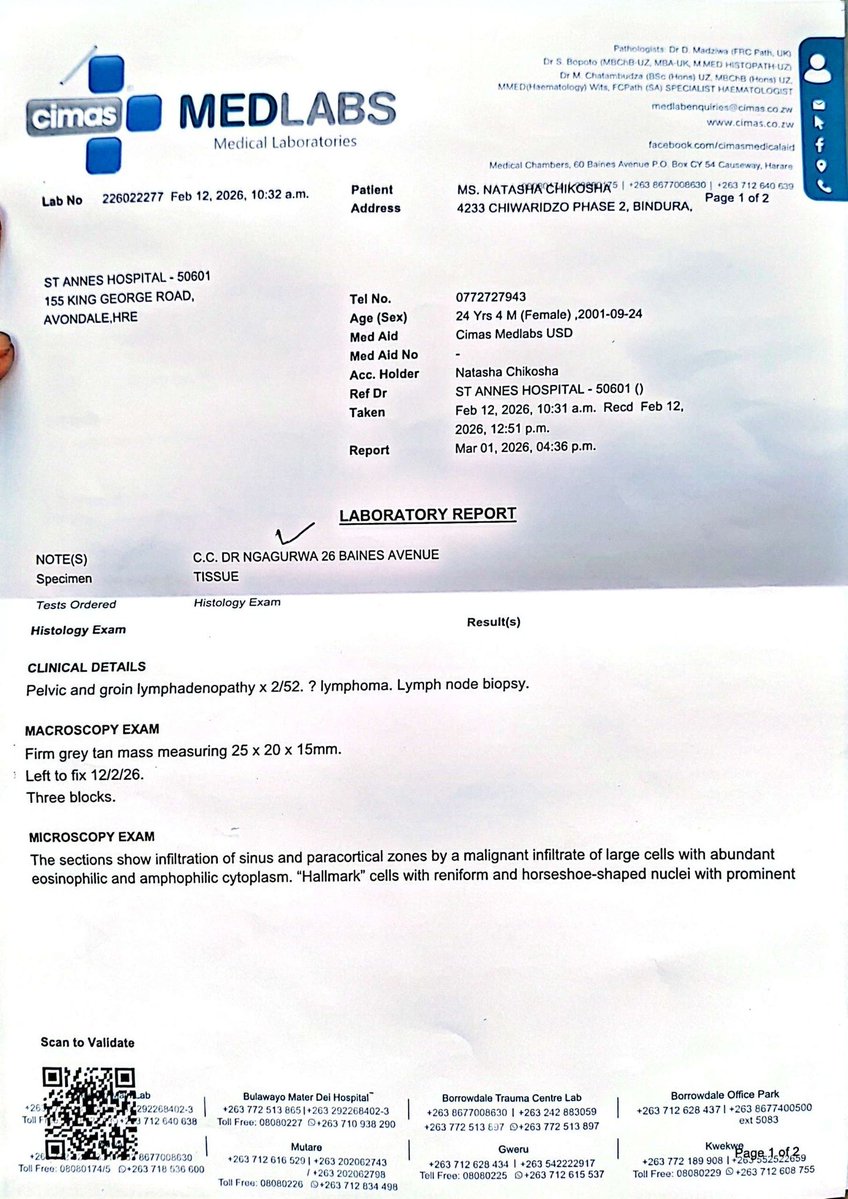
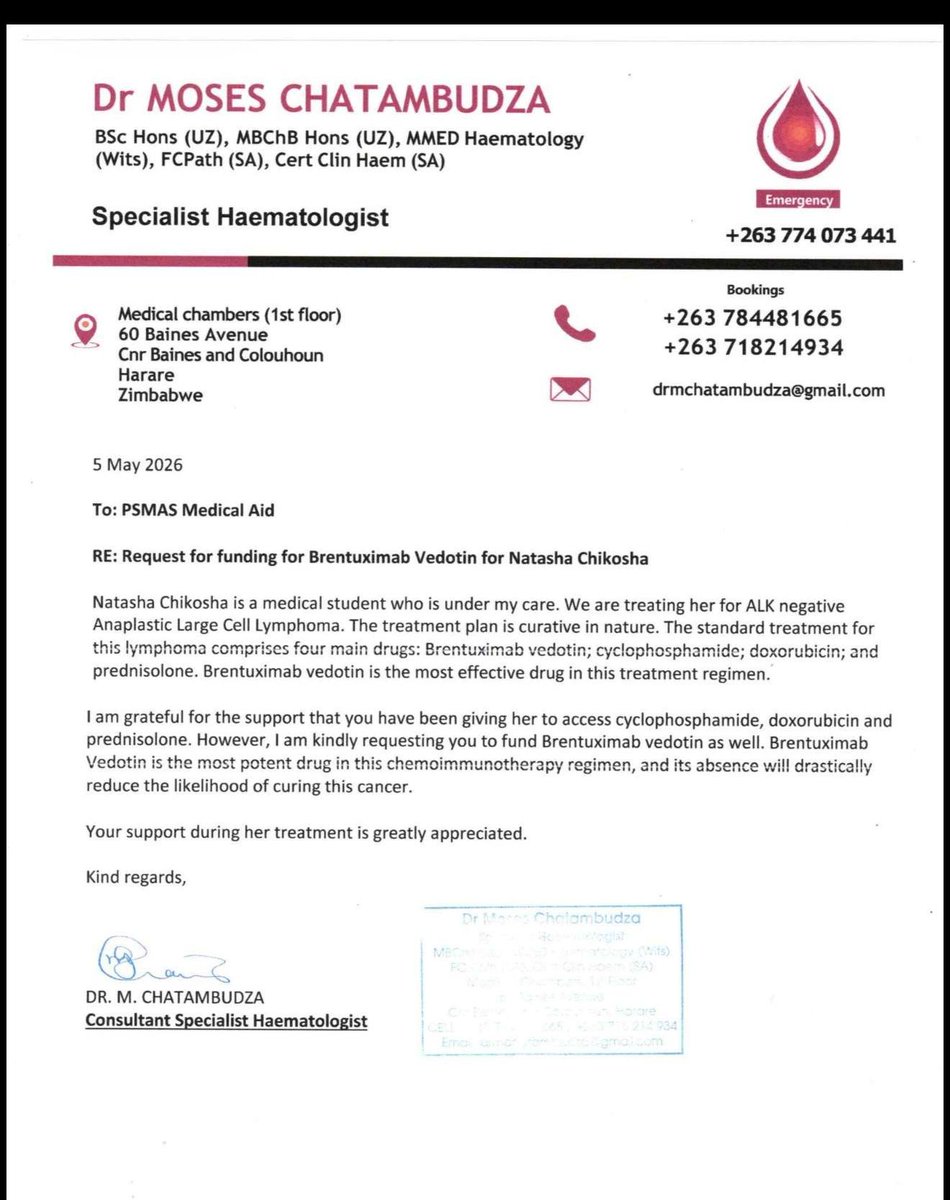
Natasha Chikosha is a 24-year-old final-year medical student at the University of Zimbabwe who is currently fighting a serious form of cancer called ALK-negative Anaplastic Large Cell Lymphoma.
Natasha has spent years working tirelessly toward her dream of becoming a doctor so she could dedicate her life to caring for others. Instead of preparing for graduation and beginning her medical career, she is now facing the fight of her life.
Her doctors have confirmed that her treatment can be curative, giving our family hope. However, one of the most important medications in her chemotherapy treatment, Brentuximab Vedotin, is extremely expensive and currently beyond what we can afford.
As a family, we are doing everything we can to support Natasha through chemotherapy, hospital visits, medication costs, transport and ongoing care. Unfortunately, cancer treatment in Zimbabwe is financially overwhelming, and we are now reaching out for help.
Natasha is kind, hardworking, resilient and deeply loved by everyone around her. Even during this difficult journey, she continues to smile and hold onto hope.
We are asking anyone who is able to support, whether through a donation, a prayer or simply sharing this fundraiser, to please help us give Natasha the chance to continue her treatment and fulfil her dream of becoming a doctor. Every contribution, no matter how small, truly makes a difference.
Thank you for standing with Natasha and our family during this incredibly difficult time.
Go Fund Me Link Available below. Alternatively if you are in Zimbabwe you can contribute using these details:
Account Name : M & D Chikosha. Bank : Agribank Nelson Mandela. Acc Number: 100004483558. Ecocash: 0772737943 Mazivisa Chikosha
It has been a while since I last gave my platform to people selling goods and services. Our country and our people are struggling, and for many, the informal sector is now the only available source of income and survival.
So today, once again, I am offering my platform free of charge to anyone selling something to advertise in the comments section. Whether it is food, clothing, furniture, electronics, farming products, transport services, or any other legitimate business, feel free to post it.
To those who will be buying, please do your due diligence. I am not responsible for any transactions you choose to engage in. Make sure the person you are dealing with is genuine and able to provide the goods or services being advertised.
Whenever possible, see the goods before making payment. Do not pay for items that have not been delivered. If delivery is required, it is safer for the seller to deliver first and then receive payment.
Happy selling and happy buying.