If you’ve been around Bitcoin for a while, you’ve seen some shit.
$20K to $3K
COVID. The money printer. DeFi summer. NFT insanity. Elon candles. China banning Bitcoin for the 47th time.
$69K… Luna. Celsius. Three Arrows. FTX.
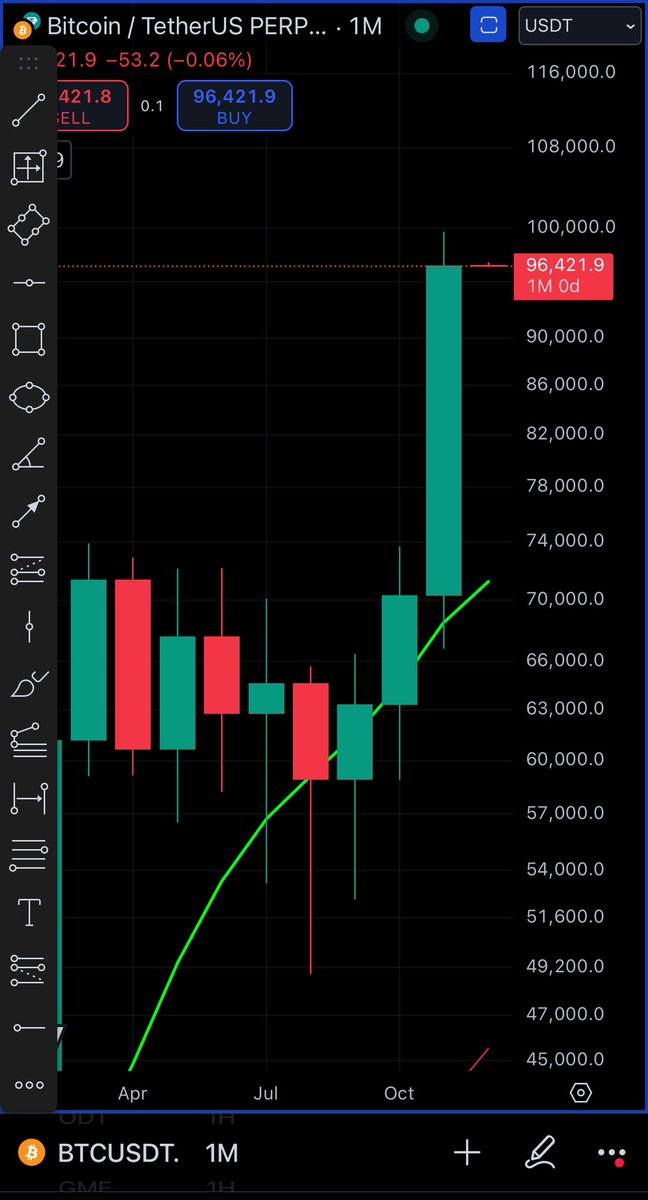
Then Bitcoin came all the way back and ripped through $100K to $126K
You saw October 10th. You saw $60K, You watched Strategy turn into a seller. You heard how Strategy was going to bring the whole thing down.
Bitcoin was dead again. Of course.
You’ve watched fortunes get made, fortunes disappear, geniuses become idiots and idiots become geniuses again.
And after all of that, you’re still here.
I’ve posted some version of this in every cycle.
So just like I told you then…
Stick around.
The fun is just beginning.
Last Friday delivered one of the worst altcoin wipeouts in crypto history, and the post-mortem of it has been a whisper.
When LUNA blew up, it owned the news. When FTX collapsed, it ruled the cycle. When we had our COVID crash, Crypto Twitter couldn’t stop talking about how we almost went to zero and what saved us.
But this time, a week later, there’s near silence. Instead, we’re told it was just a tweet. That’s not serious analysis. Yes, late Friday, Trump dropped a trade-war headline after U.S. markets closed: 100% tariffs on China and new export controls. That was the spark.
But a single tweet doesn’t send alts down 70% in minutes or vaporize entire portfolios within an hour.
The violence came from structure, from a breakdown deep in crypto’s plumbing.
During the flush, Ethena’s synthetic dollar, USDe (ticker USDe), printed as low as $0.65 on Binance while holding near $1 on other venues. This wasn’t a global depeg. It appears to have been a Binance-local pricing failure, an oracle and order-book divergence that instantly slashed collateral values for users on Binance’s unified margin system.
When your collateral is repriced that far down on a single venue, everything built on it collapses.
On Binance’s unified / cross-margin system, traders can post multiple assets, including USDe and wrapped tokens, as collateral across all their open positions.
When Binance’s feed suddenly marks USDe at $0.65 instead of $1.00, the user’s collateral value shrinks, maintenance ratios blow up, and the liquidation engine begins selling their other assets, often high-beta alts, into an already collapsing market.
Those forced sells push prices lower, triggering more liquidations across the exchange and, through arbitrage, across the entire crypto market.
Example:
Imagine a trader with $200,000 total equity.
$50,000 in USDe collateral
$150,000 in long altcoin positions
Binance marks USDe at $0.65, so that $50,000 becomes $32,500; In this case, $17,500 in margin cushion vanishes instantly.
The system detects the shortfall and auto-liquidates part of the alt positions to rebalance. Those sells slam into thin order books, driving alt prices down another 20–30% almost instantly.
Now the trader’s remaining alts, which weren’t yet liquidated, are worth even less, cutting collateral ratios further and triggering the next round of liquidations.
Each liquidation dump pushes prices down for everyone else using the same assets as collateral, igniting a chain reaction. By the time the loop finishes, hundreds of millions in positions are forcibly sold, and the cascade becomes self-fueling, a liquidation spiral that consumes everything in its path.
What started as a local pricing glitch becomes a global liquidity collapse.
Arthur Hayes @CryptoHayes summed it up perfectly: “USDe didn’t depeg. Binance did.”
The Ethena protocol remained solvent and over-collateralized. The problem was the venue’s internal feeds and book structure under stress.
When an exchange values collateral based on its own shallow order book instead of a broad market reference, small cracks become sinkholes.
This doesn’t absolve Ethena, any asset printing 35% below peg, even locally, shows fragility. But this wasn’t another LUNA.
It was a mechanical failure, a venue-specific collateral mispricing colliding with excessive leverage and opaque cross-margin rules. The result was one of the largest liquidation waves in crypto history, nearly $19 billion in forced unwinds within 24 hours.
That doesn’t happen from headlines. It occurs when margin engines and oracles fail under stress.
Binance has since promised to compensate affected users and rework how wrapped and synthetic assets are priced. That alone is an admission something broke. And yet, this event has been largely swept under the rug thus far.
We’ve seen bigger macro shocks before: Liberation Day, COVID, and even FTX contagion, yet none triggered alts to implode 70–99% in an hour.
This wasn’t fear. It was faulty design.
One venue’s pricing feed dislocated, collateral collapsed, and liquidation engines spread that contagion everywhere. The industry’s core issue is now undeniable: Too many opaque, venue-specific risk systems govern leverage, collateral, and liquidation.
When one breaks, the entire system pays for it. Design flaws, not tweets, keep blowing up the market.
If this reconstruction is wrong, then @binance and @cz_binance should publish the data:
Which feeds broke and when?
Which collateral assets were hair-cut, and how many users were liquidated? How is the compensation being calculated?
And @ethena should release a venue-by-venue chart showing USDe pricing, redemptions, and hedging during the event, to prove solvency and pinpoint where the break occurred.
Roughly $19 billion didn’t vanish into thin air. People were liquidated, portfolios erased, and careers ended because the pipes broke. If this wasn’t the cause, prove it. If it was, fix it.
Because headlines aren’t destroying crypto, it’s being destroyed by its own infrastructure.
This can’t be another story buried under “macro fear.” The silence is the loudest signal of all.
Systems failed. Users paid the price. And the industry owes them an explanation.
If we don’t fix the plumbing now, the following “tweet” could light the same fuse, and eventually, there might not be much left to save.
Because if a tweet can burn $19 billion, it’s not the tweet that’s the problem; it’s the system.
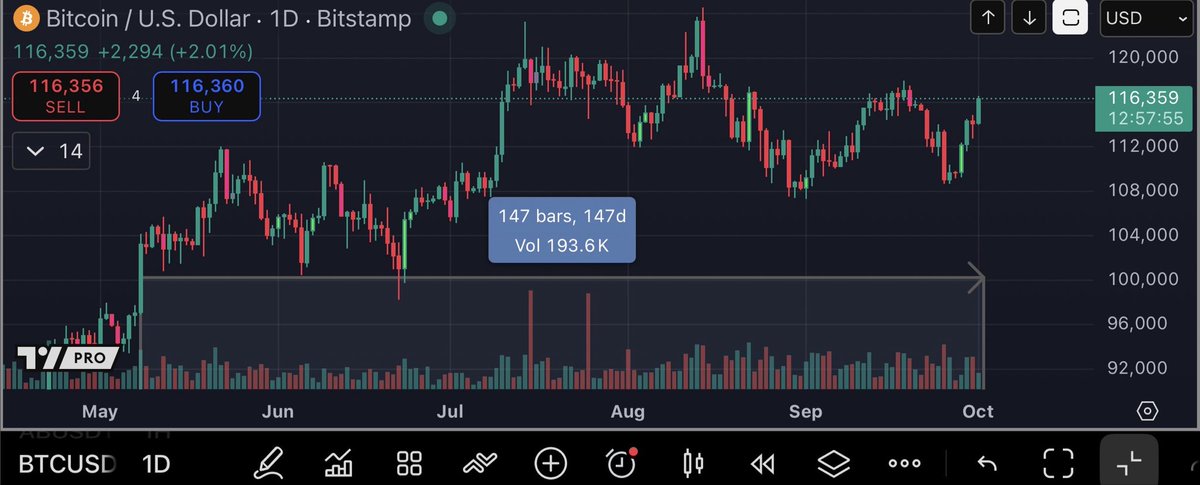
At we approached $20,000 #Bitcoin, there was pure euphoria.
Now as it approaches $120,000, no one cares.
That’s not bearish, that’s the calm before the next storm.
When apathy meets ATHs, we’re not topping…
We’re just getting started again.
#BTC Daily
No need to rush on the HTF (Daily scale)
The trend has been clear and gloriously bearish.
We’ve been in a downtrend for months, and nothing has changed yet on the daily timeframe.
✅ LTF longs? Sure, with tight stops and clear exits.
But remember, we expect resistance to resist in downtrends.
📉 Until bulls reclaim at least $88K on a daily close, there’s no reason to be swinging for daily longs.
And even that would just be step one, a starting point for structure. BTC needs to build higher before we flip our Daily scale directional bias. We have seen compression, but Bulls must see higher lows here to get excited about a potential shift.
Play your charts, not your hearts. What's the rush?
📉 Crisis brings opportunity.
Let the market prove the shift, then react.
#BTC
Bitcoin has been in a clear downtrend for some time, which means it has been important to expect resistance to hold (which it has) until the bulls reclaim a significant level.
Recently, we have observed some decent compression, which could lead to a lower low. However, if we can maintain the recent lows during the upcoming days of high volatility—while the markets process tariff news—there's a possibility of establishing a potential low.
Currently, to consider becoming a bull on the daily scale, you want to see a close above $95,000. However, we can look for early indicators in the form of higher lows.
While higher lows do not guarantee that we have hit the bottom, it's essential to remember that all bottoms begin with higher lows!
"Dead Man Spending"
I won’t pretend to know whether these tariffs will succeed in securing better trade deals (that’s the stated goal). Trade policy is complex, and the consequences often unfold over years, not months.
What is clear, though, is this: any economy that needs to run a $2+ trillion deficit (which we have averaged for the past 5 years) just to appear stable isn’t healthy. It’s not thriving, it’s on life support. That’s not a sign of strength; it’s a symptom of systemic decay. At some point, we have to stop calling it “growth” and start calling it what it really is: artificial respiration for a system that can’t survive on its own.
We’re not looking at a powerhouse economy, we’re looking at a zombie. It walks, it moves, it consumes, but it’s already dead inside. No amount of short-term policy bandages or tariffs can fix that without addressing the deeper structural rot.
The problem with the world today is that intelligent people are full of doubts, not because they’re wrong, but because they understand complexity.
Meanwhile, those who lack understanding are full of confidence, and their certainty is mistaken for wisdom.
Social media amplifies this issue, rewarding boldness over thoughtfulness, making false confidence appear like truth on a massive scale.
We are caught in this massive loop where individuals with limited knowledge overestimate their competence and yet their messaging is amplified. In contrast, the true experts, aware of the complexities, leave room for error and flexibility, a trait that contributes to their expertise and yet this leads to their message to being diminished in comparison.
People think I'm picking on this guy. I'm not, for years I've been simply trying to save people from grifters
10 days ago: "I'm FULLY exposed to the market."
Today: "I'm ready to buy the dip"
It's all so ridiculous.
FASB has officially adopted Fair Value Accounting for #Bitcoin for fiscal years beginning after Dec 15, 2024. This upgrade to accounting standards will facilitate the adoption of $BTC as a treasury reserve asset by corporations worldwide. https://t.co/4GOuji6cr0
Can confirm this is true. It was one of the most unethical and un-American things that happened in the Biden administration, and my guess is we'll find Elizabeth Warren's fingerprints all over it (Biden himself was probably unaware).
We're still collecting documents via FOIA requests, so hopefully the full story emerges of who was involved and whether they broke any laws.
Warren and Gensler tried to unlawfully kill our entire industry, and it was a major factor in the Dems losing the election. The Democratic party should realize Warren is a liability and further distance themselves if they want to have any hope of rebuilding.