Fidelity’s Ethereum Fund is getting more interesting.
$FETH can stake up to 100% of its ETH and earn native staking https://t.co/aMNyC25cSG institutions can now get:
→ ETH exposure
→ Staking yield
→ Regulated fund structure
The institutionalization of $ETH continues.
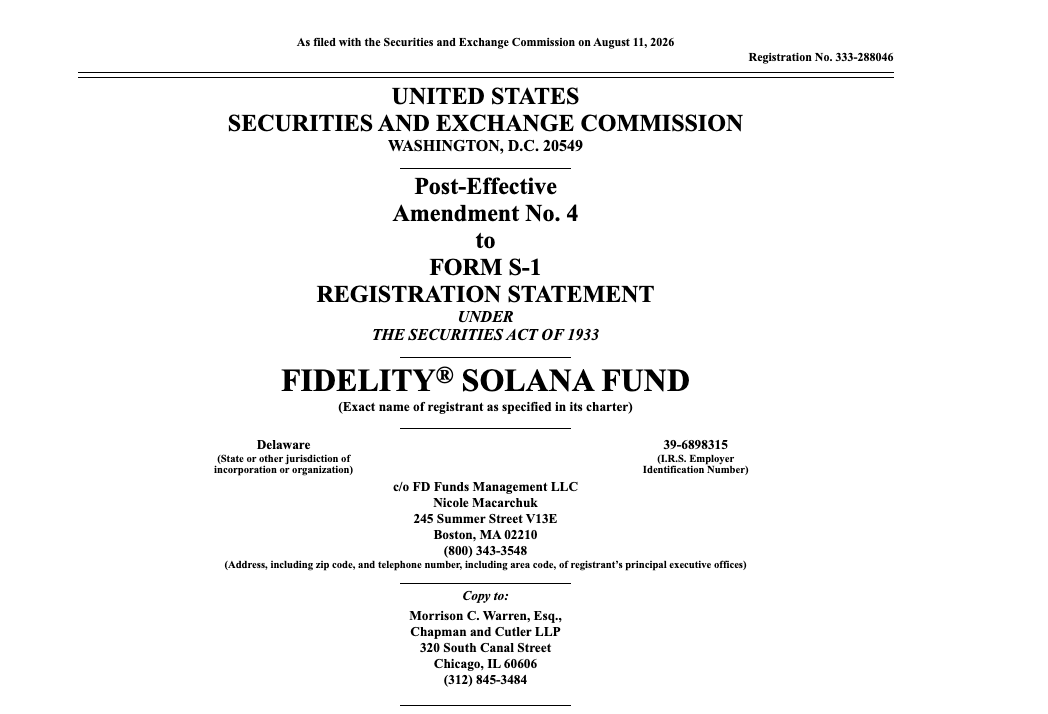
Fidelity’s Solana Fund just got more interesting.
$FSOL can stake up to 100% of its SOL and earn native staking rewards.
So institutions can now get:
→ SOL exposure
→ Staking yield
→ Regulated fund structure
The institutionalization of $SOL continues.
The oldest objection to financial privacy is that it means no rules.
That a private system is a lawless one. It sounds obvious, and it is wrong, and David Chaum showed why almost forty years ago.
In 1988, working with Amos Fiat and Moni Naor, he designed a form of digital cash with a careful property. A coin stayed completely private in normal use. The bank could not see who held it or what they bought. But if someone tried to spend the same coin twice, the system would expose that one act, and only that act.
Honesty stayed invisible. The single broken rule became visible.
The design delivered both at once, privacy and integrity together, with no trade between them.
This is the quiet, important idea that the surveillance argument always misses. Privacy and accountability can hold together. Cryptography can give you a system where good-faith activity is shielded and provable rules still apply.
DarkFi inherits that lineage. Zero-knowledge proofs are exactly this idea, generalized. You can show that you followed the rules without revealing anything beyond the fact that you did.
You do not have to choose between being private and being honest.
That was a false choice from the start.
Most people picture privacy as hiding the contents of a message.
The harder problem is older and quieter.
When David Chaum designed his mix network in 1981, the problem on his mind was traffic analysis.
Encryption already sealed the contents. The thing still leaking was the pattern. Who is talking to whom, how often, and when.
Knowing that two people exchange messages every night at the same hour reveals plenty, even if every word is unreadable.
The graph of who connects to whom is its own kind of confession.
Chaum's answer was to route messages through relays so that no single point could see both ends.
Onion routing and Tor grew out of that idea.
DarkFi takes the same problem seriously.
DarkIRC (DarkFi chat) carries unlinkable identities over Tor, so the metadata, the shape of your contacts and your timing, does not leak while the contents stay protected.